 Bellingham Exterior
 Board & Batten Siding in Sehome: What the Climate Actually Demands
Sehome sits close enough to Bellingham Bay that homes here deal with a specific combination of stresses: salt-laced air drifting up from the water, long stretches of driving rain off the Sound, and a moss season that can run nine months out of twelve on north-facing walls and anything shaded by mature trees. Board and batten siding — with its vertical boards and raised battens covering the seams — is one of the more distinctive looks a home can wear, but it's also one of the less forgiving styles when the wrong material or the wrong install method meets this climate.
The vertical board-and-batten pattern creates more seams, more joints, and more edge grain exposed to weather than a standard lap siding job. Every one of those seams is a place water can find its way behind the cladding if the material or the install isn't right. In Sehome specifically, that means the siding has to shrug off constant moisture exposure, resist the kind of algae and moss growth that thrives in shaded, damp microclimates near the water, and hold its finish without chalking or fading in salt air over the long term.
Why Material Choice Matters More With Board & Batten
Board and batten was traditionally a wood siding style, and a lot of homeowners still picture it in cedar or primed spruce. Both look good on day one. Neither holds up well to Whatcom County's wet season without a demanding maintenance schedule — recoating, caulking, and moisture monitoring that most homeowners don't want to sign up for indefinitely. Vinyl board and batten solves the rot problem but introduces its own issues: it expands and contracts more than fiber cement in temperature swings, it can look visibly "thin" in the deep vertical shadow lines this style is known for, and it doesn't hold paint if a homeowner ever wants to change the color down the road.
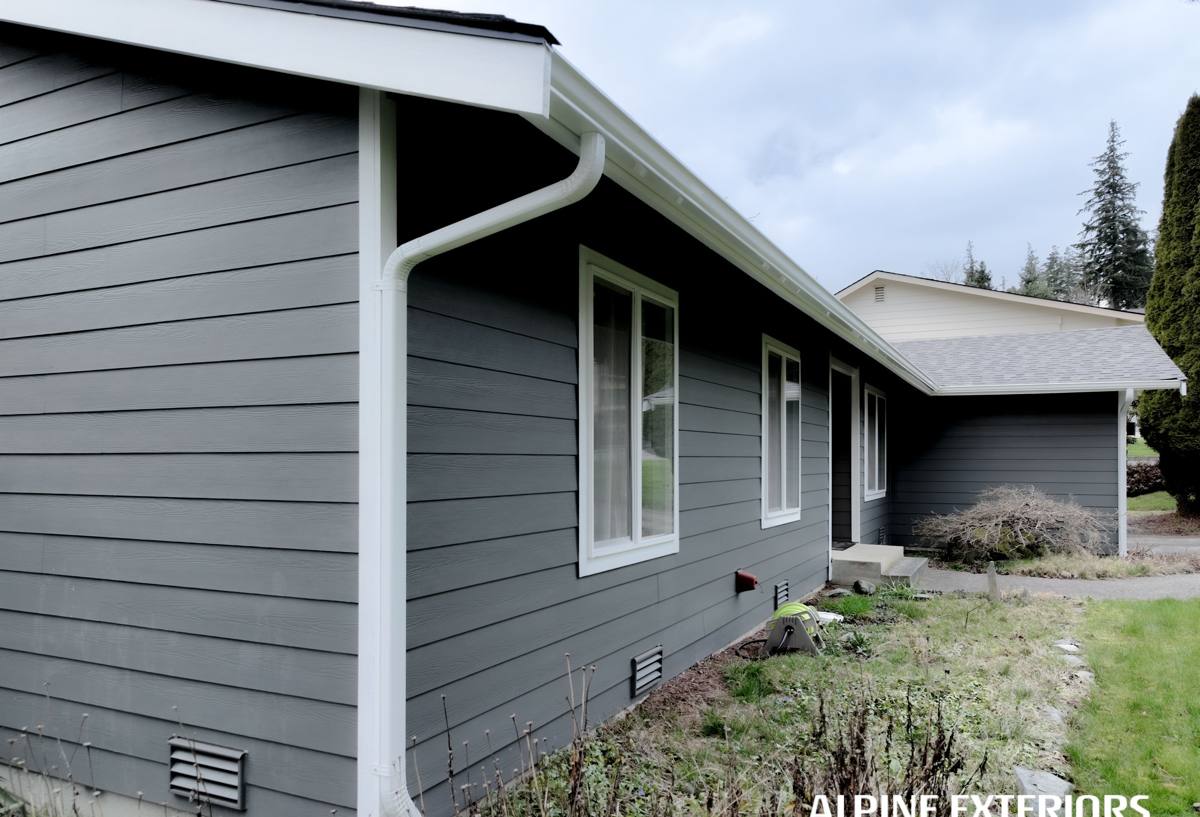
We install James Hardie fiber cement exclusively, and board and batten is actually one of the styles where that decision matters most. Hardie's vertical panel and batten systems are engineered as a system — panel, batten, and fastening pattern designed to work together — rather than dimensional boards nailed up and caulked at every joint. That matters in a neighborhood like Sehome where wind-driven rain off the bay tests every seam on the exterior.
What Correct Board & Batten Installation Involves
- Proper rainscreen or drainage plane behind the siding so any moisture that gets past the cladding has somewhere to go instead of sitting against the sheathing
- Correct fastener spacing and type for Hardie panel and batten profiles — under-fastening is one of the most common causes of early failure on vertical siding
- Batten placement over structural framing, not just cosmetic strapping, so the reveal holds its line over decades, not just the first few years
- Flashing detail at every horizontal transition — window heads, belt lines, roof-to-wall intersections — since board and batten's vertical lines make poor flashing more visually obvious, not less
- Factory-applied ColorPlus finish rather than field-applied paint, so the color and the moisture seal are baked in before the material ever reaches the site
Salt Air, Rain, and Moss: The Three Things We Design Around in Sehome
Salt Air
Proximity to Bellingham Bay means airborne salt is a real factor on siding finishes, especially on west and south-facing elevations that catch weather off the water. Field-applied paint is the first thing to show it — chalking, fading, and finish breakdown happen faster under salt exposure than most homeowners expect. Hardie's ColorPlus finish is baked on at the factory under controlled conditions and carries a separate finish warranty specifically because it's built to hold color and sheen under exactly this kind of exposure.
Driving Rain
Wind-driven rain doesn't just fall on siding, it gets pushed into seams and laps. Board and batten has more vertical seams per square foot than most siding styles, which is exactly why the drainage plane and flashing details behind the visible battens matter as much as the battens themselves. A correct install assumes water will reach those seams occasionally and gives it a way out.
Moss Season
Shaded walls, mature landscaping, and the general dampness of a Whatcom County winter all favor moss and algae growth. Fiber cement doesn't feed organic growth the way wood does, but it isn't immune to surface growth in constantly shaded, damp spots — the difference is that Hardie's surface and finish are far easier to clean without damaging the material underneath, and the substrate itself isn't degrading while moss sits on it the way untreated wood would.
Board & Batten Style Options for Sehome Homes
James Hardie offers board and batten in a few configurations, and the right one depends on the home's architecture and the look a homeowner wants:
| Style Option | Look | Best Fit |
|---|---|---|
| Vertical Siding (panel + batten) | Classic wide-reveal board and batten, deep shadow lines | Farmhouse, craftsman, and modern facades |
| Board & Batten as an accent | Mixed with HardiePlank lap siding on gables or dormers | Homes wanting texture variation without a full vertical exterior |
| Narrow reveal batten spacing | Tighter, more contemporary vertical lines | Modern builds and remodels aiming for a cleaner look |
A lot of Sehome's housing stock mixes eras and styles, so we spend time up front figuring out whether full board and batten or an accent application fits the home better — not just aesthetically, but in terms of which elevations actually take the brunt of the weather and deserve the most robust detailing.
Our Process for a Sehome Board & Batten Project
- On-site assessment — we look at existing siding condition, sheathing moisture, and which elevations face the bay or prevailing weather
- Drainage plane and moisture barrier install — this step gets skipped or shortcut more often than any other in board and batten jobs, and it's the one that determines whether the wall stays dry for the next 30 years
- Batten layout planning — battens land on framing, and layout accounts for window and door trim so reveals stay consistent across the whole elevation
- Installation to Hardie's fastening and clearance specs — including ground clearance and roofline clearance, both of which affect long-term moisture exposure at the most vulnerable parts of the wall
- Flashing and trim detail — every horizontal intersection gets proper flashing, not just caulk
- Final inspection — we walk every seam and batten line before calling the job done
Why Local Installation Experience Matters Here
Board and batten installed to a generic national spec will still function reasonably well in a dry climate. It's a different job in Whatcom County. A crew that already works Sehome and the surrounding Bellingham neighborhoods knows which elevations catch the worst of the rain off the bay, which yards hold shade and moisture longest into spring, and how the local moss and algae pattern behaves against fiber cement versus how it behaved against whatever siding was on the house before. That's not something you get from a manufacturer's install manual alone — it comes from doing this specific work in this specific area, year after year.
It also matters for warranty protection. James Hardie's product warranty assumes installation to their specifications, and their finish warranty on ColorPlus products has its own requirements. A crew that installs Hardie exclusively, and installs it locally, is set up to get those details right the first time rather than treating board and batten as an unfamiliar variation on standard lap siding.
What This Costs and What Drives the Price
Board and batten typically runs somewhat higher than standard lap siding per square foot, mostly due to the additional material (battens) and the added labor of a more detail-intensive install. Exact pricing depends on the home's size, number of stories, existing siding removal, and how much trim and flashing work the specific elevations require. We don't publish blanket per-square-foot numbers because Sehome's mix of home ages and styles makes a generic quote nearly meaningless — an accurate number comes from seeing the actual walls.
Signs It's Time to Talk About Board & Batten Replacement
- Existing wood board and batten with soft spots, visible rot at the base, or paint that won't hold anymore
- Vinyl board and batten that's warped, faded, or cracked from UV and temperature cycling
- Persistent moss or dark staining on shaded elevations that keeps coming back after cleaning
- Visible gaps opening up at battens or seams, which usually signals movement behind the siding
- A desire to change the home's look — board and batten is one of the more popular upgrades for homeowners wanting a farmhouse or modern-craftsman exterior
If you're weighing board and batten siding for a home in Sehome, we're happy to take a look, walk the exterior with you, and give you a straight answer on what the job actually involves and what it would cost — no pressure, no obligation. Fill out the form below to set up a free estimate.