 Bellingham Exterior
 Deck Building in Columbia, Built for Bellingham's Climate
Homes in the Columbia neighborhood face the same weather every Bellingham homeowner deals with, but a deck adds a wrinkle: it's a horizontal surface exposed to sky, rain, and salt-tinged air with nowhere for moisture to hide. Whatcom County's marine climate means long stretches of driving rain, humidity that never fully clears, and a moss season that can run from fall through spring. A deck built without that reality in mind starts showing problems within a couple of seasons — soft boards, green film underfoot, corroding hardware, and joists that stay damp long after the rain stops.
We build and repair decks around Bellingham regularly, and Columbia is one of the neighborhoods we know well from repeat work. That familiarity matters more than it sounds like it should. Lot slopes, typical foundation heights, how close homes sit to mature trees, and how much shade a yard gets all shape what a deck needs to hold up here — and those patterns repeat house to house in a neighborhood we already work in.
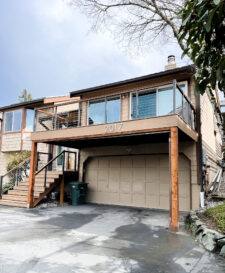
What Bellingham's Weather Actually Does to a Deck
It helps to be specific about the mechanisms, not just say "wet climate."
- Driving rain pushes water sideways under railings, into end grain, and behind ledger boards where flashing is the only thing standing between your deck and your house's framing.
- Salt air off the Puget Sound and Bellingham Bay accelerates corrosion on fasteners, brackets, and any exposed metal hardware — even at a distance inland, moist salt-laden air still speeds up rust over years.
- Moss and algae take hold on any surface that stays damp and shaded, which describes most decks here for a good chunk of the year. Beyond the cosmetic issue, moss holds moisture against the board surface, which is exactly what accelerates rot in untreated or under-sealed wood.
- Long damp seasons mean wood never gets a real chance to dry out between rain events, so any spot where water can pool or get trapped becomes a slow-motion rot problem instead of a quick-drying non-issue.
None of this means a deck can't hold up in Columbia — it means the build has to account for it from the framing up, not just at the surface finish.
What a Correct Deck Build Involves Here
Footings and Framing
Footings need to be sized and set to current code depth for our frost and drainage conditions, not just "deep enough to look right." Joists should be spaced tightly enough for the decking material you're choosing (composite generally wants tighter spacing than wood), and any joist tape or protective flashing on top of the joists matters more here than in drier climates — it's the difference between framing that lasts decades and framing that starts softening at year eight.
Ledger Attachment and Flashing
Where a deck attaches to the house is the single most common failure point we see, and it's almost always a flashing problem, not a structural one. Water gets behind the ledger board, has nowhere to drain, and slowly rots both the ledger and the rim joist behind it. Correct flashing — proper overlap, correct material, sealed at every penetration — is not optional trim work. It's the part of the job that determines whether your deck stays sound for 20 years or needs a rebuild in 8.
Fasteners and Hardware
Given the salt air and humidity, we treat fastener selection as a real decision, not an afterthought. Stainless or high-grade coated fasteners rated for ground contact and coastal-adjacent exposure cost more up front and save you from rust streaks, popped screw heads, and weakened connections down the line.
Drainage Underneath
A deck that sheds water on top but traps it underneath just moves the moss and rot problem out of sight. Grading, gaps between boards, and keeping the area under the deck ventilated all matter for how long the structure lasts.
Decking Material Options — What Actually Holds Up
Every material has real trade-offs in this climate. We won't tell you one is "bad" — we'll tell you honestly what each one asks of you.
| Material | Moisture Behavior | Moss/Algae Resistance | Maintenance Needed |
|---|---|---|---|
| Pressure-treated wood | Resists rot when sealed; needs re-sealing to stay protected | Low — needs regular cleaning | Annual cleaning, re-seal every 2-3 years |
| Cedar | Naturally rot-resistant, but surface still absorbs water | Low-moderate | Cleaning plus periodic oil/sealant |
| Composite decking | Doesn't rot, but can trap surface moisture if not cleaned | Moderate — still grows moss if shaded and dirty | Occasional washing, no sealing needed |
| PVC/capped composite | Fully moisture-resistant surface | Higher, but not immune in deep shade | Lowest — periodic washing only |
The honest takeaway: no material is maintenance-free in a Whatcom County yard with shade and rain. Composite and capped products reduce upkeep and rot risk, but they cost more up front, and installation sensitivity — hidden fastener systems, expansion gaps, correct joist spacing — matters just as much as the product itself. A well-built wood deck that's actually maintained will outlast a poorly installed composite deck. We'll walk through what fits your budget, sun exposure, and how much upkeep you actually want to do.
Our Process, Start to Finish
- On-site assessment — we look at slope, drainage, existing structure (for rebuilds), sun/shade exposure, and how the deck will tie into the house.
- Design and material selection — sized to your yard and budget, with honest trade-offs explained rather than upsold.
- Permitting — we handle the paperwork required for your project so you're not chasing city or county approvals yourself.
- Framing and flashing — footings, joists, and ledger attachment done to hold up under Bellingham's rain and humidity, not just to pass a quick look.
- Decking, railing, and finish — installed with fastener spacing and hardware chosen for long-term exposure, not just the sample board look.
- Final walkthrough — we go over what maintenance your specific material and site actually need, in plain terms.
Permits and Code in Bellingham and Whatcom County
Most new decks and many rebuilds require a permit, with requirements tied to height, size, and attachment to the structure. Inspectors are checking footing depth, ledger attachment and flashing, joist spacing, guardrail height, and stair geometry — all the things that matter most in a wet climate. Skipping the permit process might save time upfront, but it leaves you without a verified record that the structural and flashing work was done correctly, which becomes a real problem at resale or if something goes wrong later. We pull the necessary permits and build to what inspection requires, not around it.
Common Problems We Find on Existing Columbia Decks
When we're called out for repair or replacement work in this neighborhood, the same handful of issues show up again and again:
- Soft or spongy boards near the house, usually tracing back to ledger flashing that failed years earlier
- Rusted or popped fasteners, especially on older builds that used standard exterior-grade screws instead of corrosion-resistant hardware
- Persistent moss buildup in shaded corners that's been scrubbed but never structurally addressed
- Railing posts that have loosened because the connection point absorbed water over time
- Underside framing that stayed damp year-round due to poor grading or no ventilation gap
Most of these are fixable without a full rebuild if caught early — which is part of why we recommend an honest inspection before assuming a deck needs full replacement.
Maintenance That Actually Matters Here
Whatever material you choose, a short list of seasonal habits does more for deck lifespan in this climate than almost anything else:
- Sweep and clear leaves and debris regularly, especially in fall — trapped organic matter feeds moss and holds moisture against the surface
- Clean moss and algae buildup at least once a year, more often in shaded areas, using a method appropriate to your decking material
- Check and re-seal wood decking on the manufacturer's recommended cycle, not just when it looks dry
- Inspect fasteners and hardware annually for rust streaks or loosening, particularly near the ledger and railing posts
- Keep gutters and downspouts near the deck clear so runoff isn't dumping extra water onto or under the structure
- Confirm gaps between boards stay clear so water keeps draining through rather than pooling on top
Why a Crew That Already Works Columbia Makes a Difference
A deck built by a crew that's worked other homes in this same neighborhood isn't guessing at how much rain exposure, shade, and moss pressure your yard will actually see — we've already built and repaired decks dealing with the same conditions nearby. That means fewer surprises during the build, materials and fastener choices that are already proven for this specific pocket of Bellingham, and a realistic maintenance conversation instead of generic advice that doesn't account for Whatcom County's climate. It also means if something does need attention down the road, you're calling a crew that already knows your neighborhood and, in many cases, your home.
If you're planning a new deck in Columbia or want an honest look at whether an existing one needs repair or replacement, we're happy to come take a look. Use the form below to request a free, no-pressure estimate — we'll walk the site, answer your questions directly, and give you a straight assessment either way.