 Bellingham Exterior
 Decking in Cordata Has to Handle a Different Kind of Weather
Cordata sits close enough to the water and the marine air pattern that a deck here takes on a different kind of punishment than one further inland or east of the Cascades. It's not one big storm that wrecks a deck in Whatcom County — it's the slow grind of months at a time where the wood or composite surface never fully dries out. Salt-tinged air, driving rain off the Sound, and a moss season that can stretch from October into April all work against a deck that wasn't built with this climate in mind.
Composite decking exists specifically to reduce the maintenance burden that comes with that kind of exposure, but "composite" isn't one product — the boards, the substructure, and the installation details all matter more here than they would in a dry climate. This page is about what actually holds up on a Cordata deck, and what a correct installation looks like given our weather.
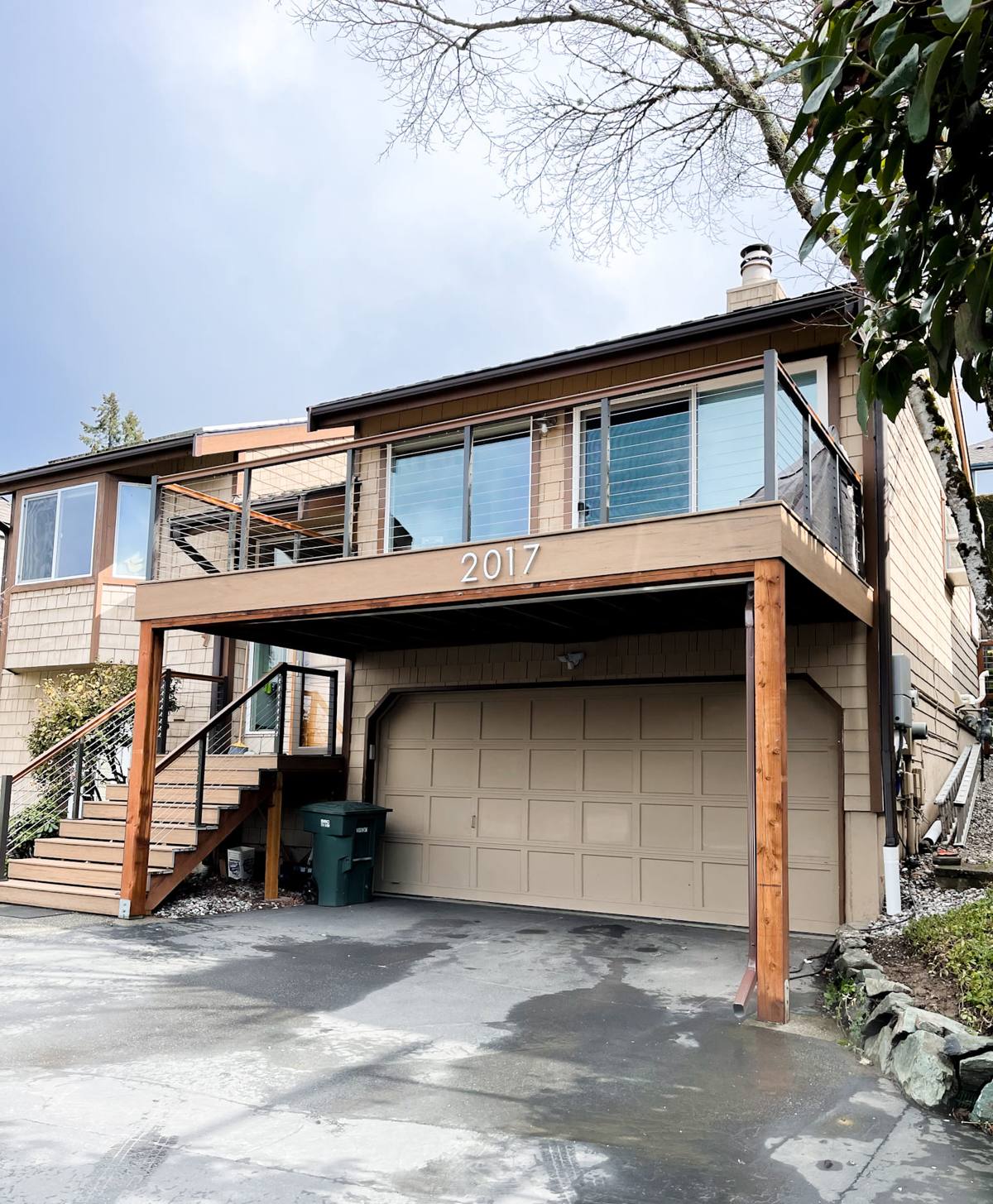
What Bellingham's Climate Actually Does to a Deck
Moisture That Never Fully Leaves
Whatcom County doesn't get the heaviest rainfall totals in the state, but it gets consistent, low-intensity rain and heavy cloud cover for long stretches. That means decks here spend a lot of time damp rather than getting soaked and then drying fast in the sun. Any decking material that's sensitive to sustained moisture — trapped water under boards, poor airflow beneath the deck, fasteners that wick water into end grain — will show it here faster than in a sunnier climate.
Moss and Algae Growth
Shaded, north-facing, and low-airflow deck areas in Cordata are prone to moss and green algae film, especially through the fall and winter months. This isn't just cosmetic — a mossy deck surface gets slick and dangerous underfoot, and moss holding moisture against a board surface accelerates whatever degradation the material is prone to.
Salt and Marine Air
Being close to Bellingham Bay means fasteners, brackets, and any exposed metal hardware are dealing with a mildly corrosive environment. Standard hardware that would be fine in a dry inland climate can start showing rust and pitting years sooner here.
Why Composite Makes Sense for This Area
Composite decking was developed largely to solve wood's biggest weakness — moisture absorption leading to rot, splintering, and warping. In a climate like ours, that's a real advantage: a quality composite board doesn't absorb water into its core the way wood does, so it doesn't swell, cup, or rot from the inside out. It also doesn't need annual staining or sealing, which matters when the weather window for exterior maintenance work in Bellingham is genuinely short.
That said, composite isn't maintenance-free, and it isn't immune to our climate — it's just better suited to it when installed correctly. Surface mildew and algae can still grow on composite boards, particularly in shaded or low-airflow spots, and it still needs periodic cleaning. The difference is that cleaning a composite surface is straightforward, while a wood deck in the same spot would need sanding, brightening, and re-sealing to stay ahead of rot.
What a Correct Composite Deck Build Involves Here
Substructure First
The composite boards get the attention, but the framing underneath is what determines whether the deck lasts. In our climate, that means:
- Pressure-treated or naturally rot-resistant framing lumber, rated for ground contact where applicable
- Joist tape or flashing on top of joists to keep fasteners from creating a moisture entry point into the wood
- Proper spacing and slope so water actually sheds off the deck surface instead of pooling
- Adequate airflow underneath the deck — low clearance decks in shaded yards are the most common spot we see moss and mildew take hold
- Corrosion-resistant fasteners and hardware rated for coastal or marine-adjacent exposure
Board Selection and Spacing
Composite boards expand and contract with temperature and moisture more than most homeowners expect. Gapping between boards needs to account for our seasonal humidity swings — too tight and boards can buckle when they take on moisture in the wet months; too loose and you get an uneven, sloppy-looking deck. Picture-frame trim boards and butt joints are where a lot of amateur installs go wrong, since end grain on composite boards is more porous than the face and needs to be handled correctly.
Fastening Method
Hidden fastener clip systems are worth the extra labor in this climate — they avoid the small pooling points that form around exposed screw heads, which is exactly where you'll see the first signs of algae growth on a deck surface.
Comparing Decking Options for a Cordata Home
| Material | Moisture Behavior | Maintenance | Typical Lifespan Here |
|---|---|---|---|
| Pressure-treated wood | Absorbs water, prone to warping and checking with our wet/dry cycles | Annual cleaning, periodic staining/sealing | 10-15 years before major repair or replacement |
| Cedar | Naturally rot-resistant but still absorbs moisture; needs upkeep to hold color and resist mildew | Regular sealing, cleaning | 15-20 years with consistent maintenance |
| Capped composite | Moisture-resistant core with a protective cap; doesn't rot or splinter | Periodic washing; no staining or sealing | 25-30+ years, backed by manufacturer warranty |
| Uncapped composite (older-style) | More porous surface, more prone to staining and mildew | More frequent cleaning than capped boards | Shorter service life than capped composite |
We install capped composite systems as our standard for this reason — the cap layer is what actually resists the moisture and algae issues that come with our climate, and it's the difference that shows up ten years down the line, not in year one.
Cost Factors for a Cordata Composite Deck
Every deck project is different, but the main variables that move the price on a composite deck in this area are:
- Deck size and shape — square footage plus how many angles, curves, or multi-level transitions are involved
- Substructure condition — whether you're building new, or the existing framing needs partial or full replacement
- Height and access — elevated decks need railing, stairs, and sometimes permitted structural support
- Board tier — composite lines range from entry-level capped boards to premium multi-tone lines with longer warranties
- Railing and trim package — composite, aluminum, or cable railing all price differently
- Site conditions — sloped yards, limited equipment access, and drainage work all add labor
Rather than quote a number that won't reflect your actual property, we walk the site and give you a real, itemized estimate — most composite deck projects in this area land in a broad mid-to-upper range once size and railing choices are factored in, but the honest answer is it depends on your specific deck.
Our Process for a Cordata Deck Build
- On-site assessment — we look at drainage, sun/shade exposure, existing structure (if replacing), and how the deck ties into the house
- Design and material selection — board color, railing style, and layout, sized to your actual space
- Permitting — most elevated decks and structural work require a permit through the City of Bellingham or Whatcom County; we handle that process
- Substructure build — framing, flashing, and fastener choices matched to our climate, not a generic spec
- Decking and railing install — proper spacing, hidden fasteners where applicable, and clean trim work
- Final walkthrough — we go over care and cleaning so the deck actually gets the lifespan it's built for
Why a Crew That Already Works Cordata Matters
A lot of deck problems we get called to fix aren't the composite material's fault — they're installation shortcuts that don't show up until the material has had a wet season or two to expose them. A crew that regularly works in and around Bellingham already knows which framing details matter here, where moss tends to take hold on a given lot orientation, and how to detail a deck so water actually leaves instead of sitting. That's not something you get from a general contractor doing one deck a year in a totally different climate zone.
We also know the local permitting process and inspection expectations for Whatcom County and the City of Bellingham, which keeps the project from stalling out waiting on paperwork we could have anticipated.
Maintaining a Composite Deck Through Moss Season
- Rinse and soft-brush the deck surface a few times through fall and winter to keep organic buildup from setting in
- Keep gutters and downspouts near the deck clear so runoff isn't draining directly onto the surface
- Trim back overhanging branches and vegetation that keep sections of the deck shaded and damp
- Sweep leaves and debris off promptly rather than letting them sit through a wet stretch
- Check that gaps between boards stay clear so water and debris don't accumulate
None of this is heavy labor — it's the kind of light, regular upkeep that keeps a well-built composite deck looking and performing the way it should for decades, instead of needing early intervention.
If you're planning a new deck or replacing one that hasn't held up to our weather, we're happy to take a look and put together a free, no-pressure estimate for your Cordata property. Use the form below to get started.