 Bellingham Exterior
 Why Cordata Homes Take a Different Kind of Beating
Cordata sits far enough inland to feel a little sheltered compared to homes right on the water, but it still gets the full Whatcom County weather package: long stretches of driving rain off the Pacific, salt-laden air that drifts in from Bellingham Bay and the Sound, and a moss season that can run eight or nine months out of the year on shaded north- and west-facing walls. None of that is dramatic on its own. The problem is what happens when it repeats, year after year, on siding that was never built to handle it or was installed with a shortcut that didn't show up until the fifth or sixth winter.
Siding repair in this climate isn't about patching a hole and moving on. It's about figuring out why the damage happened in the first place, because in Bellingham the answer is almost always moisture-related — and if you don't fix the cause, you'll be back out here repairing the same wall again in two years.
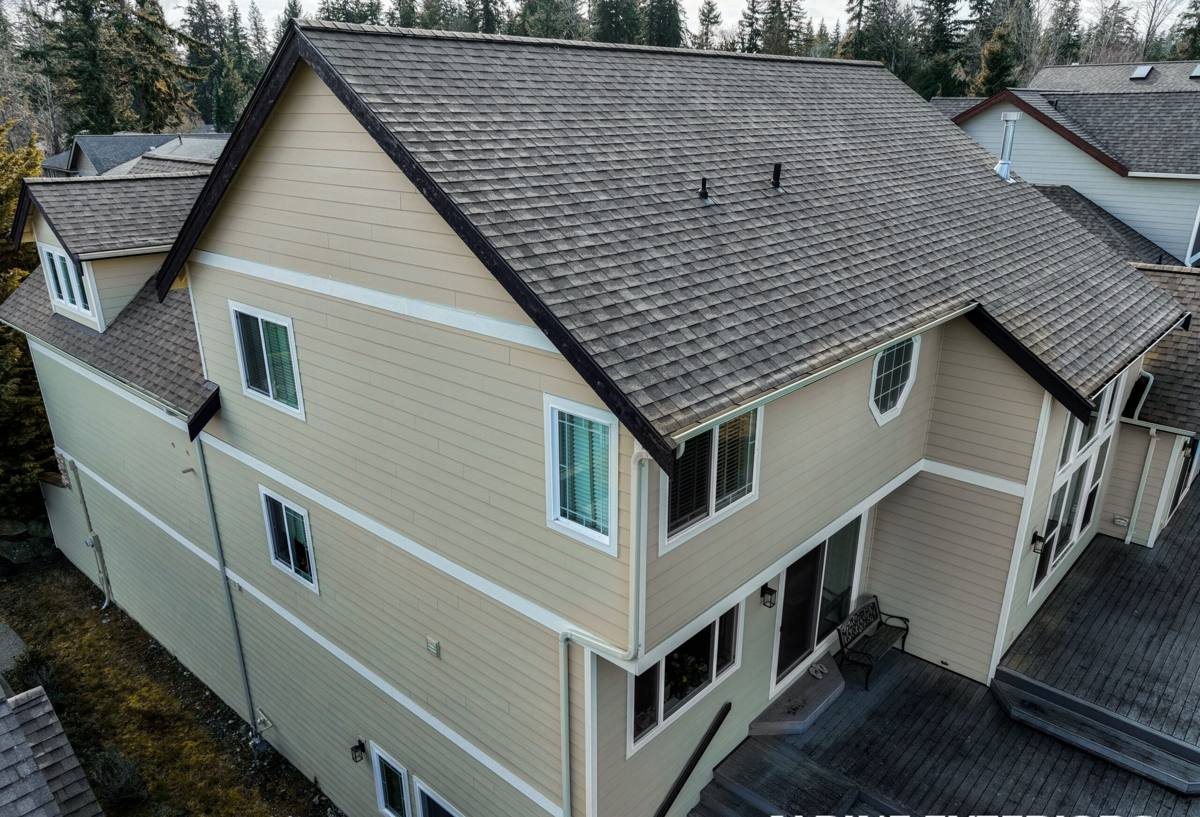
Common Siding Damage We See Around Cordata
Every neighborhood has its own damage pattern based on tree cover, sun exposure, and how homes were originally built. Around Cordata, the repair calls we get tend to fall into a handful of categories:
- Moisture intrusion at seams and butt joints — where boards meet without proper flashing or sealant, rain works its way behind the siding over time.
- Soft or rotting bottom courses — the lowest run of siding sits closest to splash-back from gutters, downspouts, and ground moisture, and it's usually the first place to fail.
- Moss and algae staining — cosmetic at first, but moss holds moisture against the surface and accelerates whatever's happening underneath.
- Cracked or warped boards — common on older wood and engineered wood products that were never rated for sustained wet exposure.
- Failed caulking around trim, windows, and penetrations — a small gap here is often the actual source of a stain or soft spot that shows up several feet away.
- Impact damage — cracked corners or dented panels from storms, falling branches, or yard work.
Why Small Problems Don't Stay Small Here
In a drier climate, a hairline crack or a gapped joint might sit for years without consequence. In Bellingham, that same gap is an entry point for months of sustained rain. Add in moss holding moisture against the surface, and a repair that would've taken an hour if caught early turns into replacing sheathing and framing if it's ignored through another wet season.
What a Correct Siding Repair Actually Involves
A repair that just covers the visible damage isn't a repair — it's a temporary patch. Here's what we actually check and do on every siding repair call.
Moisture and Cause Diagnosis
Before any board comes off, we look at what's behind the damage: is water tracking down from a failed flashing above, pooling from a gutter issue, or wicking up from grade contact? A moisture meter tells us whether the sheathing behind the siding is still dry, damp, or actively compromised. Repairing the surface without addressing the cause just buys you a year or two before the same spot fails again.
Removing Damaged Material the Right Way
Damaged boards need to come out cleanly, without tearing the weather-resistive barrier behind them or damaging adjacent boards that are still sound. If we find soft sheathing or compromised framing underneath, that gets addressed before anything new goes back on — patching over rotten sheathing is how small repairs turn into bigger problems down the road.
Correct Flashing and Sealing
Most of the repeat failures we see trace back to missing or incorrect flashing at seams, window heads, and butt joints. A proper repair re-establishes that drainage path so water sheds away from the wall instead of behind it — this is the step that's easiest to skip and most responsible for callbacks when it's skipped.
Matching the Finish
Nobody wants a repair that looks like a patch. Matching color and reveal on existing siding takes attention to detail, especially on factory-finished products where field-applied paint can look slightly different in certain light. We're upfront with homeowners about what will and won't match perfectly before we start.
Repair or Replace? An Honest Look at the Trade-Offs
Not every damaged wall needs full replacement, and not every repair is worth doing. Here's the general framework we use when advising Cordata homeowners:
| Factor | Targeted Repair | Full Replacement |
|---|---|---|
| Best for | Isolated damage, sound siding elsewhere, structure still dry | Widespread damage, repeated failures, or original material at end of life |
| Typical timeline | Days | Days to a couple weeks depending on scope |
| Cost pattern | Lower upfront, but repeat repairs add up over years | Higher upfront, resets the clock on the whole wall |
| Moisture risk | Only as good as what's found during removal — hidden damage elsewhere can remain | Full tear-off exposes the whole wall for inspection |
| Warranty | Limited to the repaired section and workmanship | Can carry full manufacturer product warranty |
If a home has one or two isolated problem spots and the rest of the siding is performing fine, repair is usually the right call. If we're finding the same failure pattern in multiple spots, or the siding is an older wood or composite product that's simply reached the end of its service life, we'll say so directly rather than keep billing for repairs on a wall that's not going to hold up.
How We Handle Repairs on Existing Siding
We install only James Hardie fiber cement siding as new work, and we're honest about why: it's a non-combustible product, it's engineered for wet Pacific Northwest climates, and its ColorPlus factory finish holds up to years of Bellingham rain and UV without the maintenance burden of paint-grade materials. That standard shapes how we approach repair work too.
When we're repairing a home that already has James Hardie siding, replacement sections are matched using genuine Hardie product, and we work carefully to get the reveal and color as close as possible to the existing wall. When we're repairing a home with an older wood, composite, or vinyl product, we'll do the repair job honestly and correctly — but if we're seeing repeated failure in that material, we'll tell you plainly that the underlying product is working against you, and what your options look like if you'd rather stop repairing and start replacing with something built to last in this climate.
Why We Don't Just Patch With "Whatever Matches"
It would be easier, short-term, to patch failing wood or composite siding with whatever's closest at the hardware store. We don't do that, because a patch using a weaker material than what's failing just guarantees the next repair call. Our name is on the work — we'd rather tell you the truth about a material's limits than sell you a patch we know won't hold.
Our Process for a Cordata Siding Repair
- On-site inspection. We look at the damage, the surrounding siding, flashing, gutters, and grading — not just the spot you called about.
- Moisture check. We test the sheathing behind the damaged area to see if the problem is cosmetic or structural.
- Honest scope and estimate. You get a clear explanation of what needs to happen, what it costs, and why — including whether repair or replacement makes more sense for that wall.
- Careful removal. Damaged material comes out without unnecessary disruption to sound siding nearby.
- Correct rebuild. Flashing, sealing, and fastening are done to spec, not just "close enough."
- Finish matching. New material is matched as closely as possible to the existing wall's color and reveal.
- Final walkthrough. We show you what was done and why, so you know the repair addressed the actual cause.
Signs Your Siding Needs a Look
A lot of siding damage in this climate stays hidden until it's significant. Here's what to watch for between now and your next dry stretch:
- Soft spots when you press on a board, especially near the bottom courses
- Paint or finish that's bubbling, peeling, or discoloring in one specific area
- Visible gaps or cracks at seams, corners, or around trim
- Persistent moss or algae buildup that keeps returning after cleaning
- Musty smell or visible staining on interior walls that back up to exterior siding
- Warping, buckling, or boards that look "wavy" from a distance
- Caulking that's cracked, shrunk, or missing around windows and penetrations
Why a Crew That Already Works Cordata Matters
Siding repair done right depends on understanding how a specific wall behaves in this specific climate — which direction it faces, how much shade it gets, whether nearby trees keep it damp longer than the rest of the block, and how salt air and rain patterns off the Bay tend to hit homes in this part of Whatcom County. A crew that's worked Cordata and the surrounding Bellingham neighborhoods has already seen how these houses age, which repair shortcuts don't hold up here, and which ones do. That local pattern recognition is the difference between a repair that lasts one season and one that lasts a decade.
It also matters for the practical side of the job — knowing which products actually perform in this weather, understanding local permitting where it applies, and being available for a follow-up visit if a repair needs a second look after a hard winter. That's not something an out-of-area crew passing through can offer.
Get an Honest Look at Your Siding
If you're dealing with a soft spot, a stain, a crack, or just siding that isn't holding up the way it used to, we're happy to come take a look. We'll tell you straight whether it's a simple repair, a bigger fix, or something you should start planning to replace — no pressure either way. Fill out the form below for a free estimate.