 Bellingham Exterior
 Building Decks for Edgemoor's Bluff-Top Climate
Edgemoor sits up on the bluff overlooking Bellingham Bay, under a heavy canopy of mature evergreens, with homes that get more shade, more wind off the water, and more standing moisture than most other parts of Bellingham. That combination is hard on a deck. It's not one problem — it's three at once: salt-laden air corroding metal, driving rain pushing water into places it shouldn't go, and a moss season that runs most of the year on anything that doesn't get direct sun. A deck built without accounting for all three will look fine for a season or two and then start showing problems in the fasteners, the ledger connection, or the boards themselves.
This page is about what we've learned building and repairing decks in this specific neighborhood — not a generic rundown of deck options. If you own a home in Edgemoor and you're thinking about a new deck or replacing a tired one, this is what actually matters for your property.
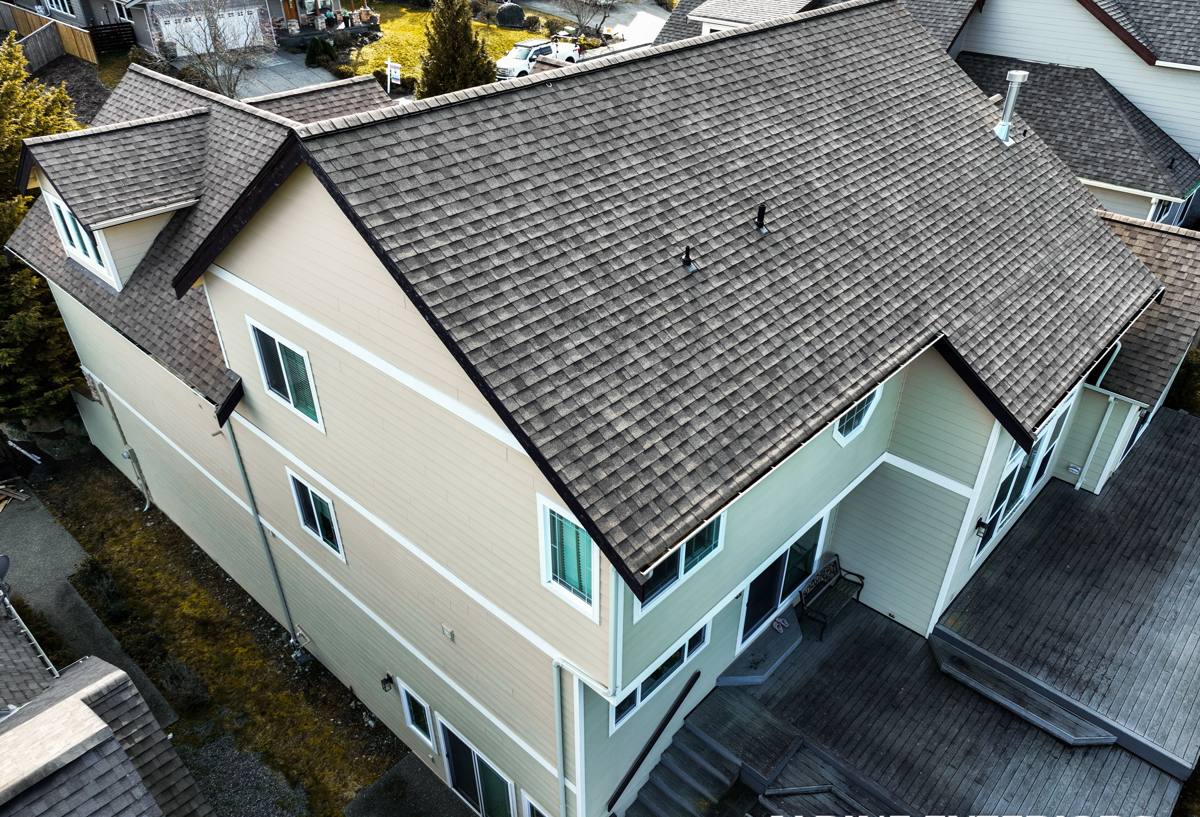
What Bellingham Bay's Salt Air Does to a Deck
Proximity to salt water changes what "good enough" hardware looks like. Standard galvanized fasteners and connectors that hold up fine twenty miles inland can start showing rust streaks within a couple of years on a bluff-top Edgemoor deck, especially on the side facing the water. Once a fastener starts corroding, it's not just cosmetic — the joint it's holding loses strength gradually, and you usually don't notice until something works loose.
Salt air also accelerates the breakdown of cheap or thin metal flashing, and it dulls and pits aluminum railings faster than inland installs. None of this means you need exotic materials for every deck in Edgemoor — plenty of homes here are set back from the water or shielded by tree cover and see less exposure. But it does mean the hardware spec should match the actual site, not a one-size-fits-all builder's default.
Our standard for exposed sites
On decks with direct bay exposure, we spec stainless steel or heavy-duty coated fasteners rated for coastal/marine use, and we're selective about which connector plates and post bases we'll use — some manufacturers' coatings hold up better than others in salt air, and we won't install a connector we don't trust for the exposure it's going to face.
Moss, Shade, and Drainage: The Tree Canopy Problem
The other defining feature of Edgemoor is the trees. Mature evergreen canopy is a big part of the neighborhood's character, but it means a lot of decks sit in partial or near-full shade most of the day, and needle litter builds up in gaps and corners faster than the wind can clear it. Combine that with our wet fall-through-spring stretch and you get moss and algae growth that doesn't just look bad — it holds moisture against the decking surface and makes boards slick and slippery underfoot.
A deck built without this in mind ends up with:
- Standing water and debris pockets where boards butt against the house or a post
- Moss establishing in board gaps that were cut too tight to self-clear
- Framing underneath that never fully dries out between rain events
- Slick spots on stairs and low-traffic corners that become a real fall hazard
Good drainage detailing and board spacing solve most of this before it starts. Where we can't solve it with design alone — heavy shade is heavy shade — we talk with the homeowner honestly about the maintenance that comes with the site, rather than promising a low-maintenance deck that shade and needle litter won't actually allow.
Choosing the Right Decking Material for This Neighborhood
There's no single "best" decking material — the right choice depends on how much sun and salt exposure your specific lot gets, your maintenance appetite, and your budget. Here's how the common options actually perform in an Edgemoor setting:
| Material | Salt air behavior | Shade/moss behavior | Maintenance |
|---|---|---|---|
| Pressure-treated wood | Fasteners need coastal-rated coating; wood itself is fine | Absorbs moisture, needs cleaning to prevent moss and mildew staining | Annual cleaning, re-sealing every 1-2 years |
| Cedar | Naturally decent rot resistance; still needs marine-grade fasteners near the water | Grays and can develop moss in deep shade without upkeep | Cleaning and oiling every 1-2 years to hold color and resist moisture |
| Composite decking | Handles salt air well; check fastener/hardware spec separately | Resists rot but can still get slick with algae film in heavy shade — surface texture matters | Periodic washing; no sealing or staining |
| PVC/capped polymer | Very good salt and moisture resistance | Similar algae-film consideration in deep shade as composite | Lowest upkeep of the common options; highest material cost |
Note that in heavy shade, even the "low maintenance" composite and PVC products can develop a slippery algae film — the material doesn't rot, but it's not immune to the moss season either. Board texture and periodic washing matter regardless of what you choose.
What a Correctly Built Deck Involves Here
The visible decking is the smallest part of what determines whether a deck lasts. Given this neighborhood's exposure, we pay particular attention to:
Ledger attachment and flashing
Where the deck ties into the house is the single most common failure point on any deck, anywhere — and it's worse here because of how much rain the ledger area sees off the bay. We flash it properly, with materials suited to sustained wet exposure, and we don't rely on caulk alone to keep water out of that joint.
Footings and post bases
Whatcom County's frost depth and Edgemoor's often uneven, wooded, or sloped lots mean footing depth and post base selection need to match the actual soil and grade, not a generic assumption. Post bases that hold the wood off the concrete and let water drain away from the post end matter more here than in a drier climate.
Board spacing and airflow underneath
Tight board gaps look clean on day one and trap debris and moisture from day two. We space and orient boards to let water and needle litter clear rather than collect, and we make sure there's enough airflow under the deck for the framing to actually dry out between storms.
Fastener and hardware selection
As covered above, this gets upgraded based on how exposed your specific site is — not applied uniformly regardless of location.
Our Process, Start to Finish
- Site visit and honest assessment. We look at your lot's actual sun, shade, and wind exposure — not just its neighborhood — and talk through what that means for material and hardware choices.
- Design and material selection. We walk through the tradeoffs in plain terms: what each material and layout choice costs you upfront versus in maintenance over time.
- Permitting. Most new decks and significant rebuilds in Bellingham require a building permit; we handle that process as part of the job.
- Demo and site protection, if replacing an existing deck. Careful removal, with attention to what condition the ledger and framing underneath are actually in before we build over them.
- Framing, footings, and ledger work. This is where the deck's actual lifespan gets decided, and where we spend the most care.
- Decking, railing, and finish work. Board spacing, fastening, and railing installed to the spec we set during design.
- Final walkthrough. We go over the finished deck with you, including what maintenance it actually needs given your site's exposure.
Permits and Whatcom County Code Considerations
Deck construction in Bellingham generally falls under building permit requirements once you're past a certain size or height, and guardrail, stair, and footing specs are governed by code regardless of size in many cases. Bluff-adjacent and sloped lots — common in Edgemoor — can also trigger additional review depending on grade and proximity to critical areas. We handle the permit application and inspection process as part of the build so you're not left navigating city and county requirements on your own.
Maintenance Checklist for Edgemoor Homeowners
Whatever material you choose, a few habits go a long way toward getting the full lifespan out of a deck in this climate:
- Clear needle litter and debris from board gaps and corners at least twice a year, more often under heavy canopy
- Wash the surface to remove algae film before it gets slick, especially on shaded sections and stairs
- Check fastener heads and railing connections yearly for early rust or looseness, particularly on the side facing the bay
- Keep gutters and downspouts near the deck clear so runoff isn't dumping extra water onto or under it
- Re-seal or re-stain wood decking on the schedule the product calls for — don't wait until it's visibly gray and dry
- Confirm airflow underneath the deck hasn't been blocked by stored items, planters, or overgrown landscaping
Why a Crew That Already Works Edgemoor Matters
A lot of what's in this page — the fastener upgrades, the drainage detailing, the honest conversation about what shade and moss will actually require from you — comes from having built and repaired decks on this specific bluff, in this specific weather, for this specific tree cover. A crew that hasn't worked salt-air, heavy-canopy sites before will often default to standard specs that are fine for most of Bellingham but undersized for Edgemoor's exposure. That shows up later as premature rust, a soft ledger connection, or a deck that's slick half the year. Knowing the neighborhood ahead of time means fewer surprises during the build and a deck that's actually built for where it sits.
If you're considering a new deck or need an honest read on whether an existing one is holding up, we're happy to take a look. Fill out the form below for a free, no-pressure estimate.