 Bellingham Exterior
 Deck Building in York: Built for Bellingham's Weather, Not Just Its Views
Homes in the York area sit close enough to the water and the wet Whatcom County air that a deck built to a generic national spec often struggles here within a few years. Salt-tinged moisture, long stretches of driving rain, and a moss season that can run from fall through spring put more stress on a deck's structure and surface than most homeowners expect. A deck that looks fine going in can hide problems in the framing, fasteners, or drainage that only show up once the wood has had a couple of wet winters to work on it.
Bellingham Exterior Company builds and repairs decks with this climate as the starting assumption, not an afterthought. That means paying attention to how water moves off the deck, how the structure breathes underneath, and which fasteners and connectors will actually hold up in salt-influenced, high-moisture air over the long run.
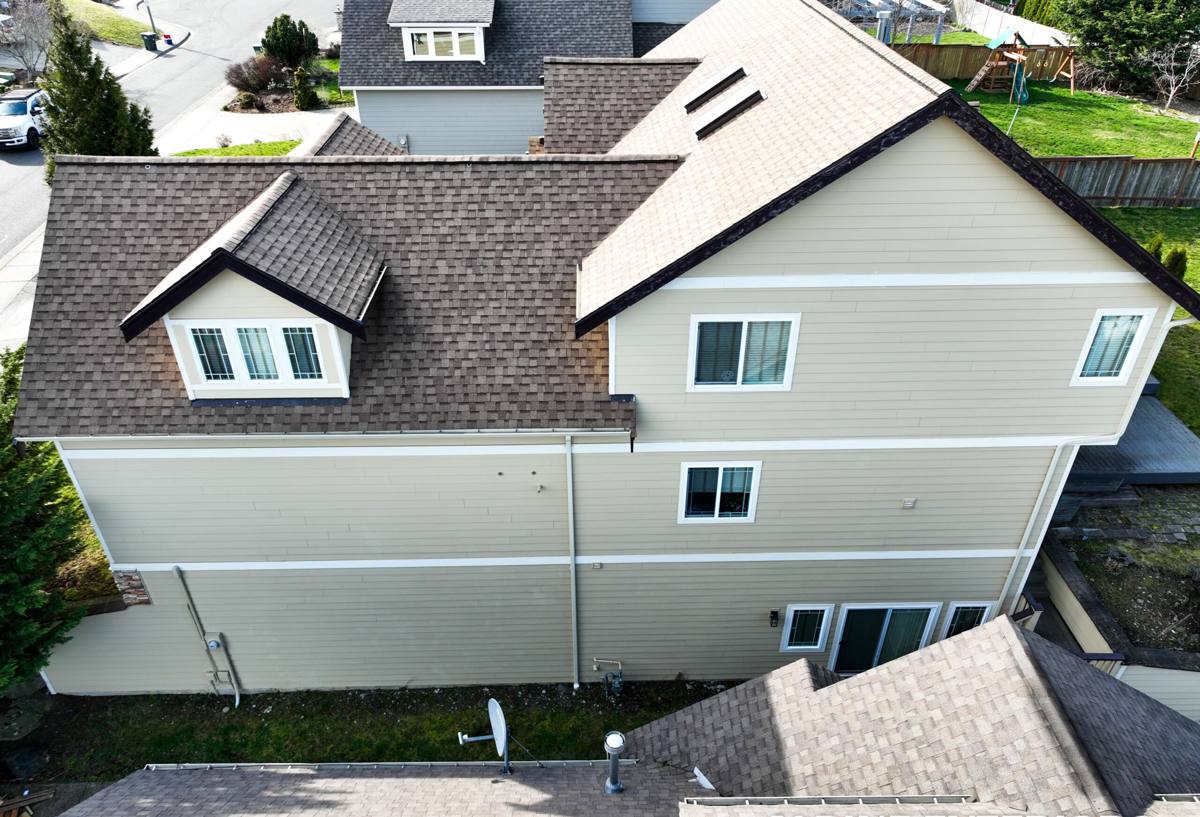
What York's Climate Actually Does to a Deck
Salt Air and Metal Fatigue
Properties nearer Bellingham Bay and the surrounding shoreline deal with airborne salt that accelerates corrosion on anything metal — nails, screws, joist hangers, and railing hardware. Standard galvanized fasteners can start showing rust streaks and weakening well before a deck's wood components are ready to be replaced. This is one of the most common reasons we get called out to look at a deck that's only ten or twelve years old but has hardware failing underneath.
Driving Rain and Water Intrusion
Whatcom County rain doesn't always fall straight down — wind-driven rain gets pushed sideways into ledger connections, under railing posts, and into any gap where flashing was skipped or done poorly. Once water gets behind a ledger board or into a post base and can't drain back out, rot starts from the inside where you can't see it until the damage is significant.
Moss, Algae, and Slick Surfaces
A long moss season means any deck surface that stays shaded or doesn't drain well will grow moss and algae, which is more than cosmetic — it holds moisture against the decking and turns stairs and walking surfaces slippery for a good part of the year. Board spacing, surface texture, and sun exposure all affect how bad this gets.
What a Correctly Built Deck Looks Like Here
A deck built for York's conditions isn't a different product line — it's the same deck built with a few details treated as non-negotiable rather than optional upgrades.
- Ledger board flashed properly where it meets the house, with the flashing lapped correctly so water sheds outward, not into the wall
- Joist hangers, structural screws, and hardware rated for coastal/high-moisture exposure, not standard interior-grade galvanized
- Post bases that hold posts up off the deck surface or footing, so end grain isn't sitting in standing water
- Consistent board gaps and a slight slope built into the frame so water actually runs off instead of pooling
- Joist tape or a similar barrier on top of framing members to slow moisture absorption into the wood itself
- Railing posts through-bolted into the frame, not just lag-screwed into a single joist
None of this is exotic. It's standard good practice that gets skipped when a job is priced and built to the bare minimum a permit will allow.
Decking Material Choices for This Area
There isn't one "right" decking material for every York home — the right choice depends on budget, how much maintenance the owner wants to do, and how exposed the deck is to sun, shade, and moisture. We'll walk through the honest trade-offs rather than push whatever has the best margin.
| Material | Moisture/Moss Behavior | Maintenance | Typical Lifespan |
|---|---|---|---|
| Pressure-treated wood | Absorbs moisture readily; needs sealing to resist moss and graying | Annual cleaning, periodic sealing/staining | 15-20 years with upkeep |
| Cedar | Naturally rot-resistant but still needs finish upkeep in wet shade | Regular cleaning and refinishing | 20-25 years with upkeep |
| Composite decking | Doesn't absorb water the way wood does, but can still grow surface algae/moss if shaded and unwashed | Occasional washing, no staining/sealing | 25-30+ years, manufacturer-dependent |
| PVC/capped composite | Best moisture resistance of the common options; least prone to holding moss | Lowest maintenance of the group | 25-30+ years, manufacturer-dependent |
Composite and capped products cost more up front but make sense for owners who don't want to keep up with sealing every year or two, especially on decks with shaded, damp spots that stay wet longer after storms. Wood costs less initially and can be the right call for a smaller deck or a homeowner who's committed to the annual maintenance.
Structure Underneath: Where Problems Actually Start
Most deck failures we see in this area start below the decking boards, not on the surface. Framing that isn't ventilated properly holds moisture against the wood; footings that were undersized or set too shallow shift over time in saturated soil; ledger connections without real flashing let water track into the house rim joist. A deck can have brand-new composite boards on top and still be sitting on a frame that's quietly rotting.
When we build new, we treat the substructure as the part of the job that determines whether the deck lasts 15 years or 30. When we're called for a repair, the first thing we check is what's happening underneath before we talk about surface materials at all.
Our Process for a York Deck Project
- On-site assessment: We look at drainage, sun/shade exposure, existing structure condition (for repairs or replacements), and how the deck ties into the house.
- Honest scope and estimate: We explain what's actually needed structurally versus what's a material upgrade choice, so you're not guessing at why the number is what it is.
- Framing and flashing first: Ledger flashing, joist hangers, post bases, and structural fasteners go in to a coastal-exposure standard regardless of which decking material is chosen.
- Decking installation: Board spacing and slope are set to shed water, not just look even on installation day.
- Railings and finish work: Hardware rated for our moisture and salt exposure, finished to match the rest of the exterior work if we're also handling siding, painting, or other trim.
- Walkthrough: We go over maintenance expectations specific to the material chosen — what needs annual attention and what doesn't.
Repair, Rebuild, or Replace?
Not every deck problem means starting over. If the framing is sound and the issues are limited to surface boards, rot at a few isolated points, or aging hardware, targeted repair is usually the right call and the more cost-effective one. If the ledger connection has been leaking for years, if multiple footings have shifted, or if the joists show soft spots across a wide area, patching the surface just delays a bigger repair later — at that point a rebuild of the structure (sometimes keeping the footings, sometimes not) makes more sense than repeated repairs.
We'll tell you plainly which category your deck falls into rather than defaulting to "replace everything" as the easy answer.
A Practical Maintenance Checklist for York Decks
- Clear leaves and debris from board gaps before fall rains set in, so water and moss don't get trapped
- Rinse or lightly scrub shaded, moss-prone areas a couple of times a year
- Check railing posts and stair connections annually for looseness — often the first sign of a hardware or framing issue
- Reseal wood decking on the manufacturer's recommended schedule, not just when it looks faded
- Look underneath the deck once a year for water staining, soft wood, or rust streaks near hardware
- Keep gutters and downspouts near the deck clear so roof runoff isn't dumping extra water onto or under it
Why a Local Crew Matters for This Job
A contractor who works across Whatcom County and specifically in areas like York already knows which details matter here — how far to carry flashing past a ledger board given our rain patterns, which hardware actually holds up near the water, and how much slope to build in given how long boards stay wet after a storm. That's different knowledge than a crew building decks in a dry inland climate and applying the same specs everywhere. Being local also means we're around for warranty work, seasonal maintenance questions, or a follow-up repair years down the line — not a name on an invoice from a job that moved on to the next region.
Let's Look at Your Deck
Whether you're planning a new deck for a York-area property, need a straightforward repair, or aren't sure if what you have needs patching or replacing, we're happy to come take a look. There's no pressure and no cost to get an honest assessment and a written estimate — just fill out the form below to get started.