 Bellingham Exterior
 Deck Repair Built Around How Sehome Actually Weathers
Sehome sits close enough to Bellingham Bay that salt-laden air reaches its decks year-round, and its mix of older craftsman homes and infill construction means we see decks from almost every decade of building practice. Add in Whatcom County's long wet season and the moss that comes with it, and a deck in this neighborhood is working harder than the same structure would in a drier inland climate. We repair decks in Sehome regularly, and the failure patterns are consistent enough that we can usually tell what's wrong with a deck before we've pulled a single board.
This page covers deck repair specifically — not full replacement, not new builds — for homeowners in Sehome who have a deck that's still structurally sound at its core but showing wear, damage, or early rot that needs to be addressed before it becomes a bigger job.
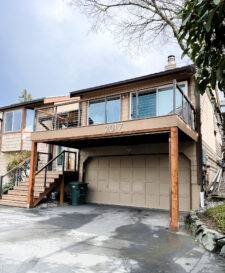
Why Salt Air, Rain, and Moss Hit Sehome Decks Hard
Salt Air and Fasteners
Proximity to the bay means airborne salt settles on exposed wood and metal. Over years, it accelerates corrosion in nails, screws, and joist hardware — especially fasteners that weren't rated for exterior or coastal exposure to begin with. A deck can look fine on the surface while the fasteners holding it together are quietly weakening underneath.
Driving Rain and Ledger Connections
Whatcom County's rain doesn't just fall straight down — wind-driven rain gets pushed sideways into ledger boards, stair stringers, and the gap where decking meets the house. That's the single most common place we find hidden rot, because it's the hardest area for a homeowner to inspect and the easiest place for water to collect without draining.
The Long Moss Season
Moss doesn't just look bad — it holds moisture against the wood surface for weeks at a time, well past when the deck would otherwise have dried out. On shaded sides of a house, or under overhangs, moss can keep boards damp almost continuously from fall through spring, which is exactly the condition that breaks down wood fiber and paint or stain film fastest.
Signs a Sehome Deck Needs Repair
Some deck problems are cosmetic and can wait. Others affect safety and shouldn't. Here's how we sort them during an inspection:
- Soft or spongy decking boards — usually localized rot that can often be replaced board-by-board if caught early.
- Rail posts that flex or wiggle — a common safety issue, often caused by a failed post-to-frame connection rather than the post itself.
- Rust streaking around fastener heads — a sign the hardware is corroding, which matters more than it looks since it affects structural holding power.
- Gaps or separation at the ledger board — where the deck meets the house; this is a priority repair, not a cosmetic one.
- Persistent moss or algae in the same spots every year — tells us where moisture is draining poorly and where rot is most likely developing underneath.
- Stair stringers that feel uneven or bouncy — often the first visible sign of rot in a component that's otherwise hard to see.
What a Correct Deck Repair Actually Involves
It Starts Underneath, Not on the Surface
A repair that only replaces the boards you can see, without checking the framing underneath, is a repair that will need to be done again soon. We check joists, the ledger connection, and post bases before deciding on scope, because in our experience the visible damage on a deck is often smaller than the damage hiding beneath it.
Matching Fasteners and Hardware to the Exposure
Given the salt air in this part of Bellingham, we use fasteners and connectors rated for coastal or wet exterior exposure rather than standard hardware. It costs a little more up front and saves the homeowner from doing this same repair again in a few years once ordinary hardware corrodes.
Flashing and Drainage, Not Just Sealant
Caulk and sealant break down and need reapplication; proper flashing at the ledger and any butt joints doesn't. Where we can improve drainage — regrading a slight slope in the decking, adding flashing tape, or opening up a joist bay that's trapping water — we do, because it reduces how often the repair needs revisiting.
Matching Materials Honestly
When we replace boards on an existing wood deck, we match species and dimension as closely as possible so the repair doesn't stand out and the new wood weathers at a similar rate to the old. On composite decks, we source matching or close-matching color and profile where the manufacturer still supports it, and we're upfront with homeowners when an exact match isn't available — better to know that before the work starts than after.
Repair or Replace: How We Help You Decide
Not every deck problem calls for full replacement, and not every deck is worth repairing indefinitely. The table below reflects the general factors we weigh — every deck is different, so this is a starting point for a conversation, not a formula.
| Factor | Leans Toward Repair | Leans Toward Replacement |
|---|---|---|
| Framing condition | Joists and ledger are sound, damage is isolated | Widespread rot in joists or ledger connection |
| Age of structure | Under 15-20 years, built to a reasonable standard | Original construction is old or was under-built |
| Extent of damage | A few boards, one rail section, or one stair run | Damage recurring across multiple areas each year |
| Fastener condition | Isolated corrosion, easily replaced | Corrosion throughout the connection points |
| Homeowner plans | Staying in the home, deck otherwise meets needs | Wanting a different size, layout, or material |
Our Deck Repair Process
1. On-Site Inspection
We walk the full deck, check the ledger connection, test rail posts for movement, and look underneath at joists and post bases wherever we can access them. This tells us whether we're looking at a straightforward repair or something more involved.
2. A Clear, Honest Scope
Before any work starts, we explain what we found, what needs to be fixed now versus what can be monitored, and roughly what it will involve. We'd rather a homeowner know the real scope upfront than be surprised partway through.
3. The Repair Itself
We remove and replace only what's actually damaged, upgrade fasteners and hardware to exposure-rated materials where it matters, and correct any drainage or flashing issues we find along the way rather than just patching over them.
4. Finish and Maintenance Guidance
Once the repair is complete, we walk the homeowner through what they can do — and how often — to slow down the next round of moss growth and moisture damage, since a repair lasts longer when it's paired with a little regular upkeep.
Why a Crew That Already Works in Sehome Matters
Deck repair in a coastal, moss-heavy climate like Bellingham's isn't the same trade as deck repair in a dry inland town. A crew that regularly works this neighborhood already knows which fasteners hold up against the salt air coming off the bay, which orientations collect the most moss through the wet season, and where ledger rot tends to hide on the house styles common in Sehome. That local pattern recognition means less time spent diagnosing and more time spent fixing the actual problem — and fewer surprises once the boards come off.
Simple Maintenance That Extends a Repair's Life
A repaired deck will hold up longer with some basic seasonal attention. This is a general checklist, not a substitute for a professional inspection if something feels off:
- Sweep debris and standing leaves off the deck surface before the wet season sets in, so they don't trap moisture against the boards.
- Rinse or gently brush moss off shaded areas periodically rather than letting it build up over winter.
- Check that gaps between boards haven't filled with debris, which blocks drainage underneath.
- Look at the ledger board area where the deck meets the house once or twice a year for gaps, staining, or soft spots.
- Reapply sealant or stain on the schedule recommended for the product, since a failed finish exposes wood to moisture much faster.
- Test rail posts by hand periodically — any new flex is worth having looked at before it becomes a safety issue.
Get a Free, No-Pressure Estimate
If your deck in Sehome has soft boards, a shaky rail, recurring moss, or you're just not sure whether it needs a repair or a closer look, we're happy to come take a look and give you an honest read on what's actually going on. There's no pressure and no cost to get an estimate — just a straight answer about what your deck needs. The form below is the easiest way to get started.