 Bellingham Exterior
 Why South Hill Decks Wear Out Faster Than You'd Expect
South Hill sits up in the trees and fog above downtown Bellingham, and that elevation and tree cover come with a trade-off. The same shade and view that make the neighborhood desirable also mean decks up here get less direct sun and more standing moisture than decks out in the open. Add in the salt air drifting up from Bellingham Bay, the long stretches of driving rain that define a Whatcom County winter, and a moss season that can run from October through May, and you have a recipe for decks that look fine on the surface while quietly failing underneath.
We've worked on enough decks in this neighborhood to know the pattern: homeowners notice a soft spot underfoot, a railing that wiggles a little more than it used to, or a green film that keeps coming back no matter how many times they scrub it. Individually those seem minor. Together, they usually mean the deck's moisture management has broken down somewhere, and it's worth a real look before a small repair turns into a full rebuild.
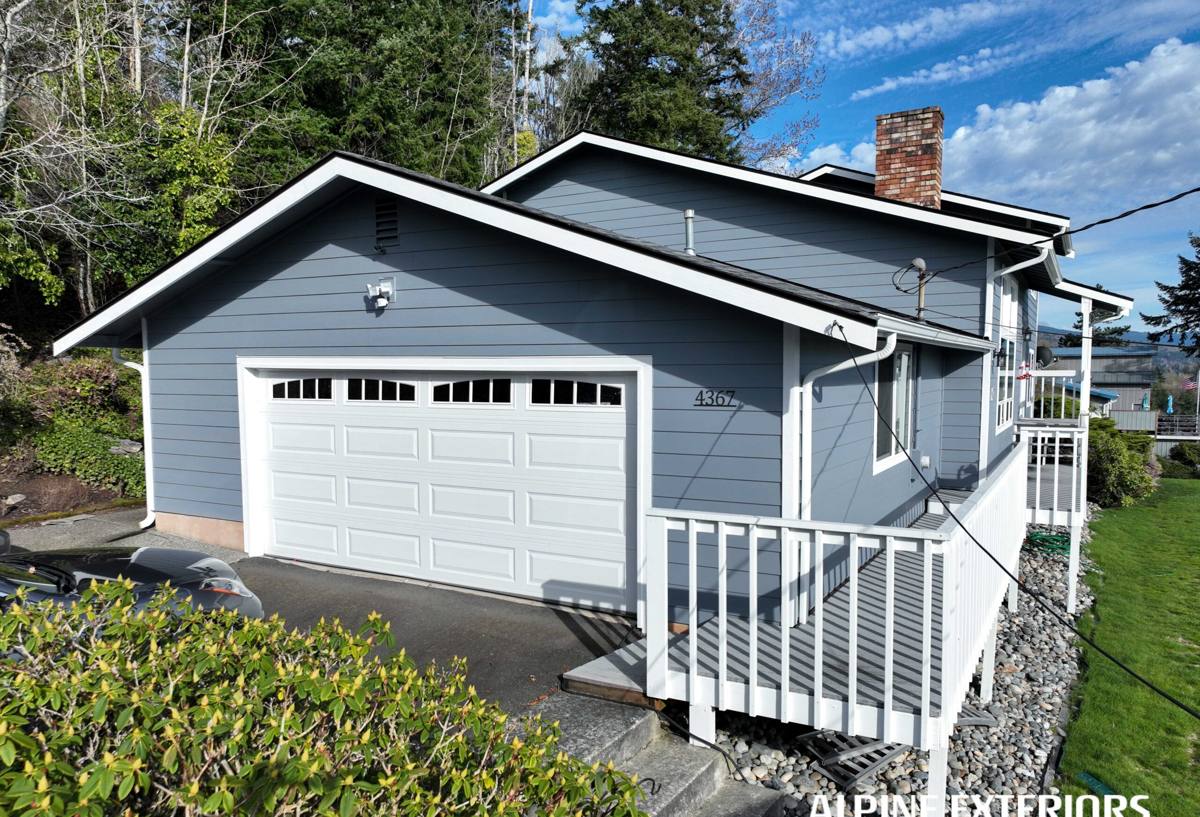
Common Deck Problems We See in South Hill
Moss and Algae Buildup
Shaded, north-facing decks in this part of Bellingham rarely get enough sun to dry out between rain events. Moss and algae take hold in the wood grain and between boards, holding moisture against the surface long after the rain has stopped. Left alone, this accelerates rot and makes the deck surface genuinely slick and dangerous, not just unsightly.
Fastener Corrosion
Salt-laden air from the bay corrodes standard fasteners faster than most homeowners expect, especially on decks with any western or northern exposure. We regularly find nails and screws that have rusted enough to weaken their hold, even though the surrounding wood still looks solid. Corroded fasteners are one of the most common reasons a deck develops movement or squeaking before the boards themselves are actually failing.
Ledger Board and Flashing Failures
The ledger board — where the deck attaches to the house — is the single most important structural connection on most decks, and it's also the part most exposed to wind-driven rain in this climate. When flashing is missing, damaged, or was never installed correctly, water gets behind the ledger and rots both the ledger and the rim joist it's attached to. This is a structural issue, not a cosmetic one, and it's one of the first things we check.
Poor Drainage Underneath
Decks built low to the ground or over poorly graded soil trap moisture underneath, especially through a wet Bellingham winter. That trapped moisture keeps joists and posts damp for weeks at a time, which is exactly the condition wood rot needs to take hold.
What a Correct Repair Actually Involves
A proper deck repair isn't just replacing the boards that look bad. It starts with figuring out why those boards failed in the first place, because replacing surface material without addressing the underlying moisture problem just buys a few more years before the same issue comes back.
- Structural inspection of ledger, joists, beams, and posts — not just the visible decking surface
- Probing for soft or spongy wood at connection points, which is often hidden under paint or stain
- Checking flashing at the ledger board and any other point where the deck meets the house
- Assessing fastener condition, especially on older decks using standard (non-marine-grade) hardware
- Evaluating drainage and ventilation underneath the deck structure
- Checking railing and guardrail post attachment for looseness or rot at the base
Only after that inspection do we know whether a section needs new boards, new joists, re-flashing, refastening with corrosion-resistant hardware, or some combination. We'd rather spend the time up front finding the real problem than come back out in a year for the same complaint.
Repair or Replace? How We Help You Decide
Not every deck with problems needs to be torn out and rebuilt. But not every deck is worth patching, either. The decision usually comes down to how much of the structural frame — as opposed to just the surface boards — has been compromised.
| Factor | Usually Points to Repair | Usually Points to Replacement |
|---|---|---|
| Ledger board condition | Solid, properly flashed | Rotted or improperly flashed |
| Joists and beams | Sound, no soft spots | Widespread soft or rotted framing |
| Surface boards | Isolated cupping, splitting, or moss staining | Rot or splitting across most of the deck |
| Fasteners | A few corroded, easy to replace | Corrosion widespread throughout structure |
| Age of structure | Under 15-20 years, built to code | Older, undersized, or non-conforming framing |
We'll walk you through exactly what we find and why we're recommending what we're recommending — we're not going to sell a full rebuild when a targeted repair will genuinely hold up, and we're not going to patch something that's going to fail again next winter.
Our Deck Repair Process
1. On-Site Inspection
We start underneath the deck as much as on top of it. Most of what actually matters — joist condition, ledger attachment, drainage — is only visible from below or by probing suspect areas with a screwdriver or moisture meter.
2. Honest Scope and Estimate
You get a clear explanation of what's actually wrong, what we recommend fixing, and a straightforward estimate. No pressure to upgrade to a full replacement if repair is the right call.
3. Structural Repairs First
Any compromised framing, ledger, or flashing gets addressed before we touch the surface. There's no point installing new decking over a joist that won't hold it in five years.
4. Surface Repair or Replacement
Damaged boards are replaced, refastened with corrosion-resistant hardware appropriate for our coastal air, and set with proper spacing for drainage and seasonal wood movement.
5. Cleanup and Finish
Moss and algae staining is cleaned from remaining boards, and we'll talk through a realistic finishing or sealing schedule based on the deck's exposure and material.
Materials That Actually Hold Up Here
Fasteners
Given the salt air off the bay, we use stainless steel or hot-dip galvanized fasteners rated for exterior and coastal exposure rather than standard electroplated hardware. It costs a little more up front, but replacing rusted-out fasteners on a five-year-old deck is money nobody wants to spend twice.
Decking Material Trade-Offs
Pressure-treated lumber is affordable and easy to repair in sections, but it needs regular sealing to perform well through a wet Bellingham winter, and it's more prone to moss growth in shaded spots if left unmaintained. Composite decking resists moss and rot better and needs no staining, but it's a bigger investment, board profiles vary by manufacturer, and damaged sections generally need full-board replacement rather than a patch. Cedar sits in between — naturally rot-resistant and attractive, but it weathers and requires upkeep. We'll talk through which fits your deck, your budget, and how much maintenance you actually want to do.
Flashing and Fasteners at the Ledger
This is not a place to cut corners. Proper metal flashing, correctly lapped and sealed at the ledger board, is what keeps water from getting behind the house's rim joist. We treat this connection as the top priority on every repair, regardless of how the rest of the deck looks.
Keeping a South Hill Deck Healthy Between Repairs
A repair only holds up as long as the maintenance around it. Because of the shade and moisture typical up here, South Hill decks generally need more frequent attention than a deck out in full sun on flatter ground.
- Sweep debris and standing needles off the deck regularly, especially under trees
- Clean moss and algae off boards as soon as it appears rather than letting it establish
- Check and clear drainage gaps between boards each fall before the rains set in
- Inspect railings and posts for movement once a year
- Reseal or restain wood decking on the schedule appropriate to the product — often more frequently in shaded, damp areas than manufacturer minimums suggest
- Look underneath the deck occasionally for standing water or damp soil that isn't draining away
Why It Matters to Hire a Crew That Already Works South Hill
Deck problems here follow patterns that are different from what you'd see on a deck in a drier, sunnier part of Washington. A crew that works this neighborhood regularly already knows which exposures tend to hold moisture, which older fastener types are failing across the area, and what flashing details actually stand up to a full Whatcom County winter. That local pattern recognition speeds up diagnosis and helps avoid repairs that look right on paper but don't hold up to our specific climate.
We also understand the practical side of working on South Hill properties — the terrain, tree cover, and access considerations that come with the neighborhood's hillside lots. That familiarity means fewer surprises and a repair that's planned around how your specific property actually behaves through the wet season, not a generic checklist.
Get a Straightforward Look at Your Deck
If your deck has soft spots, persistent moss, a wobbly railing, or you just haven't had it checked in a few years, we're happy to come take an honest look. The estimate is free, there's no pressure, and you'll walk away knowing exactly what's going on and what your real options are. Use the form below to get started.