 Bellingham Exterior
 The Columbia neighborhood sits close enough to Bellingham Bay that salt air is part of daily life, and that changes what a deck needs to survive here. Add in Whatcom County's long, wet winters and the moss season that follows them, and you've got a climate that's hard on fasteners, hard on framing, and hard on any decking material that wasn't built with moisture in mind. If your deck is starting to feel soft underfoot, or you've noticed boards cupping and railings that wiggle more than they used to, replacement is often the more honest answer than another round of patching.
Why Columbia's Location Puts Extra Stress on a Deck
Homes in and around Columbia get a mix of exposures — some sit close enough to catch salt-laden air off the bay, others are tucked under mature trees that keep decks shaded and damp for much of the year. Both situations accelerate wear, just in different ways. Salt air speeds up corrosion on fasteners and metal connectors. Shade and tree cover keep moss and algae established on decking boards long after the rain has stopped, which keeps the wood underneath damp even on a dry afternoon.
Bellingham's driving rain — wind-blown, not straight down — also finds its way into gaps that would stay dry in a calmer climate. That means ledger boards, stair stringers, and the framing tucked under the decking surface take on water that a homeowner never sees until a board finally gives way.
Moss Season Isn't Just Cosmetic
Moss holds moisture against wood and composite surfaces for weeks at a time. On decking, that moisture doesn't just sit on top — it works into board gaps, screw holes, and any spot where the protective coating or cap has worn thin. Over several moss seasons, that repeated soaking is what turns a structurally sound deck into one with soft spots and rot pockets, often well before the wood looks obviously bad from a distance.
Salt Air and Hardware
Standard hot-dip galvanized fasteners hold up fine in a lot of the country. Closer to the water, they corrode faster, and corroded fasteners are one of the more common hidden failure points we find when we pull up an old deck. It's rarely the decking boards that fail first structurally — it's the screws, joist hangers, and post connectors underneath.
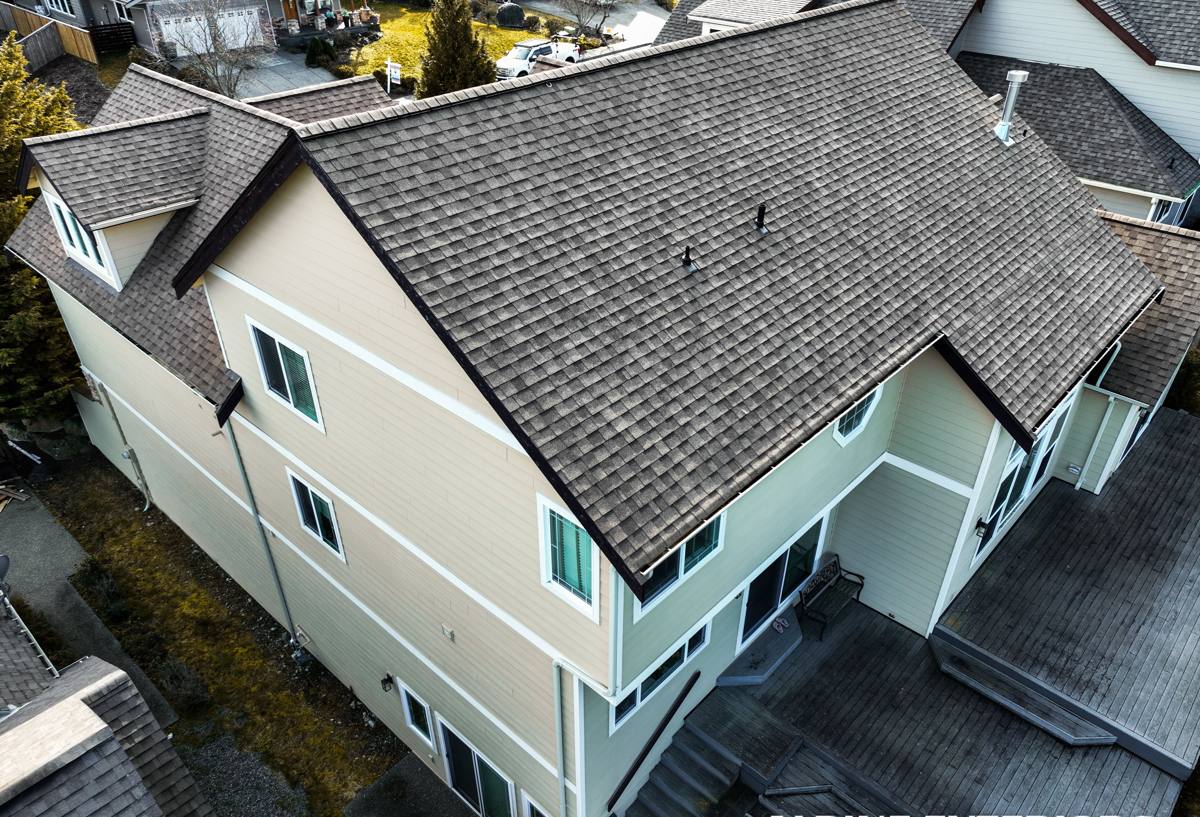
Signs a Columbia Deck Needs Replacement, Not Repair
Repair makes sense when the problem is isolated — a cracked board, a loose railing baluster, a single joist with surface rot. Replacement makes sense once the damage is systemic. Here's what we look for during an assessment:
- Soft or spongy decking boards in more than one area, not just near a downspout or planter
- Rust staining or visible corrosion around joist hangers and post bases
- A ledger board that's separating from the house or shows water staining on the siding above it
- Railings or stair stringers that flex or wobble under normal weight
- Persistent moss or algae growth that comes back within weeks of cleaning
- Visible daylight or gaps where framing meets the house — a common entry point for wind-driven rain
- A deck more than 20 years old that has never had fasteners or hardware upgraded
If two or three of these show up together, patch repairs usually end up costing more over a few years than a single, correctly built replacement.
What a Correct Deck Replacement Actually Involves
A deck is only as good as what's underneath it. Replacing the visible boards without addressing the framing, flashing, and connections is how decks end up needing another replacement in half the time they should last.
Ledger and Flashing
The ledger board — where the deck attaches to the house — is the single most important connection on the structure, and it's also the one most exposed to wind-driven rain in this climate. A correct install uses proper flashing that directs water away from the house framing, not just a bead of sealant hoping to hold up through a Bellingham winter.
Framing and Fasteners
We build with fasteners and connector hardware rated for coastal and high-moisture exposure, not the minimum-grade galvanized hardware that's fine inland but corrodes faster this close to the bay. Joist hangers, post bases, and structural screws all get selected with that exposure in mind.
Drainage and Airflow
Standing water and trapped moisture under a deck are what invite rot and moss to take hold in the first place. Correct spacing, grading underneath the deck, and attention to how water sheds off the surface all matter more here than in a drier climate, where a builder can get away with cutting corners on drainage.
Decking Surface
The visible boards get the most attention from homeowners, but they're the last decision, not the first. Material choice should follow from how much moss exposure the site gets, how much upkeep the homeowner wants to do, and the budget — not just appearance.
Decking Material Options for This Climate
There's no single right answer for every Columbia property — a sunny, open lot and a shaded, tree-covered one call for different trade-offs. Here's how the common options compare for moss-prone, salt-air conditions:
| Material | Moisture & Moss Resistance | Maintenance | Typical Lifespan |
|---|---|---|---|
| Pressure-treated wood | Good if sealed regularly; moss gets a foothold if maintenance lapses | Annual cleaning and periodic sealing | 15-20 years |
| Cedar | Naturally moisture-resistant but still needs sealing in this climate | Regular cleaning and re-sealing | 15-20 years |
| Composite decking | Very good; caps resist moisture but grooved boards can still trap moss debris | Occasional washing, no sealing | 25-30 years |
| PVC decking | Best moisture resistance; fully synthetic, doesn't absorb water | Low; occasional washing | 30+ years |
Composite and PVC cost more up front, but in a climate where moss and moisture are working against the deck year-round, the reduced maintenance and longer lifespan often even out the math within 10-15 years. Wood is a legitimate choice for homeowners who prefer the look and don't mind the upkeep — we're straightforward with clients about what that upkeep actually requires, rather than downplaying it to close the sale.
Permits and Whatcom County Code
Most full deck replacements in Bellingham require a building permit, particularly when the structure is being rebuilt rather than just re-decked, or when it's more than 30 inches off the ground. Code requirements that commonly come up include:
- Guardrail height and baluster spacing on elevated decks
- Footing depth and frost protection for post supports
- Proper ledger attachment and flashing, which inspectors specifically check given how much moisture this region sees
- Stair rise and run consistency
We handle the permit process as part of the job rather than leaving it to the homeowner to sort out — it's a routine part of doing this correctly in Bellingham, not an extra hurdle.
Our Process for a Columbia Deck Replacement
1. On-Site Assessment
We look at the framing, not just the surface boards — pulling a few boards if needed to check joists, the ledger connection, and hardware condition. This is where we tell you honestly whether you need a repair or a full replacement.
2. Plan and Quote
You get a clear, written scope covering materials, framing work, permit handling, and timeline, with material options laid out so you can weigh cost against maintenance and lifespan for your specific site conditions.
3. Build
Demolition, framing repair or replacement, correct flashing and drainage detailing, then the decking surface and railings. We sequence the work to minimize how long the structure sits open to weather, which matters in a climate where an unexpected rain shower is never far off.
4. Final Walkthrough
We walk the finished deck with you, cover basic care for whatever material you chose, and make sure railings, stairs, and fasteners all check out before we consider the job done.
Why a Locally Experienced Crew Matters Here
A deck built to a generic national standard isn't necessarily built for Bellingham. A crew that already works in Columbia and the surrounding neighborhoods knows which fastener grades hold up against the salt air off the bay, which lots need extra drainage attention because of tree cover and shade, and how Whatcom County inspectors expect ledger flashing and guardrails to be handled. That local knowledge shows up in details a generic crew might miss — and those details are exactly what determines whether a deck lasts 15 years or 30.
If your deck in Columbia is showing soft spots, moss that won't quit, or hardware that's seen better days, we're happy to take a look and give you a straightforward, no-pressure estimate — just fill out the form below to get started.