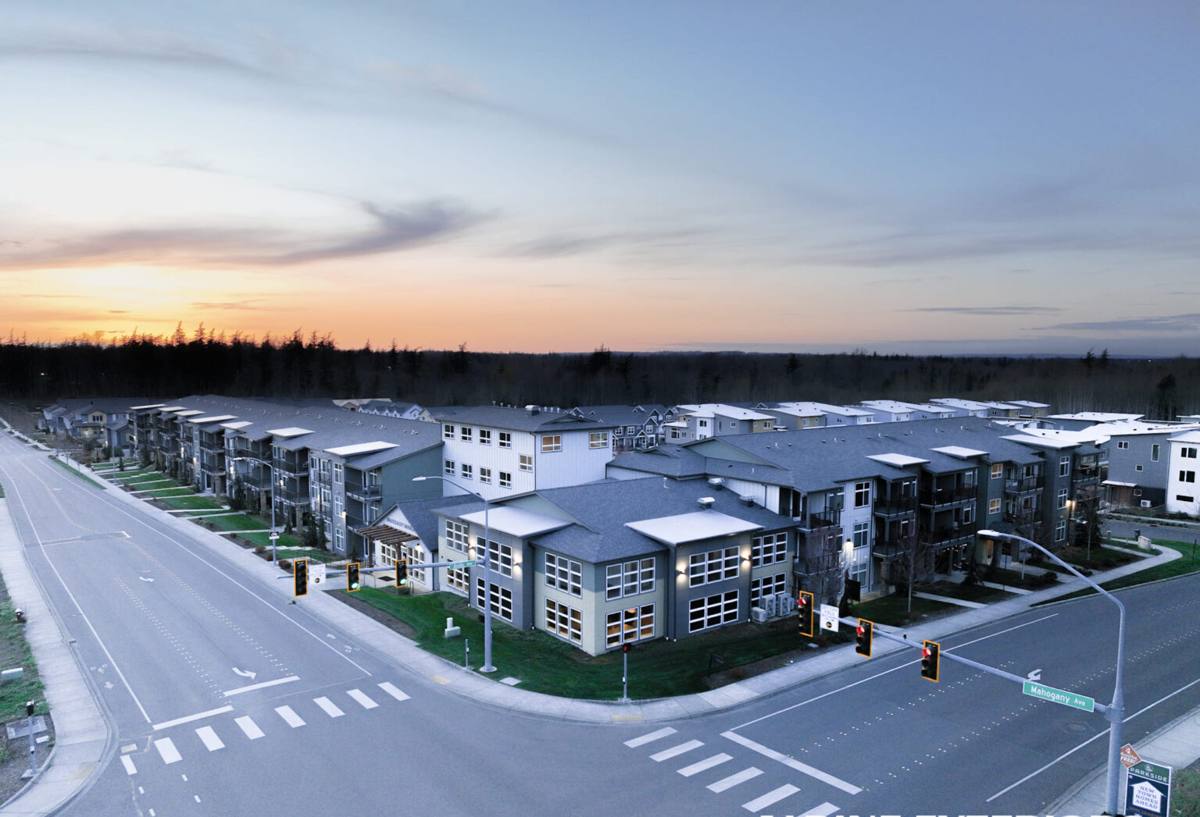
 Bellingham Exterior
 Why Edgemoor's Location Puts Extra Demands on a Metal Roof
Edgemoor sits on wooded, bluffside terrain overlooking Bellingham Bay, and that setting is beautiful right up until it starts working against your roof. Homes here deal with salt-laden air moving in off the water, long stretches of driving rain through the fall and winter, and deep shade from mature evergreens that keeps roof surfaces damp long after a storm has passed. That combination of salt, moisture, and shade is exactly what accelerates corrosion on the wrong metal, breaks down fasteners and sealants faster than a manufacturer's generic warranty assumes, and feeds the moss and lichen growth that so many Whatcom County roofs fight year-round.
None of this means metal roofing is a poor fit for Edgemoor — it's actually one of the stronger long-term choices for this kind of site, provided the material, coating, and installation details are matched to it. The problems we get called out to fix almost always trace back to a roof that was installed to a generic spec sheet instead of one built for a shaded, bluffside, salt-exposed property.
What a Correct Installation Looks Like for This Climate
Underlayment and Moisture Management
A metal roof is only as good as what's underneath it. In a rain-heavy climate like Bellingham's, we install a high-temperature, self-adhering underlayment at eaves, valleys, and any low-slope transitions, backed by synthetic underlayment across the rest of the field. This matters more on shaded Edgemoor lots than it does on an open, sun-exposed roof, because damp roof decks under tree cover dry out slower and give wind-driven rain more opportunity to find a way in through fastener holes or seams before the surface has a chance to dry.
Ventilation That Accounts for Shade and Moisture
Metal sheds water fast, but a poorly ventilated attic underneath it will still trap moisture — and trapped moisture under a tree canopy is a recipe for condensation on the underside of the deck, not just surface moss on top. We check intake and exhaust ventilation as part of every metal roof job, not as an afterthought, because on a shaded property the attic often needs the help more than the roof surface does.
Flashing and Penetration Details
Most metal roof failures we're called to repair aren't panel failures — they're flashing failures. Chimneys, skylights, vent stacks, and valley transitions are where driving rain finds its way in, and they're the details that get rushed on a job priced too low or crewed by installers who don't do metal every week. Correct flashing on a coastal property also means using fasteners and flashing metal compatible with the panel material, since mixing incompatible metals near salt air can set off galvanic corrosion at exactly the seams you're relying on to stay watertight.
Panel Types and Which Ones Make Sense in Edgemoor
Not every metal roofing product is a good match for a shaded, salt-exposed, high-rainfall site. Here's how the common options stack up for this specific setting:
| Panel Type | Best For | Considerations in Edgemoor |
|---|---|---|
| Standing seam (concealed fastener) | Long-term, low-maintenance performance | No exposed fasteners to fail over time; handles thermal movement and driving rain well |
| Exposed-fastener panel | Budget-conscious projects, outbuildings, shops | Fastener washers age faster in salt air and shade; needs periodic gasket inspection |
| Standing seam with premium coating | Bluffside or waterfront-adjacent homes | Best corrosion resistance for direct salt air exposure; higher upfront cost, longest service life |
| Stone-coated steel | Homeowners wanting a shingle-like profile | Good rain performance; check coating warranty terms for coastal exposure specifically |
Metal Roofing vs. Composition Shingles for This Site
We install both products and don't push one over the other blindly — but on a shaded, salt-exposed, moss-prone lot like a typical Edgemoor property, the trade-offs tend to favor metal more than they would on a sunnier, more sheltered site.
| Factor | Metal Roofing | Composition Shingles |
|---|---|---|
| Moss resistance | Sheds moisture fast; moss struggles to establish on smooth metal | Granule surface holds moisture and organic debris, moss-friendly |
| Wind-driven rain performance | Strong, especially with standing seam and proper flashing | Adequate when installed well, but more seams and edges to fail |
| Salt air durability | Excellent with the right coating and fastener choice | Granule loss and UV breakdown can accelerate near salt air |
| Upfront cost | Higher | Lower |
| Expected service life | Multiple decades with correct installation | Shorter, especially under heavy shade and moss pressure |
Shingles remain a reasonable, cost-effective option for plenty of Edgemoor homes, particularly on more open, less shaded roof planes. The right answer depends on your roof's specific exposure, slope, and how long you plan to own the home — which is a conversation worth having on-site rather than deciding from a brochure.
Moss, Debris, and What Ongoing Maintenance Actually Looks Like
Metal roofing dramatically reduces moss growth compared to shingles, but "reduces" isn't "eliminates." Under the tree cover common in Edgemoor, organic debris still collects in valleys, at panel laps, and against any obstruction that slows water down. Left alone, that debris holds moisture against the panel finish and can shorten the life of a coating that would otherwise last decades. A simple annual look at the roof — mainly clearing debris and checking flashing lines — keeps a metal roof performing the way it's designed to.
- Clear needles, leaves, and moss buildup from valleys and around penetrations at least once a year
- Keep gutters and downspouts flowing freely so water isn't backing up under the drip edge
- Trim back overhanging branches that keep sections of the roof shaded and damp longer than the rest
- Have flashing around chimneys, skylights, and vents visually checked after major wind or rain events
- Watch for any dissimilar-metal contact (like copper flashing against steel panels) that can accelerate corrosion
Choosing the Right Metal and Finish for Salt Air Exposure
Steel vs. Aluminum
Steel panels with a quality protective coating perform well across most of Bellingham, but properties closer to Bellingham Bay with more direct salt air exposure often do better with aluminum, which doesn't rust the way steel can if a coating is ever compromised. It's a detail worth discussing based on exactly how exposed your particular roof plane is to wind coming off the water.
Coating and Finish Considerations
The coating is doing most of the long-term work, not just the base metal. We pay attention to manufacturer warranty language specific to coastal or marine exposure, since some standard finish warranties are written with inland conditions in mind and don't hold up the same way this close to salt water. This is a case where reading the fine print before installation saves a homeowner from a warranty dispute a decade down the road.
Our Process for a Metal Roofing Project in Edgemoor
We approach every metal roof job here the same structured way, adjusted for the specific site conditions:
- On-site assessment of slope, shade exposure, existing deck condition, and proximity to the water
- Panel type, gauge, and coating recommendation matched to that specific exposure, not a one-size-fits-all default
- Tear-off (when needed) with a deck inspection for rot or moisture damage before anything new goes down
- Underlayment and flashing installed to handle wind-driven rain, not just standard vertical rainfall
- Ventilation checked and corrected where the existing setup won't keep up with a shaded, damp attic
- Final walkthrough covering maintenance expectations specific to a wooded, coastal property
Cost Factors Specific to Edgemoor Properties
Metal roofing costs vary widely based on panel type, roof complexity, and site access — and Edgemoor's terrain adds a few factors that a flatter, more open neighborhood wouldn't face.
| Cost Factor | Why It Matters Here |
|---|---|
| Roof access and site slope | Bluffside lots and steep driveways can affect staging and equipment access |
| Tree cover and debris protection | Overhanging trees may need trimming or protection measures during installation |
| Coating tier chosen | Premium coastal-grade coatings cost more upfront but reduce long-term corrosion risk |
| Existing deck condition | Homes with past moisture issues from shade or moss may need deck repair before install |
| Panel profile (standing seam vs. exposed fastener) | Concealed-fastener systems cost more but need less long-term maintenance |
We provide a straightforward, itemized quote after an on-site look — not a phone estimate — because so many of these cost drivers depend on conditions specific to your roof and lot.
Why Hiring a Crew That Already Works in Edgemoor Matters
A metal roof installed to spec in a dry, open, inland setting can still underperform on a shaded bluffside lot if the installer hasn't accounted for the local conditions. Crews unfamiliar with this kind of site tend to under-ventilate attics, skip the coastal-grade fastener and flashing upgrades, or size gutters and drainage for average rainfall instead of the driving, wind-blown storms that come through this part of Whatcom County. We work on homes in and around Edgemoor regularly, which means we're not guessing at how exposure, shade, and rainfall interact on a given roof — we've already seen how that combination plays out here and build the job around it from the start.
If you're weighing metal roofing for a home in Edgemoor, we're happy to take a look and walk through what your specific roof needs — no pressure, no obligation. Use the form below to request a free estimate.