 Bellingham Exterior
 Windows Built for Edgemoor's Bluff-Side Climate
Edgemoor sits close to the water, and that proximity shapes everything about how windows perform there. Salt-laden air off Bellingham Bay accelerates corrosion on hardware and fasteners that would last decades in a drier inland neighborhood. Driving rain off Puget Sound pushes water sideways into gaps that a calmer climate would never expose. And the long, wet moss season that defines a Whatcom County winter keeps north-facing walls and window sills damp for months at a time. None of this means Edgemoor homes need exotic products — it means they need correct installation, the right materials, and a crew that understands why shortcuts fail faster here than almost anywhere else in the county.
We install windows across Bellingham, but Edgemoor jobs get evaluated with this coastal reality in mind from the first walkthrough. That's not marketing — it's just what the site conditions require if the work is going to hold up.
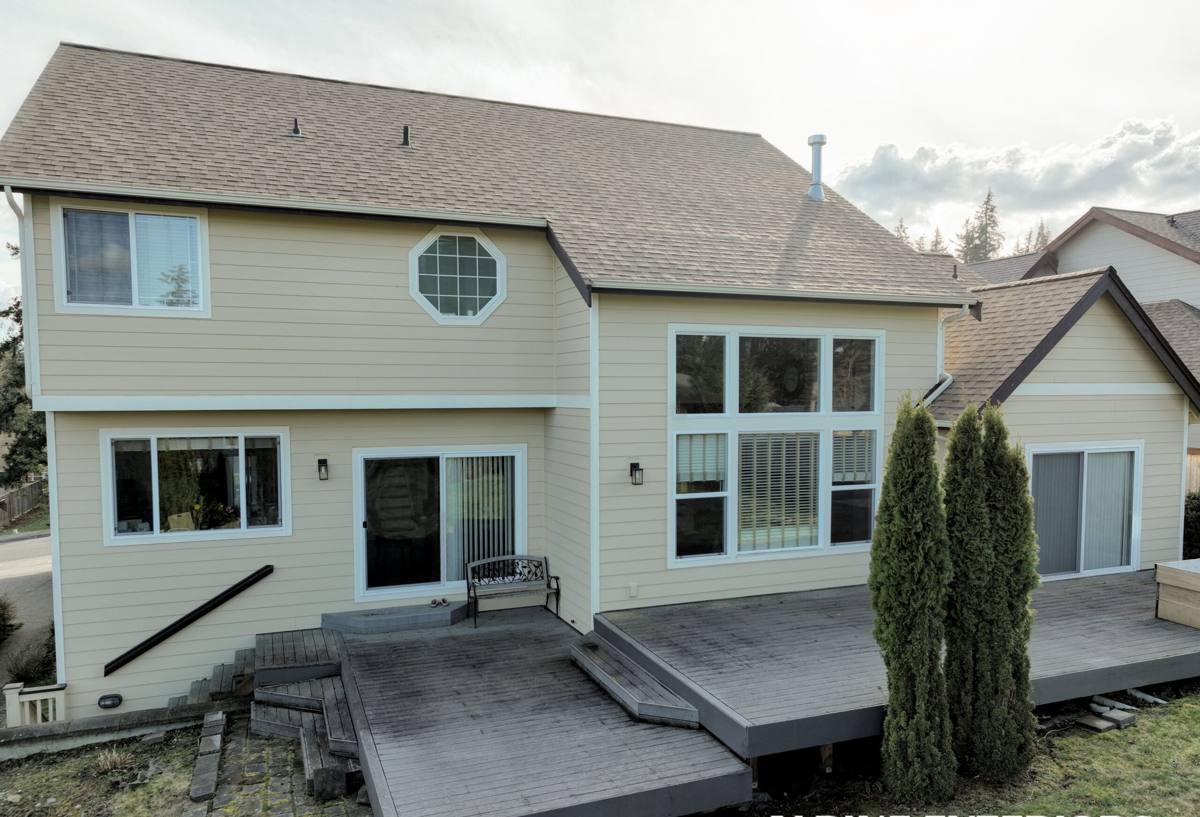
What Local Homes Actually Need From a Window Installation
Edgemoor's housing stock ranges from older homes with original wood-frame windows to more recent builds with vinyl or fiberglass units. Regardless of age, the failure points we see most often trace back to the same handful of causes:
- Failed flashing or missing flashing entirely — common in homes built or renovated before current best practices, and a direct path for wind-driven rain to reach the framing.
- Corroded fasteners and hardware — salt air is hard on standard steel screws, hinges, and locks; the wrong hardware spec shows rust within a few seasons.
- Sill rot from trapped moisture — moss and algae hold water against wood trim and sills long after a rain event has passed, so drainage details matter more here than in a drier climate.
- Condensation and fogging — a sign of failed seals or poor installation, often mistaken for a bad window when the real problem is how it was set.
- Air infiltration around the frame — gaps in sealant or backer rod that let wind whistle through during a winter storm off the water.
A correct installation addresses all of these at once — the window unit itself is only part of the job. The flashing, the sealant, the fasteners, and the sill detail are what determine whether the installation still performs in ten or twenty years.
Why the Installation Matters More Than the Brand
A quality window installed poorly will leak. A mid-grade window installed correctly, with proper flashing and drainage, will often outperform it. We'd rather spend the extra time getting the water management right than sell a homeowner on the idea that a premium product alone solves a coastal exposure problem. That's the honest tradeoff, and it's one we explain plainly during every estimate.
Our Window Installation Process
Every Edgemoor installation follows the same sequence, adjusted for the specific exposure of that wall and elevation:
- Site assessment. We look at the existing window, the condition of the framing and sill, and how that particular wall is exposed to prevailing wind and rain. A south or west wall facing open water gets treated differently than a sheltered interior wall.
- Removal and inspection. Old windows come out carefully so we can inspect the framing underneath for rot, moisture staining, or prior flashing failures before anything new goes in.
- Repair as needed. Any soft or damaged framing gets addressed before the new window is set — installing a new window over compromised framing just hides a problem that will resurface.
- Flashing and weather barrier integration. Flashing tape and pan flashing are installed to shed water down and out, tied into the existing weather-resistive barrier so water has a continuous path to the exterior rather than a place to pool.
- Setting the window. The unit is shimmed level and plumb, fastened with hardware rated for coastal exposure, and checked for square before final attachment.
- Sealing. Backer rod and sealant are applied at the exterior joint, sized correctly for the gap — too little sealant fails early, too much can trap moisture instead of shedding it.
- Interior and exterior trim. Trim is reinstalled or replaced, with attention to any drip caps or sill extensions that help direct water away from the wall below.
- Final walkthrough. We check operation, look for daylight gaps, and confirm the finished install with the homeowner before calling the job done.
Material Choices That Hold Up Near the Water
There's no single "best" window material for every home — the right choice depends on the home's age, style, and exposure. Here's how the common options compare for a coastal Bellingham setting:
| Material | Coastal Performance | Maintenance | Best Fit |
|---|---|---|---|
| Vinyl | Good — won't rust or rot, handles moisture well | Low | Most homes prioritizing value and low upkeep |
| Fiberglass | Very good — dimensionally stable, resists warping | Low | Homes wanting durability with a slimmer frame profile |
| Wood (clad exterior) | Fair to good — depends heavily on cladding quality and installation | Moderate to high | Historic or period-style homes where wood interior trim matters |
| Aluminum | Poor without thermal breaks — prone to condensation and corrosion near salt air | Moderate | Rarely our first recommendation for this area |
We install a range of quality vinyl and fiberglass products and will talk through specific manufacturer options during your estimate. What matters more than the label on the window is matching the product to the wall it's going on and installing it with the flashing and drainage details this climate demands.
A Note on Hardware and Fasteners
This gets overlooked constantly. Standard carbon-steel screws and hinges will show surface rust within a couple of seasons this close to the water. We spec corrosion-resistant fasteners and hardware for Edgemoor jobs as a standard practice, not an upsell — it's a small cost difference that prevents an early, avoidable failure point.
Moss, Algae, and Long-Term Window Care
Whatcom County's wet season keeps shaded and north-facing surfaces damp for months, and windows near mature trees or dense landscaping pick up moss and algae growth on sills and lower sashes. This isn't just cosmetic — sustained moisture against wood trim or compromised sealant accelerates rot and seal failure. A few habits extend the life of any installation:
- Rinse sills and lower sashes periodically during the wet months to keep organic growth from taking hold.
- Keep gutters and downspouts clear so roof runoff isn't sheeting down over window heads.
- Trim back vegetation that keeps a window in constant shade and dampness.
- Check exterior caulk lines annually — sealant is a wear item, not a permanent one, and catching a hairline gap early is far cheaper than repairing hidden rot later.
- Watch for fogging between panes, which signals a failed seal rather than something a homeowner can fix with cleaning.
Signs an Edgemoor Home May Need New Windows
Not every problem window needs full replacement, but these are the signals worth having looked at:
| Sign | Likely Cause |
|---|---|
| Drafts or whistling during winter storms | Failed weatherstripping or gaps in the original installation |
| Fogging or moisture between panes | Failed insulated glass seal — not repairable, indicates replacement |
| Soft or discolored sill and trim | Ongoing moisture intrusion, often from missing or failed flashing |
| Difficulty opening or closing | Frame settling, swelling from moisture, or corroded hardware |
| Rising heating bills without another explanation | Air infiltration through aging frames or seals |
Why a Crew That Works Edgemoor Regularly Matters
General window installation knowledge doesn't automatically translate to coastal Bellingham conditions. A crew that regularly works this specific neighborhood has already seen how a given elevation handles wind-driven rain, which fastener specs actually hold up, and where moss buildup tends to concentrate on local roof and wall lines. That familiarity shows up in fewer callbacks and installations that are detailed correctly the first time, rather than adjusted after a problem shows up during the first winter storm.
It also means a faster, more accurate estimate. We're not guessing at how a wall performs in this exposure — we've worked on wall assemblies like it before, in this same stretch of Bellingham.
What to Expect From an Estimate
A window installation estimate for an Edgemoor home should include a look at the existing framing condition, a discussion of material options suited to that specific wall's exposure, and a clear explanation of the flashing and drainage approach — not just a quote for the window units themselves. Be wary of any estimate that skips the site assessment altogether; window pricing without an inspection is a guess, and coastal jobs are exactly where guesses turn into callbacks.
If you're weighing a repair versus full replacement, or just want an honest read on how your current windows are holding up against the weather this side of Bellingham Bay, we're happy to take a look. Reach out for a free, no-pressure estimate using the form below.