 Bellingham Exterior
 Fairhaven's Windows Work Harder Than Most
Fairhaven sits close to Bellingham Bay, and that proximity to open water shapes everything about how windows age here. Salt-laden air moves in off the water and settles into hardware, weep holes, and frame seams. Driving rain off Puget Sound doesn't fall straight down — it hits siding and glass at an angle, which means any weakness in flashing or sealant shows up as a leak sooner rather than later. And Whatcom County's long, wet winters keep humidity high for months at a stretch, which is exactly the environment moss and algae need to take hold on sills, tracks, and trim.
Add in the fact that a lot of Fairhaven's housing stock is older — original wood-frame windows, aging aluminum single-pane units, or early-generation vinyl replacements that were never rated for this kind of exposure — and you end up with a neighborhood where windows fail earlier and more visibly than they would in a drier inland climate. None of that means the situation is hopeless. It means the fix has to account for the environment, not just swap old glass for new glass.
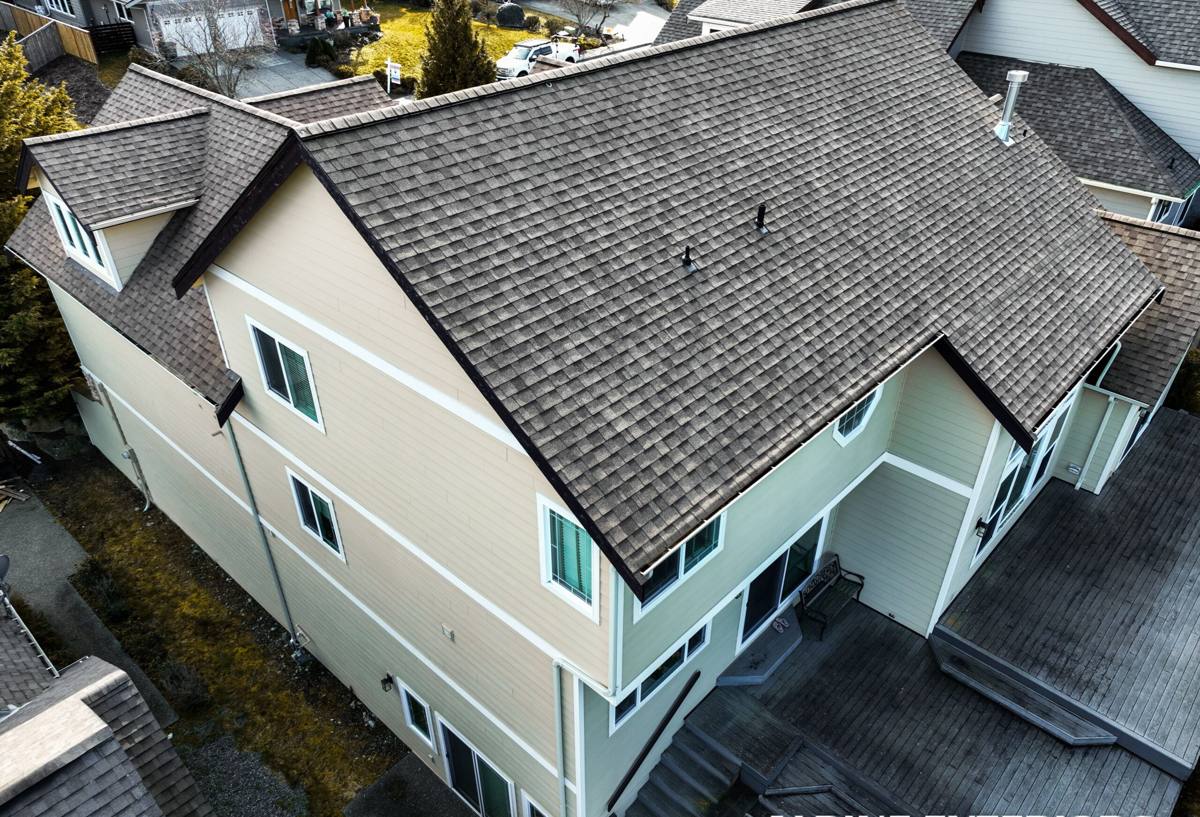
Signs a Fairhaven Home's Windows Need Attention
Before jumping to full replacement, it's worth knowing what to look for. Some of these are simple maintenance items; others point to a window system that's past the point of patching.
- Condensation forming between panes (a sign the seal has failed on a double- or triple-pane unit)
- Visible corrosion, pitting, or a chalky white residue on aluminum frames or hardware
- Green or black growth building up in the sill track faster than you can keep it cleaned off
- Drafts you can feel with a hand near the frame on a windy day
- Wood frames that feel soft, spongy, or show paint bubbling near the bottom corners
- Windows that are difficult to open, close, or lock — often a sign the frame has shifted or swollen
- Noticeably higher heating bills in winter compared to similar-sized homes nearby
What "Energy-Efficient" Actually Means Here
Energy efficiency isn't one number — it's a combination of factors that matter differently depending on climate. For Fairhaven's marine, moisture-heavy conditions, three ratings matter most.
U-Factor
This measures how well a window resists heat loss. Lower is better. In Bellingham's climate, where we're heating a lot more months than we're cooling, a low U-factor keeps warm air inside during our long wet winters and is generally the single most important number on the label.
Solar Heat Gain Coefficient (SHGC)
This measures how much solar heat passes through the glass. Because we don't get intense, sustained summer heat the way inland regions do, Fairhaven homes usually benefit more from a moderate SHGC that lets in some free winter warmth rather than an ultra-low SHGC built for hot climates.
Low-E Coatings and Gas Fill
A low-emissivity coating reflects heat back into the room without noticeably darkening the glass, and an argon or krypton gas fill between panes slows heat transfer further. Combined with a well-sealed frame, these are what actually separate a window that performs from one that just looks new.
Frame Materials for a Salt-Air, High-Moisture Climate
Frame material matters as much as the glass package when the environment includes salt air and standing moisture. Here's how the common options stack up for this specific setting.
| Frame Material | Coastal / Salt-Air Performance | Typical Maintenance | Relative Cost Tier |
|---|---|---|---|
| Vinyl | Does not corrode or rust; performs well in salt air; can become brittle with age and heavy UV exposure over decades | Low — occasional cleaning | Moderate |
| Fiberglass | Excellent — dimensionally stable, resists corrosion and moisture-driven warping better than most options | Low | Higher |
| Aluminum-Clad Wood | Good exterior protection if seals hold, but any breach in the cladding exposes wood to rot in a wet climate | Moderate — watch seams and caulking | Higher |
| Bare Aluminum | Prone to pitting and corrosion in salt-influenced air over time; also a poor thermal performer without a thermal break | Higher | Lower upfront |
| Wood (unclad) | Classic look but highest vulnerability to moisture, rot, and moss/mildew without diligent upkeep | Highest | Moderate to Higher |
There's no single "right" answer for every home — a wood-clad window on a covered, sheltered elevation behaves very differently than the same window on a wall that takes direct weather off the bay. Part of our job is walking the exposure on each side of the house before recommending a material, not applying one answer to the whole home.
How We Approach an Installation
A window is only as good as its installation, and in a high-moisture climate the installation details matter more than the product label. Here's the general sequence we follow.
1. On-Site Assessment
We look at each window opening individually — sun and wind exposure, current frame condition, signs of past water intrusion, and whether the surrounding siding or trim needs attention before a new window goes in. Installing a new window into a compromised opening just hides the real problem.
2. Removal and Opening Inspection
Once the old unit is out, we check the rough opening for hidden rot, deteriorated sheathing, or old flashing that's failed. This is often where older Fairhaven homes reveal issues that weren't visible from outside.
3. Flashing and Moisture Barrier
This step is what actually keeps driving rain out over the long run. Proper flashing tape and a correctly lapped water-resistive barrier direct water down and away from the opening instead of letting it track behind the siding.
4. Setting and Sealing the Window
The unit is shimmed level and plumb, fastened per manufacturer spec, and sealed with exterior-grade sealant rated for our climate — not a general-purpose caulk that will crack and open a gap within a year or two.
5. Interior Finish and Cleanup
Interior trim is reset or replaced, insulation gaps are filled, and the site is cleaned up. We test operation and locking hardware before calling the job done.
Working Around Fairhaven's Older Housing Stock
Fairhaven has a real mix of home vintages, including a number of older and historic structures. If your home falls inside a designated historic area, there can be guidelines around visible exterior changes, including window style, grid pattern, or trim profile — it's worth checking with the City of Bellingham before finalizing a design if you're unsure whether your property is affected. Outside of any formal historic designation, we still aim to match the proportions and sightlines of original windows on older homes so the replacement doesn't look out of place, even when the materials underneath are entirely modern.
Living With Moss Season
Whatcom County's moss season isn't a one-time nuisance — it's a recurring maintenance factor for anything that holds moisture, and window sills and tracks are prime real estate for it. A few habits go a long way:
- Clear debris from sill tracks and weep holes each fall before the wet season sets in
- Rinse visible moss or algae buildup with plain water rather than pressure-washing directly into the frame
- Keep nearby gutters clear so overflow isn't running down onto window heads
- Trim back vegetation that keeps a window's exterior shaded and damp for long stretches
Weep holes especially matter — they're the small drainage points built into most modern window frames, and if they're clogged with moss or debris, water that should drain away instead sits against the frame.
Why a Local Crew Matters for This Job
Window installation done wrong is expensive to fix twice. A crew that already works regularly in Fairhaven and around Bellingham Bay has seen how these specific conditions — salt air, angled driving rain, sustained winter moisture — actually play out on real homes over years, not just on a spec sheet. That experience shows up in the small decisions: which flashing detail to use on a wall that takes direct weather, which frame material makes sense for a shaded north-facing elevation versus a bay-facing wall, and how to sequence the work around our wetter months so the opening isn't sitting exposed longer than it needs to be. It also means someone is nearby if a follow-up question comes up after the job is done, rather than a crew that installed once and left the region.
If you're weighing whether it's time to replace windows on a Fairhaven property, we're glad to take a look and give you a straightforward, no-pressure assessment — no upselling, just an honest read on what your home actually needs. Use the form below to request a free estimate.