 Bellingham Exterior
 Why Fairhaven Roofs Face a Different Set of Problems
Fairhaven sits close to Bellingham Bay, which means homes here deal with a combination of weather stress that inland Whatcom County properties don't see nearly as often. Salt-laden air off the water accelerates corrosion on fasteners, flashing, and any metal component that isn't rated for it. Add in long stretches of driving rain that comes in sideways off the water, plus a moss season that can run most of the year in the shaded, tree-covered lots common to this part of Bellingham, and you have a roofing environment that punishes anything installed with generic, one-size-fits-all methods.
A lot of roofing problems we get called out for in Fairhaven aren't failures of the roofing material itself — they're failures of installation choices that didn't account for where the house sits. Metal roofing done right is one of the best answers to this combination of salt, rain, and moss, but "done right" is doing a lot of work in that sentence.
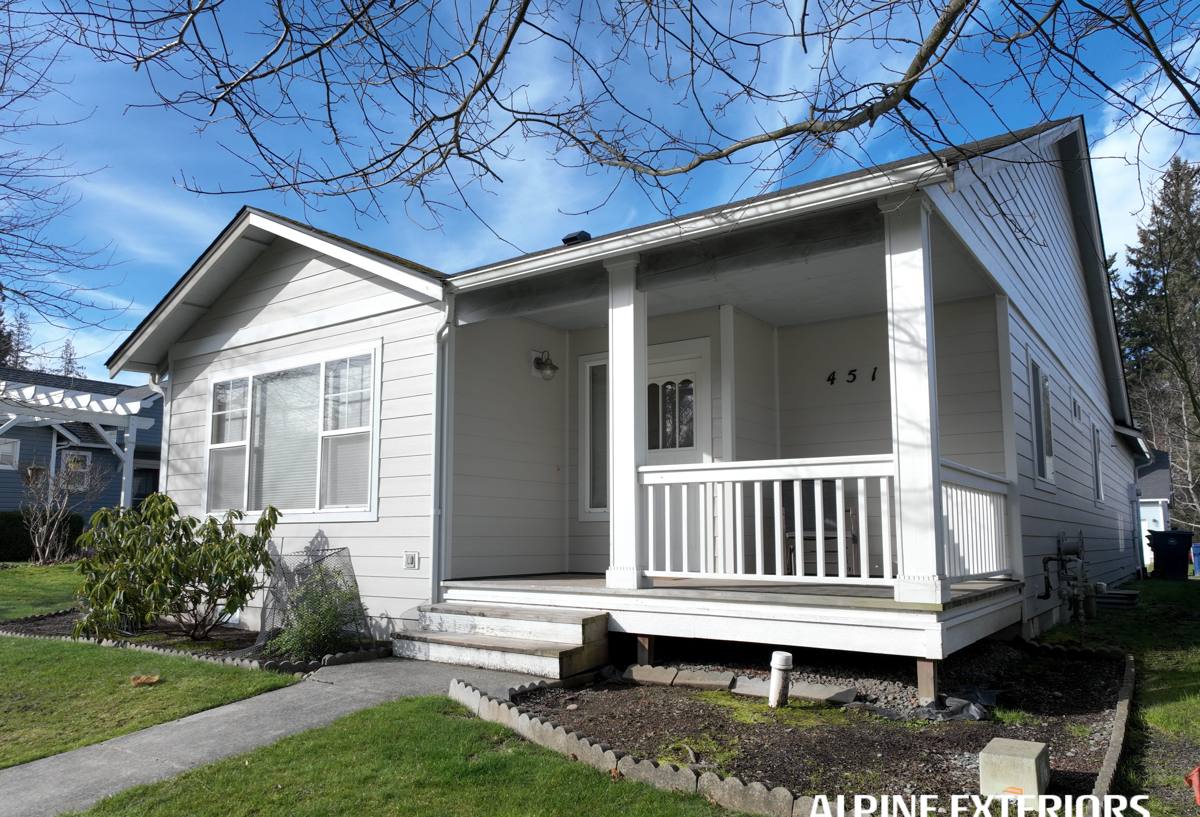
What Bellingham's Coastal Climate Does to a Roof Over Time
Salt Air and Corrosion
Proximity to the bay means airborne salt settles on roofing surfaces, fasteners, and flashing year-round, not just during storms. Uncoated or under-coated steel components can start showing surface rust well before the roof is due for any other kind of attention. This is one of the most common oversights we see: a metal roof installed with standard fasteners or trim that wasn't specified for a marine-influenced environment.
Driving Rain and Wind-Driven Water
Storms coming off the Puget Sound and Strait of Georgia don't just drop rain straight down — wind pushes it sideways and up under laps, trim, and penetrations that would stay dry in a calmer climate. Roof systems in Fairhaven need tighter seam work, properly lapped flashing, and underlayment that's rated to handle water that's actively being driven uphill by wind, not just gravity-fed runoff.
Moss, Shade, and Moisture Retention
Many Fairhaven properties sit under mature tree cover, which keeps roof surfaces shaded and slow to dry after rain. That's ideal growing conditions for moss, and moss holds moisture directly against roofing material for extended periods. On traditional shingle roofs this shortens lifespan significantly. Metal roofing handles this far better, but it's not moss-proof — panel design, slope, and surface finish all affect how much moss can actually get a foothold.
Why Metal Roofing Is a Strong Fit for This Neighborhood
Fairhaven's mix of historic character homes and newer builds close to the water benefits from metal roofing for a few concrete reasons rather than general hype:
- Smooth, continuous panel surfaces give moss far less to grip onto compared to shingle tabs and granule surfaces.
- Properly finished metal sheds wind-driven rain more effectively when seams and laps are installed correctly.
- Coated steel or aluminum systems, specified correctly for coastal exposure, resist the corrosion that shortens the life of lesser-rated metal.
- Steeper, older rooflines common in this part of Bellingham drain faster, which pairs well with metal's smooth runoff characteristics.
- Long service life reduces how often a roof needs to be disturbed — every tear-off and re-roof is a chance for water intrusion during the work itself.
None of this means metal roofing is the only correct choice for every home in the area, but for the specific combination of salt exposure, rain volume, and moss pressure that Fairhaven sees, it holds up better than most alternatives when it's specified and installed correctly.
Panel Types: What Actually Matters for This Location
Not all metal roofing is built the same, and the differences matter more here than in drier, inland climates. The table below breaks down the two most common profile types we discuss with Fairhaven homeowners.
| Factor | Standing Seam | Exposed Fastener |
|---|---|---|
| Fastener exposure | Concealed under seams — no exposed penetrations | Fasteners penetrate the panel face directly |
| Salt air resilience | Better long-term, since fasteners aren't exposed to weather | Depends heavily on fastener coating and maintenance |
| Water shedding | Raised seams handle wind-driven rain very well | Adequate on proper slopes, more reliant on washers staying sealed |
| Upfront cost | Higher material and labor cost | Lower upfront cost |
| Maintenance over time | Minimal fastener-related upkeep | Washers and fasteners may need attention over the roof's life |
For homes closest to the water, or anywhere salt exposure is a daily reality rather than an occasional storm event, standing seam is generally the more defensible long-term choice. Exposed fastener systems still have their place on outbuildings, garages, and lower-budget projects, but we're upfront that they come with more long-term fastener maintenance in this kind of environment.
What a Correct Metal Roofing Job Actually Involves
Deck Inspection and Prep
Before any panel goes down, the roof deck needs to be sound. Rot, soft spots, or old fastener damage from a previous roof have to be addressed first — metal roofing amplifies problems with an inadequate substrate rather than hiding them.
Underlayment Selection
A synthetic, high-temperature-rated underlayment is standard under metal roofing, but in a wind-driven rain climate like Bellingham's, self-adhering underlayment at eaves, valleys, and penetrations adds a real layer of protection against water that gets pushed uphill under panels.
Flashing and Penetration Detail
Chimneys, vents, skylights, and wall transitions are where the vast majority of metal roof leaks originate — not the panel field itself. Flashing has to be formed and lapped correctly, with attention to how water moves during a real sideways rainstorm, not just a straight-down shower.
Fastener and Coating Specification
For coastal-influenced areas like Fairhaven, fastener material and coating matter as much as the panel material itself. We specify fasteners and trim rated for the corrosion exposure the house actually faces, not a generic inland default.
Ventilation
Metal roofing performs best over a properly ventilated attic or roof assembly. Poor ventilation traps moisture underneath the roof deck, which can cause condensation issues regardless of how good the metal above it is.
Our Process for Fairhaven Metal Roofing Projects
- On-site assessment — we look at slope, tree cover, existing moss or moisture damage, and how exposed the home is to bay-driven wind and salt air.
- Material and profile recommendation — based on that assessment, not a default package, we recommend a panel type, gauge, and coating suited to the specific property.
- Deck and structure check — we confirm the existing roof deck can support the new system, and flag any repairs needed before installation.
- Installation — underlayment, panels, flashing, and fastening done in sequence with attention to every penetration and transition point.
- Final walkthrough — we review the finished roof with the homeowner, including what routine maintenance will look like going forward.
Maintenance: What Fairhaven Homeowners Should Actually Do
Metal roofing is lower-maintenance than shingle roofing, but "low-maintenance" isn't "no-maintenance," especially in this climate. A short seasonal checklist goes a long way:
- Clear overhanging branches and debris that trap moisture against the roof surface.
- Check gutters and downspouts each fall — clogged gutters send water back up under eaves during heavy rain.
- Visually inspect flashing around chimneys, vents, and skylights once a year for lifting or gaps.
- Watch for any moss or algae buildup in shaded valleys, and address it early rather than letting it hold moisture long-term.
- After major windstorms, do a quick visual check for any lifted panels or dislodged trim.
Why Local Experience Matters More Than It Sounds Like It Should
A roofing crew that hasn't worked in Fairhaven specifically can still install a technically fine metal roof — but they're guessing at things a crew with local experience already knows: which slopes and tree-shaded lots hold onto moss longest, how much salt exposure a given block actually gets off the bay, and which flashing details tend to fail first under Bellingham's specific rain patterns. That local knowledge shows up in the small decisions — fastener choice, underlayment placement, flashing detail — that determine whether a roof performs well for its first five years or for its next thirty.
Whatcom County's weather isn't extreme by national standards, but it's persistent, and persistence is what wears down a roof that wasn't built for it. Metal roofing installed with this specific climate in mind is one of the more durable, lower-maintenance answers available to Fairhaven homeowners.
If you'd like a straightforward look at your roof and what a correctly specified metal roofing system would involve for your property, we're happy to provide a free, no-pressure estimate — just fill out the form below.