 Bellingham Exterior
 Why Ferndale Decks Take a Beating
Ferndale sits close enough to the water and open farmland that decks here deal with a different mix of stress than decks fifty miles inland. Salt-tinged air off Bellingham Bay and the Strait works into fasteners and connectors over time. Driving rain — the kind that comes in sideways off a Whatcom County storm rather than straight down — gets pushed under rail caps and into board end grain that a lot of installs never bother to seal. And then there's the long stretch from late fall through spring when decks in shaded or north-facing yards barely dry out, which is exactly the setup moss and algae need to take hold.
None of that means composite decking is a bad choice for Ferndale. It means the install has to account for those conditions specifically, not just follow a generic manufacturer diagram written for a drier climate. A deck built the same way here as it would be in Arizona will look fine for a season or two and then start showing problems the homeowner didn't cause and couldn't have seen coming.
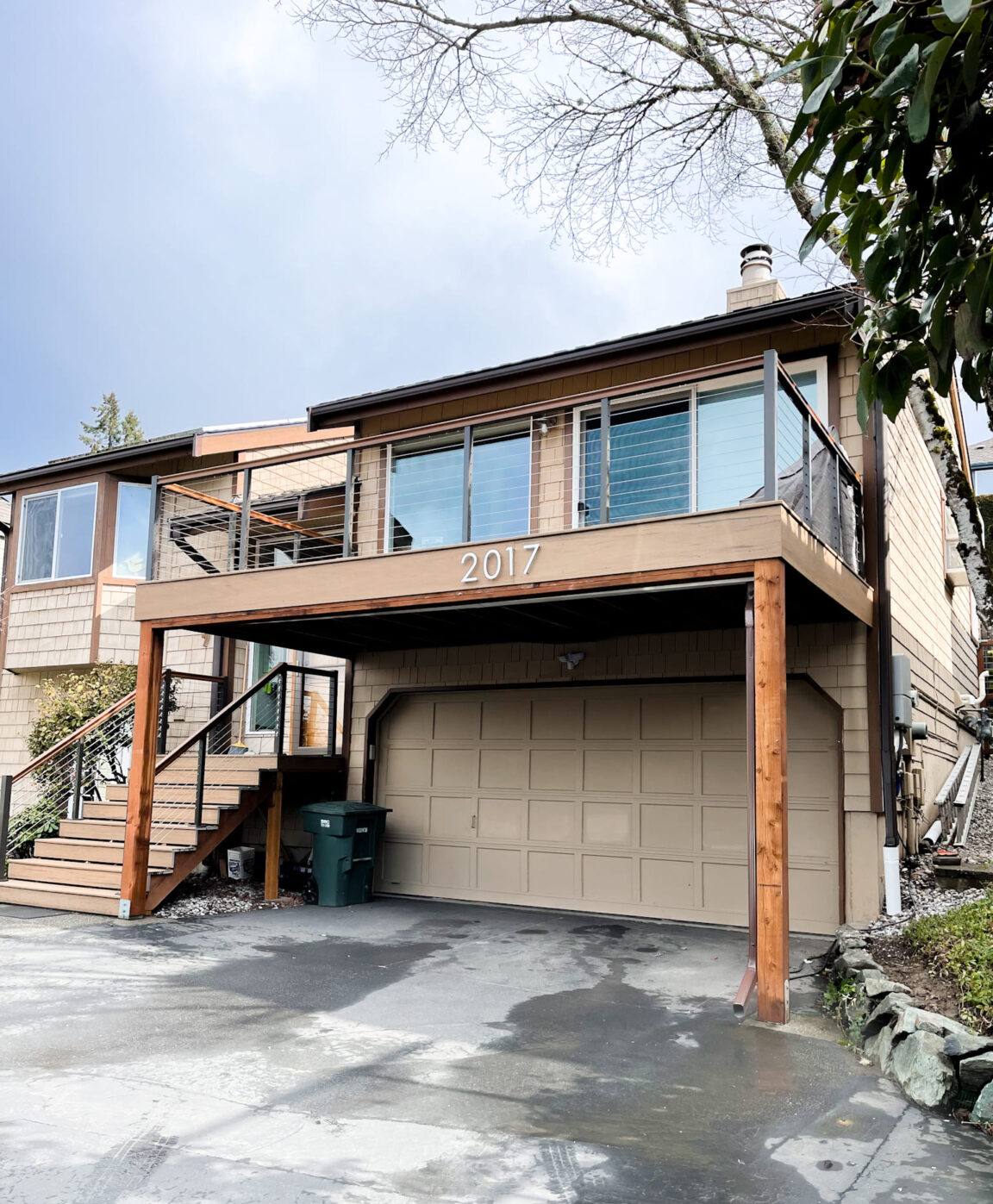
Composite vs. Wood for This Climate
Wood decking isn't a bad product, but it asks a lot of the homeowner in a climate like this — annual or biannual staining, regular checks for soft spots, and real vigilance around ledger boards and joists where water collects. Composite shifts most of that maintenance burden away, which is why it's become the default choice for a lot of Ferndale homeowners who want a deck they can actually use instead of one they have to maintain.
The honest trade-off is upfront cost and installation sensitivity. Composite board is less forgiving of sloppy substructure work — gaps, fastening mistakes, and poor drainage show up as cupping, staining, or mildew faster on composite than they would on wood, because the board itself isn't drawing moisture out the way wood does. That's an argument for careful installation, not an argument against the material.
| Material | Upfront Cost | Maintenance | Moss/Algae Resistance | Typical Lifespan |
|---|---|---|---|---|
| Pressure-treated wood | Lowest | High — annual cleaning, periodic staining/sealing | Low without regular treatment | 10-15 years before major repair |
| Uncapped composite | Moderate | Moderate — surface cleaning, watch cut ends | Moderate | 15-20 years |
| Capped composite | Higher | Low — occasional washing | Good | 20-25+ years |
| PVC decking | Highest | Lowest | Good | 25+ years |
These are general industry ranges, not guarantees — actual lifespan depends heavily on installation quality, sun/shade exposure, and how consistently the deck gets cleaned. A capped composite board installed poorly will underperform an uncapped board installed correctly.
Capped vs. Uncapped Composite
Capped composite has a shell wrapped around the core that resists moisture absorption and staining at the surface. Uncapped composite is more exposed to weathering and moss growth over time, especially in shaded yards, but costs less. For most Ferndale properties — particularly anything with tree cover, a north exposure, or proximity to open water — we lean toward capped boards because the moss and algae resistance actually matters here in a way it might not in a drier region. We'll walk through the real difference in person rather than push the higher-margin option by default.
What a Correct Composite Deck Build Actually Involves
The board is the part homeowners see and compare. The substructure underneath is what determines whether the deck is still solid and dry in fifteen years. In this climate, a handful of details matter more than they would elsewhere:
- Joist spacing matched to the board. Composite boards flex differently than wood and most manufacturers require tighter joist spacing, especially on angled or diagonal patterns. Following the wood-era 16-inch standard on composite is a common shortcut that leads to sagging.
- Ledger board flashing done right. Where the deck attaches to the house is the single most common source of hidden water damage. Proper flashing keeps rain from tracking behind the siding and into the rim joist — a real risk given how much sideways rain this area gets.
- Airflow underneath. Low decks or decks with skirting need enough ventilation to let the space under the boards dry out between storms. Sealed-in, poorly vented understructure is where we see the worst moss and mildew buildup.
- Hidden fastener systems installed with the right gap. Board spacing needs to allow for both drainage and the seasonal expansion composite goes through with temperature swings.
- Cut-end treatment. Every field cut on uncapped or partially capped composite exposes the core. Leaving cut ends untreated is one of the fastest ways moisture and staining get started.
None of this is exotic. It's just easy to skip when a crew is moving fast, and the consequences don't show up until a year or two after the invoice is paid.
Our Process, Start to Finish
- On-site assessment. We look at the existing structure (if there is one), grade and drainage around the footprint, sun/shade exposure, and how the deck ties into the house.
- Structural check. Ledger attachment, footings, and joist condition get evaluated before we talk board selection — no point picking a beautiful composite for a substructure that needs work first.
- Permitting. Deck projects in Whatcom County frequently require permits depending on size, height, and attachment to the structure. We handle that step rather than leaving it for the homeowner to sort out.
- Substructure build or repair. Framing, flashing, and ventilation get addressed to the standard the board manufacturer actually requires — not the minimum that happens to look finished.
- Board installation. Hidden fasteners, correct spacing, and manufacturer-specified expansion gaps around the perimeter and any fixed obstructions.
- Final walkthrough. We go over care basics for this climate specifically — what to expect the first wet season, and what's normal weathering versus something to call us about.
Living With Composite Decking Through a Bellingham Winter
Even the best composite deck needs occasional attention here. Moss spores travel easily in this region, and a deck that sits shaded for months at a time will pick up some growth on the surface no matter what material it's built from. The difference with a properly installed capped composite deck is that a simple wash — soft brush, mild soap, garden hose — handles it. On wood, the same buildup often means scraping, brightening, and re-sealing to keep the surface from breaking down underneath the moss.
A few habits go a long way in this climate:
- Sweep leaves and debris off the deck through fall rather than letting them mat down over winter.
- Rinse the deck once or twice a season, more often in heavily shaded spots.
- Keep planters and rugs off the boards for extended periods — trapped moisture underneath is where staining starts, regardless of material.
- Check that gutters and downspouts near the deck are directing water away, not onto or under it.
Why a Crew That Already Works Ferndale Matters
A lot of what separates a deck that holds up here from one that doesn't isn't the brand of composite — it's decisions made during framing and flashing that nobody sees once the boards go down. A crew that regularly works Ferndale and the surrounding Bellingham area has already seen how local moisture patterns, shade cover, and salt exposure play out on real decks a few years after installation. That shows up in small choices: where extra ventilation gets added, which ledger details get extra attention, which board lines get built with a bit more drainage slope than the minimum spec.
It also matters for permitting and inspection — knowing what Whatcom County and local jurisdictions actually require avoids delays or rework that an out-of-area crew might not anticipate.
Questions to Ask Before You Hire
Whoever you choose for a Ferndale composite deck, it's worth asking a few direct questions before signing anything:
- Will you pull the required permit, and is that included in the estimate?
- What joist spacing will you use for this specific board, and does it match the manufacturer's spec?
- How will the ledger board be flashed against the house?
- What's your plan for ventilation if the deck sits low to the ground?
- What warranty coverage applies to the board itself versus your installation labor?
- Can you show examples of decks you've built in this area that have been through at least one wet season?
A contractor who answers these clearly and specifically, rather than vaguely, is generally the one who's actually done the work before.
Get a Straightforward Estimate
If you're weighing a new composite deck or replacing a tired wood one in Ferndale, we're happy to come take a look, walk the site, and give you a clear, no-pressure estimate — including what your specific yard, exposure, and existing structure will actually need. Use the form below to get started.