 Bellingham Exterior
 Ferndale's Climate Is Harder on Siding Than It Looks
Ferndale sits close enough to Bellingham Bay and the Strait of Georgia that salt-laden air is a real factor in how exterior materials age here, not just a talking point. Add Whatcom County's long wet season, driving rain off the water, and the shade and dampness that many Ferndale lots carry from mature evergreen cover, and you get a climate that is genuinely tough on siding. Moisture doesn't just fall here — it lingers. North-facing walls and shaded sides of a house can stay damp for days at a stretch through fall and winter, and that's exactly the condition moss, algae, and mildew need to take hold.
None of this is dramatic weather. It's the slow, steady kind that wears down materials that aren't built for it. A siding product that performs fine in a dry inland climate can fail early here — not catastrophically, but through swelling, delamination, paint failure, or moss staining that never fully goes away. That's the backdrop for every siding decision a Ferndale homeowner makes.
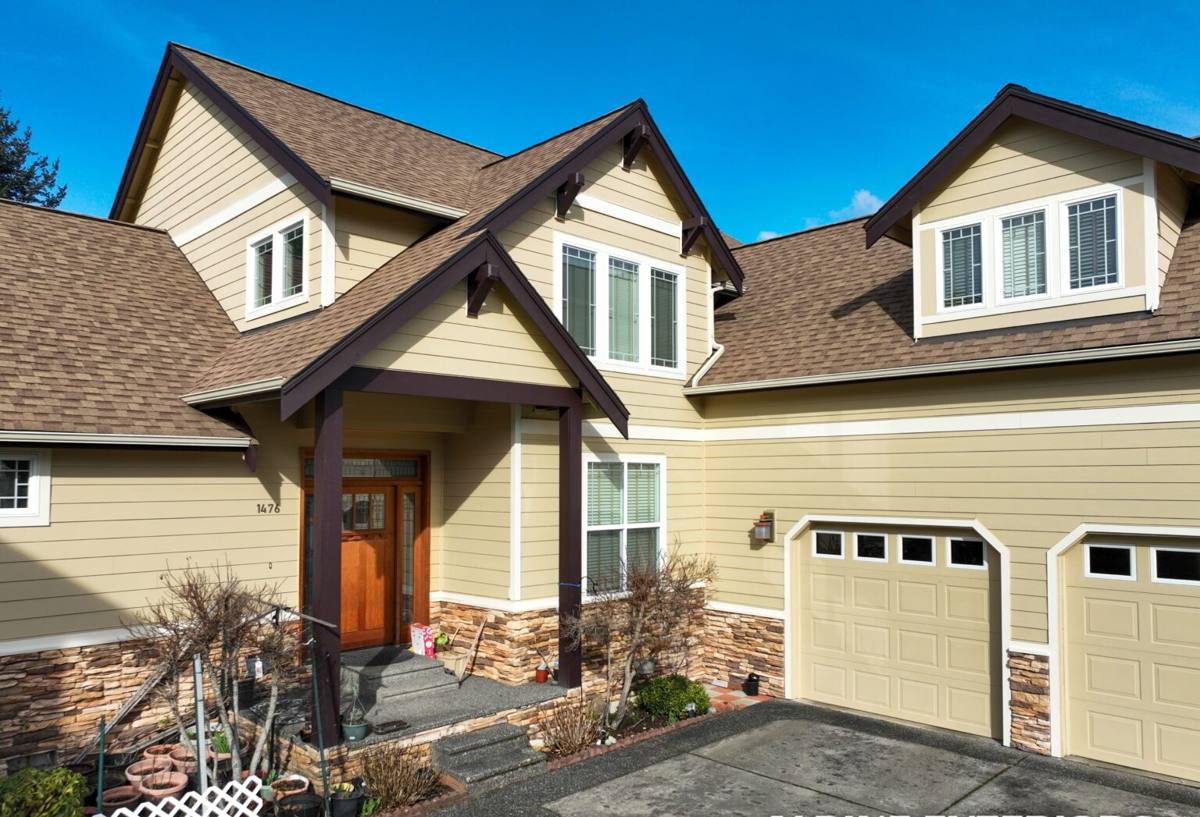
What Ferndale Homes Actually Need From Their Siding
Strip away the marketing and a house in this part of Whatcom County needs siding that does three things well:
- Resists moisture absorption and doesn't swell, cup, or rot when it stays wet for extended stretches
- Holds its finish through UV exposure, salt air, and repeated wet-dry cycling without chalking or peeling early
- Doesn't give moss and algae an easy surface to grip, or is at least resistant enough that routine cleaning keeps it in check
That's a short list, but it rules out a lot of products that look fine on paper. It's also the reason we don't try to be a full-catalog siding contractor. We install James Hardie fiber cement siding — that's it. We think that's the right call for this climate, and we'd rather explain why than sell a homeowner something we wouldn't put on our own house.
Why We Standardized on One Product Line
Fiber cement itself isn't new, and not all fiber cement is installed or engineered the same way. James Hardie builds region-specific formulations — their HZ5 line is engineered for the kind of freeze-thaw and moisture cycling the Pacific Northwest sees, which is a meaningfully different climate profile than what a product engineered for the Southeast or Southwest is built around. For a marine-influenced climate like Ferndale's, that regional engineering isn't a marketing detail — it's the difference between siding that's suited to the job and siding that's merely available.
What a Correct Fiber Cement Install Actually Involves
Fiber cement siding is only as good as the installation behind it. It is a forgiving material in the sense that it doesn't rot, but it is unforgiving of installation shortcuts — water intrusion behind poorly installed siding can damage sheathing and framing regardless of what's on the surface. A correct install in a climate like Ferndale's comes down to a handful of details that are easy to skip and expensive to fix later.
Moisture Management Behind the Siding
The siding itself is the visible layer, but the water-resistive barrier and flashing behind it are what actually keep a wall assembly dry. On Ferndale homes we typically build in a drainage gap — a rainscreen — so that any moisture that gets past the siding has a path to drain and dry out instead of sitting against the sheathing. Given how much sustained dampness this area sees, that gap matters more here than it would in a drier climate.
Fastening, Clearances, and Manufacturer Spec
James Hardie publishes specific fastening patterns, minimum clearances from grade, decks, and roof lines, and joint treatment requirements. Skipping these doesn't usually show up as a problem in year one — it shows up in year five or eight as staining, soft spots, or premature caulk failure. Installing to spec is also what keeps the manufacturer's warranty intact, which is a warranty a homeowner is paying for whether the installer honors the requirements or not.
Factory Finish vs. Field Painting
We install James Hardie's ColorPlus finish wherever possible rather than field-painted primed board. A factory-applied finish is baked on under controlled conditions and carries its own finish warranty; field painting is only as good as the weather on install day and the quality of the crew doing it. In a climate that gives you a narrow dry window to work in, factory finish removes a variable that otherwise depends on the weather cooperating.
Cost Factors on a Ferndale Siding Job
Every house is different, but the same handful of factors drive most of the cost variation we see on jobs in this area. This isn't a quote — it's meant to help a homeowner understand what's actually moving the number.
| Factor | Why It Matters |
|---|---|
| Existing siding removal | Tear-off and disposal of old material, especially if it's layered or contains hazardous materials, adds labor before install even starts |
| Sheathing and framing condition | Moisture-damaged sheathing found once old siding comes off has to be repaired before new siding goes on — common on homes with a history of unmanaged moisture |
| Home size and wall complexity | Cut-up facades with lots of corners, dormers, and trim take more labor per square foot than a simple rectangular wall |
| Trim and accessory scope | Fascia, soffits, trim boards, and window/door detailing are often bundled with a siding job and add material and labor |
| ColorPlus vs. field-painted | Factory finish costs more upfront but removes ongoing repaint cost and carries a separate finish warranty |
How Our Process Works
We start with an on-site inspection, not a phone estimate — siding scope depends on what's under the existing material, and that's not something anyone can price accurately sight unseen. From there:
- Walk the exterior, check for moisture damage, and assess trim, flashing, and window detailing that will need attention alongside the siding
- Provide a written scope and estimate that separates siding, trim, and any sheathing or framing repair so the homeowner knows what's driving the cost
- Remove existing siding, address any water-damaged sheathing found underneath, and install or verify the water-resistive barrier and rainscreen
- Install James Hardie siding to manufacturer fastening, clearance, and flashing spec
- Final walk-through covering caulking, touch-up, and what routine maintenance looks like going forward
What We See on Older Ferndale Homes
A lot of the siding problems we get called out for in this area trace back to a small set of recurring issues rather than the siding material failing on its own:
- Moss and algae buildup on shaded, north-facing walls that were never designed to drain or dry efficiently
- Caulk joints that failed years ago and were never resealed, letting water track behind trim and window casings
- Siding installed tight to grade or to a deck ledger with no clearance, wicking moisture up from below
- Older vinyl or wood siding that's cupped, cracked, or rotted from years of sustained damp exposure
None of these are unusual failures — they're what you'd expect from this climate acting on a wall assembly over enough years. They're also largely preventable with the right install details up front, which is the argument for doing the job correctly the first time rather than re-doing it in a decade.
Maintenance in a Marine, Moss-Prone Climate
Fiber cement is low-maintenance compared to wood or repainted surfaces, but "low-maintenance" doesn't mean "no maintenance" in a climate like this one. A simple annual routine keeps siding performing the way it's supposed to:
- Rinse siding annually, and more often on shaded or north-facing walls, to keep moss and algae from establishing
- Inspect caulk joints around windows, doors, and trim yearly and reseal before gaps open up
- Keep gutters clean and downspouts directed away from the wall so runoff isn't sheeting down the siding
- Trim back vegetation and tree cover that keeps a wall section shaded and damp longer than the rest of the house
- Watch for soft spots, staining, or bubbling paint at trim boundaries — early signs of moisture getting behind the siding
Why a Crew That Already Works Ferndale Matters
Siding installation isn't uniform across climates, and it isn't uniform across Whatcom County either. A crew that regularly works Ferndale and the surrounding Bellingham area already knows which wall orientations tend to hold moisture, what moss growth actually looks like a few years after a bad install versus a good one, and how local permitting and inspection expectations run. That local pattern recognition is hard to replicate on a one-off job from a crew that doesn't normally work this area or this climate. It's also part of why we limit ourselves to one product line we trust rather than installing whatever a homeowner saw at a big-box store — fewer variables, more accountability for how the job performs over time.
Get a Straightforward Estimate
If your Ferndale home's siding is showing moss staining, failing caulk, or just needs replacing, we're glad to take a look and give you a straightforward, no-pressure estimate. There's a form below — reach out and we'll schedule a walk-through.