 Bellingham Exterior
 Why Ferndale Roofs Age Differently Than Roofs Inland
Ferndale sits close enough to Puget Sound and the Nooksack River lowlands that its roofs deal with a combination most inland Washington towns never see: salt-laden air moving in off the water, long stretches of driving rain angled by coastal wind, and a moss season that can run eight months out of the year in shaded, north-facing yards. None of these things individually is unusual for Western Washington. Together, on the same roof, year after year, they wear down fasteners, shorten shingle life, and turn a roof that "looks fine from the driveway" into one that's failing quietly from underneath.
A new roof installation here isn't just about picking a shingle color and nailing it down. It's about choosing materials and details that hold up to salt exposure without corroding, shedding the volume of rain Whatcom County gets without backing up at the edges, and resisting the moss and moisture load that builds up under tree cover and in shaded valleys. We approach every Ferndale roof with those three factors first, before we ever talk about curb appeal.
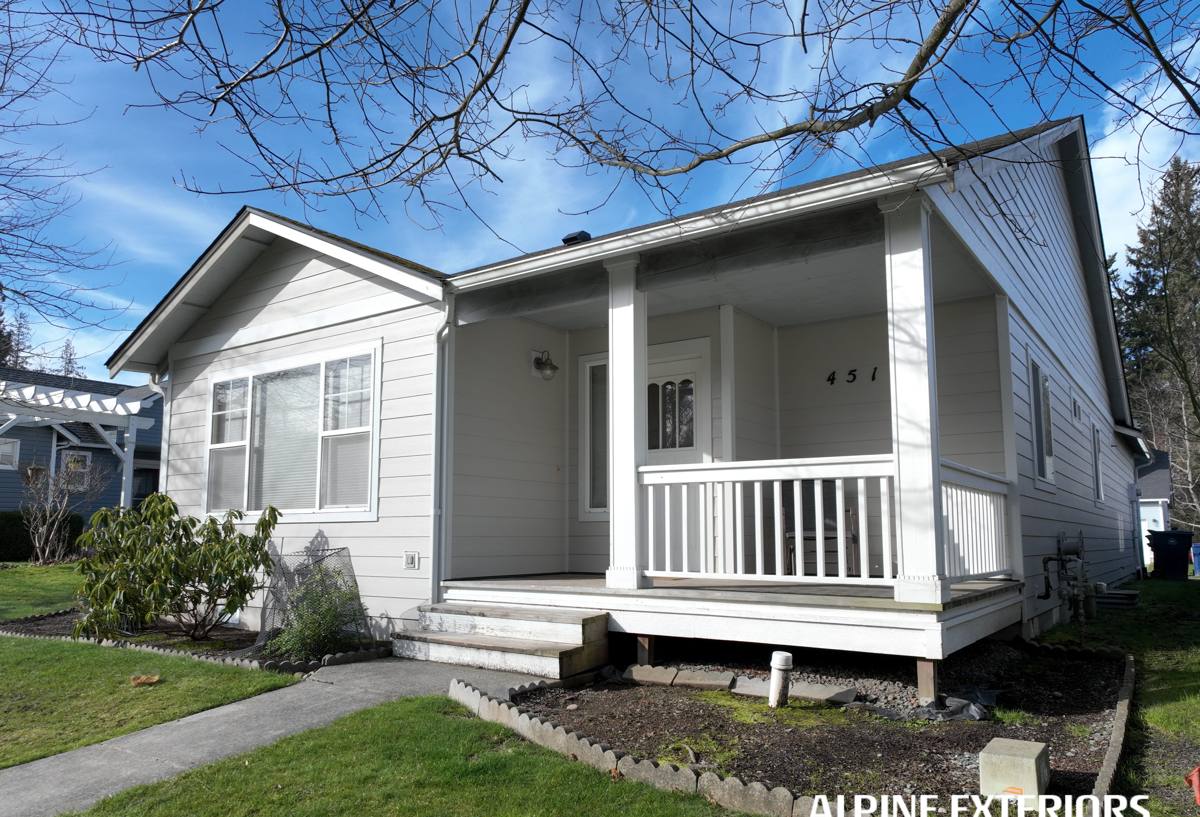
What a Correct New Roof Installation Actually Involves
"New roof" sounds simple, but the work that determines whether it lasts 15 years or 30 happens in the layers homeowners never see once the shingles go down. Here's what we consider non-negotiable.
Tear-Off and Deck Inspection
We remove the old roofing down to the deck rather than layering over it. That's the only way to actually see the plywood or OSB underneath, check for soft spots from long-term moisture intrusion, and replace any damaged sheathing before it's covered up again. Skipping this step is how a roof looks new for two years and then starts failing from the inside out.
Underlayment and Moisture Barrier
Given how much rain this area sees, we treat underlayment as a real second line of defense, not a formality. Synthetic underlayment across the full deck, with self-adhered ice-and-water membrane at eaves, valleys, and any low-slope transitions, gives the roof a backup layer if wind-driven rain ever gets past the shingles.
Flashing at Every Penetration
Chimneys, skylights, vent pipes, and wall-to-roof transitions are where roofs actually leak — almost never in the open field of shingles. Correct step flashing, counterflashing, and pipe boots, properly integrated with the underlayment rather than just caulked over the top, are what keep water out for decades instead of a couple of seasons.
Ventilation That Matches the Climate
Balanced intake and exhaust ventilation keeps the attic dry and temperature-stable. In a marine climate like ours, poor ventilation traps moisture in the attic, which speeds up sheathing rot and can encourage the same moss and algae growth on the underside of the deck that you're trying to keep off the shingles above it.
Roofing Material Options for Ferndale Homes
There's no single "best" roofing material — the right choice depends on your home's exposure, roof pitch, budget, and how much maintenance you want to do over the years. Here's how the common options actually compare for a coastal Whatcom County property.
| Material | Salt Air Tolerance | Moss Resistance | Typical Lifespan | Maintenance Level |
|---|---|---|---|---|
| Architectural asphalt shingle | Good with corrosion-resistant fasteners | Moderate — benefits from zinc/copper strips | 25–30 years | Low to moderate |
| Standing seam metal | Very good with proper coating/fastener spec | Excellent — sheds moss naturally | 40–50+ years | Low |
| Synthetic composite (rubber/polymer) | Good | Good | 30–50 years | Low |
| Wood shake | Requires diligent maintenance near salt air | Poor without regular treatment | 20–30 years with upkeep | High |
Asphalt shingle remains the most common choice for Ferndale homes because it balances cost and performance well, especially when paired with the right underlayment and fastener hardware. Metal roofing costs more up front but earns that back in longevity and near-zero moss maintenance, which matters a lot on shaded, tree-covered lots. We'll talk through which fits your home and budget rather than push one option across the board.
Moss, Algae, and the Long Wet Season
Whatcom County's moss season is long enough that it's really a design consideration, not just a cleaning chore. Moss holds moisture against the shingle surface, works into granule layers, and over time lifts shingle edges — which is exactly where wind-driven rain finds its way in. A new roof installation is the best time to build in moss resistance rather than fight it every fall.
During installation, we can integrate zinc or copper strips near the ridge, which release trace metal ions with every rain and inhibit moss growth down the roof plane over time. We also make sure valleys and gutter lines are detailed so debris doesn't collect and hold water against the shingles — a small design choice that pays off every rainy season for the life of the roof.
Signs a Ferndale Home Needs a New Roof, Not a Repair
Not every roof problem calls for full replacement, but there's a point where repairs stop being cost-effective and start being a way to delay the inevitable. Some of what we look for during an assessment:
- Granule loss heavy enough that you can see bare asphalt on multiple shingles
- Shingles that are curling, cupping, or cracking across large sections, not just one isolated area
- Soft or spongy decking felt underfoot in the attic, especially near eaves or valleys
- Daylight visible through the roof deck from inside the attic
- Persistent moss buildup that keeps returning within months of cleaning
- Roof age at or beyond 20–25 years for asphalt shingle, regardless of surface appearance
- Multiple past repairs in different spots rather than one recurring, fixable issue
If a roof is showing two or three of these at once, replacement is usually the more honest recommendation than another patch.
Our Process, Start to Finish
- On-site assessment. We inspect the existing roof, attic ventilation, and decking condition, and talk through what your home actually needs versus what's optional.
- Written estimate. Material options, scope of work, and cost are laid out clearly before anything is scheduled — no surprise line items later.
- Permitting. Whatcom County and City of Ferndale permitting requirements are handled as part of the job, not left for the homeowner to sort out.
- Tear-off and deck repair. Old roofing comes off, the deck is inspected, and any compromised sheathing is replaced before anything new goes on.
- Underlayment, flashing, and ventilation installed correctly, per the details above — this is where most of the long-term performance is decided.
- Final installation of the chosen roofing material, per manufacturer specification, to keep warranty coverage intact.
- Final walkthrough covering the completed work, cleanup, and what to expect from the new roof going forward.
Why a Crew That Already Works Ferndale Matters
A lot of what separates a roof that performs well here from one that doesn't isn't the shingle brand — it's whether the crew installing it understands local conditions. A contractor who works across Bellingham and Whatcom County day in and day out already knows which fastener corrosion ratings hold up near the water, how local wind patterns load roof edges and ridges differently than in more sheltered inland areas, and which valley and eave details actually need extra attention given how much rain this area gets in a normal winter. That's knowledge you build by working the same climate repeatedly, not by reading a spec sheet once.
There's also the practical side: a local crew is easier to reach for a follow-up question, knows the county's permitting process without delay, and has a reputation in the area worth protecting — which tends to show up in the quality of the work, not just the sales pitch.
Cost Factors to Expect
Every roof is priced individually, but the variables that move the number the most are consistent from job to job:
| Factor | Effect on Cost |
|---|---|
| Roof size and pitch | Steeper, larger roofs require more material and labor time |
| Layers of existing roofing to remove | Multiple tear-off layers add disposal and labor cost |
| Decking condition | Rotted or soft sheathing adds repair cost discovered during tear-off |
| Material choice | Asphalt shingle costs less upfront than metal or composite |
| Roof complexity | Valleys, dormers, and multiple penetrations add labor and flashing detail |
| Access | Difficult site access can add setup and safety equipment cost |
We'd rather walk a homeowner through these factors honestly during the estimate than quote a number that doesn't hold up once tear-off reveals what's actually underneath.
Workmanship and Warranty
Materials come with a manufacturer's warranty, but installation quality is what actually determines whether that warranty ever needs to be used. We install per manufacturer specification so that material warranties stay valid, and we stand behind our own workmanship separately, because most roof failures we see trace back to installation shortcuts — not defective shingles.
If your Ferndale roof is showing its age, or you're planning ahead rather than waiting for a leak, we're happy to take a look and give you a straightforward, no-pressure estimate. Fill out the form below and we'll get back to you with next steps.