 Bellingham Exterior
 Cordata's Climate Is Harder on Siding Than It Looks
Cordata sits in north Bellingham, close enough to Bellingham Bay and the Salish Sea that homes here still pick up marine moisture in the air even a few miles inland. Add Whatcom County's driving rain off the water, long stretches of overcast days, and a moss season that can stretch from fall through spring, and you have a climate that is quietly rough on exterior building materials. Siding in this area isn't just cosmetic — it's the first line of defense against sustained dampness, wind-driven rain that gets pushed sideways into wall assemblies, and the kind of shaded, moist conditions that let moss and algae take hold on north-facing walls.
Homeowners who haven't dealt with a siding failure often assume any product will hold up as long as it's installed. In a climate like this, the material and the installation details matter more than most people expect, and the two can't really be separated from each other.
What Cordata's Housing Stock Is Dealing With
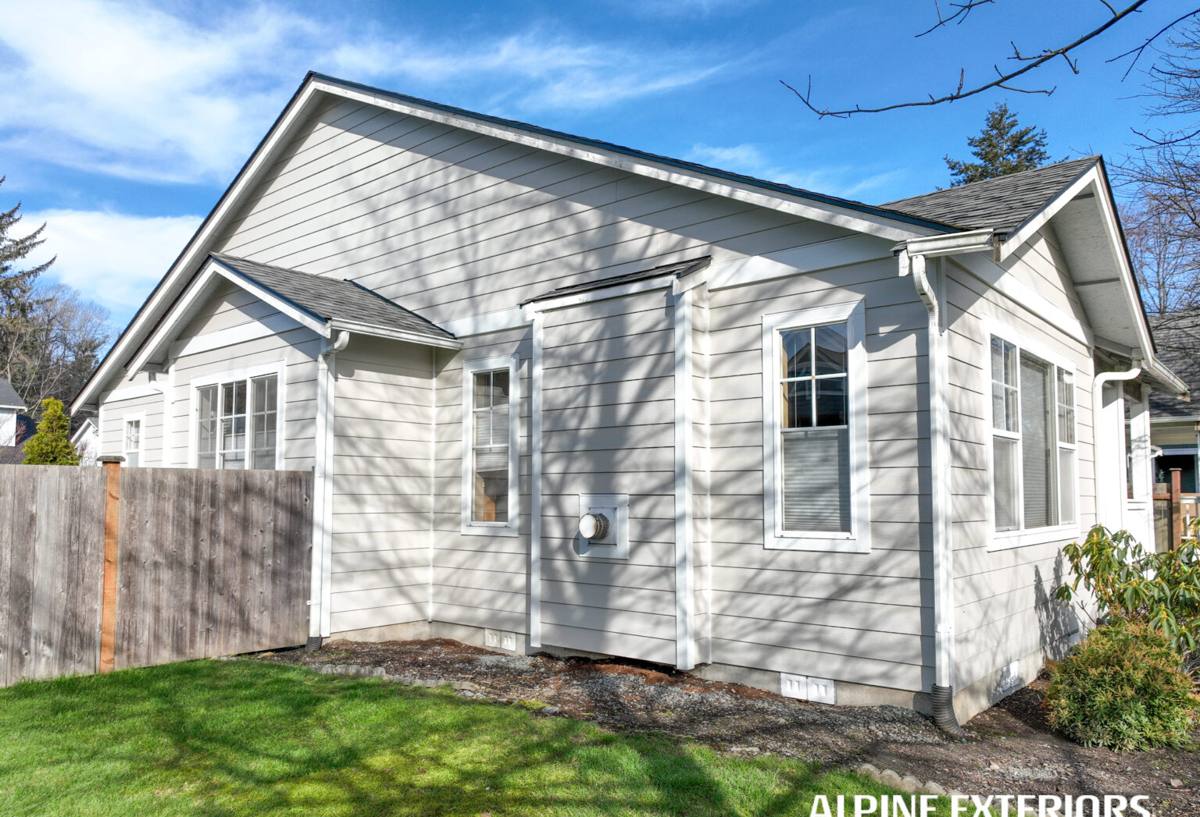
Cordata is a newer part of Bellingham compared to some of the city's older neighborhoods, with a mix of single-family homes, townhomes, and multi-family buildings built out over the past few decades. That means a lot of homes here are now old enough that their original siding — whatever it was — is reaching the point where moisture problems start to show up, particularly on walls that don't get much sun or that face the prevailing weather.
Original Siding Doesn't Always Match the Site
A lot of production-built homes go up with whatever siding spec was standard for the builder at the time, not necessarily what's best suited to a specific lot's sun exposure, drainage, or wind exposure. A home tucked against trees or facing a damp, low-lying area needs a siding system and installation detail that accounts for that — something that's easy to miss when siding decisions get made at the subdivision level rather than the individual house.
What a Correct Fiber Cement Installation Actually Involves
Fiber cement siding is only as good as the wall assembly behind it. A rushed or corner-cut install can leave a home looking right for a few years while moisture quietly works its way in behind the boards. We treat the details below as non-negotiable, not optional upgrades.
Drainage Plane and Weather-Resistive Barrier
Every wall needs a continuous weather-resistive barrier behind the siding, with a drainage gap that lets any water that gets past the cladding drain back out instead of sitting against the sheathing. In a climate with as much sustained rain as Whatcom County gets, this drainage plane is doing real work, not just meeting code minimums.
Flashing at Every Penetration
Windows, doors, hose bibs, light fixtures, and deck ledgers all need proper flashing integrated with the weather barrier before siding goes on. These are the spots where water intrusion actually starts, and they're also the spots most likely to get rushed on a fast production install.
Fastening and Clearances
James Hardie specifies fastener type, spacing, and placement for a reason — done wrong, boards can crack, buckle, or lose their hold over time. Ground clearance and clearance from roof lines, decks, and walkways also need to follow spec so the bottom edge of the siding isn't sitting in standing water or splash-back all winter.
The James Hardie Products We Install
We only install James Hardie fiber cement, in the product lines and finishes that fit how a specific home sits on its lot. The table below covers the main options we work with most often on homes in this area.
| Product | Best Use | Notes for Cordata Homes |
|---|---|---|
| HardiePlank Lap Siding | Most common wall cladding | Available in several profiles and textures; factory ColorPlus finish holds up to sustained damp weather |
| HardiePanel Vertical Siding | Accent walls, gables, modern designs | Pairs well with lap siding for two-material facades |
| HardieShingle Siding | Craftsman and cottage-style homes | Gives a shingle look without the maintenance burden of real wood shingle |
| HardieTrim | Corners, fascia, window and door trim | Matches siding durability so trim doesn't fail before the field siding does |
HZ5 Engineering
James Hardie engineers its products by climate zone. Western Washington falls under the HZ5 designation, built for cooler, wetter regions with freeze-thaw cycles, as opposed to the HZ10 formulation made for hot, humid Southern climates. Using the zone-correct product isn't a marketing detail — it affects how the material handles moisture cycling over the life of the siding.
Our Installation Process
- On-site evaluation — we look at the home's current siding, wall condition, sun and wind exposure, and any moisture or moss issues already showing up.
- Product and color selection — we walk through profile, texture, and ColorPlus color options that fit the home and any HOA or neighborhood expectations.
- Tear-off and wall inspection — old siding comes off and we check sheathing and framing for rot or damage before anything new goes up.
- Weather barrier and flashing — a continuous drainage plane and correct flashing at every penetration, done before a single piece of siding is hung.
- Siding installation — installed to James Hardie's fastening, clearance, and joint specifications, not shortcuts to save labor time.
- Final walkthrough — we go over the finished work with the homeowner and confirm everything meets spec before calling the job done.
Cost Factors for a Cordata Siding Project
Every home is different, but the factors below are what actually move the price on a fiber cement siding job in this area.
| Factor | Why It Matters |
|---|---|
| Home size and wall complexity | More corners, gables, and dormers mean more cutting, trim, and labor time |
| Condition of existing sheathing | Rot or moisture damage found during tear-off adds repair work before siding can go on |
| Siding profile and texture | Lap, panel, and shingle products carry different material and labor costs |
| Trim and accent work | Extensive HardieTrim detailing adds time compared to a simple, single-material facade |
| Site access | Tight lots, fencing, or landscaping close to the house can slow staging and scaffolding |
We give a written, itemized estimate before any work starts, so homeowners can see exactly where the cost is going rather than a single lump-sum number.
Moss, Mildew, and Long-Term Care in a Wet Climate
Fiber cement doesn't feed mold or rot the way wood siding can, but that doesn't make any siding immune to moss and mildew growth on the surface, especially on shaded, north-facing walls that stay damp for long stretches during Bellingham's wet season. ColorPlus factory-applied finish helps because it's more resistant to moisture absorption than field-applied paint, which means less opportunity for growth to take hold and stain the surface over time.
- Keep gutters clear so overflow doesn't run down the siding face
- Trim back vegetation and tree limbs that shade walls and trap moisture
- Rinse siding periodically to remove built-up moss, pollen, and grime
- Check caulking at trim and penetrations annually and re-caulk as needed
- Address any soft spots or staining early, before it points to a wall assembly issue
Why a Crew That Already Works in Cordata Matters
A siding contractor who works regularly in Bellingham and Whatcom County has already seen how the local climate plays out on real homes over multiple seasons — where moss tends to build up, which wall orientations take the worst of the wind-driven rain, and how a wall assembly needs to be built to hold up rather than just look good the day it's finished. That's different from a crew running a generic installation the same way regardless of climate. Familiarity with the area also means realistic scheduling around the wet months and a better sense of what permitting and inspection expectations look like locally.
What to Ask Before You Sign a Siding Contract
Whatever contractor you're considering, these are worth asking directly before you sign anything:
- Are you a certified installer for the specific siding product being quoted?
- What weather-resistive barrier and flashing details are included in the bid?
- Is the estimate itemized, or a single lump-sum number?
- What happens if rot or damage is found once old siding comes off?
- What warranty covers the product, and what separately covers the labor and workmanship?
- Can you provide proof of licensing and insurance for work in Washington State?
If you're weighing siding options for a home in Cordata, we're happy to take a look and walk you through what we'd recommend — no pressure, no obligation. A free estimate is a low-cost way to get a straight answer on what your home actually needs.