 Bellingham Exterior
 Board & Batten Siding in Happy Valley: Built for This Neighborhood's Weather
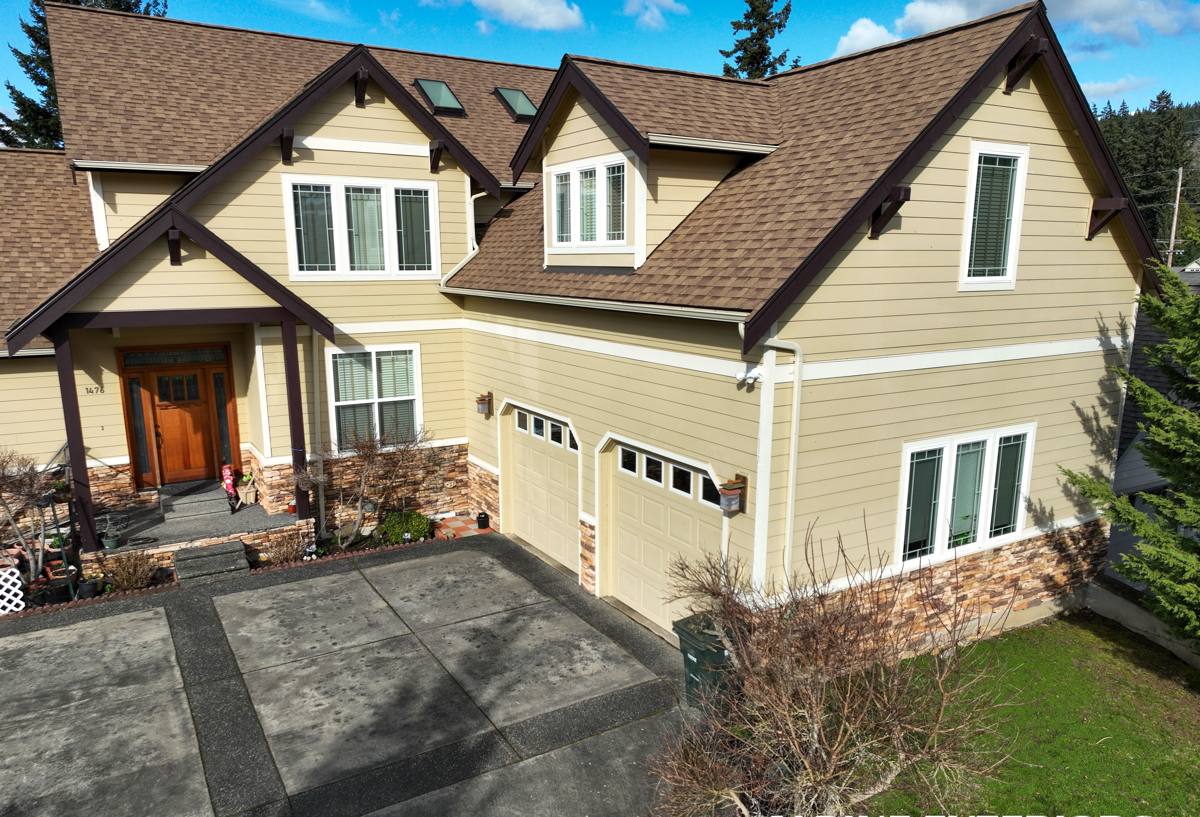
Happy Valley is one of Bellingham's older, well-established residential pockets, and it shows in the housing stock: a mix of craftsman bungalows, mid-century ramblers, and newer infill homes that all lean toward clean, vertical lines. Board and batten siding fits that character naturally. It's a classic Pacific Northwest look, and when it's installed correctly with the right material, it holds that look for decades instead of five or six years.
The problem is that "installed correctly with the right material" is doing a lot of work in that sentence. Board and batten is a style, not a guarantee of performance. We've been called out to Happy Valley homes with board and batten siding that was failing at year seven or eight because it was built out of a product or a detail that couldn't handle what this part of Whatcom County throws at it. This page is about what actually holds up here, and what a correct board and batten job looks like from the ground up.
What Bellingham's Climate Does to Board & Batten Siding
Board and batten has more seams than lap siding. Every vertical batten creates a joint, and every joint is a place where water, salt, and moss can find a way in if the install isn't done right. In Happy Valley's specific conditions, that matters more than it would somewhere drier and calmer.
Salt Air
Homes in and around Bellingham sit close enough to Bellingham Bay that salt-laden air is a real factor, not a theoretical one. Salt air accelerates corrosion on exposed fasteners and metal flashing, and it breaks down cheap paint and coatings faster than inland air does. Any board and batten system here needs corrosion-resistant fasteners and a factory finish that's engineered to hold color and integrity against that exposure — not a job-site paint job that starts chalking in a few seasons.
Driving Rain
Whatcom County doesn't just get a lot of rain — a meaningful share of it comes in sideways during winter storms, driven by wind off the water. Driving rain finds horizontal battens, unsealed joints, and any spot where the siding sits flush against the wall without a drainage path. Board and batten is more vulnerable to this than lap siding because of how many vertical seams it has, which makes the flashing and gap details behind the boards the single most important part of the job.
Moss Season
Bellingham's moss season runs long — shaded, north-facing walls and anything near overhanging trees can stay damp for months at a stretch. Moss and algae don't just look bad; they hold moisture against the siding surface, which is exactly what accelerates rot in wood-based products and finish breakdown in lower-grade fiber cement. Board and batten's vertical battens create narrow shadow lines that trap moisture longer than a flat panel would, so material choice and surface prep both matter here.
What Correct Board & Batten Installation Actually Involves
A lot of the failures we see in Happy Valley and around Bellingham trace back to shortcuts that aren't visible once the siding is up — which is exactly why they're worth explaining.
- A drainage gap behind the siding. Board and batten should never be nailed flush against the weather-resistive barrier. A rainscreen gap lets any water that gets past the surface drain and dry out instead of sitting against the sheathing.
- Proper flashing at every horizontal transition. Window heads, door heads, roof lines, and any horizontal trim need flashing detailed to shed water outward, not into the wall assembly.
- Corrosion-resistant fasteners. Given the salt air here, that means fasteners rated for coastal exposure — not standard interior-grade nails or screws that will bleed rust through the finish within a few years.
- Correct batten spacing and fastening pattern. Battens need to be fastened into structural framing at the manufacturer's specified intervals, with room for the material to expand and contract with temperature and moisture swings.
- Factory-finished material, not field-painted. A factory finish is baked on under controlled conditions and holds up far better against UV, salt air, and moss growth than paint applied on site.
- Caulking only where it belongs. Over-caulking board and batten joints traps moisture instead of letting it drain — a detail that's easy to get wrong if a crew is used to working with lap siding.
The Material We Use: James Hardie Fiber Cement
We install James Hardie exclusively, and board and batten applications are one of the clearest cases for why. Hardie's vertical siding and batten systems are fiber cement — a mix of cement, sand, and cellulose fibers engineered to resist moisture, fire, and pests in a way that wood-based and polymer-based sidings can't fully match.
Hardie's ColorPlus finish is baked on in a factory-controlled process, which means it resists the fading, chalking, and peeling that salt air and UV exposure cause faster on field-painted or lower-grade finishes. Hardie also engineers different product lines (HZ5, HZ10) for different climate zones, so the material specified for a Whatcom County home is built for exactly the freeze-thaw cycles, moisture load, and coastal exposure this region delivers — not a generic national spec.
None of that removes the need for correct installation. Even the best material fails if it's hung without a drainage gap or fastened with the wrong hardware. Material and installation both have to be right, and that's the standard we hold every job to.
Board & Batten Material Comparison
| Material | Performance in Salt Air & Driving Rain | Moss/Moisture Resistance | Finish Longevity | Long-Term Maintenance |
|---|---|---|---|---|
| James Hardie Fiber Cement | Engineered for coastal exposure; non-combustible | Resists moisture damage when installed with proper drainage | Factory ColorPlus finish, rated for years before repaint | Low — periodic washing, no repainting on typical cycle |
| Cedar / Primed Spruce | Attractive but vulnerable to swelling, splitting, and salt exposure | Prone to rot and moss retention without diligent upkeep | Field-painted; fades and requires recoating on a shorter cycle | High — regular painting, caulking, and rot inspection |
| Vinyl | Can warp or crack under temperature swings and wind-driven rain | Doesn't rot, but seams and J-channels trap moisture and grime | Color molded in but fades over time; can't be easily refinished | Low, but limited repair options and shorter realistic lifespan |
| LP SmartSide | Engineered wood core; performs well when sealed edges stay intact | Vulnerable at cut edges and joints if sealing isn't maintained | Field or factory finish depending on install; edge sealing critical | Moderate — edge maintenance is essential to avoid swelling |
Our Process for Happy Valley Homes
1. On-Site Assessment
We walk the home and look at what's actually happening on the walls — existing siding condition, moisture staining, moss buildup on shaded elevations, and how the home is oriented relative to wind and rain exposure. Happy Valley's mix of older and newer homes means every house has a different starting point.
2. Tear-Off or Overlay Decision
If the existing siding or sheathing shows moisture damage, we don't cover it up. Board and batten installed over a compromised wall assembly will fail regardless of how good the new material is, so we're upfront about what needs to come off versus what can stay.
3. Weather Barrier and Drainage Plane
We install or verify the weather-resistive barrier and set up the rainscreen drainage gap before a single board goes up. This is the step that determines whether the siding survives driving rain over the long haul, and it's the step that's easiest to skip if a crew is in a hurry.
4. Installation to Manufacturer Spec
Boards and battens go up with James Hardie's specified fastener type, spacing, and flashing details — matched to the HZ product line appropriate for this climate zone.
5. Final Inspection
We walk the finished job checking every seam, flashing point, and fastener line before calling it complete.
Maintenance: What Happy Valley Homeowners Should Actually Do
Board and batten installed correctly with James Hardie material doesn't demand much upkeep, but a little seasonal attention goes a long way in this climate.
- Rinse siding annually, especially shaded or north-facing walls, to keep moss and algae from establishing.
- Trim back trees and shrubs that keep siding shaded and damp for extended periods.
- Check caulking around windows, doors, and trim once a year and have any cracked or missing sections addressed.
- Watch for any staining or discoloration at the base of battens, which can signal a drainage issue worth having looked at.
- Keep gutters and downspouts clear so roof runoff isn't dumping extra water onto siding below.
Why a Crew That Already Works Happy Valley Matters
Board and batten siding done wrong doesn't usually fail in year one — it fails in year six or seven, once the drainage gap that was never installed finally lets enough water behind the wall to cause real damage. By then, the homeowner is looking at sheathing repair, not just a siding job.
A crew that regularly works this neighborhood and the surrounding Bellingham area already knows which elevations tend to hold moss the longest, how local permitting works, and what wind and rain exposure looks like on this side of Whatcom County. That's not a substitute for doing the technical details right — but it means fewer surprises and fewer callbacks, because the crew has already seen how this specific climate treats a house like yours.
Get a Straight Answer for Your Home
If you're weighing board and batten siding for a Happy Valley home, we're happy to take a look, walk you through what your specific house needs, and give you a straightforward, no-pressure estimate — no inflated claims, just an honest read on the work involved. Fill out the form below to get started.