 Bellingham Exterior
 Storm Damage Roof Repair for Happy Valley Homes
Happy Valley sits close enough to Bellingham Bay and the surrounding hills that its roofs take a different kind of beating than roofs twenty miles inland. Salt-laden air off the water, wind that funnels through the low ground near Padden Creek and the I-5 corridor, and long stretches of steady winter rain all work on a roof at the same time. When a storm rolls through, the damage isn't always obvious from the driveway. A few lifted shingles, a strained flashing seam, or a soft spot under a moss patch can sit quietly for months before they turn into a stained ceiling or a rotted deck board. This page covers what storm damage actually looks like on a Happy Valley roof, what a correct repair involves, and how our process works when you call us in after a storm.
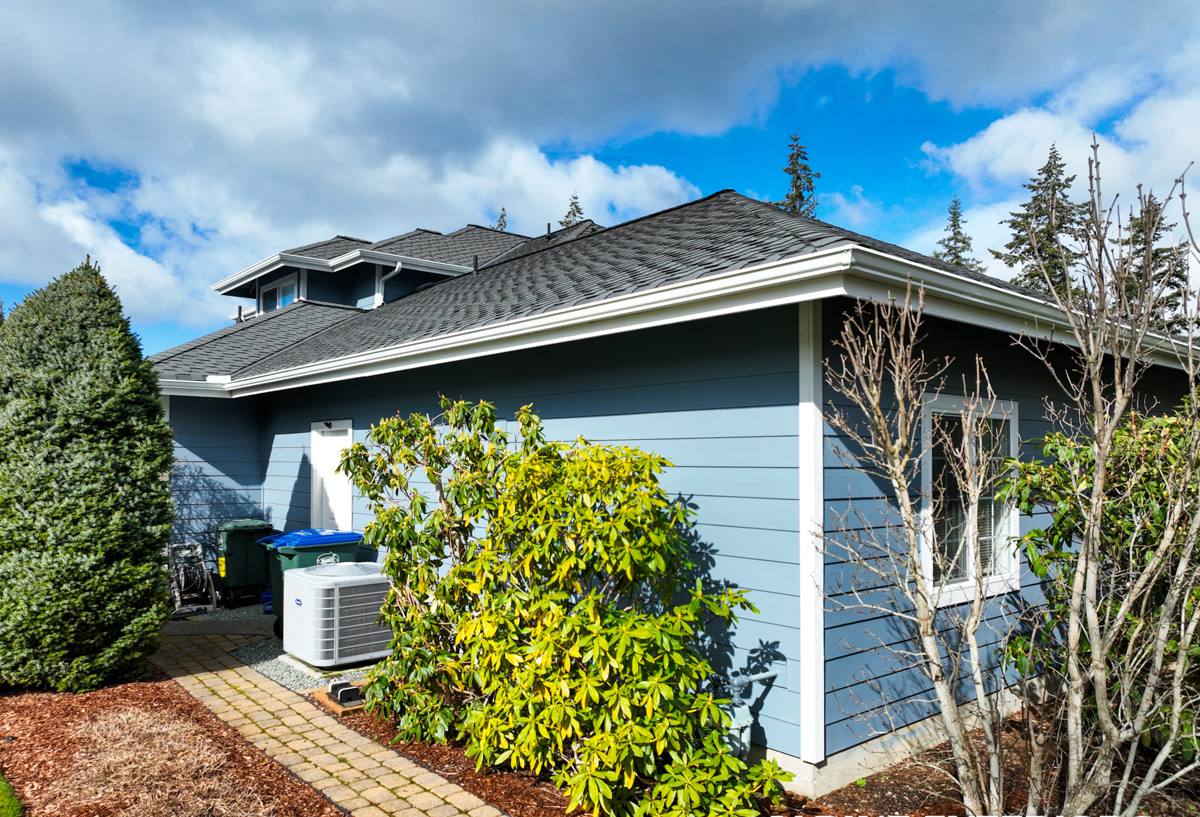
Why Happy Valley Roofs Take a Beating
Bellingham's location on the water gives Happy Valley a specific mix of weather stress that not every roofing job accounts for. Understanding it is the first step in diagnosing storm damage correctly instead of just patching the symptom.
Salt Air and Metal Fatigue
Homes closer to the bay deal with airborne salt that accelerates corrosion on exposed metal — flashing, nail heads, gutter fasteners, and vent stacks. A storm that would leave an inland roof untouched can be enough to finish off flashing that salt air has already been quietly weakening for years.
Driving Rain and Wind-Driven Water
Whatcom County storms rarely come straight down. Wind pushes rain sideways under shingle edges, into valleys, and around chimney and skylight flashing that would shed water fine in a calm rain. This is why storm damage often shows up as an interior leak in a spot that looks completely dry from the ground.
The Long Moss Season
Bellingham's wet, mild climate gives moss nearly nine months a year to establish itself on north-facing slopes and shaded roof sections. Moss holds moisture against the shingle surface, lifts tabs as it grows, and gives wind something to grab onto during a storm. A roof with an established moss problem is more vulnerable to storm damage than a clean one, even if the shingles themselves aren't old.
Wind Gusts Off the Terrain
The mix of open water, low valley ground, and surrounding hills around Bellingham can accelerate wind gusts through certain neighborhoods more than official weather reports for the area suggest. Roofs with older or already-compromised shingles are the first to show it.
What Counts as Storm Damage — and What Doesn't
Not every roof problem after a storm is storm damage, and that distinction matters for both the repair approach and any insurance claim.
- Wind-lifted or torn shingles — tabs creased, cracked, or missing along ridges and edges where wind pressure is highest
- Granule loss from wind-driven debris — bald patches that expose the asphalt mat underneath
- Flashing separated or bent — around chimneys, skylights, sidewalls, and roof-to-wall transitions
- Gutter and downspout damage — pulled fasteners, dents, or sections torn loose in high wind
- Punctures from falling branches or debris — common under mature trees, which much of Happy Valley has
- Pre-existing wear that a storm exposed — moss-softened decking, already-brittle shingles, or old nail pops that finally let go
That last category is the one worth being honest about. A storm can be the trigger that reveals a roof issue that was already developing — it doesn't automatically make everything a storm claim, and a contractor who tells you otherwise isn't doing you any favors when the insurance adjuster shows up.
What a Correct Storm Damage Repair Actually Involves
A quick patch job can stop a leak for a season and let the underlying problem keep going. A correct repair addresses the water path, not just the visible hole.
Finding the Real Entry Point
Water often travels along the underlayment or decking before it shows up as a stain, so the leak inside the house is rarely directly below the damage outside. A proper inspection traces the path from the interior stain back up through the attic or roof deck to the actual entry point.
Checking the Decking, Not Just the Surface
If water has been getting in for any length of time, the plywood or plank decking underneath can be soft, delaminated, or rotted. Replacing shingles over compromised decking is a repair that fails again within a year or two.
Matching Underlayment and Flashing to the Exposure
In a wind-and-rain climate like Bellingham's, ice-and-water shield or a high-quality synthetic underlayment at vulnerable points — valleys, eaves, chimney and skylight perimeters — does more long-term good than upgrading shingle brand alone. Flashing gets bent, cut, and set to actually shed water sideways, not just laid flat and caulked.
Reworking Fastening for Wind
Shingles that were nailed high or under-nailed are a big reason storms peel them off in the first place. A correct repair re-nails surrounding shingles to proper pattern and exposure, not just the damaged section.
Our Process When You Call Us In
- Initial call and photos. We ask what you're seeing — interior stains, missing shingles, debris on the ground — and get a rough sense of urgency before we come out.
- On-site inspection. We walk the roof and the attic where accessible, checking flashing, decking, and the areas most exposed to wind-driven rain, not just the spot you noticed.
- Plain-language explanation. We tell you what we found, what's storm-related versus pre-existing wear, and what the repair options are — including when a smaller repair is genuinely the right call over a bigger sell.
- Documentation. If you're filing an insurance claim, we document the damage with photos and a written scope that matches what an adjuster will expect to see.
- Repair. We complete the work to match your existing roof system, using materials suited to Whatcom County's wet, wind-exposed climate.
- Cleanup and walkthrough. Debris and old material hauled off, and we walk the finished repair with you before we consider the job done.
Repair vs. Replacement — What Actually Decides It
Storm damage doesn't always mean a full roof replacement, and it doesn't always mean a small patch is enough either. The honest answer depends on a few factors.
| Factor | Leans Toward Repair | Leans Toward Replacement |
|---|---|---|
| Age of roof | Under roughly 10-12 years | Near or past expected shingle lifespan |
| Extent of damage | Isolated to one section or slope | Spread across multiple areas |
| Decking condition | Solid, dry underneath | Soft, delaminated, or rotted in multiple spots |
| Moss/algae history | Minor, manageable with cleaning | Long-term moss damage to multiple courses |
| Matching materials | Discontinued shingle still patchable | Shingle line discontinued, visible mismatch unavoidable |
We'll tell you honestly which side of that table your roof falls on. A repair that's genuinely enough is the right answer far more often than a full tear-off — but when the decking or the roof's age make repair a short-term fix, we'll say so plainly.
Storm Damage Insurance Claims in Whatcom County
Most homeowner policies cover sudden storm damage — wind, falling debris, hail — but they distinguish that from gradual wear, deferred maintenance, or moss damage that built up over years. That distinction is exactly why documentation matters. We provide photos and a written scope of the storm-caused damage specifically, which helps if you're working with an adjuster. We're not a public adjuster and we don't handle your claim for you, but we'll give you an honest, accurate scope you can bring to your insurer rather than an inflated one built to maximize a payout.
Why a Crew That Already Works Happy Valley Matters
A roofing crew that works this specific area regularly builds up knowledge that a one-time inspection can't replicate. We know which roof orientations in Happy Valley tend to hold moss longest, which flashing details tend to fail first under salt air and driving rain, and roughly what to expect from a given storm system based on how it tracks across Bellingham Bay. That local pattern recognition speeds up diagnosis and helps us catch related problems — a second weak flashing point, decking that's starting to soften nearby — before they turn into a second service call.
There's also a practical response-time advantage. After a significant wind event, roofing crews get busy fast across Whatcom County. A crew already routed through your neighborhood can typically get a tarp or temporary repair on an active leak sooner than one dispatching from farther away — and getting water stopped quickly is often the single biggest factor in keeping a storm repair small instead of letting it become a decking or insulation replacement too.
After a Storm: What to Check Before We Arrive
If you suspect storm damage, a few careful checks from the ground and inside the house help us diagnose faster once we're on site.
- Look for shingle pieces or granules in the yard or gutters after a storm
- Check ceilings and upper closets for new stains, especially near chimneys, skylights, or exterior walls
- Note any new drafts or daylight visible in the attic, if you can access it safely
- Photograph any visible roof damage from the ground — don't climb up yourself
- Check gutters and downspouts for dents, separation, or pulled brackets
- If a leak is active, place a container to catch water and move anything valuable out of the drip path
- Avoid tarping the roof yourself in wet or windy conditions — a poorly secured tarp can cause more damage than the original leak
Getting It Right the First Time
The cost of a storm repair isn't just the materials and labor — it's what happens if the fix doesn't actually address how water moves across your specific roof in Bellingham's wind-and-rain pattern. A repair that ignores flashing detail, decking condition, or the fastening pattern that failed in the first place is a repair you'll likely be paying for twice. Our approach is to fix the actual cause, be plain with you about what's necessary versus optional, and leave the roof in a condition that holds up through the next storm season, not just until the next inspection.
If you've got storm damage on a Happy Valley roof, or you just want an honest look after a rough weekend of wind and rain, we're happy to come take a look. Reach out for a free, no-pressure estimate using the form below.