 Bellingham Exterior
 Sudden Valley's Climate Is Harder on Siding Than It Looks
Sudden Valley sits on the wooded south shore of Lake Whatcom, and that setting changes how siding ages compared to a home out in the open. Heavy tree canopy keeps walls shaded for long stretches of the day, which means siding stays damp longer after every rain instead of drying out in the sun. Add in the marine-influenced weather that moves through Whatcom County off Bellingham Bay and the Salish Sea, the driving rain that comes with fall and winter storms, and the long, mild, overcast stretch of the year that lets moss and algae get established, and you have a climate that is genuinely tougher on exterior cladding than most homeowners realize until they're dealing with it firsthand.
Wood-based and composite sidings respond to that moisture cycle by swelling, delaminating, or losing paint adhesion at the seams and butt joints. Moss doesn't just sit on top of siding — it holds water against the surface, which speeds up whatever failure mode the material is already prone to. On a shaded, lake-adjacent lot, that cycle repeats more often and recovers more slowly than it would on a sunnier, more exposed street closer to downtown Bellingham.
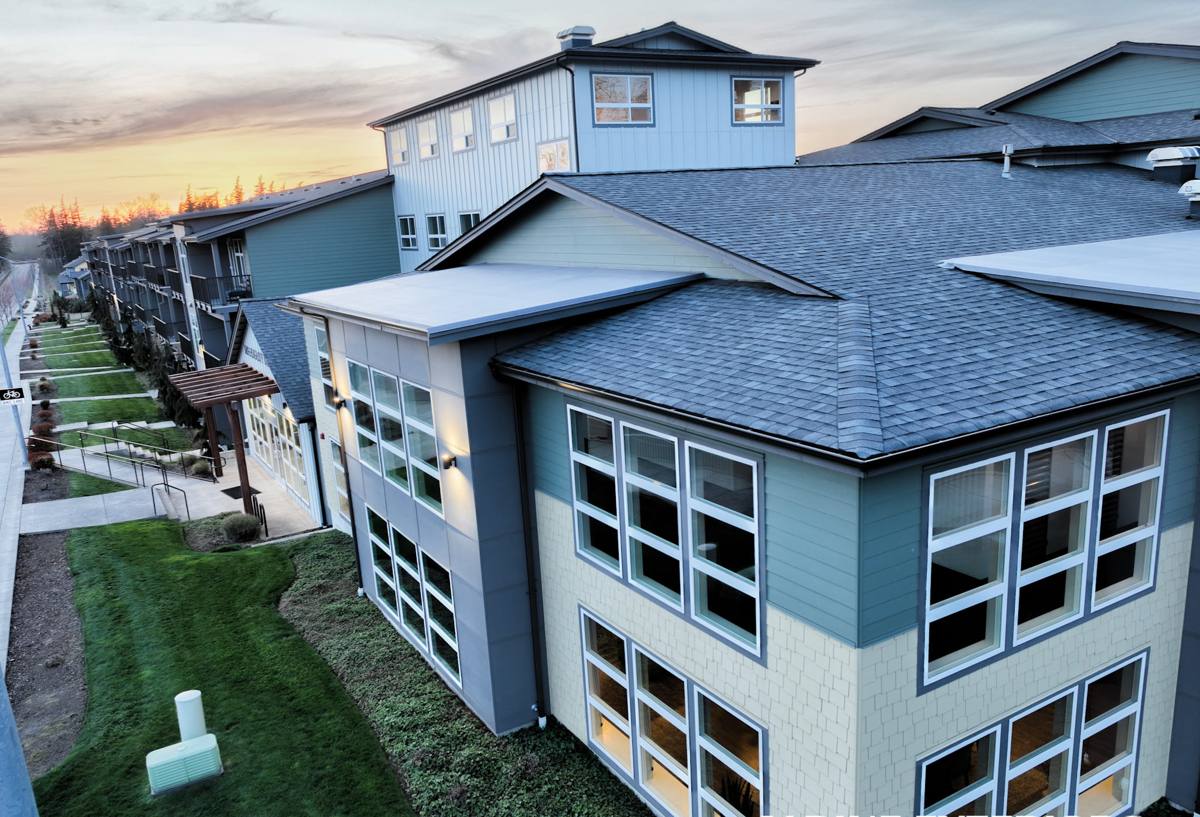
What James Hardie Fiber Cement Actually Solves Here
James Hardie siding is fiber cement — sand, cement, and cellulose fiber pressed and cured into a dense, dimensionally stable board. It doesn't absorb water the way wood does, it won't swell or rot at the edges, and it's non-combustible. For a wooded lot like the ones common in Sudden Valley, that non-combustible quality matters for more than fire code reasons — it's simply a material that doesn't feed the moisture-and-decay cycle the surrounding trees create.
Hardie's ColorPlus finish is baked on in a factory under controlled conditions, not brushed on outdoors. That matters directly for a shaded, damp lot: factory-cured finish holds up to moss and mildew staining and UV fade far more evenly than field-applied paint, which tends to age unevenly when parts of a wall stay wet longer than others.
Why We Don't Install Vinyl or Bare Wood Siding in a Spot Like This
Vinyl siding is inexpensive and easy to install, and that's a real advantage in the right situation. But it's a thin material that expands and contracts with temperature swings, and its seams rely on overlap rather than a sealed joint — in a shaded, consistently damp environment, that gives moss and moisture an easy path behind the panel where nobody can see it happening. Cedar and other bare wood sidings look great when new, but they need regular refinishing to hold up, and that maintenance burden only grows under tree cover where wood never fully dries out between rains. Neither is a defect in the product so much as a mismatch with this specific climate, which is why we standardized on Hardie fiber cement instead of carrying multiple product lines.
Choosing the Right Hardie Line for a Wooded, Lakeside Lot
Hardie makes several product lines, and the right choice depends on the home's style and how much shade and moisture exposure a given wall sees.
| Product | Best Use | Why It Works in Sudden Valley |
|---|---|---|
| HardiePlank lap siding | Primary field siding on most walls | Engineered HZ5 formulation built for the Pacific Northwest's wet, mixed climate zone |
| HardieShingle | Gables, accent walls, cedar-shake look | Delivers a wooded-lot aesthetic without wood's refinishing burden |
| HardieTrim | Corner boards, window and door trim | Matches the field siding's moisture resistance at vulnerable edges |
| HardiePanel | Modern vertical sections, accent panels | Clean look for contemporary lake-lot homes, same fiber cement durability |
Color is worth thinking through carefully on a shaded lot. Very light, bright colors show green moss staining faster in deep shade than muted, natural tones do — not because the finish is weaker, but because contrast makes early growth more visible. Darker earth tones, greens, and grays tend to blend with the surrounding tree cover and hide the gradual buildup that happens between cleanings. Because ColorPlus color is baked in at the factory rather than painted on site, the color stays consistent across the whole wall even where shade and sun exposure differ from one side of the house to another.
What a Correct Installation Actually Involves
Fiber cement siding is only as good as the assembly behind it. On a shaded, moisture-heavy lot, the details that get skipped on a rushed job are exactly the ones that matter most.
- Full tear-off of the old siding so the sheathing can actually be inspected — hidden rot behind old siding is more common on shaded walls than most homeowners expect
- A continuous, correctly lapped weather-resistive barrier behind the new siding
- Proper flashing at every window, door, and roof-to-wall intersection, not reused flashing from the old install
- The 1/4-inch gap and sealant Hardie specifies at trim and butt joints, so water has somewhere to go instead of getting trapped
- Corrosion-resistant fasteners, driven to Hardie's spacing and depth spec rather than face-nailed at random
- Minimum clearance from grade, decks, and roof lines, kept clear of soil, mulch beds, and dense plantings that hold moisture against the bottom edge
Where Corners Get Cut
The most common shortcuts we see on lake-adjacent, heavily landscaped lots are siding installed too close to grade or deck surfaces, cut edges that weren't back-primed before installation, and flashing that gets reused instead of replaced during a re-side. None of these show up as a problem on day one — they show up two or three wet seasons later, which is exactly why they get cut in the first place on jobs that are priced or scheduled too tight.
What Drives the Cost of a Sudden Valley Hardie Install
| Factor | Why It Matters |
|---|---|
| Sheathing condition | Rot found during tear-off on a shaded wall needs repair before new siding goes on |
| Home size and wall complexity | More corners, gables, and roof intersections mean more flashing and trim work |
| Product line and profile | HardiePlank, HardieShingle accents, and trim packages price differently |
| Access and site conditions | Tree cover, slopes, and tight lake-lot setbacks affect staging and scaffolding |
| Color and finish selection | Standard ColorPlus colors versus custom-matched finishes |
We give a firm number after walking the specific home — anyone quoting a whole-house price over the phone hasn't seen what's actually behind the existing siding.
Our Process, Start to Finish
- On-site assessment, including checking the existing sheathing for moisture damage before we ever quote a number
- A written proposal covering the Hardie product line, profile, color, and trim package for the home
- Full tear-off and any needed sheathing repair, done before a single new board goes up
- Installation to Hardie's fastening, flashing, and clearance specifications
- Final walkthrough and cleanup before we call the job done
Why a Crew That Already Works in Sudden Valley Matters
Sudden Valley is a private, amenity-based community, and homes there often go through an architectural or color approval process before exterior work can start — that's a step a crew unfamiliar with the neighborhood can easily miss or delay. A crew that has worked there before also knows what to expect walking up to an older lake-lot home: wall assemblies from a different building era, shaded sides that hold moisture differently than sun-facing ones, and site access that isn't always as simple as pulling a trailer up to the curb. That familiarity translates into fewer surprises mid-project and a smoother path through whatever local approval steps apply, in addition to the standard Whatcom County permitting any siding replacement requires.
Living with Hardie Siding in a Moss-Heavy Environment
Correctly installed Hardie siding needs far less upkeep than wood, but "less" isn't "none" on a shaded, wet lot. A little routine care keeps it looking right for the long haul.
- Rinse siding down at least once a year, more often on north-facing or heavily shaded walls
- Keep gutters and downspouts clear so water isn't sheeting down the wall below them
- Trim back branches and shrubs that keep a wall shaded and reduce airflow
- Check caulking at trim and butt joints yearly and touch up before gaps open up
- Skip high-pressure direct spray on siding and seams — use a garden-hose-pressure rinse instead
- Use only Hardie-approved touch-up products if a repaint or touch-up is ever needed, to keep the finish performing as designed
If you're weighing a siding replacement on a shaded or lake-facing Sudden Valley home, we're happy to take a look and give you a straightforward, no-pressure estimate — including an honest read on what's likely underneath the existing siding before any work starts.