 Bellingham Exterior
 Storm Damage Roof Repair in Lynden
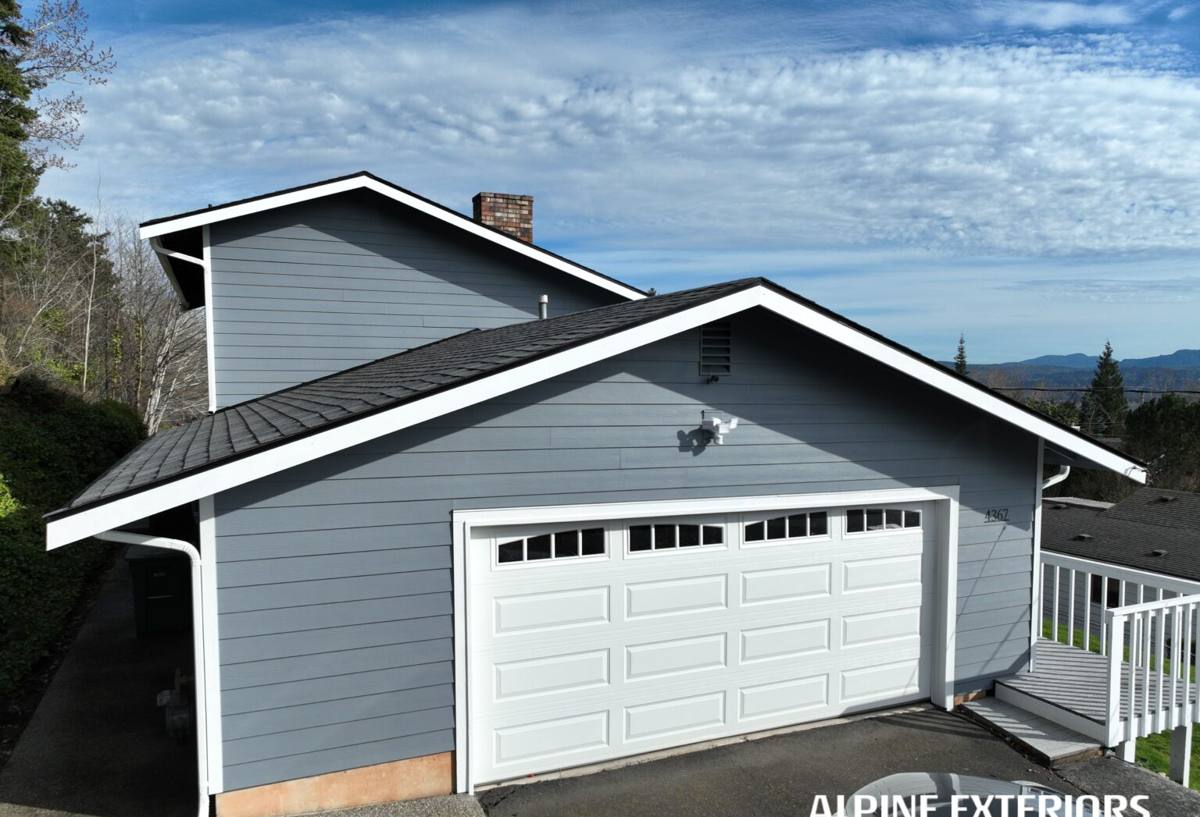
Lynden sits far enough inland from Bellingham Bay to feel a little sheltered, but that doesn't mean the roofs here get an easy ride. Winter windstorms funnel down from the Fraser Valley, heavy rain sits on low-slope sections for days at a time, and the same damp, shaded conditions that make Whatcom County farmland so productive also make roofs here prime real estate for moss. When a storm knocks loose shingles, lifts flashing, or drives water under a roof edge, the damage is rarely limited to what you can see from the ground. We repair storm-damaged roofs for homeowners in and around Lynden, and this page walks through what that work actually involves — not a generic "we fix roofs" pitch, but the specifics of doing it right in this climate.
What Lynden's Climate Does to a Roof
Three things drive most of the storm repair calls we get out this way:
Wind-Driven Rain
Pacific storm systems moving through Whatcom County often bring rain sideways, not straight down. That matters because a roof designed to shed water vertically can still leak when wind forces rain up under shingle tabs, around vent boots, or through nail holes that were never meant to see standing water pressure. A storm doesn't have to rip shingles off to cause a leak — it just has to push water somewhere it isn't supposed to go.
Long Moss Season
Lynden's tree cover, valley humidity, and mild wet winters add up to a moss season that runs longer than what homeowners in drier parts of the state deal with. Moss holds moisture against the roof surface, works its way under shingle edges, and lifts tabs just enough for wind and rain to get underneath during the next storm. A roof with active moss growth is more vulnerable to storm damage than a clean one, and moss damage often gets misdiagnosed as "just cosmetic" until a storm turns it into an active leak.
Salt Air Influence
Even well inland, Whatcom County's proximity to Bellingham Bay and the Salish Sea means metal roofing components, fasteners, and flashing are exposed to more airborne salt than they would be in a landlocked region. Salt exposure accelerates corrosion on lower-grade fasteners and unprotected metal edges, which is a big part of why we're particular about the hardware we use on repairs — corroded flashing or fasteners are a common hidden cause of leaks that show up "out of nowhere" after a storm.
What Storm Damage Actually Looks Like
Homeowners often expect storm damage to be obvious — missing shingles scattered across the yard. Sometimes it is. More often it's subtler:
- Shingle tabs that are lifted or creased but still attached — these will fail in the next wind event even if they aren't leaking yet
- Granule loss visible in gutters or downspouts after a storm, signaling accelerated shingle wear
- Flashing pulled away from chimneys, skylights, or wall intersections
- Bent, dented, or lifted ridge caps
- Debris impact damage from branches or wind-carried material
- Water staining on interior ceilings that appears days after the storm, not during it
- Soft spots or sagging in the roof deck felt underfoot during inspection
That gap between "the storm happened" and "the leak shows up inside" is exactly why we recommend a roof inspection after any significant wind or rain event, even if nothing looks obviously wrong from the driveway.
Our Storm Repair Process
We approach storm repair as a diagnostic job first and a repair job second. Rushing straight to patching the visible damage without figuring out how water actually got in is how homeowners end up calling back six months later for the same leak in a slightly different spot.
1. Inspection and Documentation
We walk the roof (weather permitting) and check the attic or accessible roof deck from below for staining, damp insulation, or daylight coming through anywhere it shouldn't. We photograph findings for insurance purposes if you're planning to file a claim.
2. Honest Damage Assessment
We tell you plainly whether you're looking at a targeted repair, a larger section replacement, or — if the roof is already near the end of its service life — whether repair is even the most cost-effective option. We don't pad scope, and we don't downplay it either.
3. Temporary Weatherproofing (When Needed)
If a roof has active exposure and full repair can't happen immediately, we can install temporary protection to stop water intrusion while materials or scheduling come together.
4. The Repair Itself
Depending on the damage, this might mean replacing individual shingles and matching the existing course lines, resetting or replacing flashing, rebuilding a damaged ridge, or repairing deck sheathing that's been compromised by sustained moisture. We match materials as closely as possible so a repair doesn't stand out as an obvious patch.
5. Final Walkthrough
We show you what was done and why, including anything we found that's worth keeping an eye on going forward — moss regrowth risk, aging flashing nearby, that sort of thing.
Repair vs. Replacement: How We Decide
Not every storm-damaged roof needs a full replacement, and not every roof is worth repairing again. Here's how we generally think through it:
| Factor | Leans Toward Repair | Leans Toward Replacement |
|---|---|---|
| Roof age | Under roughly 12-15 years, asphalt shingle | Nearing or past manufacturer's expected service life |
| Damage extent | Isolated to one section or a few penetrations | Spread across multiple roof planes |
| Underlying deck condition | Solid, dry sheathing | Soft spots, rot, or repeated moisture intrusion |
| Prior repair history | First or second storm repair | Multiple past patches in different areas |
| Shingle condition elsewhere | Granule loss minimal, tabs still flexible | Widespread brittleness or granule loss |
When a roof falls into a gray area, we'll walk you through the trade-offs rather than just picking a side for you.
Why Local Storm Repair Experience Matters
A crew that works Bellingham and Whatcom County regularly sees the same weather patterns hit the same neighborhoods year after year, and that pattern recognition is worth something. We know which roof orientations in this area tend to take the brunt of prevailing storm winds, which shaded, tree-covered lots need more aggressive moss management, and which flashing details tend to fail first when salt-influenced air and driving rain work on them together over time. That's the kind of judgment that's hard to get from a crew passing through the area for one job.
It also matters for response time. Storm damage doesn't wait for a convenient week, and a roof with active water intrusion gets worse every day it sits unaddressed. Working locally means we can typically get eyes on a Lynden-area roof faster than an out-of-town outfit, and we're not disappearing once the invoice is paid — if something related to the repair needs a follow-up look, we're still in the area.
What We Won't Do
We won't recommend a full roof replacement when a targeted repair will genuinely hold up, and we won't quote a "quick patch" on a roof that's clearly failing structurally just to get a cheaper number in front of you. We also won't cut corners on flashing and fastener quality to save a few dollars on a job in an area where salt air and sustained moisture are already working against the roof. Those shortcuts show up as callbacks, and we'd rather do it right the first time.
A Practical Post-Storm Checklist
If a windstorm or heavy rain event has just come through Lynden, here's what's worth doing before you call anyone:
- Check gutters and the ground around your home for shingle granules or shingle pieces
- Look at your ceilings for new staining, especially near chimneys, skylights, or where roof planes meet
- Check your attic (if accessible) for damp insulation, daylight, or a musty smell
- Note the date and general conditions of the storm — useful if you end up filing an insurance claim
- Avoid getting on the roof yourself, especially if it's wet or you can see visible damage
- Photograph any visible exterior damage from the ground if it's safe to do so
If you check these and something looks off — or even if nothing looks off but the storm was severe — it's worth having a professional take a closer look before the next round of weather.
Insurance and Storm Claims
Many storm repairs in this area are at least partially covered by homeowner's insurance, depending on your policy and the cause of damage. We can document damage clearly and provide the kind of assessment that supports a claim, but we're a roofing crew, not an insurance adjuster — we'll give you honest findings, and you or your adjuster make the coverage determination. Getting an inspection soon after a storm, rather than waiting, generally makes the claims process smoother because the damage is easier to tie directly to a specific weather event.
Getting Started
If your Lynden-area home has visible storm damage, a slow leak you can't quite place, or you just want a roof checked out after a rough stretch of weather, we're glad to take a look. If you'd like a free, no-pressure estimate, fill out the form below and we'll get in touch to schedule a time that works for you.