 Bellingham Exterior
 Why Sudden Valley Roofs Work Harder Than Most
Sudden Valley sits in a wooded, lake-adjacent setting east of Bellingham, and that setting shapes what a roof has to deal with year-round. Mature tree canopy means near-constant shade on large sections of most roofs, which slows drying time after every rain. Whatcom County's marine climate adds long stretches of steady drizzle rather than short hard downpours, so water sits on roofing surfaces for hours or days at a time instead of running off quickly. Add in wind-driven rain funneling across the lake and through the tree line, and you get a roofing environment that punishes anything that doesn't shed water fast and stay sealed at every seam.
Moss is the most visible symptom of this. Shaded, damp roof sections in this neighborhood can grow moss within a single wet season if the surface holds moisture, and moss doesn't just look bad — it lifts shingle edges, holds water against fasteners, and accelerates rot in the decking underneath. A metal roof doesn't eliminate moss risk entirely, but it removes the porous, granulated surface moss spores need to take hold, and it sheds water fast enough that the surface has far less time to stay wet between storms.
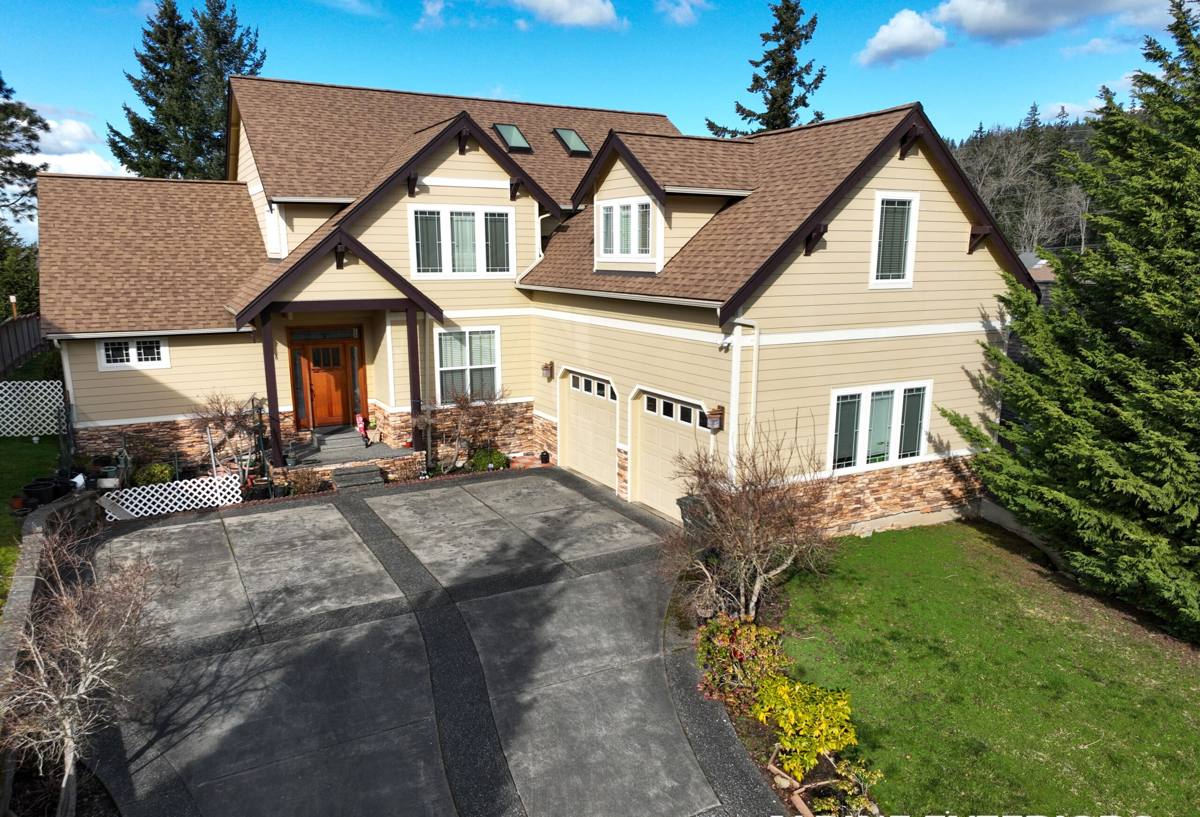
What Metal Roofing Actually Solves Here
The case for metal roofing in Sudden Valley isn't about looks — it's about three specific climate problems:
- Standing moisture: a smooth metal surface with proper slope sheds water far faster than composition shingle, reducing the window moss and algae need to establish.
- Debris load: needles, cones, and leaf litter from surrounding trees slide off a metal roof more easily than they shed from shingle texture, where debris tends to mat and hold water against the surface.
- Long-term fastener and seam integrity: in a climate with this much sustained dampness, the roof's weak points are almost always at penetrations and edges, not the field of the roof. Metal systems done correctly put more engineering into those exact spots.
None of this means metal is automatically the right choice for every home in the neighborhood — roof pitch, tree cover, HOA or design guidelines, and budget all factor in. It means that where a homeowner is already leaning toward metal, or replacing a roof that's fought moss and moisture problems for years, the material lines up well with what this specific location throws at a roof.
Panel Types We Install and How They Fit Sudden Valley Homes
"Metal roofing" covers a range of products, and the right one depends on the home's roofline, budget, and how visible the roof is from the street or neighboring lots.
| Panel Type | Best Fit | Trade-offs |
|---|---|---|
| Standing seam | Homes wanting a clean, modern line and maximum weathertightness | Higher cost; concealed fasteners mean fewer future leak points |
| Exposed-fastener panels | Budget-conscious projects, outbuildings, secondary structures | Lower upfront cost; fasteners need periodic inspection and re-torquing over time |
| Stone-coated steel | Homes wanting a shake or tile look with metal's performance | More cost, closer visual match to traditional roofing, added texture can hold debris slightly longer |
For heavily treed lots with a lot of overhead shade, we lean toward standing seam or stone-coated systems with tighter panel-to-panel tolerances, since concealed fasteners and interlocking seams give the roof fewer places for trapped moisture to work its way in over years of damp exposure.
Coatings and Finish
Whatever the panel profile, the coating matters as much as the metal underneath. A quality baked-on finish resists fading and chalking from UV exposure and holds up against the acidic runoff from conifer needles and organic debris common in wooded settings like this one. We don't cut corners on finish quality to hit a lower price point — a roof that looks tired after a few winters isn't a good value no matter what it cost going in.
Details That Actually Prevent Leaks
Most metal roof failures don't happen in the field of the panels — they happen at the details. This is where experience installing in this specific climate pays off:
Flashing and Penetrations
Chimneys, skylights, and vent stacks all need step flashing, counterflashing, or boot systems sized and lapped correctly for the panel profile being used. In a climate with this much sustained rain, an undersized or poorly lapped flashing detail will leak eventually — not from one big storm, but from repeated exposure wearing down a marginal seal.
Fastener Strategy
On exposed-fastener systems, screw placement, torque, and washer condition determine how long the roof stays watertight. We follow manufacturer spacing and torque specs rather than field-guessing, because over-driven or under-driven fasteners are one of the most common causes of early leaks on this type of roof.
Underlayment
A high-temperature synthetic or self-adhering underlayment underneath the metal gives the roof a second line of defense if wind-driven rain ever gets past a seam, which matters more here than in drier parts of the state given how often this area sees sustained wind and rain together.
Ventilation
Metal roofs need proper intake and exhaust ventilation to avoid trapping condensation against the underside of the panels, especially over conditioned attic space. We check existing ventilation as part of every metal roofing project rather than assuming what's there is adequate.
Our Installation Process
- On-site assessment: we walk the roof (or use a lift/drone where pitch or access requires it), checking deck condition, existing ventilation, tree overhang, and flashing points.
- Tear-off and deck inspection: old roofing comes off down to the deck so we can check for rot or soft spots, particularly common under moss growth or around old flashing that's been leaking slowly.
- Deck repair as needed: any compromised sheathing gets replaced before anything new goes down — installing metal over a weak deck just hides the problem.
- Underlayment installation: synthetic or self-adhering underlayment goes down per manufacturer spec, with extra attention at valleys and eaves.
- Panel and flashing installation: panels go on according to the manufacturer's fastening or seaming pattern, with custom-fabricated flashing at every penetration, valley, and edge.
- Final walk-through: we review the completed roof with the homeowner, point out anything worth knowing for future maintenance, and confirm gutters and downspouts are handling the new roof's water flow correctly.
Cost Factors for a Sudden Valley Metal Roof
Pricing depends on more than just square footage. These are the main variables that move the number:
| Factor | Why It Matters |
|---|---|
| Roof pitch and access | Steep pitches and tree-obstructed access slow every stage of the job |
| Panel type | Standing seam runs higher than exposed-fastener panels; stone-coated falls in between |
| Deck condition | Rot or soft sheathing found during tear-off adds repair cost before installation can proceed |
| Number of penetrations | Chimneys, skylights, and multiple roof planes all add flashing labor |
| Tear-off scope | Full tear-off versus roofing over an existing layer (not something we recommend for metal) changes labor significantly |
We'd rather give a homeowner an honest range after actually seeing the roof than a number over the phone that doesn't hold up once we're up there. Broadly, metal roofing costs more upfront than composition shingle, and the gap narrows over the life of the roof given how much less maintenance and how much longer service life a correctly installed metal system delivers in this climate.
Living With a Metal Roof in This Climate
A metal roof cuts down on maintenance, but it isn't maintenance-free, especially surrounded by the tree cover common throughout this neighborhood. A short seasonal routine keeps it performing the way it should:
- Clear needles, leaves, and debris from valleys and around penetrations at least once or twice a year, more often on heavily shaded roof sections.
- Check gutters and downspouts for buildup — metal roofs shed water fast, and clogged gutters undercut that advantage quickly.
- Look for any panel fasteners that appear loose or lifted, particularly after a windy storm season.
- Trim back overhanging branches where practical to cut down on debris load and reduce shade-driven moisture retention.
- Have flashing and seams checked periodically, especially around chimneys and skylights, since these are the points most likely to need attention over time.
Why Hiring a Crew That Already Works This Neighborhood Matters
Sudden Valley's mix of mature trees, lake-effect moisture, and varied roof access isn't the same as a roofing job in an open, treeless subdivision closer to town. A crew that's worked this specific area understands the tree overhang situations, the moss patterns tied to shade exposure, and the drainage realities of homes built into wooded, sloped lots. That local familiarity shows up in smaller decisions during the job — how flashing gets detailed around a shaded valley, where extra underlayment attention pays off, how tear-off debris and access get handled on a lot with limited driveway space — decisions that don't show up on a written estimate but affect how the roof performs ten years later.
We're a Bellingham-based crew working throughout Whatcom County, and Sudden Valley is part of our regular service area, not a one-off trip. That means we're not learning the neighborhood's quirks on your project — we already know them.
Is Metal Roofing the Right Call for Your Home?
Metal roofing makes the most sense for Sudden Valley homeowners dealing with recurring moss problems, heavy tree debris, a roof nearing the end of its shingle life, or anyone planning to stay in the home long enough for the lower long-term maintenance to pay off. It's a bigger upfront investment than a shingle replacement, and it's worth weighing against your specific roof's pitch, shade exposure, and how long you plan to own the home. We'll give you a straight answer on whether it fits your situation rather than pushing one product for every roof.
If you're weighing a metal roof for your Sudden Valley home, we're happy to take a look and walk you through what your specific roof needs. Reach out for a free, no-pressure estimate using the form below.