 Bellingham Exterior
 Building or Adding On in Edgemoor? The Windows Have to Match the Site
Edgemoor sits close to the water, on elevated lots that catch wind and weather most inland Bellingham neighborhoods never see. If you're framing a new home, an addition, or a full rebuild in this part of Whatcom County, the windows you choose and how they're installed matter more than they would on a sheltered lot a mile inland. Salt-laden air off Bellingham Bay, wind-driven rain, and the long gray moss season all put steady pressure on window assemblies — not dramatic failures, but slow ones: seal breakdown, corroded hardware, rot at the sill, and streaking that never quite goes away.
New-construction windows give you an advantage that replacement windows don't: you're installing into open framing, before siding and trim go on, so the flashing and weatherproofing can be done correctly from the studs out. That's the whole point of doing it right the first time. Get the sequencing wrong at this stage and the mistake gets buried behind finish materials for the next twenty years.
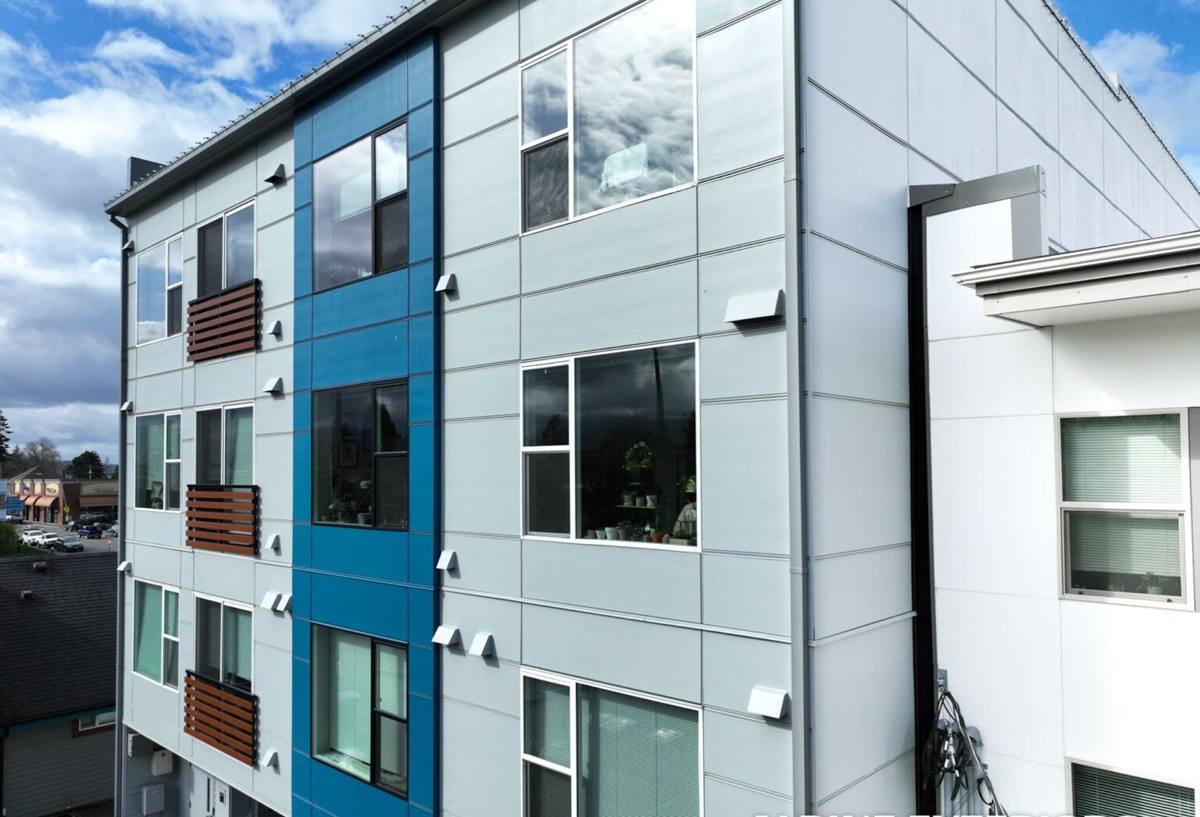
What Edgemoor's Climate Actually Does to Windows
It helps to be specific about what we're building for, rather than treating "coastal Bellingham" as a generic label.
Salt Air
Proximity to Bellingham Bay means airborne salt settles on exterior surfaces even when there's no visible spray. Over years, that accelerates corrosion on unprotected fasteners, hinges, and lower-grade hardware, and it can dull or pit finishes that aren't rated for marine-adjacent exposure.
Driving Rain
Storms off the water don't just fall — they push. Wind-driven rain finds horizontal surfaces and gaps that vertical rain never reaches, which is why sill design and flashing laps matter far more here than in a calm inland yard.
Moss Season
Whatcom County's wet, mild stretch from fall through spring keeps exterior surfaces damp for months at a time. Moss and algae take hold anywhere moisture lingers — window sills, mulled units, and trim details with poor drainage are common spots. It's not just cosmetic; trapped moisture against wood trim or sheathing is a slow path to rot.
New-Construction Windows vs. Replacement Windows: Why the Distinction Matters Here
These are two different installation methods, and on an exposed Edgemoor lot the difference isn't cosmetic — it's structural.
| Factor | New-Construction Windows | Replacement (Insert) Windows |
|---|---|---|
| Installed into | Open stud framing, before siding | Existing window frame, siding stays in place |
| Flashing access | Full access to sheathing, WRB, and rough opening | Limited — relies on the condition of the existing frame |
| Nail fin or flange | Fastened directly to framing and integrated with the water-resistive barrier | Not applicable — unit fits inside old frame |
| Best suited for | New builds, additions, full re-siding projects | Sound existing frames needing glass/hardware upgrades only |
| Weatherproofing control | Built correctly from the ground up | Limited by what's already in the wall |
For new construction or an addition in Edgemoor, we always recommend true new-construction (flanged) units installed with full flashing integration — not inserts. On an exposed, water-facing lot, the extra access to do the flashing right isn't optional; it's the difference between a window that sheds wind-driven rain and one that slowly lets it in behind the trim.
What a Correct New-Construction Window Installation Actually Involves
A window looks the same from the curb whether it was installed correctly or not — the difference shows up five, ten, fifteen years later. Here's what has to happen at each opening, every time:
- Rough opening checked for square, level, and correct dimension before the unit ever arrives on site
- Sill pan flashing installed to shed any water that gets past the window to the exterior, not into the wall cavity
- Water-resistive barrier (housewrap) cut and integrated with the flashing in the correct shingle-lap order — top piece always over the piece below it
- Window set plumb, level, and square in the opening, with shims at load-bearing points, not just at the corners
- Flange fastened per the manufacturer's schedule — enough fasteners, in the right spots, to hold under wind load
- Head flashing installed last, lapped over the side flashing and the WRB above it, so water is always directed outward and down
- Rough opening insulated (not overpacked) around the frame to control both air leakage and condensation risk
- Interior and exterior sealant joints placed only where they belong — sealant is a backup to good flashing, never a substitute for it
That sequence — sill pan, WRB integration, shimming, fastening, then flashing lapped top-down — is what actually keeps wind-driven rain out. Skipping or reordering any one step is the single most common cause of window leaks we get called to diagnose on Bellingham-area homes, new or old.
Choosing Window Materials for a Waterfront-Adjacent Lot
Material choice affects how a window handles salt air, moisture, and years of Pacific Northwest weather. There's no single "best" answer — it depends on your budget, your home's style, and how much long-term maintenance you want to take on.
| Material | How it handles salt air & moisture | Maintenance | Typical fit |
|---|---|---|---|
| Vinyl | Good — won't corrode or rot, some flexing in temperature swings | Low — occasional cleaning | Budget-conscious new builds |
| Fiberglass | Very good — dimensionally stable, resists corrosion well | Low | Mid-to-upper budget, longevity-focused |
| Aluminum-clad wood | Good on the exterior face; interior wood needs protection from condensation | Moderate | Traditional or high-end aesthetic |
| All-wood | Vulnerable without diligent upkeep in this climate | High — needs regular refinishing | Historic-style projects with committed maintenance plans |
On exposed Edgemoor lots, we steer most clients toward vinyl, fiberglass, or aluminum-clad options rather than exposed all-wood exteriors. That's not a knock on wood as a material — it's an honest read on what a bluff-facing elevation with driving rain and salt air will do to an unprotected wood exterior over a decade of Whatcom County winters. If the look you want calls for wood, cladding it on the weather side is the way to get that appearance without signing up for constant refinishing.
Glass matters too. A quality low-E, dual- or triple-pane unit with a warm-edge spacer keeps interior condensation down during our long damp season — which matters directly for moss and mildew control on sills and trim, since condensation runoff is one more moisture source feeding the problem.
Hardware and Fasteners
In a salt-air environment, hardware quality is not the place to cut corners. We spec corrosion-resistant fasteners and hardware for coastal-adjacent installs, and we flag any manufacturer spec sheet that doesn't hold up to that standard before the order goes in — not after the windows are on site.
Our Process for Edgemoor New-Construction Projects
- Site walk and rough-opening review. We look at exposure — which elevations face the water and prevailing wind — before recommending glass packages or flashing details.
- Product selection. We go over material, glass, and hardware options honestly, including trade-offs, so you're choosing based on how the window will actually perform on your lot.
- Flashing and WRB coordination. On new builds we coordinate directly with your builder's sheathing and housewrap sequence so nothing gets covered up out of order.
- Installation. Sill pan, shimming, fastening, and flashing done in the correct sequence at every opening — not just the ones facing the street.
- Final inspection. We check operation, seals, and flashing laps before we call the job done, not just that the window is set and caulked.
Why a Crew That Already Works Edgemoor Is Worth Choosing
Edgemoor isn't a generic subdivision, and it doesn't get treated like one. Lots here vary block by block in how exposed they are to wind and water, and the correct flashing detail on a bluff-facing wall can be different from what's needed on a sheltered side of the same house. A crew that's done window work on this side of Bellingham has already seen how the wind moves across these lots and where driving rain tends to find weak spots — that's not something you get from a spec sheet, it comes from having stood on these roofs and framed these openings before.
We're a Bellingham-based crew serving Whatcom County, and we treat every new-construction opening — waterfront-facing or not — with the same flashing standard. On an exposed lot, that standard is what keeps a window performing for decades instead of needing attention in five years.
Protecting the Investment After Installation
New-construction windows installed correctly need very little from you, but a few habits go a long way in this climate:
- Rinse sills and tracks during the dry summer months to clear salt residue before moss season starts
- Keep gutters and nearby drainage clear so runoff isn't sheeting across window openings
- Check exterior sealant joints annually — sealant is a maintenance item, not a lifetime fix
- Trim back vegetation that shades and dampens window areas, which slows drying and invites moss growth
Get an Honest Look at Your Project
If you're framing new construction or planning an addition in Edgemoor, we're happy to walk the site, talk through window and glass options for your specific exposure, and give you a straightforward estimate — no pressure, no upsell script. Fill out the form below and we'll get back to you.