 Bellingham Exterior
 New Roof Installation in Puget: A Bellingham Bay Neighborhood That's Hard on Roofs
Puget sits along the bluffs and hillsides above Bellingham Bay on the city's south side, one of the neighborhoods where a house's roofline is doing real work every single day rather than just sitting there for decoration. Homes here get a fairly direct shot of marine air moving off the bay, rain that arrives on a slant more often than it falls straight down, and a stretch of shaded, tree-covered lots where roof surfaces rarely get a long, uninterrupted chance to dry out. None of that is unique to Puget in isolation, but the combination — bay exposure, driving rain, and a long moss season — adds up to a roof that ages faster here than the same roof would somewhere calmer and drier.
When a roof in Puget reaches the point where patching it another time doesn't make sense anymore, a full new roof installation is the honest answer, and it's a bigger decision than picking a shingle color out of a brochure. It's a chance to correct whatever the old roof got wrong the first time around — thin underlayment, undersized flashing, poor attic ventilation — and build something that's actually specified for this climate instead of a generic national spec. This page is about that one job, done right, for houses in this specific part of Bellingham.
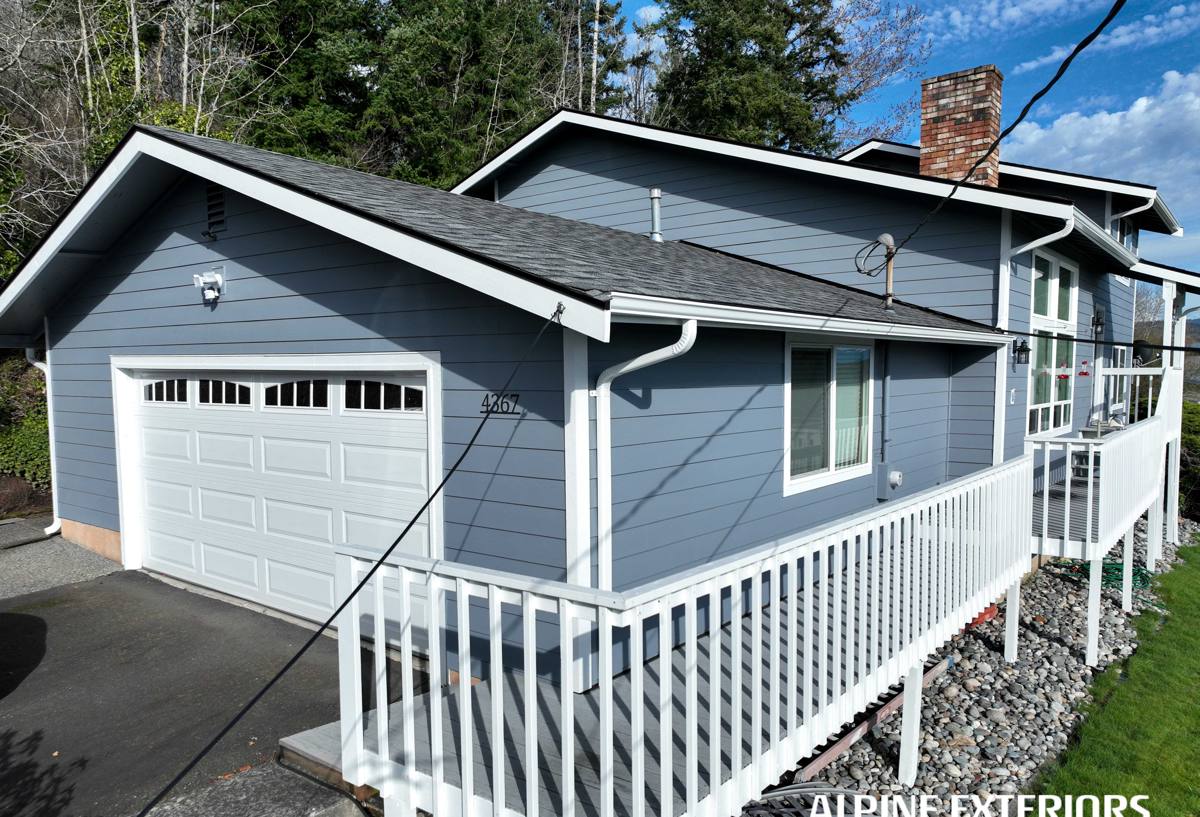
What Puget's Location Does to a Roof
Salt Air and Bay Exposure
Air moving inland off Bellingham Bay carries a mild salt content that spreads across bluff-facing homes more consistently than it does further inland. Over years, that steady exposure works on exposed fasteners, flashing, and any metal component that isn't rated for it, showing up as premature rust streaking or corrosion around vent pipes and valleys long before the shingles themselves are actually worn out. It's a slow, quiet process — the kind of thing that's easy to miss during a five-minute look from the ground.
Wind-Driven Rain Off the Water
Open water in front of a house means wind picks up speed before it hits the roof, and that wind drives rain into valleys, chimney flashing, and roof-to-wall transitions with more force than the same storm delivers to a sheltered, tree-lined lot further inland. That matters because a roofing system built and installed for straight-down rain can still leak here specifically, since the water is being pushed sideways and upward into laps and seams that a purely vertical rainfall model never accounts for.
A Long Moss and Mildew Season
Mild year-round temperatures, regular rainfall, and tree cover on many Puget lots mean roof surfaces that stay damp for extended stretches, especially on north-facing slopes and anywhere shaded by mature trees. That's the exact condition moss needs to establish itself, and once it does, it holds moisture against the roofing material and can work its way under shingle tabs over time, lifting and loosening a roof system that would otherwise still have years of service left in it.
When a Full New Roof Installation Is the Right Call
Not every roofing problem in Puget calls for a full tear-off and new install, and we don't default to recommending one just because that's a bigger job. A localized leak, a handful of storm-damaged shingles, or flashing that's come loose around a single penetration is usually a straightforward repair. A new roof installation becomes the honest recommendation when the roof is at or past its rated service life, when moss and moisture damage are spread across multiple slopes rather than one isolated spot, or when the decking underneath shows soft spots from long-term trapped moisture. At that point, another round of patchwork on an aging roof usually just delays a bigger job and adds cost without adding real years of service.
What a Correct New Roof Installation Actually Involves
A new roof is more than shingles nailed to a deck. On a bay-exposed lot like Puget, the layers underneath the shingles are what actually determine whether the roof performs through a full wet season or starts leaking within a few years. A proper installation includes:
- Full tear-off of the old roofing so the decking can be inspected directly, not just installed over
- Repair or replacement of any rotted, delaminated, or soft decking found underneath
- Underlayment rated for sustained moisture exposure, not a bare minimum-code product
- Ice-and-water shield at eaves, valleys, and other spots where water and debris tend to collect
- Correctly lapped and sealed flashing at every valley, chimney, vent pipe, and wall transition
- Attic and roof deck ventilation sized to let moisture escape rather than condense inside
- Corrosion-resistant fasteners and metal components suited to a salt-tinged marine climate
None of these line items cost much relative to the shingles themselves, but skipping any one of them is exactly what turns a roof rated for twenty-five years into one that starts failing at twelve or fifteen.
Choosing a Roofing Material for a Puget Home
There isn't one correct roofing material for every house here — it depends on roof pitch, how much shade and tree cover the lot has, how directly the roof faces the bay, and how long you plan to stay in the home. What matters is understanding the real trade-offs before deciding, not picking based on whichever option is cheapest per square foot.
| Material | Moss & Moisture Behavior | Typical Maintenance | Realistic Lifespan Here |
|---|---|---|---|
| Architectural asphalt shingle | Performs well with proper ventilation; moss-resistant granule options help on shaded slopes | Periodic moss removal and gutter checks | 20-30 years |
| Standing seam metal | Sheds water and moss buildup well due to a smooth, non-porous surface | Low; occasional fastener and sealant checks | 40-60 years |
| Composite/synthetic shingle | Resists moisture absorption; performance varies by product quality | Low to moderate | 30-50 years depending on product |
| Cedar shake | Absorbs moisture readily; needs airflow underneath to dry between rain events | Higher; regular treatment and moss control | 20-30 years with consistent upkeep |
On a directly bay-facing lot, we lean toward materials and details that shed water and moss aggressively rather than materials that simply tolerate moisture, since those roofs take more direct wind and rain than a comparable house set back from the water. We'll walk your specific roof and give a straightforward read on which option actually fits it.
Our New Roof Installation Process in Puget
The steps don't change much house to house, but the details inside each step do, based on exposure, pitch, and what we find once the old roofing comes off.
- On-site inspection and estimate: We look at the existing roof, attic ventilation, and any visible moisture damage before quoting, rather than pricing off square footage alone.
- Tear-off: The old roofing comes off completely so the decking is fully exposed and can be inspected directly, not covered over.
- Deck repair: Any soft, delaminated, or rotted decking gets replaced before anything new goes down on top of it.
- Underlayment and flashing: Moisture-rated underlayment, ice-and-water shield at eaves and valleys, and properly lapped flashing at every penetration and transition.
- Ventilation check: Intake and exhaust ventilation are verified or corrected so the new roof isn't trapping moisture in the attic from day one.
- Roofing installation: Shingles or panels installed to manufacturer spec, with fastening patterns and clearances suited to this climate.
- Cleanup and walkthrough: Site cleanup, magnetic sweep for stray fasteners, and a walkthrough covering warranty terms and basic upkeep.
Signs Your Puget Roof Needs a New Roof Installation
- Moss buildup on shaded or north-facing slopes that returns quickly after cleaning
- Granules collecting heavily in gutters or at the base of downspouts
- Curling, cupping, cracking, or missing shingles, especially after a windstorm off the bay
- Water staining on interior ceilings near exterior walls, chimneys, or skylights
- Soft spots or noticeable give when the roof deck is walked, or sagging along the roofline
- Flashing that looks lifted, rusted, or stripped of sealant around penetrations
- A roof that's already had several rounds of repair and is approaching or past its rated service life
Cost Factors for a New Roof Installation
| Factor | What It Affects | Why It Matters in Puget |
|---|---|---|
| Roof size, pitch, and complexity | Total material and labor | Bluff-facing homes with dormers or multiple roof planes create more valleys where wind-driven rain can find a way in |
| Decking condition | Repair costs discovered during tear-off | Years of trapped moisture behind aging shingles can rot decking before it's ever visible from the ground |
| Material selection | Upfront cost vs. lifespan | Bay-facing lots benefit from materials that shed moss and water aggressively rather than merely tolerate it |
| Ventilation upgrades | Labor and material scope | Older Puget homes often have undersized attic ventilation relative to what a modern roof system needs |
| Site access and slope | Labor time and equipment needs | Hillside lots common to this neighborhood can add staging and safety setup time |
Real numbers depend on the specific roof, which is why we walk the property before quoting instead of pricing off a generic per-square figure.
Why a Crew That Already Works Puget Matters
A crew that installs roofs in this neighborhood regularly sees how bay wind, driving rain, and moss actually behave on real houses over a full year, not just how a product performs on a spec sheet. That shows up in practical, on-site decisions: which roof orientations catch the most direct wind off the water, where extra ice-and-water shield actually earns its cost, and which flashing details are worth the additional time so you're not dealing with a callback two winters later. Puget's bluff terrain and bay exposure aren't identical to a sheltered, tree-lined lot elsewhere in Bellingham, and a crew with hands-on experience here accounts for that instead of treating every roof the same.
Roofing Alongside Siding, Windows, and Decks
A roof rarely fails in isolation. A leaking valley can show up as staining on siding below it, a poorly flashed roof-to-wall transition can rot the wall sheathing behind it, and a roofline that dumps water directly onto a deck ledger can cause problems that have nothing to do with the deck itself. Bellingham Exterior Company handles roofing, siding, windows, and decks, so we can look at a Puget property as one connected exterior system and trace a problem back to where it actually starts, instead of installing a new roof over an issue that's still there underneath.
If your Puget home needs a new roof, or you'd just like an honest read on whether repair or full replacement makes more sense right now, we're glad to take a look. Reach out using the form below to schedule a free, no-pressure estimate.