 Bellingham Exterior
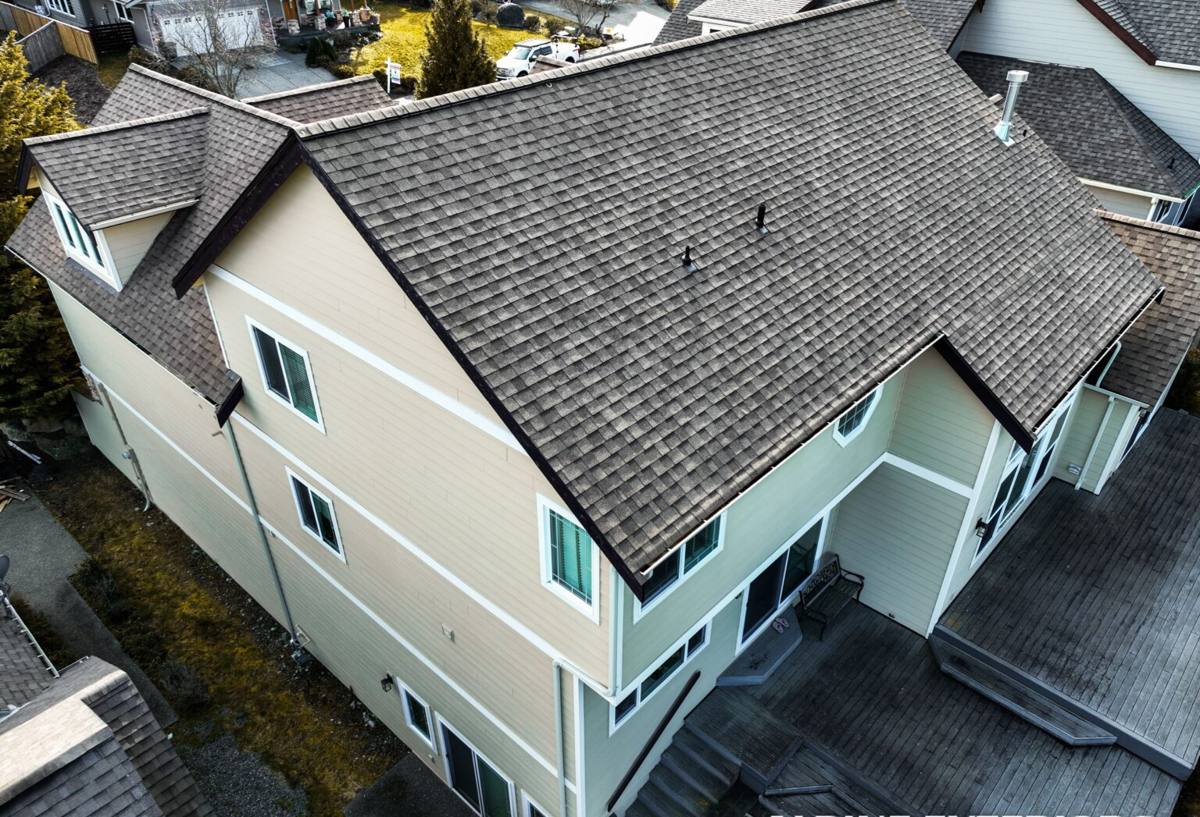
 Building a Deck in Puget: What the Location Actually Demands
Puget sits close enough to the water that a deck here lives a different life than one built ten miles inland. The same three things show up on every job we look at: salt-laden air moving off Bellingham Bay, rain that comes in sideways during fall and winter storms, and a moss season that seems to stretch longer every year. None of that is exotic — it's just Whatcom County weather doing what it does. But it means a deck built with generic, one-size-fits-all methods will show its age faster here than the same deck built twenty miles east.
A correct deck for this location isn't about upgrading everything to the most expensive option available. It's about knowing which parts of the structure actually take the abuse — fasteners, ledger connections, the underside of the decking, the first few inches above grade — and building those parts to a higher standard than the parts that don't matter as much.
Salt Air and Corrosion: Why Hardware Choice Isn't Optional
Salt air doesn't need direct ocean spray to do damage. Moisture carrying salt particles travels well inland on wind, and in a location like Puget it settles on every exposed metal surface — nail heads, joist hangers, bolt threads, screw tips. Left unaddressed, that's the difference between hardware that lasts the life of the deck and hardware that's visibly rusting within a few seasons.
Standard electro-galvanized fasteners are fine for a lot of interior framing, but they're the wrong choice for an exposed deck this close to the water. We build with hot-dip galvanized or stainless steel connectors, screws, and bolts as our baseline for coastal-adjacent work — not because code always requires it, but because it's cheap insurance against a callback in three years for streaking rust stains and weakening connections.
Where corrosion resistance matters most
- Joist hangers and structural connectors — these are load-bearing, so corrosion here is a safety issue, not just cosmetic
- Ledger board bolts — the connection to the house takes constant moisture cycling
- Deck screws through composite or wood decking — visible rust streaks are one of the most common complaints we hear about older decks
- Railing post hardware — high-stress connections that get wet and dry repeatedly
Driving Rain, Drainage, and the Ledger Board Connection
The single most common failure point we find on older decks in this area isn't the decking boards — it's the ledger board, the piece that bolts the deck to the house. Driving rain pushes water sideways and upward under normal circumstances, and a ledger that wasn't flashed correctly will let water track behind it and into the house's rim joist. That's how you get rot inside a wall that nobody notices until the deck starts to feel spongy near the house.
Correct ledger flashing means a proper drip-cap flashing installed under the house's weather barrier (not just caulked on top of the siding), a gap or flashing tape system that lets any water that does get behind the ledger drain back out, and lag bolts or through-bolts rated for the load — never just nailed. We also slope the ledger connection and decking itself slightly away from the house, typically a small fraction of an inch per foot, so water sheets off the surface instead of pooling against the siding.
Other drainage details worth getting right
Gaps between decking boards need to be sized for drainage without becoming a hazard or a moss trap — too tight and water sits on the surface; too wide and debris collects in the gap and holds moisture against the board edges. Under the deck, especially on lower decks close to grade, we grade the soil so water moves away from the house rather than pooling under the structure where it can wick up into posts and framing.
Moss Season: Airflow, Spacing, and Surface Choice
Moss doesn't just grow on roofs in this part of Washington. Any horizontal wood surface that stays damp and shaded for weeks at a time — which describes most decks here from October through March — will grow moss and algae if airflow underneath is restricted and the surface isn't built or maintained to shed water quickly.
Two things control moss more than anything else: airflow under the deck and the finish or material on top of it. Decks built low to the ground with skirting that blocks air movement dry out slower and moss faster, sometimes within the first year. We build in ventilation gaps and use skirting designs that let air pass through while still looking finished, rather than sealing the underside completely.
On the surface itself, moss gets a foothold fastest in the microscopic texture of untreated or poorly sealed wood, and in the dirt and pollen that collects in wide board gaps. Composite decking with a cap layer resists moss better than raw wood because there's less porous surface for spores to grip, though even composite needs occasional cleaning in a moss-heavy yard. Whatever material you choose, board orientation, gap width, and how much sun the deck actually gets in your specific yard all affect how much moss maintenance you'll be doing.
Decking Material Comparison for This Climate
There's no single "best" decking material — there's a best material for your yard's shade, your budget, and how much upkeep you want to do. Here's how the common options actually perform under Puget's specific mix of salt air, rain, and moss:
| Material | Moss resistance | Salt air / hardware wear | Maintenance | Typical lifespan here |
|---|---|---|---|---|
| Pressure-treated wood | Moderate — needs periodic cleaning and sealing | Fine with corrosion-resistant fasteners | Annual cleaning, re-sealing every 2-3 years | 15-20 years |
| Cedar | Moderate — natural oils help some, still needs care | Fine with corrosion-resistant fasteners | Regular cleaning and finish maintenance | 15-20 years |
| Composite (capped) | Good — dense cap sheds spores better than raw wood | Not affected; hardware still needs to be corrosion-resistant | Periodic washing, no sealing needed | 25-30 years |
| PVC decking | Very good — non-porous surface | Not affected; hardware still needs to be corrosion-resistant | Light washing | 25-30+ years |
Composite and PVC cost more up front, but in a shaded, damp yard the maintenance savings and moss resistance often make them the more practical choice over the deck's full lifespan. Wood is a perfectly reasonable choice too — it just asks more of the homeowner in upkeep, and that upkeep matters more here than it would somewhere drier.
Framing and Footings: Building to Last in Wet Ground
What's under the decking matters as much as what's on top. Whatcom County's building codes set minimum footing depths and sizes for a reason — frost heave and saturated soil both put stress on undersized or shallow footings over time. We set footings below frost depth and size them for the actual load of the deck, not the minimum that happens to pass inspection.
For framing lumber, we use pressure-treated material rated for ground contact anywhere the wood is within a few inches of soil or sits in a persistently damp zone, and we keep any beam-to-post connections up off the ground with post bases rather than burying the post end directly in concrete, which traps moisture against the wood and accelerates rot from the inside out — often invisibly, until the post fails.
Post and beam basics we don't skip
- Post bases that hold the post above the concrete, not embedded in it
- Beam-to-post connections rated for uplift, not just downward load — wind matters here too
- Joist spacing sized for the actual decking material's span rating, since composite and PVC often need tighter spacing than solid wood
- Blocking at butt joints and stair stringers for a deck that doesn't bounce or flex underfoot
Our Process for a Puget Deck Project
1. On-site assessment
We look at sun exposure, drainage patterns in your specific yard, how close the deck will sit to the house's existing siding and roofline, and what's already failing if this is a replacement. This is also where we talk through material options against your budget and how much maintenance you actually want to do.
2. Design and permitting
We size footings, framing, and railings to code, pull the required Whatcom County or City of Bellingham permit depending on your exact location, and schedule inspections at the right points in the build rather than working around them.
3. Framing and structural work
Footings, posts, beams, and joists go in first, with all the corrosion-resistant hardware and ledger flashing detail handled before anything is covered up and hidden from view.
4. Decking, railing, and finish work
Decking is installed with proper gapping for drainage and expansion, railings are set to code height and baluster spacing, and any stairs are built to match the same standard as the deck itself.
5. Final walkthrough
We walk the finished deck with you, cover basic maintenance for whatever material you chose, and make sure you know what to watch for as the seasons change.
Permits and Code Considerations in Whatcom County
Most decks attached to a house and elevated above a certain height require a building permit, along with inspections at framing and final stages. Requirements can differ slightly depending on whether your property falls under City of Bellingham jurisdiction or unincorporated Whatcom County, and shoreline-proximity rules can add another layer of review for properties close to the water. We handle the permit application and inspection scheduling as part of the job, so you're not left figuring out which jurisdiction's rules apply or chasing down inspection appointments yourself.
Maintenance Checklist for Puget Deck Owners
Whatever material your deck is built from, a few habits make a real difference in how it holds up against this climate:
- Sweep debris out of board gaps and off the surface regularly, especially in fall when leaves and needles pile up
- Rinse or wash the deck surface at least once or twice a year to slow moss and algae growth before it takes hold
- Check hardware — visible screws, railing bolts, stair connections — annually for early rust streaking or looseness
- Keep gutters and downspouts near the deck clear so runoff isn't dumping extra water onto or under the structure
- Re-seal or re-stain wood decking on the schedule your material calls for; don't wait until it's visibly gray and dry
- Trim back vegetation that's shading the deck more than necessary — more sun exposure means less moss
Why a Crew That Already Works Puget Makes a Difference
None of the details above are secret knowledge, but they're easy to skip when a crew builds mostly inland and treats every deck the same way. A crew that regularly works this specific stretch near Bellingham Bay already knows which fastener grade to reach for by default, how to detail a ledger for driving rain without being told, and which yards in this neighborhood tend to hold moisture longer because of tree cover or exposure. That familiarity shows up less in any single dramatic decision and more in a dozen small ones done right the first time, which is exactly what keeps a deck looking and performing well ten years in instead of needing early repairs.
If you're planning a new deck or replacing one that's showing its age, we're happy to come take a look and talk through what makes sense for your yard, your budget, and how you actually want to use the space. The estimate is free, there's no pressure, and you'll get a straight answer about what your deck needs — use the form below to get started.