 Bellingham Exterior
 Why Birch Bay Asks More of a Roof
Birch Bay sits close enough to the water that salt-laden air is a constant, low-grade presence on every exterior surface, roofs included. Add Whatcom County's long wet season, driving rain that comes in sideways off the Strait during winter storms, and a moss season that can stretch from fall through spring, and you have a roofing environment that's genuinely tougher than what you'd find twenty miles inland. A roof that would last two extra years in a drier, more sheltered part of Bellingham can show its age early out here if it wasn't built and maintained with these conditions in mind.
None of this means Birch Bay homes need exotic solutions. It means the fundamentals — material choice, ventilation, flashing detail, and moss management — have to be taken more seriously than a generic replacement job would treat them.
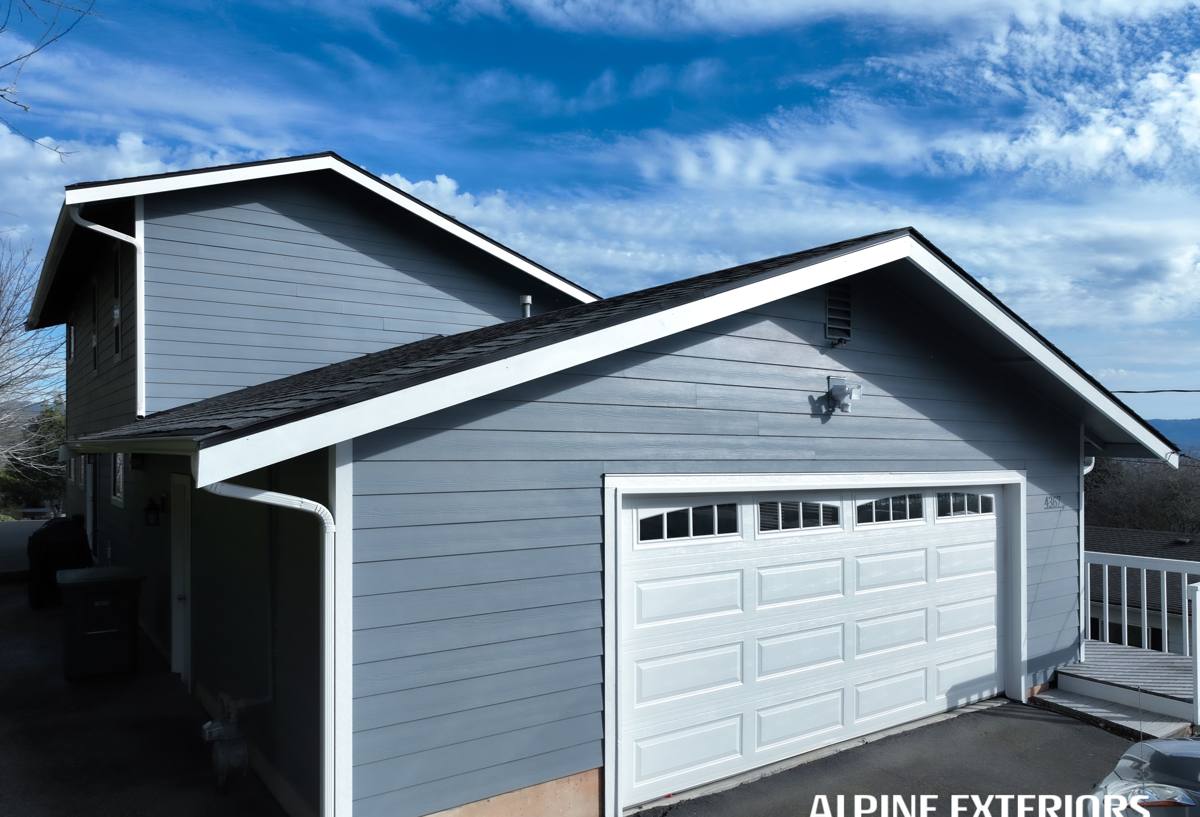
Signs a Birch Bay Roof Has Reached Replacement Stage
Repairs make sense when a roof has isolated damage on an otherwise sound system. Replacement becomes the honest recommendation when the problems are systemic. In our experience working this area, the clearest signals are:
- Granule loss heavy enough that you're finding grit in gutters and downspouts every season
- Moss that keeps returning within months of cleaning, especially on north-facing slopes that stay shaded and damp
- Curling, cupping, or cracked shingles concentrated on the sides of the roof that catch the most wind and salt spray
- Soft spots in the decking found during inspection, usually near valleys, chimneys, or old repair patches
- Interior staining on ceilings or in the attic that shows up after wind-driven rain events specifically, not just heavy rain in general
- A roof approaching or past the manufacturer's expected service life for this climate, which in a marine environment usually runs shorter than the national average quoted on the shingle wrapper
If you're seeing two or more of these at once, it's worth having a full roof evaluated rather than chasing individual leaks year after year.
Material Choices for a Marine Climate
What matters more here than elsewhere
Every roofing material on the market can technically be installed in Birch Bay. The question is which ones hold up with reasonable maintenance against salt exposure, sustained moisture, and moss pressure — and which ones ask for more upkeep than most homeowners want to sign up for.
| Material | How it handles salt air & moisture | Moss resistance | Maintenance reality |
|---|---|---|---|
| Architectural asphalt shingle (algae-resistant) | Good with proper flashing and ventilation; the industry standard for this region | Copper/zinc-infused granules slow regrowth, don't eliminate it | Periodic gentle cleaning; straightforward repairs if ever needed |
| Standing seam metal | Very good when properly coated and fastened; sheds water fast | Excellent — moss struggles to get a foothold on smooth metal | Low; fastener and sealant checks over time |
| Cedar shake/shingle | Requires diligent upkeep in a wet, salty environment; moisture retention is the main concern | Poor without regular treatment — cedar and moss are a persistent match-up here | Highest — regular treatment and cleaning needed to avoid premature rot |
| Synthetic/composite shingle | Good; doesn't absorb moisture like natural wood | Comparable to quality asphalt with treated granules | Moderate; check manufacturer warranty terms carefully |
We install algae-resistant architectural asphalt and standing seam metal most often on Birch Bay homes because they strike the best balance of upfront cost, longevity, and realistic maintenance for a waterfront-adjacent property. We're generally cautious recommending cedar in this specific microclimate — not because it's a bad product everywhere, but because the combination of salt humidity and moss pressure here means it demands a maintenance schedule many homeowners underestimate before they commit to it. That's a trade-off we'll walk through honestly rather than push a material because it looks good on a proposal.
Color and granule choice
Darker shingle colors show algae streaking sooner in this climate; lighter, algae-resistant blends tend to hide the early stages of biological growth longer, which matters if moss and algae are a recurring nuisance on your lot's shaded side.
What a Correct Replacement Actually Involves
A roof replacement is only as good as what happens underneath the new material. The steps that matter most in a Birch Bay job:
Full tear-off and decking inspection
We don't recommend layering new shingles over old in this climate — it traps moisture and hides decking problems that a coastal environment makes worse, not better. Full tear-off lets us inspect every square foot of decking and replace any sections that have softened from long-term moisture exposure.
Ice-and-water shield in the right places
Valleys, eaves, and areas prone to wind-driven rain infiltration get self-adhering waterproof underlayment, not just standard felt. This is one of the details that separates a roof built for driving coastal rain from one built for a drier climate and simply installed here anyway.
Flashing done properly, not reused
Chimney, vent, and wall flashing are common leak points, and reusing old flashing to save a step is a false economy on a coastal roof. New step flashing, counter-flashing, and pipe boots are installed as part of the job.
Ventilation balance
Proper intake at the eaves and exhaust at the ridge keeps attic moisture from condensing under the decking — a bigger issue here than in drier inland areas, because damp air has fewer dry stretches to escape during. Poor ventilation shortens shingle life and feeds the conditions moss needs to establish.
Our Process for Birch Bay Homeowners
- On-site evaluation — we walk the roof, check the attic, and document the actual condition rather than guessing from the ground or from photos.
- Honest scope and options — repair versus replace, with material options suited to your home's exposure (open waterfront view lots take more wind and salt than a home tucked back among trees).
- Written estimate — clear on material, labor, tear-off disposal, and any decking replacement contingencies before work starts.
- Scheduling around the weather window — we plan around Whatcom County's wetter months where possible and use appropriate dry-in protection if timing gets tight.
- Tear-off, decking repair, underlayment, and installation — done in that order, with flashing and ventilation addressed as part of the same job, not an upsell after the fact.
- Final walk-through — we review the completed roof with you, including gutters and any moss-prevention measures installed.
Moss: Managing It Long-Term, Not Just Removing It Once
Moss on a Birch Bay roof isn't a one-time cleanup problem — it's an ongoing condition of the local climate, especially on shaded north- and east-facing slopes near trees. A new roof reduces the problem but doesn't eliminate it on its own. What actually helps over the years:
- Zinc or copper strips installed near the ridge, which release trace metal ions that discourage regrowth as rain washes over the roof
- Keeping overhanging branches trimmed back so shaded, damp areas get more light and airflow
- Gentle, non-pressure-washed cleaning on a regular schedule rather than aggressive scraping, which can lift granules and shorten shingle life
- Clear gutters, since trapped debris holds moisture against the roof edge and gives moss an easy starting point
Permits and Timeline in Whatcom County
Roof replacements in this area typically require a building permit, and we handle that process as part of the job rather than leaving it to the homeowner. Timeline depends on roof size and complexity, but most single-family replacements are completed in a matter of days once material is on-site — weather permitting, since we won't start a tear-off with a significant rain system inbound.
What Drives the Cost
Every roof is priced on its own specifics, but the factors that move the number most are consistent:
| Factor | Why it matters |
|---|---|
| Roof size and pitch | More square footage and steeper pitches mean more material, labor, and safety setup |
| Decking condition | Rot or soft spots found during tear-off require replacement boards, which isn't always visible before the old roof comes off |
| Material selection | Asphalt, metal, and composite options carry different upfront costs and different long-term maintenance costs |
| Number of penetrations | Chimneys, skylights, and vents each need proper flashing, which adds labor |
| Access and site conditions | Steep lots, tree cover, or limited driveway access near the water can affect setup time |
| Ventilation upgrades | Adding or correcting intake/exhaust venting is worth the modest added cost for long-term roof health |
We'd rather walk your specific roof and give you real numbers than quote a range that doesn't reflect your home.
Why Local Experience in Birch Bay Matters
A roofing crew that mostly works drier, inland neighborhoods can still do competent work, but they're often making climate decisions on the fly — guessing at underlayment placement, ventilation ratios, or moss treatment based on general training rather than repeated experience with this exact combination of salt air, wind exposure, and moisture. Crews who regularly work Birch Bay and the surrounding Whatcom County coastline know which slopes on a given lot orientation will hold moss, which flashing details actually fail first in driving rain, and which materials hold up versus which ones just look good on paper for this specific stretch of coastline.
If your roof is showing its age or you just want an honest read on where it stands, we're happy to take a look. Reach out for a free, no-pressure estimate using the form below.