 Bellingham Exterior
 Decking in Sehome Has to Deal With a Lot More Than Most Manufacturers Admit
Sehome sits close enough to Bellingham Bay that salt-laden air is part of daily life, and close enough to the hills and tree cover that shade and dampness linger long after the rest of Whatcom County has dried out. That combination is hard on any outdoor structure, but it's especially hard on decks, where wide horizontal surfaces collect moisture, debris, and organic growth all winter long. A deck that looks fine in June can be a slippery, moss-streaked mess by February if it wasn't built with this climate in mind.
We install and repair composite decking specifically for homes in this part of Bellingham, and the way we spec, frame, and finish a deck here is different from how a crew in a drier inland climate would approach the same job. This page walks through what that actually means, not in marketing terms, but in practical, buildable detail.
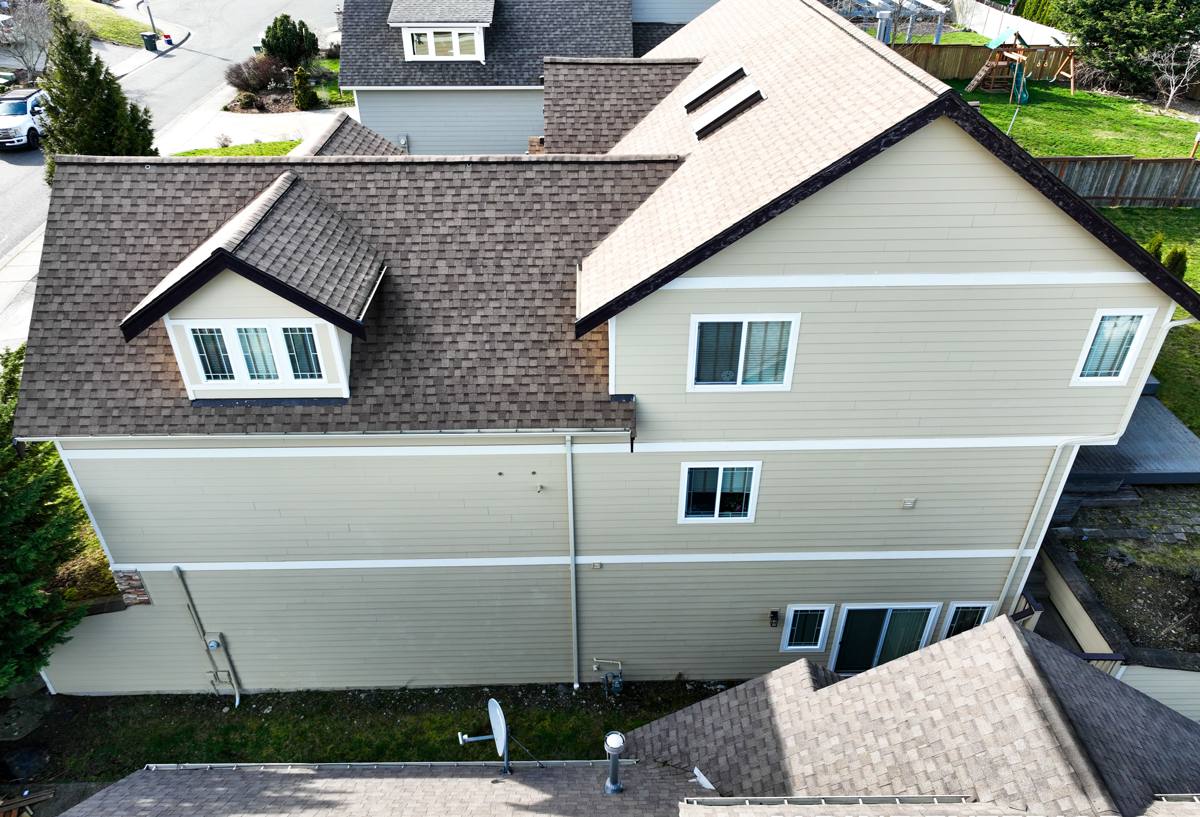
What Bellingham's Climate Actually Does to a Deck Over Time
Salt Air and Metal Fatigue
Proximity to the bay means airborne salt settles on everything outdoors, including deck hardware. Standard fasteners, brackets, and ledger connectors corrode faster near the water than they would twenty miles inland. Over years, corroded fasteners loosen, stain the surrounding board, and can eventually compromise structural connections at railing posts or ledger attachments.
Driving Rain and Trapped Moisture
Whatcom County's rain doesn't just fall straight down — wind off the bay drives it sideways, which pushes water into gaps, under railings, and against house siding at the ledger connection more aggressively than a calm-weather rain would. If flashing and drainage details aren't done correctly at the point where the deck meets the house, water finds its way behind siding and into framing, and that damage is often invisible until it's serious.
Moss Season Is Longer Here Than People Expect
Shaded, damp conditions in and around Sehome can support moss and algae growth for a good stretch of the year, not just a few winter months. On a deck surface, that growth isn't just cosmetic — it fills board grain, holds moisture against the material, and creates a genuinely slick, unsafe walking surface, especially on stairs.
Why Composite Decking Is the Right Call for This Climate
We're not going to tell you wood decking is a bad product — it isn't, and plenty of homes in Bellingham have wood decks that are well cared for. But wood asks for a level of ongoing maintenance (annual cleaning, periodic sealing or staining, prompt repair of any soft or checked boards) that a lot of homeowners don't have time for, and in a climate this wet, skipped maintenance shows up fast as rot, splintering, and mold staining.
Composite decking, when it's a quality capped product and it's installed correctly, doesn't rot, doesn't need staining, and resists moss and algae staining far better than bare wood because it doesn't absorb water into an open wood grain the same way. That's the honest trade-off: composite costs more upfront than pressure-treated wood, and it isn't literally maintenance-free, but it removes the two failure modes — rot and finish upkeep — that cause the most trouble for wood decks in this specific climate.
What a Correctly Built Composite Deck Actually Involves
The composite boards themselves get most of the attention, but the boards are the last thing installed. Everything underneath them is what determines whether the deck lasts fifteen years or needs rework in five.
Framing and Ledger Flashing
Where the deck attaches to the house, the ledger board needs proper flashing that directs water out and away from the wall assembly, not just a bead of caulk. This is the single most common point of hidden water damage we find when repairing older decks in this area, and it's invisible once the deck is built — which is exactly why it has to be done right the first time.
Joist Protection
We wrap or tape the tops of the framing joists before decking goes down. Composite decking sheds water off its own surface, but rain still gets into the gaps between boards and lands on the joists below. Untreated joists in a climate this wet will eventually rot at the top edge even though the visible deck surface looks perfect.
Airflow Underneath the Deck
Composite boards need air movement underneath them to dry out properly between rain events. A deck built low to the ground, or boxed in without any ventilation, traps humid air underneath — which is exactly the environment that encourages mold and mildew staining on the underside of the boards and on the framing itself. We plan skirting and clearance with this in mind rather than treating it as a cosmetic afterthought.
Fastening Method
Hidden fastener clip systems, rather than face-screwing through the board top, avoid creating small water traps at every screw head — a real issue in a climate where standing moisture on a horizontal surface is the norm for months at a time. Hidden fasteners also mean no exposed screw heads to corrode from salt air.
Board Spacing and Drainage
Gap spacing between boards has to account for material expansion, drainage, and airflow together — too tight and water pools; too wide and it becomes a hazard and a debris trap. We set spacing to manufacturer spec adjusted for our seasonal temperature swings, not a generic default.
Choosing the Right Composite Board for a Sehome Property
Not all composite decking is built the same way, and the differences matter more in a wet, shaded climate than they would somewhere dry. The biggest distinction is whether a board is fully capped (a protective polymer shell around the entire board) or only capped on the top surface, or not capped at all.
| Board Type | Moisture Resistance | Moss/Algae Resistance | Typical Lifespan Here |
|---|---|---|---|
| Uncapped composite (older-generation) | Absorbs moisture at cut ends and edges | Prone to surface staining over time | Shorter — edge swelling is common in wet climates |
| Top-capped only | Good on the walking surface, exposed at edges and cut ends | Better than uncapped, still vulnerable at edges | Moderate, depends on how edges are finished |
| Fully capped composite | Protected on all sides against moisture intrusion | Best resistance to staining and growth | Longest-performing option in our climate |
For a deck in Sehome, we default to recommending fully capped boards specifically because of how much time this area's decks spend wet or shaded. It costs a bit more per square foot, but the difference shows up as fewer callbacks for edge swelling or staining down the road — which matters more here than in a drier region.
Our Process, Start to Finish
- On-site assessment — we look at existing framing (if replacing an old deck), drainage path, sun/shade exposure, and how the deck ties into the house.
- Honest scope and estimate — what needs replacing versus what can be reused, with board options and a real cost range, not a lowball number that grows once work starts.
- Framing and flashing work — ledger flashing, joist protection, and structural corrections happen before a single composite board is placed.
- Composite installation — hidden fastener systems, correct spacing, and attention to airflow and drainage as described above.
- Final walkthrough — we check railing security, stair safety, and finished appearance with you before calling the job done.
What Little Maintenance a Composite Deck Needs Here
Composite decking is low-maintenance, not no-maintenance, and in this climate the maintenance it does need is worth doing on schedule.
- Sweep off debris and standing leaves regularly, especially in fall — trapped organic matter under leaves is what starts moss growth
- Rinse or lightly scrub the surface once or twice a year to remove early moss and pollen film before it sets in
- Check railing posts and fastener points annually for any looseness, particularly after a hard windstorm off the bay
- Keep gutters and downspouts near the deck clear so runoff isn't dumping extra water directly onto the deck surface
- Clear leaves and debris from under the deck occasionally to keep airflow paths open
That's a short list, and it's the whole point of choosing composite in the first place — no annual staining, no sanding, no re-sealing.
Why It Matters That We Already Work in Sehome
A lot of the details above — flashing choices, board selection, fastener spacing — aren't things you can eyeball from a generic install manual written for a different climate. They come from having built and repaired decks in this specific stretch of Bellingham long enough to see which shortcuts cause problems in year three or four, not just what looks fine on install day. We know which parts of a property tend to stay shaded and damp longer, and we plan drainage and ventilation around that instead of discovering it after the fact.
We also stand behind the work with clear communication about what's covered under the manufacturer's product warranty versus our own workmanship, so there's no confusion later about who's responsible for what.
Ready to Talk Through Your Deck
If you're planning a new composite deck, or your current deck in Sehome is showing rot, staining, or loose railings, we're happy to take a look and talk through honest options — no pressure, no sales script. Use the form below to request a free estimate, and we'll walk the property with the local climate in mind from the very first conversation.