 Bellingham Exterior
 Why Roofs in Sehome Wear Differently Than Roofs Inland
Sehome sits close enough to Bellingham Bay to pick up salt-laden air, close enough to Sehome Hill's tree canopy to stay shaded and damp for long stretches, and squarely inside a stretch of Whatcom County that sees months of steady, driving rain every year. None of those things alone would be unusual for Western Washington. Together, on a roof that's twenty, thirty, or more years old, they add up faster than most homeowners expect.
We replace roofs across Bellingham, but a real number of our Sehome calls start the same way: a homeowner noticed a stain on a ceiling, a shingle in the yard, or a green tinge creeping across the north-facing slope, and wants to know whether it's a repair or something bigger. This page walks through how we answer that question for homes in this specific neighborhood, and what a correctly done replacement actually involves.
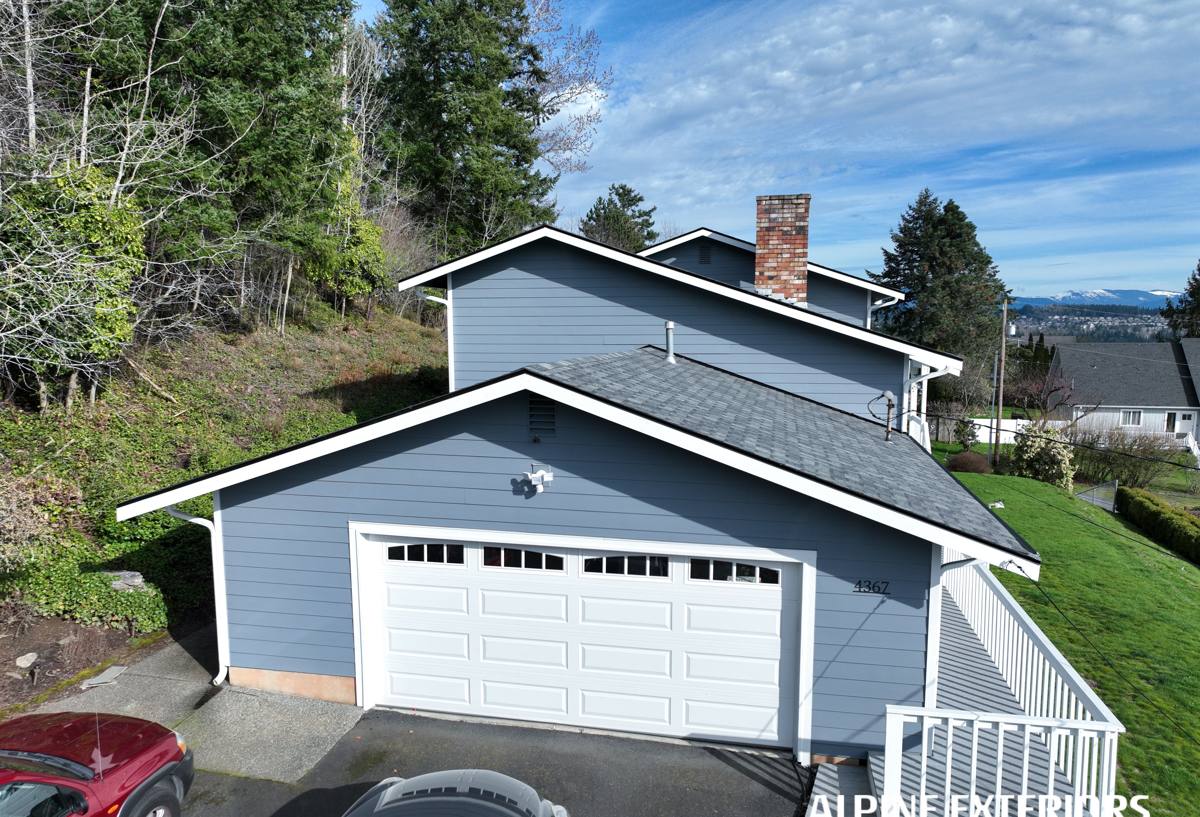
What Salt Air, Rain, and Moss Actually Do to a Roof
Salt Air and Metal Components
Proximity to the bay means airborne salt settles on roofing metal — flashing, fasteners, gutter hardware, vents — a little every day. Over years, uncoated or poorly finished metal corrodes faster here than it would twenty miles inland. This shows up first at flashing seams and nail heads, which is exactly where leaks start.
Driving Rain and Wind-Driven Water
Bellingham's rain doesn't just fall straight down; a lot of it comes in sideways off Puget Sound weather systems. That matters because it pushes water up and under shingle edges, into valleys, and around anything that penetrates the roof plane — vent stacks, chimneys, skylights. A roof that would perform fine in a drier climate can still leak here if flashing details and underlayment laps weren't built for wind-driven water in the first place.
Moss and the Long Shade Season
Sehome's mature trees and hillside lots are part of the neighborhood's character, but they also mean many roofs get limited direct sun for much of the year. Moss and moss-holding debris trap moisture against the roofing surface, which accelerates granule loss on asphalt shingles and can lift edges enough to let water track underneath. A roof that's constantly damp ages faster than one that gets to dry out between storms — that's the core problem moss creates, more than the moss itself.
Repair or Replace? How We Tell the Difference
Not every stained ceiling means a new roof. But there's a point where patching becomes a waste of money, and we're direct with homeowners about where that line sits. Signs we look for before recommending full replacement:
- Granule loss heavy enough that you can see bare, shiny patches on asphalt shingles from the ground
- Shingles that are cupping, curling, or cracking across multiple slopes, not just one isolated area
- Soft or spongy decking felt underfoot in the attic, especially near valleys or chimneys
- Moss or algae established deeply enough that it's lifting shingle edges rather than just staining the surface
- Flashing that's visibly rusted, separated, or was never properly integrated with the roofing material
- Multiple past repairs in different spots — a sign the roof is failing broadly, not locally
- Roof age at or past the manufacturer's expected service life for this climate
If a roof shows one or two of these in a limited area, targeted repair is usually the honest answer, and we'll say so. Replacement makes sense when the underlying material and system — not just the surface — has reached the end of its useful life.
What a Correct Roof Replacement Actually Involves
A roof replacement is more than swapping old shingles for new ones. Done right, in a climate like this, it's a system: decking, underlayment, ventilation, flashing, and the roofing material itself, all working together.
Full Tear-Off and Decking Inspection
We remove the existing roofing down to the deck rather than layering over it. This is the only way to actually see the condition of the sheathing underneath — soft, delaminated, or water-stained decking gets replaced before anything new goes down. Covering over a compromised deck just hides the problem for the next homeowner or the next storm.
Underlayment Built for Wind-Driven Rain
Given how much of Bellingham's weather comes in sideways, we pay particular attention to underlayment laps and to synthetic or self-adhered membrane at eaves, valleys, and any roof penetration. This is one of the most overlooked parts of a cheap roofing job, and it's the part most likely to cause a slow, hidden leak years later.
Flashing That Accounts for Salt Exposure
Where a roof meets a chimney, wall, skylight, or vent, we use flashing materials and fastener finishes chosen with the salt-air exposure in mind, not just whatever's cheapest at the yard. Corroded flashing is one of the most common failure points we find on older Sehome roofs during tear-off.
Ventilation Sized for a Shaded, Damp Lot
On lots with heavy tree cover, attic ventilation matters even more than usual, because the roof deck doesn't get the drying benefit of full sun. We check intake and exhaust balance as part of every replacement — not just to protect the new roof, but to reduce the moisture and moss conditions that shortened the old one's life.
Choosing a Roofing Material for Sehome's Conditions
There's no single "best" roofing material — the right choice depends on the home's roof pitch, budget, tree cover, and how the homeowner weighs upfront cost against long-term upkeep. Here's how the common options stack up against the specific pressures Sehome roofs face:
| Material | Typical Lifespan Here | Moss Resistance | Salt-Air Durability | Relative Upfront Cost |
|---|---|---|---|---|
| Architectural asphalt shingle | 20–30 years | Moderate; benefits from algae-resistant granules | Good with corrosion-resistant flashing/fasteners | Lowest |
| Standing seam metal | 40–60 years | High; sheds debris and dries quickly | Depends heavily on coating quality | Highest |
| Synthetic/composite shingle | 30–50 years | High; engineered surface resists moisture uptake | Good; minimal exposed metal | Mid-to-high |
| Cedar shake | 20–30 years with upkeep | Low without regular treatment | Fair; more maintenance-sensitive overall | Mid-to-high |
We're honest about trade-offs rather than pushing one product. Cedar shake, for example, can look great, but on a shaded Sehome lot it needs more consistent maintenance to resist moss and rot than most homeowners plan for — that's a maintenance-burden issue, not a knock on the material itself. Metal performs extremely well here but carries the highest upfront cost. For most Sehome homes, a quality architectural shingle with the right underlayment and flashing package is the most practical balance of cost and durability.
A Note on Warranties
Manufacturer warranties on shingles and underlayment are only as good as the installation behind them. Most manufacturers require certified installation and correct ventilation to honor a full warranty — something worth confirming in writing before work starts, regardless of who you hire.
Our Roof Replacement Process
- On-site inspection: We walk the roof and attic, check decking condition, ventilation, and flashing, and photograph anything relevant to the estimate.
- Written scope and estimate: A clear breakdown of materials, tear-off, decking repair allowances, and flashing/ventilation work — no vague line items.
- Permitting: We handle the required City of Bellingham or Whatcom County permitting so the job is documented and inspected properly.
- Tear-off and deck inspection: Old roofing removed, deck inspected and repaired as needed before anything new is installed.
- Underlayment, flashing, and ventilation installed: The system components that determine long-term performance go in before the finished roofing material.
- Roofing material installation: Installed to manufacturer specification so warranty coverage stays intact.
- Final walkthrough and cleanup: Site cleared of debris, magnetic sweep for nails, and a final review with the homeowner.
Why Local Experience in Sehome Matters
Roofing crews who work this neighborhood regularly know things a general contractor from farther out doesn't automatically account for: how tight some Sehome lots are for staging material and equipment, how much tree cover affects drying time mid-project, and how older homes here often have roof framing and pitches that don't match modern truss-built houses. That experience shows up in scheduling, in how carefully a crew protects landscaping and neighboring properties during tear-off, and in not being surprised by what's under the old roofing once it comes off.
It also matters for permitting. Bellingham and Whatcom County have their own permitting requirements and inspection expectations, and a crew that pulls permits here routinely doesn't lose time figuring that process out mid-project.
Questions Worth Asking Before You Hire
- Is the estimate a full tear-off, or does it include an option to layer over the existing roof?
- Does the written scope specify underlayment type and flashing materials, or just "standard"?
- Who pulls the permit, and is that cost included in the estimate?
- Is attic ventilation being assessed and adjusted, or left as-is?
- What does the manufacturer's warranty require to stay valid, and does the contractor meet that requirement?
- Is the contractor licensed and insured in Washington, and can they provide proof directly?
A roof replacement is a significant investment, and the difference between a correct job and a corner-cut one usually isn't visible until years later, when it's far more expensive to fix. If your Sehome home is due for a new roof, or you're just not sure whether repair or replacement is the right call, we're happy to take a look and give you a straight answer. Reach out for a free, no-pressure estimate using the form below.