 Bellingham Exterior
 Edgemoor Sits Where Bellingham's Climate Gets Toughest on Siding
Edgemoor is one of Bellingham's older, more heavily wooded neighborhoods, and it sits close enough to the water that salt air is a daily fact of life for anything mounted on an exterior wall. Add in the mature tree canopy that shades much of the neighborhood, Whatcom County's long wet season, and the driving rain that comes off Bellingham Bay during winter storms, and you have a set of conditions that will find every weakness in a siding system within a few years. Homes here don't fail because owners neglected them. They fail because the siding, the flashing, or the installation wasn't built for this specific combination of salt, shade, and moisture.
This page covers what siding installation actually needs to look like for an Edgemoor home, why we install only James Hardie fiber cement, and what our process looks like on a property like yours.
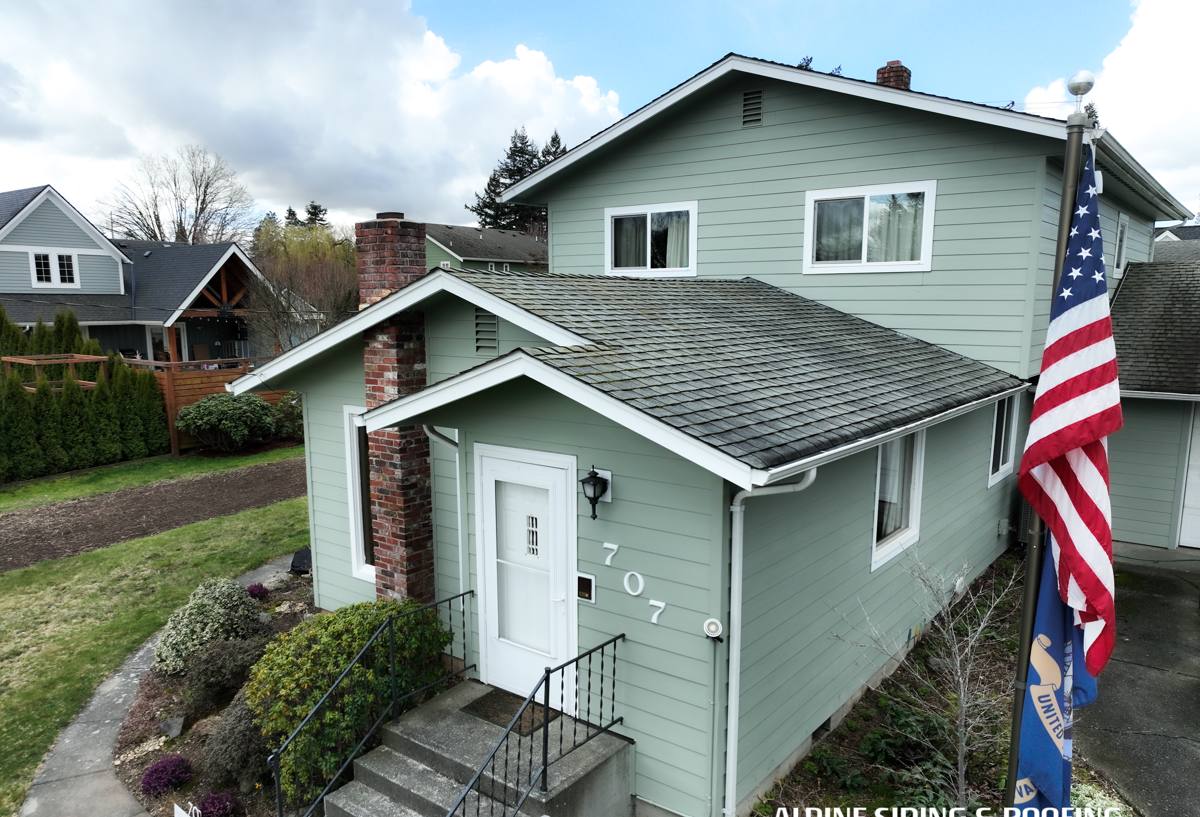
What Edgemoor's Microclimate Does to Siding Over Time
Salt Air and Coastal Exposure
Even a few blocks inland from Bellingham Bay, airborne salt settles on exterior surfaces and accelerates corrosion of anything metal — nails, fasteners, flashing, and trim accessories. On siding materials that depend on a painted or laminated surface film to stay sealed, salt exposure combined with UV and moisture cycling breaks that film down faster than it would inland. Fasteners that aren't rated for coastal exposure can bleed rust through the face of the siding within a few seasons, leaving streaks that no amount of touch-up paint fully hides.
Moss, Shade, and Slow-Drying Walls
Edgemoor's tree cover is part of what makes the neighborhood attractive, but it also means many walls get limited direct sun, especially on north and east-facing elevations. Less sun means slower drying after every rain event, and slower drying means more time for moss and algae to establish on the siding surface and in seams. On wood-based or fiber-based products that aren't engineered to resist moisture intrusion, that constant damp cycle is exactly the condition that leads to swelling, delamination, and rot at the edges and butt joints.
Driving Rain and Wind-Driven Moisture
Storms moving in off the bay don't just drop rain straight down — wind-driven rain gets pushed sideways into walls, especially on exposed corners and upper stories. That kind of exposure punishes any siding installation where the water-resistive barrier, flashing, and laps weren't detailed correctly. Water finds the first gap it can and works its way behind the cladding, where damage happens out of sight until it's already expensive.
Why We Install Only James Hardie Fiber Cement Here
We don't install vinyl, LP SmartSide, primed wood, cedar, or other fiber cement brands. That's a deliberate standard, not a sales pitch, and Edgemoor's climate is a good example of why. James Hardie fiber cement is non-combustible, doesn't absorb moisture the way wood-based products do, and is manufactured with a factory-applied ColorPlus finish that's baked on rather than painted on site — which matters a great deal when the finish has to survive salt air and UV exposure year after year. Hardie's HZ5 product line is engineered specifically for wetter, harsher climates like the Pacific Northwest, with moisture and freeze-thaw performance built into the formulation rather than added afterward.
Vinyl siding can warp and gap under temperature swings and doesn't hold paint if a color change is ever wanted. Wood-based products, including engineered wood, remain vulnerable at cut edges and fastener penetrations no matter how well they're primed. Cedar is genuinely attractive but demands an ongoing maintenance commitment — refinishing, sealing, and moss control — that most Edgemoor homeowners don't want to sign up for given the shade and moisture on their lots. Fiber cement from a manufacturer with a strong, transferable warranty and a proven track record in wet coastal climates is what we've chosen to stand behind.
What a Correct Installation Actually Involves
Siding installation is mostly a water management project with a finish material attached to it. The visible panel is the smallest part of what determines whether a job lasts.
Water Management Details
- A continuous, properly lapped weather-resistive barrier behind the siding, with all penetrations sealed
- Correct flashing at every window, door, deck ledger, and roof-to-wall transition
- A drainage gap or rainscreen approach so any moisture that does get behind the siding has somewhere to go and can dry out
- Kick-out flashing at roof-wall intersections to direct water away from the wall assembly instead of behind it
- Proper clearance between siding and grade, decks, roofs, and other horizontal surfaces
Fastening and Manufacturer Spec Compliance
James Hardie publishes exact installation requirements — fastener type and spacing, minimum overlaps, gapping at butt joints, and caulking practices — and those specs are what the warranty is actually built on. Using the wrong fastener, nailing too tight, or skipping the specified gap at joints doesn't just risk cosmetic problems; it can void warranty coverage and shorten the real lifespan of the siding regardless of how good the material itself is. In a salt-air environment, fastener choice matters even more, since corrosion-resistant fasteners are what keep rust streaks from showing up on the face of the siding a few years down the road.
Our Process for an Edgemoor Project
We walk every project through the same sequence, adjusted for what your specific home and lot need:
- On-site assessment — we look at existing siding condition, moisture damage, tree cover and shade patterns on your specific elevations, and any prior water intrusion signs around windows, decks, and roof lines.
- Tear-off and sheathing inspection — old siding comes off and the sheathing underneath gets checked for rot or soft spots before anything new goes up. Any damaged sheathing gets repaired, not covered over.
- Weather barrier and flashing installation — this is the step that determines whether the job holds up, and it happens before a single piece of visible siding is installed.
- Hardie panel or lap installation — installed to manufacturer spec, with attention to fastener pattern, gapping, and caulking at trim and penetrations.
- Final inspection and walkthrough — we go over the finished work with you and explain what basic upkeep will keep it looking right.
Cost Factors for Edgemoor Siding Projects
Every home is different, but the variables that move price on a project like this are fairly consistent. We give firm numbers only after an on-site look, but this is what typically drives the estimate:
| Factor | Why It Matters |
|---|---|
| Home size and wall complexity | More square footage, corners, and roof lines mean more material and labor |
| Existing damage found at tear-off | Rotted sheathing or framing found behind old siding adds repair scope |
| Elevation exposure | Walls facing prevailing wind and rain off the bay often need extra flashing attention |
| Tree cover and site access | Wooded lots common in Edgemoor can mean tighter staging and more careful equipment placement |
| Siding profile and trim level | Lap siding, panel systems, and trim detailing carry different material and labor costs |
| Color and finish selection | ColorPlus factory finishes versus field-painted options affect both cost and long-term maintenance |
Why a Crew That Already Works Edgemoor Matters
A neighborhood like Edgemoor has its own set of practical challenges that a contractor who only occasionally works in Bellingham may not anticipate: mature trees close to structures that require careful staging and protection during tear-off and install, older homes where sheathing and framing conditions vary by decade of construction, and lot layouts that don't always allow for easy equipment access. A crew that has worked this part of Bellingham repeatedly knows what to expect before the tear-off even starts, which means fewer surprises and a smoother timeline for you. It also means we already understand which elevations in this kind of setting take the worst weather exposure and need the most attention to flashing and drainage detail.
Maintaining Your Siding After Installation
Correctly installed James Hardie siding is low-maintenance, not zero-maintenance. A little attention goes a long way, especially given Edgemoor's shade and moss conditions:
- Rinse siding periodically, with extra attention to shaded, north-facing walls where moss and algae establish fastest
- Keep gutters clear so water isn't overflowing onto siding below
- Trim back vegetation and tree limbs that keep walls damp or in constant shade
- Have caulking at trim, window, and door junctions inspected every couple of years and refreshed if it's cracking
- Address any impact damage or cracked panels promptly so moisture doesn't get behind the siding at that point
None of this is intensive work, but skipping it is how even a good installation loses years off its lifespan in a wet, shaded coastal setting like this one.
Get a Straightforward Estimate
If you're weighing a siding replacement on an Edgemoor property, we're happy to come take a look, walk you through what we're seeing on your specific home, and give you an honest, no-pressure estimate. Use the form below to get started.