 Bellingham Exterior
 Siding Repair for Columbia Homes in Bellingham
Columbia is one of Bellingham's older, established neighborhoods, and that history shows up in its housing stock — a mix of early-to-mid-century homes and newer infill, many of which have been re-sided or patched more than once over the decades. When a homeowner in this part of Bellingham calls about siding repair, the underlying problem is rarely just "one bad board." It's usually a combination of age, moisture exposure, and whatever siding material was used at the time, meeting head-on with the realities of living close to Bellingham Bay and the Salish Sea.
This page focuses on siding repair specifically for Columbia-area homes — what the local climate does to siding here, what a repair should actually involve, and why a crew that already knows this neighborhood's housing stock does a better job than a general contractor working from a truck.
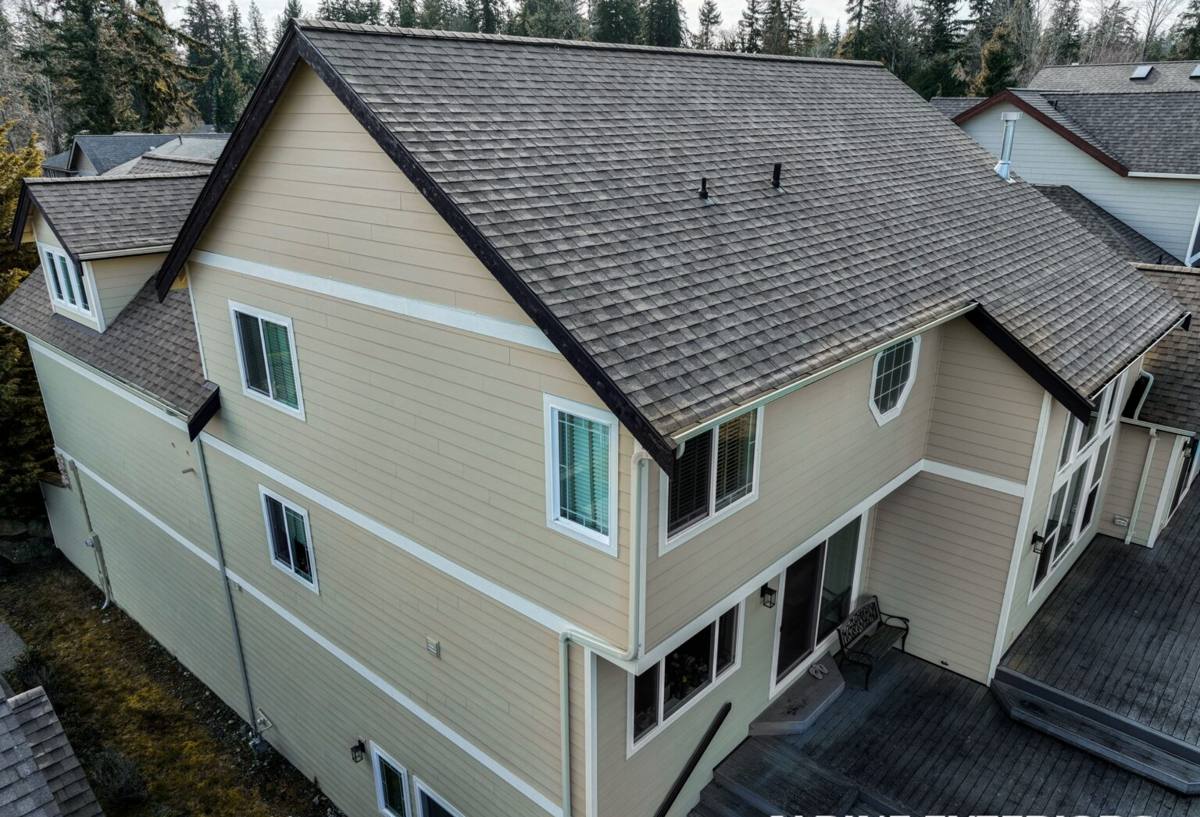
What Whatcom County Weather Does to Siding in This Neighborhood
Columbia's proximity to the water is part of its character, but it's also the reason siding here ages differently than it does further inland. Three factors show up again and again on repair calls in this part of Bellingham:
- Salt air: Airborne salt from Bellingham Bay accelerates corrosion on fasteners, flashing, and any exposed metal trim. Once a fastener starts to rust, it loosens, and a loose fastener is where water gets its first foothold.
- Driving rain: Bellingham's storms rarely come straight down. Wind-driven rain off the water pushes moisture sideways into laps, seams, and butt joints — the exact spots where a poorly maintained repair fails first.
- Long moss season: Cool, damp conditions for much of the year mean moss and algae get a long runway on north-facing and shaded walls. Left alone, that growth holds moisture against the siding surface far longer than the material was ever designed to tolerate.
None of this means siding in Columbia is doomed — it means repairs have to account for moisture behavior, not just cosmetic appearance.
Signs a Columbia Home Needs Siding Repair
Because so many homes in this neighborhood have layered repairs or re-sides over the years, it's worth knowing what to actually look for before assuming a full re-side is necessary:
Surface-level signs
- Peeling or bubbling paint, especially near the bottom courses of siding or around window trim
- Persistent moss or dark streaking that returns shortly after cleaning
- Visible gaps at butt joints, corners, or where siding meets trim
- Cracked, split, or bowed boards, particularly on the weather-facing (typically west and southwest) walls
Signs the damage has gone deeper
- Soft or spongy spots when you press on the siding or the trim beneath it
- Interior staining on walls that back up to exterior siding problems
- Rust streaks below fasteners or flashing
- A musty smell near exterior walls, especially in a basement or crawlspace on the affected side
The second list is the more important one. Surface issues are often genuinely repairable. Once moisture has reached the sheathing or framing behind the siding, the scope of the job changes — and pretending otherwise just delays a bigger bill.
What a Correct Siding Repair Actually Involves
A siding repair that's done right is a diagnostic process first and a patch job second. Skipping the diagnostic step is the most common way a "repair" ends up needing to be redone within a couple of years.
1. Find out why the siding failed, not just where
Cracked boards, rot, and paint failure are symptoms. The cause might be a missing kick-out flashing, a gutter that's been overflowing onto the wall below, poor original installation clearance at grade, or simply a section of siding that was never properly caulked or painted. Replacing the board without fixing the cause just resets the clock on the same failure.
2. Inspect what's behind the siding
Once damaged boards are pulled, the house wrap or building paper, sheathing, and any flashing underneath need to be checked. If there's rot in the sheathing, that gets addressed before any new siding goes back on — covering damaged sheathing with new siding is how small problems become expensive ones.
3. Match the material and the reveal
Repairs need to match the existing siding's profile, reveal (the exposed width of each course), and finish as closely as possible, or the patch will be visible from the street for as long as it's there. On older Columbia homes this sometimes means the original siding material is no longer manufactured, which is a real factor in deciding whether to repair a section or re-side the whole wall.
4. Detail the flashing and joints correctly
Every seam, corner, and penetration (hose bibs, vents, light fixtures) is a place water can get behind the siding. Proper flashing, sealant, and fastener placement at these points matters more to long-term performance than the siding material itself.
Repairing Different Siding Types — and Where We Draw the Line
Not every siding repair call in Columbia involves the same material. We run into wood, vinyl, older fiber cement, and occasionally LP SmartSide on homes here. We'll assess and repair what's on the house today, but it's worth being upfront about how we approach the work:
| Siding Material | Common Repair Issues | Our Approach |
|---|---|---|
| Wood / cedar | Rot, splitting, paint failure, insect damage | Repair where sound; recommend Hardie for any section requiring full replacement |
| Vinyl | Cracking, warping, fading, wind damage | Patch or panel-replace where possible; matching older vinyl profiles gets harder each year |
| LP SmartSide / OSB-based | Edge swelling, moisture wicking at seams | Repair swollen sections promptly; these products are moisture-sensitive at cut edges and seams |
| Older fiber cement | Cracked boards, failed caulk joints, paint wear | Repair with matched-profile fiber cement; straightforward, stable material to patch |
| James Hardie fiber cement | Rare — occasional impact damage or failed caulk joints | Direct board replacement using ColorPlus-matched product where available |
We install James Hardie exclusively for full re-sides and larger repair sections. It's non-combustible, holds up to the moisture cycle this area sees every winter, and the ColorPlus factory finish means a repaired section doesn't need to be field-painted to blend in. For homes with other siding types, we'll tell you honestly whether a patch makes sense or whether you're better off putting the repair budget toward re-siding the affected wall in Hardie instead.
Repair or Replace? What Actually Drives the Decision
| Factor | Favors Repair | Favors Replacement |
|---|---|---|
| Extent of damage | Isolated to a few boards or one wall section | Spread across multiple walls or elevations |
| Sheathing condition | Dry, sound sheathing behind damaged boards | Rot or moisture found behind siding |
| Material availability | Matching material or profile still available | Discontinued profile, visible mismatch likely |
| Age of existing siding | Relatively recent, otherwise in good shape | Nearing or past expected service life |
| Underlying cause | One-time or localized (impact, isolated flashing failure) | Systemic (poor original install, chronic moisture path) |
We'll walk you through where your specific situation lands on this table before we recommend anything — a repair that will genuinely hold up is a legitimate, cost-effective answer for a lot of Columbia homes.
Our Process for Siding Repair Calls
- On-site inspection: We look at the damaged area and the surrounding wall, not just the spot you called about — related problems are common nearby.
- Diagnosis: We identify the root cause (flashing, drainage, installation gap, material failure) before scoping the fix.
- Written recommendation: A clear explanation of what needs to happen, why, and what it will cost — including whether repair or partial replacement is the better call.
- The repair itself: Damaged material removed, substrate checked and addressed if needed, correct flashing and fastening detail, and matched siding installed.
- Final check: We confirm the repaired section sheds water correctly and blends acceptably with the surrounding siding before calling the job done.
Why Local Experience with Columbia Homes Matters
A crew that already works in Bellingham's Columbia neighborhood has seen the housing stock here — the range of siding materials used across different eras, the way homes closer to the water tend to show wear on their west and southwest faces first, and the drainage quirks of older lots in this part of the city. That familiarity shortens the diagnostic process and reduces the chance of a repair that looks right for a season and then fails again the next wet winter. It also means we're not guessing at how Whatcom County's salt air, wind-driven rain, and moss season interact with a given material — we've already repaired it on a neighboring street.
A Quick Checklist Before You Call for an Estimate
- Note which side of the house the damage is on (weather-facing walls fail first here)
- Check gutters and downspouts near the damaged area for overflow or clogging
- Look for soft spots by pressing gently on the siding, not just visual cracks
- Take note of how long the current siding has been on the house, if known
- Mention any interior signs — stains, musty smell, or soft drywall on the same wall
If you've noticed cracked boards, persistent moss, or soft spots on your Columbia-area home, we're glad to take a look and give you a straight answer on repair versus replacement — no pressure, no upsell. Reach out below for a free estimate.