 Bellingham Exterior
 Why Fairhaven's Climate Is Hard on Siding
Fairhaven sits close to Bellingham Bay, which means homes here deal with a combination that inland Whatcom County neighborhoods don't face to the same degree: salt-laden air off the water, driving rain that comes in sideways during winter storms, and a long, damp moss season that can stretch from fall through spring. Any one of these on its own is manageable. Together, over years, they wear down siding faster than homeowners expect.
Salt air accelerates corrosion on fasteners, trim, and any metal flashing that isn't properly protected. Driving rain finds every gap in a siding system that wasn't installed with the right laps, flashing, and sealant details, pushing moisture behind the cladding instead of shedding it. And moss doesn't just grow on roofs — it takes hold in shaded, north-facing siding sections and anywhere water sits instead of draining, holding moisture against the wall long after a storm has passed.
None of this means siding is doomed in Fairhaven. It means the material and the installation both have to be chosen with this specific climate in mind, not just installed to a generic spec.
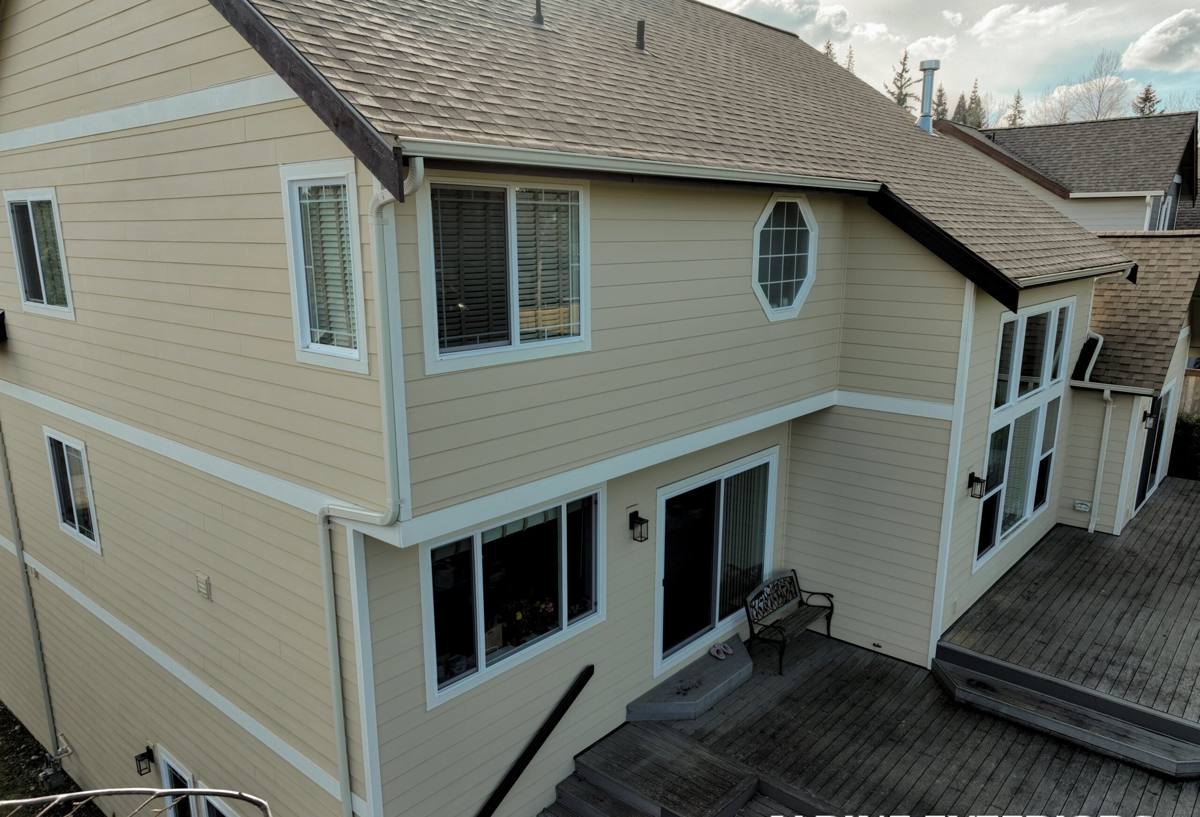
Signs Your Fairhaven Home Needs Siding Replacement
Most siding failure in this area shows up gradually. By the time it's obvious from the curb, there's often been moisture intrusion happening behind the wall for a while. Look for these signs before scheduling a repair or replacement estimate:
- Soft or spongy spots when you press on siding, especially near the bottom of walls or under windows
- Persistent moss or black streaking that comes back within weeks of cleaning
- Paint that's peeling, bubbling, or failing faster than a normal repaint cycle
- Visible warping, buckling, or gaps between siding panels or boards
- Rising interior utility bills, which can point to a compromised weather barrier and air leaks
- Musty smells or visible mold near exterior walls, particularly in closets or rooms on the water-facing side of the house
- Siding that's more than 20-25 years old, regardless of visible condition, if it's wood-based or vinyl
Any one of these is worth a look. Several at once usually means the siding has been letting moisture in for longer than it appears.
What a Correct Siding Replacement Actually Involves
It starts underneath the siding, not with it
The siding itself is the least important part of keeping water out of a wall — the water-resistive barrier underneath it does most of the real work. A correct replacement means removing the old cladding down to the sheathing, checking for hidden rot or damaged framing, and installing a continuous weather barrier with properly lapped and taped seams before a single new panel goes up. Skipping this step to save a day of labor is the single most common reason siding fails early in wet coastal climates.
Flashing at every penetration
Windows, doors, hose bibs, vents, and any other penetration through the wall need dedicated flashing that directs water back out and away from the framing. In a neighborhood that takes driving rain off the water, these details matter more than they would further inland — water under pressure will find any shortcut.
Fastening and clearances to spec
Fiber cement siding has a specific nailing pattern, fastener type, and minimum clearance from grade, roofing, and decks that the manufacturer requires to keep the warranty valid. Butt joints need to be caulked or flashed correctly, not just pushed together. These aren't optional details — they're the difference between siding that lasts three decades and siding that needs attention in five years.
Ventilation behind the cladding
In a damp climate, giving the wall assembly a way to dry out matters as much as keeping water from getting in. Proper rainscreen or drainage detailing lets any moisture that does get past the outer layer escape instead of sitting against the sheathing.
Why We Install Only James Hardie Fiber Cement
We standardized on James Hardie fiber cement siding for every job we do, including here in Fairhaven, and we don't install vinyl, LP SmartSide, or unfinished wood siding. That's a deliberate call based on how each of those materials actually performs in a wet, salt-air coastal climate over decades, not just how they look on installation day.
Fiber cement is non-combustible, doesn't expand and contract with moisture the way engineered wood products can, and holds paint and factory finish far longer than raw wood. James Hardie's ColorPlus finish is baked on at the factory under controlled conditions, which gives it better fade and moisture resistance than field-applied paint. For homes exposed to salt air and long stretches of damp weather, that factory finish is doing real work — it's not just a cosmetic upgrade.
James Hardie also engineers specific product lines (their HZ5 line, for example) for harsher climate zones, accounting for moisture exposure rather than using one generic formulation everywhere. That climate-specific engineering, paired with a strong transferable warranty, is a big part of why we settled on this one manufacturer instead of offering several options.
How Siding Materials Compare in Fairhaven's Climate
| Material | Moisture Behavior | Salt Air / Coastal Performance | Maintenance Burden |
|---|---|---|---|
| James Hardie fiber cement | Dimensionally stable, resists swelling and warping | Strong; non-combustible, holds factory finish well | Low — occasional wash, repaint on a long cycle |
| Vinyl siding | Doesn't rot, but can trap moisture behind it and warp in heat or impact | Can become brittle and fade faster under salt exposure and UV | Low upfront, but limited repair options once damaged |
| Engineered wood (LP SmartSide) | Wood-based core is vulnerable if the finish is compromised | Moisture and salt exposure raise the risk of edge swelling | Moderate — finish and caulked seams need monitoring |
| Cedar / primed wood | Absorbs and releases moisture readily; prone to cupping and checking | High maintenance in salt air and constant damp shade | High — regular refinishing and moss/rot monitoring |
What a Fairhaven Siding Replacement Costs
We don't quote pricing without seeing the house, but a few factors consistently move the number more than homeowners expect:
| Factor | Why It Matters |
|---|---|
| Hidden sheathing or framing damage | Moisture that's been getting in for years often means rot repair is needed before new siding can go up |
| Home size and wall complexity | Multiple gables, dormers, and trim details take more time and material than a simple rectangular wall |
| Siding profile chosen | Lap siding, board-and-batten, and shingle-style Hardie products vary in material and labor cost |
| Access and site conditions | Steep lots, tight setbacks, or limited staging space near the water can slow the job down |
| Trim and accessory work | Corner boards, window trim, and fascia are often replaced alongside siding for a consistent, sealed result |
An accurate number only comes from an on-site look at the current siding, the sheathing underneath it once we open it up, and the scope of trim work involved.
Our Process for a Fairhaven Siding Replacement
- On-site assessment — we walk the exterior, check for soft spots and moisture signs, and talk through what we're seeing before any work is scheduled
- Tear-off and sheathing inspection — old siding comes off in sections so we can check the sheathing and framing for hidden damage as we go
- Repair as needed — any compromised sheathing or framing gets replaced before the weather barrier goes on, not patched over
- Weather barrier and flashing — a continuous, properly lapped barrier with flashing at every window, door, and penetration
- Hardie installation to spec — correct fastening pattern, clearances, and joint detailing per manufacturer requirements
- Trim, caulking, and final finish — corner boards, trim, and sealant details finished for a clean, weathertight result
- Final walkthrough — we go over the finished job with the homeowner before calling it done
Fairhaven's Character Is Worth Getting Right
Fairhaven has a distinct mix of older homes with real architectural character alongside newer construction, and a lot of homeowners here care about getting the exterior right, not just weathertight. James Hardie's lap, shingle, and board-and-batten profiles, along with a range of ColorPlus finish colors, give us room to match or complement a home's existing style rather than forcing every house into the same look. When we're replacing siding on an older home, we pay attention to trim details and proportions so the result still reads as belonging to the house, not like a generic re-clad.
Why a Crew That Already Works in Fairhaven Matters
Siding replacement done wrong in a driving-rain, salt-air climate doesn't fail gracefully — it fails behind the wall, where nobody sees it until there's real damage. A crew that regularly works this specific stretch of Bellingham's waterfront neighborhoods has already seen how water moves on these lots, which wall orientations hold moss longest, and where moisture tends to sneak in on homes built to older standards. That local pattern recognition shows up in better flashing decisions and fewer callbacks, not just faster scheduling.
It also matters for the practical side of the job — knowing local permitting expectations, working efficiently on the tighter lots common in older Bellingham neighborhoods, and being reachable if a question comes up after the job is done. That's harder to get from a crew that's rarely in the area.
If your Fairhaven home's siding is showing its age, we're happy to take a look and give you a straight assessment — no pressure, no upsell, just what we'd actually recommend. Request a free estimate below and we'll walk the exterior with you.