 Bellingham Exterior
 Metal Roofing Built for What Silver Beach Actually Deals With
Silver Beach homes sit under mature tree cover, close to the water, in one of the wettest corners of Washington State. That combination is hard on a roof. Constant shade keeps surfaces damp long after a storm passes, moss gets a foothold and doesn't let go, and the marine, salt-tinged air that moves through Bellingham and the rest of Whatcom County speeds up corrosion on anything not properly protected. A roof that would hold up fine in a drier, more open part of the state can fail early here.
Metal roofing, installed correctly, handles this environment better than most alternatives. It sheds water fast, gives moss less to grip, and — with the right metal, coating, and fastening system — resists the slow corrosion that salt air and standing moisture cause over time. The word "correctly" is doing a lot of work in that sentence, though. Metal roofing is unforgiving of shortcuts in a way that shingles often aren't, and a lot of the problems we get called out to fix on metal roofs trace back to installation choices made to save time or money up front.
This page covers what a metal roof needs to actually perform on a Silver Beach property, what correct installation looks like, and how we approach the work.
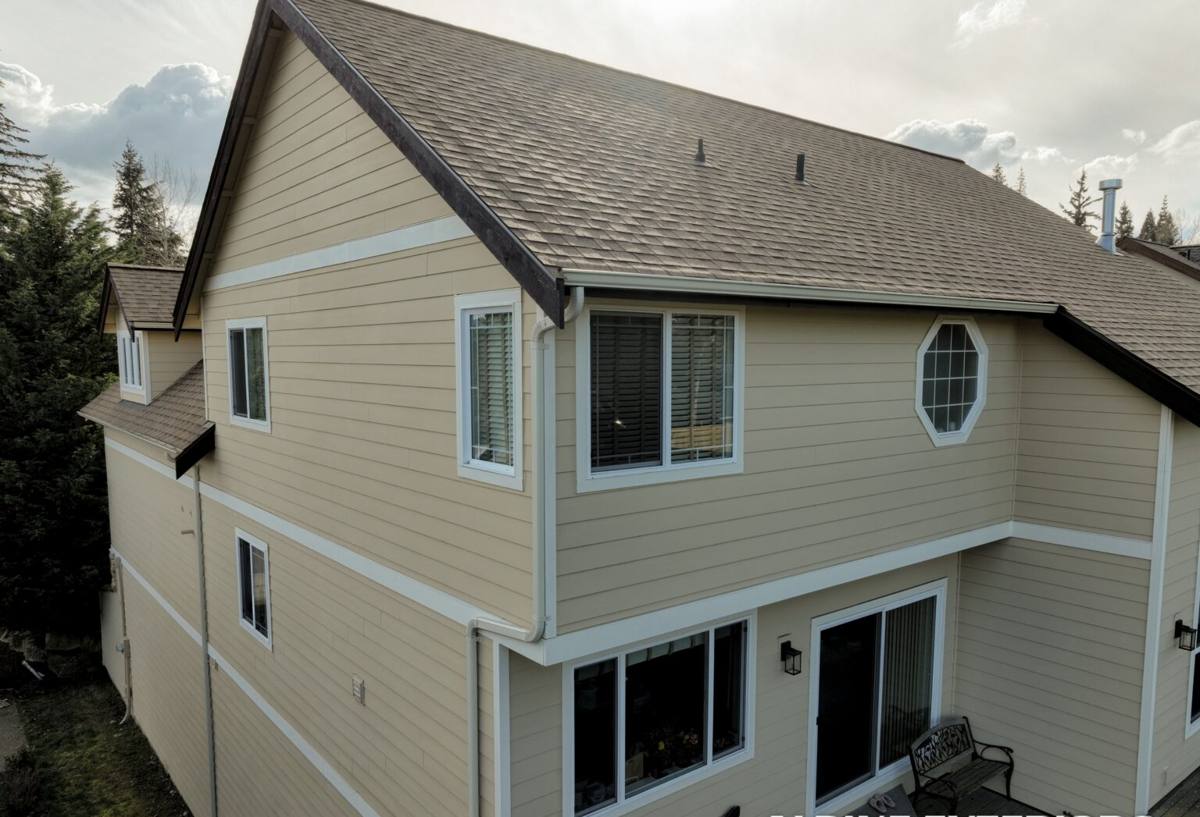
What This Climate Does to a Roof Over Time
Rain That Doesn't Let Up
Bellingham gets a lot of rain spread across many months, not just a handful of hard storms. That means fasteners, seams, flashing, and underlayment are under near-constant low-grade moisture pressure for most of the year. Small gaps or poorly lapped seams that might never leak in a drier climate will eventually leak here — it's a matter of when, not if.
A Long Moss Season
Shaded, tree-covered lots — common around Silver Beach — stay damp long enough for moss and lichen to establish themselves on roofing surfaces. On asphalt shingles, moss roots into the granules and lifts them. On a properly installed metal roof, moss has much less to hold onto, but it can still build up in valleys, around penetrations, and at panel overlaps if debris is allowed to collect there. Neglected moss holds moisture against the metal and its coating, which is exactly what you don't want happening in one spot for months at a time.
Salt-Tinged Air
Whatcom County's proximity to the water means the air carries a degree of salinity that inland parts of the state don't deal with. Salt accelerates galvanic and general corrosion on exposed metal — fasteners, flashing, and any cut edges where a protective coating has been compromised. This is a material and detailing issue as much as anything else: the metal, coating, and fastener choices we make have to account for it.
What a Correct Metal Roof Installation Involves
A metal roof is a system, not just a layer of panels. Every part of it has to work together, and getting any one part wrong undermines the rest.
Underlayment
In a climate this wet, we don't treat underlayment as an afterthought. A high-temperature, self-adhering synthetic underlayment gives the roof a real second line of defense if wind-driven rain or ice-damming ever pushes water past the panels themselves — which happens more often on metal roofs with condensation than most homeowners expect, especially on unconditioned attic spaces.
Panel Layout, Seams, and Fastening
How panels overlap, how seams are formed, and where fasteners are placed all determine whether water is actually shed or just slowed down. Panels need consistent, adequate overlap in the direction of water flow, and seams need to be formed — not just lapped — where the roof design calls for it. Fastener spacing and torque matter too: overdriven screws crush the washer and stop sealing; underdriven ones back out over time as the metal expands and contracts with temperature.
Flashing and Penetrations
Valleys, chimneys, vent stacks, skylights, and wall transitions are where the vast majority of roof leaks actually start, on metal roofs and every other kind. Flashing has to be custom-fit and properly integrated with the panel system and underlayment — not just caulked in place. We treat every penetration as a place that needs a real mechanical detail, because caulk is a maintenance item, not a permanent fix.
Expansion and Movement
Metal panels expand and contract with temperature swings throughout the year. Fastening systems need to allow for that movement, especially on longer panel runs, or you end up with oil-canning, stress cracks at fastener points, or seams that work themselves loose over several seasons.
Choosing the Right Metal Roofing System
Not every metal roofing system fits every house or budget. The two most common options for residential work are standing seam and exposed-fastener panel systems, and the right call depends on the roof, the budget, and how long you want to go between maintenance checks.
| Factor | Standing Seam | Exposed-Fastener Panels |
|---|---|---|
| Fasteners | Concealed, mechanically seamed | Visible, through-panel screws with gaskets |
| Moisture performance in this climate | Strong — no exposed penetrations for water or salt air to attack | Good, but gasketed fasteners are a wear item that needs periodic checking |
| Upfront cost | Higher | Lower |
| Long-term maintenance | Minimal | Fastener gaskets typically need inspection/replacement over the roof's life |
| Best fit | Homeowners planning to stay long-term, or roofs with heavy tree/moisture exposure | Budget-conscious projects, outbuildings, shorter ownership horizons |
Our standard is to walk each homeowner through this trade-off honestly rather than defaulting to whichever system is easiest to sell. On a shaded, moisture-heavy lot, the case for standing seam is stronger simply because there are fewer exposed fasteners for water and salt air to work on over the years. That said, exposed-fastener systems are a legitimate, durable option when installed with quality gasketed screws and proper spacing — they just carry a different maintenance rhythm.
Managing Moss and Debris on a Wooded, Shaded Lot
Tree cover is part of what makes a lot of Silver Beach's setting appealing, but it also means more leaf litter, needles, and organic debris landing on the roof year-round. On a metal roof, the goal isn't zero debris — it's making sure debris doesn't sit and pack into valleys, behind chimneys, or against curbs and transitions where it holds moisture against the metal.
Panel design and valley detailing play a role here too. Wider, properly sloped valleys shed debris more readily than tight, poorly formed ones. Ridge and hip caps need to be sealed and vented correctly so they don't become collection points. None of this eliminates the need for occasional cleaning, but it reduces how often it's needed and how much damage neglect can do between cleanings.
Corrosion Protection for Salt Air and Constant Moisture
Corrosion resistance on a metal roof comes down to three things: the base metal, the coating, and the fasteners.
- Base metal: Galvanized or Galvalume steel and aluminum are the common choices for residential work in this region. Aluminum has a natural edge in salt-air resistance since it doesn't rust the way steel can if the coating is ever breached.
- Coating: A quality PVDF (Kynar-type) paint finish holds its color and protective properties far longer than lower-grade paint systems, especially under UV exposure and repeated wet-dry cycles.
- Fasteners: Fasteners should match the panel metal to avoid galvanic corrosion, and gasketed screws need to be rated for exterior, high-moisture use — not a generic hardware-store substitute.
Cut edges are a detail that's easy to overlook: any place a panel is field-cut, the raw edge loses its factory coating and becomes a starting point for corrosion unless it's treated or protected during install. We account for that in how we plan cuts and edge treatments, not just in the materials we specify.
How Our Process Works
We start with an on-site look at the existing roof, decking condition, ventilation, and any problem areas — chronic moss, past leaks, damaged flashing — before recommending a system. From there:
- A written estimate outlining the panel system, metal, coating, underlayment, and flashing plan, with pricing broken out so you know what you're paying for.
- Removal of the old roofing material and an inspection of the decking underneath, with any needed repairs addressed before new material goes down — not covered over.
- Underlayment, panel, and flashing installation, with valleys, penetrations, and transitions treated as the priority details they are.
- A final walkthrough with the homeowner and full site cleanup, including magnetic sweeps for stray fasteners and clippings.
We handle the permitting that applies to the project rather than leaving it to the homeowner to sort out, and we stand behind the workmanship in writing.
What Maintenance Actually Looks Like
Metal roofing is low-maintenance compared to shingles, but "low" isn't "none." A short annual check catches most problems while they're still cheap to fix.
- Clear leaves, needles, and debris from valleys and around penetrations, especially heading into fall and winter.
- Check gutters and downspouts are flowing freely — a backed-up gutter can push water back under roof edges.
- Look for moss buildup at panel overlaps, valleys, and shaded north-facing slopes.
- Visually check exposed fasteners (if applicable) for backing out, corrosion, or gasket wear.
- Inspect flashing around chimneys, skylights, and wall transitions for gaps or lifted edges.
- Have a professional look at the roof after any major windstorm or heavy snow load.
None of this is complicated work, but skipping it for years at a time is how small, cheap fixes turn into deck repairs and premature panel replacement.
Why It Matters That We Already Work in Silver Beach
A roofing crew that's worked this specific area knows the practical realities before they show up: how much tree debris to expect, how long moss tends to take hold on shaded slopes, and how the local moisture and air conditions affect material choices over the roof's life. That's not a marketing point — it changes real decisions, like which coating to spec, how aggressive the valley design needs to be, and how we sequence tear-off and dry-in around Bellingham's rain patterns so decking isn't left exposed longer than necessary.
It also means straightforward communication. You're not explaining your street's conditions to someone who's never worked in the neighborhood — we already have a working sense of what homes here are up against.
Get a Straight Answer for Your Roof
If you're weighing a metal roof for a Silver Beach home — replacing an aging roof, dealing with chronic moss or leaks, or planning ahead — we're glad to take a look and give you an honest read on what your roof actually needs, with no pressure to sign anything on the spot. Use the form below to request a free estimate.