 Bellingham Exterior
 Building a Deck That Actually Holds Up on South Hill
South Hill sits above downtown Bellingham with some of the best views in the city, but that elevation and exposure come with a trade-off: wind-driven rain, damp shade under mature trees, and a moss season that runs longer than most homeowners expect. A deck built here has to handle different stresses than one built in a flat, sheltered yard across town. We've built and repaired decks throughout South Hill and the surrounding Bellingham neighborhoods long enough to know which shortcuts fail first and which details actually matter once the rain starts in October and doesn't let up until spring.
This page is specifically about custom deck construction for South Hill homes — the terrain, the climate load, the material choices that make sense here, and how we approach the job from first estimate to final walkthrough.
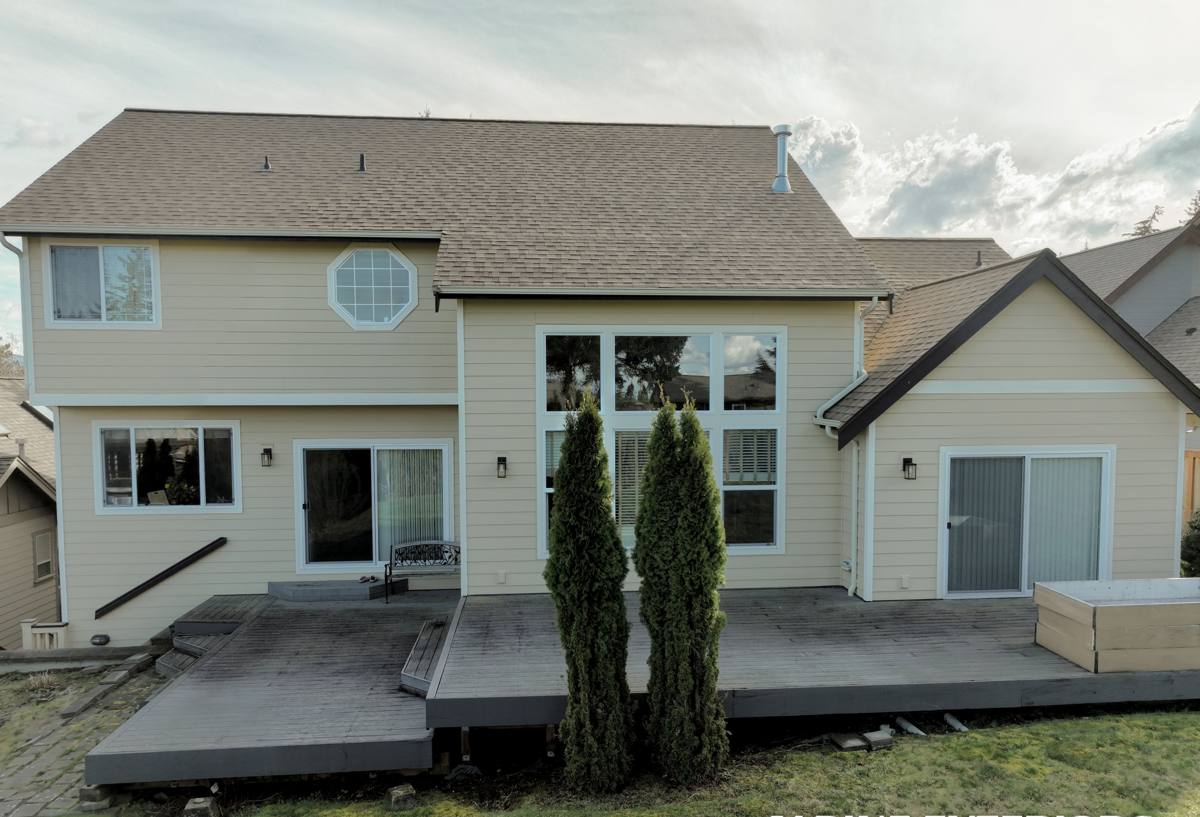
What Bellingham's Climate Does to an Outdoor Deck
Whatcom County's marine climate is mild, which is part of why people love living here — but "mild" doesn't mean "easy" on wood and fasteners. Three things do most of the damage over time:
- Driving rain and prolonged dampness: Bellingham gets a lot of steady, sideways rain rather than short heavy downpours. That means horizontal surfaces, ledger connections, and end grain stay wet for days at a stretch, which accelerates rot if the wood isn't properly sealed or the framing isn't detailed to shed water.
- A long moss and algae season: Shaded decking, north-facing stairs, and anything under tree cover on South Hill's wooded lots grows moss fast. Moss holds moisture against the board surface and turns walking surfaces slick and dangerous, especially on stair treads.
- Salt air off Bellingham Bay: South Hill's elevation puts many homes close enough to the water that salt-laden air reaches fasteners, flashing, and any exposed metal hardware. Standard fasteners corrode faster here than they would inland, which is why hardware selection matters more on this side of the county than a generic build guide would suggest.
None of this means a deck can't last decades in South Hill. It means the design and material choices have to account for these conditions from day one, not get patched in after the first winter.
Decking Material Options for South Hill Conditions
There's no single "right" material for every home — budget, sun exposure, and how much upkeep you want to do all factor in. Here's how the common options stack up against South Hill's specific climate load:
| Material | Moisture/Moss Resistance | Maintenance | Typical Lifespan Here |
|---|---|---|---|
| Pressure-treated wood | Good if sealed and cleaned regularly; moss takes hold if neglected | Annual cleaning and re-sealing recommended | 15-20 years with upkeep |
| Cedar | Naturally rot-resistant, but surface still grows moss in shade | Periodic oiling/staining to prevent graying and moss | 20-25 years with upkeep |
| Composite decking | Excellent — doesn't absorb water or rot, though moss can still grow on the surface film | Occasional wash-down; no sealing or staining | 25-30+ years, manufacturer-dependent |
| PVC decking | Very good moisture resistance; smooth surfaces shed moss more easily than wood grain | Low — soap and water wash-down | 25-30+ years, manufacturer-dependent |
We install all of these depending on what the homeowner wants, but we're honest about trade-offs. Wood costs less upfront and looks great, but it demands real annual maintenance in this climate or it will gray, split, and grow moss faster than owners expect. Composite and PVC cost more initially but remove most of that maintenance burden — the trade-off there is upfront cost and, on some product lines, a more limited color/texture selection compared to natural wood grain.
A Note on Fasteners and Hardware
Given the salt air exposure on South Hill, we default to stainless steel or heavy hot-dip galvanized fasteners and structural hardware rather than standard coated screws, especially at ledger connections and post bases where a failure isn't just cosmetic. This is a small line-item cost difference that saves a much larger repair bill down the road.
Framing and Structure — What's Underneath Matters Most
A deck's surface material gets all the attention, but the framing underneath is what actually determines how long it lasts and how safe it is. Three structural details matter more in South Hill than in a flatter, drier part of the county:
- Ledger flashing: Where the deck attaches to the house, proper flashing keeps water from working its way behind the siding and into the rim joist. This is the single most common failure point we see on older decks here, and it's invisible until the rot shows up.
- Joist tape and end-grain sealing: Sealing the tops of joists and cut ends of framing lumber before decking goes down keeps standing water from soaking in through screw holes and cut edges — cheap insurance against the area's steady rainfall.
- Footings on sloped lots: South Hill's terrain includes plenty of sloped and terraced yards. Footings need to be set to proper frost depth and bear on undisturbed or properly compacted soil, not fill dirt, especially where a deck steps down a grade in multiple levels.
Drainage and Slope Considerations Specific to South Hill
Because so much of South Hill is built on a grade, water management around a deck's footprint is as important as the deck itself. A deck built without attention to how water moves across the yard can end up funneling runoff toward the foundation, under-deck storage areas, or a neighbor's property line. Before we finalize a design, we look at:
- Where the yard naturally drains and whether the deck's footprint or under-structure will interrupt that path
- Whether under-deck drainage systems make sense for spaces used for storage or outdoor living beneath a raised, multi-level deck
- How stair placement interacts with existing grade changes, so steps land on stable, well-drained ground rather than a low spot that holds water
This is one of the areas where hiring a crew that already works this specific terrain pays off — grading and drainage mistakes are expensive to fix after the deck is built, and a lot of them.
Our Process, Start to Finish
- Free on-site estimate: We walk the property, look at grade, sun/shade exposure, existing structure (for replacements), and talk through what you actually want to use the space for.
- Design and material selection: We lay out sizing, levels, railing style, and material options with honest cost and maintenance trade-offs for each — no upselling toward whatever has the best margin.
- Permitting: Most new decks and many substantial rebuilds in Bellingham and unincorporated Whatcom County require a building permit, particularly for anything attached to the house or built above a certain height. We handle that paperwork so you don't have to chase it down.
- Site prep and framing: Footings, ledger flashing, and structural framing go in first, built to handle the load and moisture conditions specific to the site.
- Decking, railing, and finish details: Surface material, railing systems, stairs, and any built-in features like benches or planters go in last.
- Final walkthrough: We go over the finished deck with you, including a plain-English rundown of what maintenance (if any) the material you chose actually needs.
Permits, Setbacks, and Code Basics
Bellingham and Whatcom County both apply building code requirements to most deck construction — this typically includes guardrail height and baluster spacing for any deck surface a certain distance above grade, proper footing depth, and structural attachment standards for ledger-mounted decks. Requirements can also vary based on setbacks from property lines, which matters on some of South Hill's smaller or irregularly shaped lots. We don't guess on this — we pull the correct permit and build to the code that applies to your specific lot and design, rather than assuming a standard suburban lot's rules apply everywhere.
Maintenance Checklist for South Hill Decks
Whatever material you choose, a little seasonal attention goes a long way in this climate. Here's what we recommend homeowners stay on top of:
- Sweep debris and standing leaves off the deck surface regularly in fall, when South Hill's tree cover drops the most material
- Wash down moss and algae growth at the start of spring before it gets a foothold for the wet season
- Check stair treads and any shaded walking surfaces for slickness after long wet stretches
- Inspect ledger flashing and the point where the deck meets the house once a year for any signs of water staining
- Re-seal or re-stain wood decking on the manufacturer or trade-standard schedule rather than waiting until it visibly grays
- Check fastener and hardware condition periodically, especially on decks with more direct exposure to bay-facing wind
Why Hiring a Crew That Already Works South Hill Matters
A lot of deck problems we get called to repair weren't built badly out of laziness — they were built to a generic standard that doesn't account for this specific hillside, this specific rain pattern, or this specific amount of salt air. Knowing which lots on South Hill drain poorly, which yards need extra footing depth because of fill soil, and which fastener grade actually holds up this close to the bay isn't something you get from a general contracting background alone. It comes from building and repairing decks in this exact neighborhood, season after season.
If you're planning a new custom deck or replacing one that didn't hold up, we're happy to come take a look and walk you through what your specific lot and layout actually need. There's no cost and no pressure for the estimate — just a straight answer on what a well-built deck looks like for your home.