 Bellingham Exterior
 Siding Built for South Hill's Particular Climate Challenges
South Hill sits up on Bellingham's hillside terrain, which means homes here deal with a mix of conditions that flatter neighborhoods don't face as intensely. Wind off Bellingham Bay carries salt air up the slope. Mature tree canopy across much of the hill keeps siding shaded and slow to dry after rain. And Whatcom County's long, wet fall-through-spring stretch means a lot of days where moisture just sits against exterior walls instead of evaporating off. Put those three things together and you get a neighborhood where siding has to work harder than it does in a lot of other parts of town.
We install exclusively James Hardie fiber cement siding, and a big part of why is that it's engineered to hold up under exactly this combination of salt exposure, shade, and sustained moisture. Before we talk about installation specifics, it's worth understanding what South Hill homes are actually up against, because that's what should drive every decision on the job — product choice, flashing details, and how the crew sequences the work.
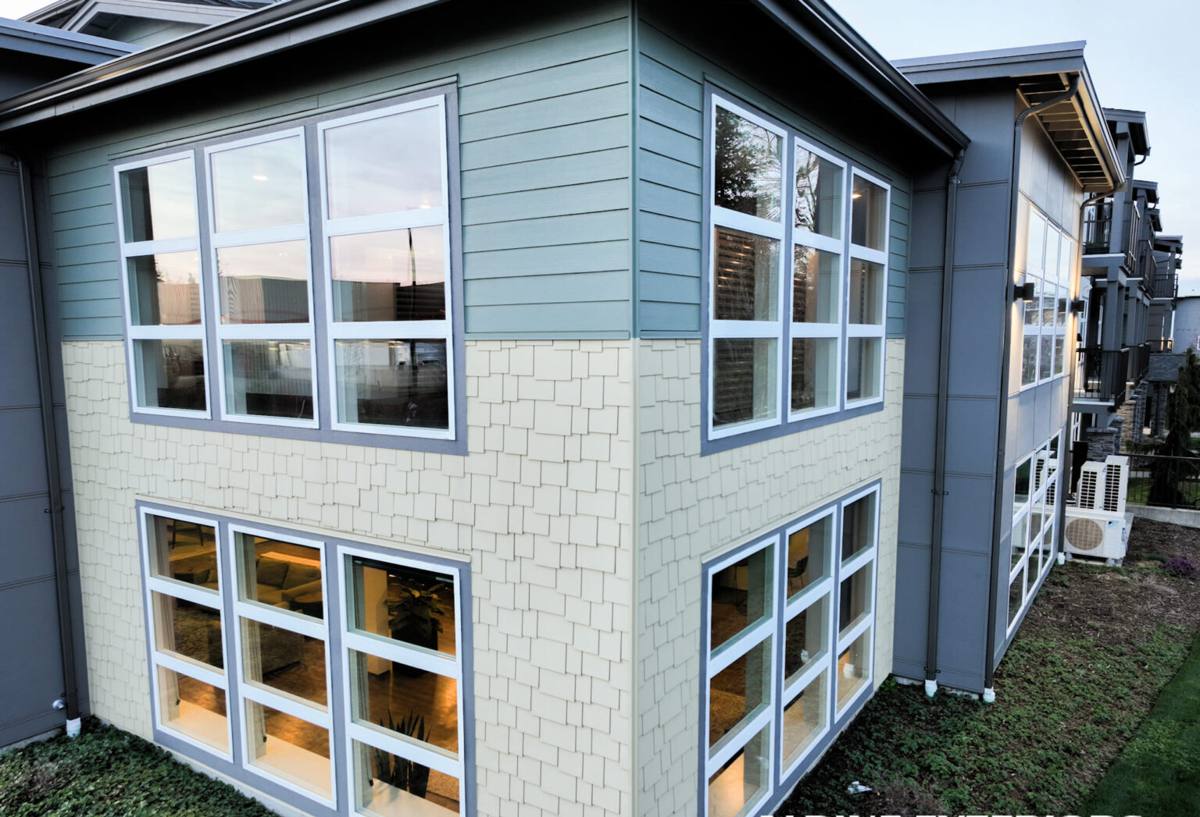
What South Hill's Elevation and Tree Cover Do to a House
Salt Air and Driving Rain
Proximity to the bay means airborne salt settles on exterior surfaces over time. On untreated or poorly finished siding, that salt accelerates corrosion of fasteners and trim, and it can work into seams and joints that weren't sealed correctly. Combine that with driving rain pushed sideways by wind off the water, and you get water intrusion at the exact spots — butt joints, corner boards, window and door trim — where installation quality matters most. A siding job that looks fine on a calm, dry day can fail within a few seasons if those details were rushed.
Moss and Shade
South Hill's tree cover is part of what makes it a desirable place to live, but it also means many homes get long stretches without direct sun on at least one exposure. Shaded, damp surfaces are exactly where moss and algae take hold, and once organic growth establishes itself on siding, it holds moisture against the substrate even longer — a cycle that keeps feeding itself. Siding materials and finishes vary a lot in how well they resist this. Some absorb moisture into the material itself, which is a much bigger problem than surface growth alone.
Freeze-Thaw and Seasonal Swelling
Whatcom County doesn't get brutal winters, but it does get repeated cycles of damp cold followed by mild spells, especially at elevation. Materials that absorb water and then freeze are prone to cracking, swelling, and delaminating over years of this cycle. It's a slower failure mode than a leak, but it's just as costly to fix once it starts.
Why We Only Install James Hardie Fiber Cement
Fiber cement is engineered specifically to resist the failure modes described above. It's non-combustible, dimensionally stable, and doesn't absorb water the way wood-based or wood-adjacent products do. James Hardie's ColorPlus factory-applied finish is baked on under controlled conditions, which gives it better fade and moisture resistance than field-applied paint — an important detail on a hillside where re-painting siding means dealing with scaffolding, tree access, and weather windows that don't open often.
James Hardie also engineers regional product lines (HZ5 for our climate zone) specifically for areas that see the kind of moisture cycling South Hill gets. That's a meaningful difference from generic fiber cement or other siding categories that use one formulation everywhere. We've made a standing decision not to install LP SmartSide, vinyl, Cemplank, Allura, or unfinished wood siding like primed spruce or cedar on the homes we work on — not because those products have no merit, but because after years of doing this work in Whatcom County's climate, we've seen which materials hold up on hillside, shaded, salt-exposed homes and which ones create maintenance headaches or premature failure. Hardie backed by correct installation is what we're willing to put our name behind.
What Correct Siding Installation Actually Involves
The material is only half the equation. A huge share of siding failures we see on older South Hill homes trace back to installation shortcuts, not the siding itself. Here's what a job done right actually includes:
- Full removal of old siding and inspection of the sheathing underneath for rot, mold, or prior water damage before anything new goes up
- Repair or replacement of any compromised sheathing — covering over damaged substrate just locks the problem in behind new siding
- A correctly installed weather-resistive barrier (housewrap) with proper overlaps and taping at every seam
- Rain screen or drainage gap where conditions call for it, giving moisture that does get behind the siding a path to drain and dry instead of sitting against the wall
- Correct flashing at every window, door, and roofline intersection — this is where the vast majority of leaks actually originate
- Proper fastener type, spacing, and placement per James Hardie's published installation specifications
- Correct joint treatment and caulking at butt joints and corners, sized and sealed to handle the material's expansion and contraction
- Manufacturer-specified clearances from grade, roofing, and other transitions so the bottom edge of the siding isn't sitting in a moisture trap
Every one of those steps is written into James Hardie's installation guidelines for a reason. Skipping any of them can void the manufacturer's warranty even if the siding itself is genuine Hardie product — which is a common and frustrating surprise for homeowners who assumed the material warranty covered installation mistakes.
Our Process on South Hill Jobs
1. On-Site Assessment
We walk the property, look at current siding condition, check for shade and moss patterns specific to that lot, and inspect trim, flashing, and any visible signs of past water intrusion. Hillside lots often have different exposure on each side of the house, and we plan the job around that rather than treating all elevations the same.
2. Removal and Substrate Inspection
Old siding comes off and we inspect the sheathing before anything new is planned in detail. This is the point where hidden problems — usually moisture-related — get found and addressed, rather than covered up.
3. Weather Barrier and Flashing
Housewrap, flashing, and drainage details go in next, done to spec at every penetration and transition. This layer is what actually keeps water out of the wall assembly — the siding itself is the second line of defense, not the first.
4. Hardie Installation
Panels or lap siding go up per manufacturer specification, with attention to fastener placement, joint treatment, and clearances. We factor in the specific exposure of that elevation — a shaded, moss-prone north wall gets the same rigor as a wind-exposed west wall facing the bay.
5. Trim, Caulk, and Final Detail
Corner boards, trim, and caulking are finished last, sealing the assembly and giving the ColorPlus finish a clean, factory-consistent look across the whole house.
Comparing Siding Approaches for a South Hill Home
| Factor | James Hardie Fiber Cement | Products We Don't Install |
|---|---|---|
| Moisture absorption | Engineered to resist water absorption; won't swell or rot from repeated wet cycles | Wood-based and engineered-wood products can absorb moisture at cut edges and joints over time |
| Finish durability | Factory-baked ColorPlus finish resists fading and moisture better than field paint | Field-applied or lower-grade finishes often need repainting sooner, especially in shaded, damp spots |
| Fire resistance | Non-combustible material | Combustible depending on material |
| Salt air / coastal exposure | Formulated for regional moisture and climate conditions (HZ5 line) | Not all products are engineered for a specific regional moisture profile |
| Warranty structure | Strong transferable warranty when installed to specification | Warranty terms and transferability vary by product and manufacturer |
Why Local Experience on South Hill Specifically Matters
A crew that's worked hillside neighborhoods in Bellingham understands things a generic estimate can miss: which elevations on a given lot layout tend to hold shade and moss longest, how wind patterns off the bay affect where driving rain hits hardest, and how mature tree cover changes drying time after a storm compared to an open lot. That local pattern recognition shapes real decisions — where extra flashing attention goes, whether a rain screen gap makes sense on a particular exposure, and how the job gets sequenced around Whatcom County's wetter months.
It also means we're not guessing about how a James Hardie installation actually performs a few years out in this specific climate — we've seen it, on homes with the same salt air, tree cover, and rain exposure that your home deals with.
Signs South Hill Homeowners Shouldn't Ignore
If your current siding is showing any of the following, it's worth having it looked at before small problems become structural ones:
- Persistent moss or algae growth that comes back quickly after cleaning
- Soft spots, bubbling, or visible warping, especially on shaded walls
- Peeling or chalky paint that keeps recurring in the same spots
- Gaps opening up at trim, corner boards, or window and door surrounds
- Musty smell or visible staining on interior walls that share an exterior wall with problem siding
Get a Straightforward Estimate
If you're weighing a siding replacement on South Hill, we're happy to take a look, walk you through what we're seeing on your specific home, and give you an honest read on what it needs — no pressure, no inflated urgency. Use the form below to request a free estimate.