 Bellingham Exterior
 Asphalt Shingle Roofing Built for Sudden Valley's Tree Cover and Wet Winters
Sudden Valley sits in a heavily wooded pocket of Whatcom County, wrapped around Lake Whatcom with mature conifers shading most lots year-round. That combination is beautiful to live in and hard on a roof. Shade slows drying time after every rain, needles and debris pack into valleys and gutters, and moss gets a head start on any shingle that stays damp more than a day or two. Add the broader Bellingham pattern of driving rain and salt-tinged marine air moving in off the Sound, and you have a climate that asks more of an asphalt shingle roof than most manufacturers' generic install instructions account for.
This page is specifically about asphalt shingle roofing for Sudden Valley homes — not a general roofing overview. If you own a home in this neighborhood, here's what actually matters for your roof, what a correct job looks like, and how we approach it.
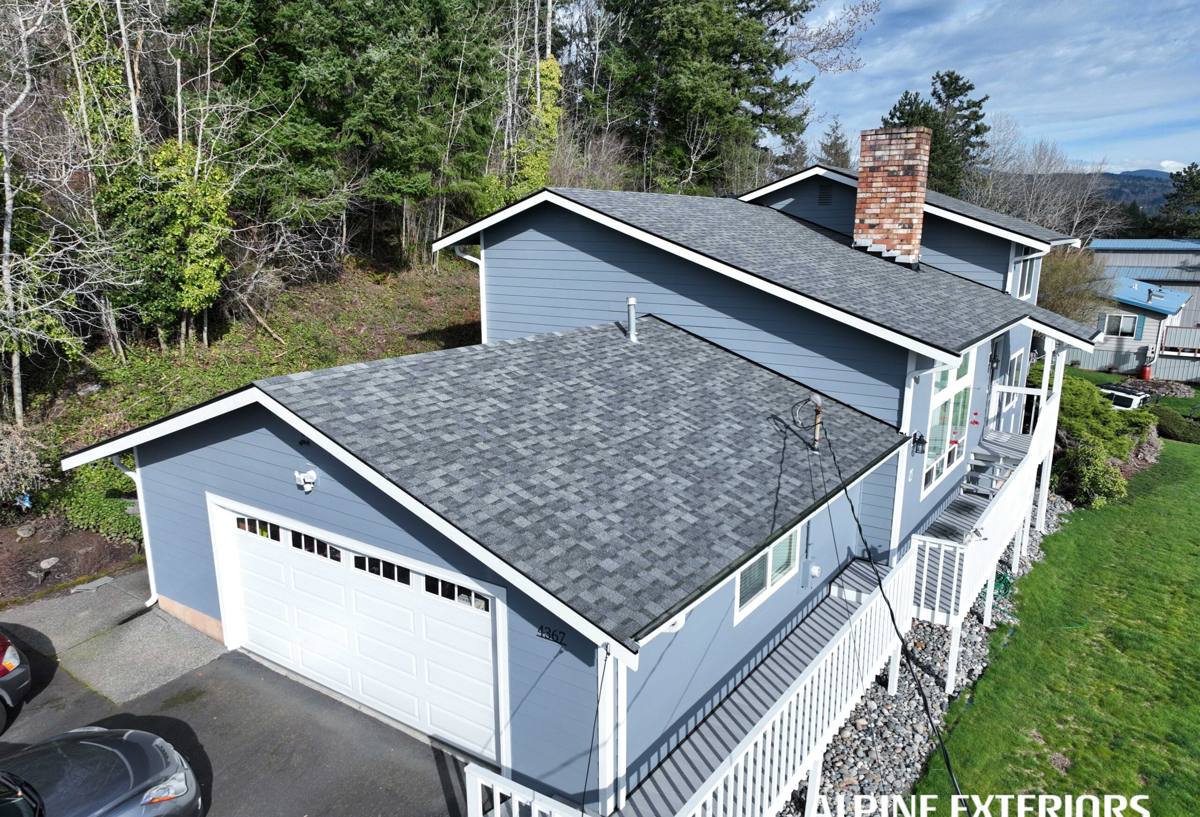
Why Sudden Valley Roofs Wear Differently Than Roofs Closer to Downtown Bellingham
Two things separate Sudden Valley from a lot of the rest of the Bellingham market: tree canopy and lake-effect humidity. Homes tucked under a full canopy of Douglas fir or cedar rarely get direct afternoon sun on the north-facing roof plane, which means moisture from fog, dew, and rain sits longer before it evaporates. That extended damp period is exactly what moss and algae need to establish. Once moss gets a foothold under the shingle tabs, it lifts the edges, holds water against the mat, and accelerates granule loss — which is the beginning of the end for an asphalt shingle's service life.
Homes closer to the lake shoreline also deal with more airborne moisture generally, and the county's marine climate brings periodic wind-driven rain that tests every flashing detail and every shingle's wind rating. None of this means asphalt shingles are a poor choice for Sudden Valley — they're still the most practical, cost-effective option for the vast majority of homes here. It means the installation details have to be right, and the roof needs a maintenance rhythm suited to a shaded, wooded lot rather than a sunny, open one.
What This Means in Practice
- North-facing and heavily shaded roof planes need moss-resistant shingles or zinc/copper strip protection more than south-facing planes do.
- Valleys and gutters need to be sized and cleared for higher debris load from surrounding trees.
- Ventilation has to move enough air to help the roof deck dry out between wet spells, not just meet code minimums.
- Flashing at chimneys, skylights, and wall intersections has to be treated as critical, not optional, given the amount of wind-driven rain the area sees.
What a Correct Asphalt Shingle Roof Involves Here
A roof that's going to hold up in Sudden Valley's conditions is built in layers, and every layer matters more here than it would in a drier climate.
Deck and Underlayment
Before any shingle goes down, the deck gets inspected for soft spots, delamination, or rot — common on older roofs where moss has been trapping moisture against the sheathing for years. We use synthetic underlayment for tear resistance and better water shedding than old-style felt, and we run self-adhered ice-and-water shield along eaves, valleys, and any roof-to-wall transition where wind-driven rain is most likely to find a way in.
Flashing
Step flashing at walls, counterflashing at chimneys, and properly lapped valley metal are where most leaks actually start, not in the field of the shingles themselves. We don't rely on caulk or roof cement as a substitute for correctly lapped metal — sealant fails years before metal flashing does, and a shaded, damp roof gives failed sealant nowhere to dry out.
Ventilation
Balanced intake and exhaust ventilation lets the attic and roof deck dry out between wet periods instead of staying saturated with moisture. On shaded lots this is one of the biggest factors in how long a shingle roof actually lasts, because it's the difference between a deck that dries out overnight and one that stays damp for days.
Nailing and Fastening
Shingles installed with the wrong nail pattern or placement lose their wind rating regardless of what the product is rated for on paper. We follow manufacturer nailing specs exactly, which also keeps the warranty intact if you ever need to make a claim.
Our Process for a Sudden Valley Re-Roof
- On-site inspection. We walk the roof and the attic, check for moss damage, soft decking, and ventilation issues, and take note of tree overhang and drainage patterns specific to your lot.
- Written estimate. You get a clear scope — tear-off, decking repair if needed, underlayment, flashing, shingle product, and cleanup — with no vague allowances.
- Tear-off and deck prep. Old material comes off down to the deck so we can actually see and fix what's underneath, not just re-cover a problem.
- Install. Underlayment, ice-and-water shield, flashing, and shingles go in per manufacturer spec, with extra attention to valleys and any shaded plane.
- Cleanup and magnetic sweep. Yard and driveway get cleared of debris and stray fasteners before we call the job done.
- Walkthrough. We go over what was done, what to expect, and any maintenance recommendations specific to your property's tree cover and roof orientation.
Choosing the Right Shingle for a Shaded, Wooded Lot
Not every asphalt shingle product is a good match for a heavily treed roof plane. The table below is a general comparison of the tiers we typically discuss with Sudden Valley homeowners.
| Shingle Type | Typical Lifespan | Moss/Algae Resistance | Best Fit |
|---|---|---|---|
| 3-tab asphalt | 15-20 years | Standard, no built-in resistance | Budget-conscious re-roofs on sunnier planes |
| Architectural (laminate) asphalt | 25-30 years | Better mat and thicker profile, still benefits from algae-resistant granules | Most Sudden Valley homes, especially mixed sun/shade roofs |
| Algae-resistant (AR) architectural | 25-30 years | Copper-infused granules resist algae/moss growth | North-facing and heavily shaded roof planes |
| Impact-rated architectural | 25-30+ years | Same as standard architectural, plus better resistance to debris impact | Lots with heavy branch/cone drop from tall conifers |
We don't push a single brand as the only right answer — the honest trade-off is usually between upfront cost and how much moss maintenance you want to do over the life of the roof. AR shingles cost a bit more up front and earn that back in fewer moss treatments and cleanings over time, which matters more on a shaded lot than on an open one.
Moss and Debris: What Actually Keeps a Sudden Valley Roof Healthy
Even a well-installed roof needs some upkeep in this environment. This is the maintenance checklist we give Sudden Valley homeowners:
- Clear needles, cones, and leaf debris from valleys and gutters at least twice a year — more often under heavy cedar or fir cover.
- Trim back branches that overhang the roofline to reduce shading, debris drop, and physical abrasion on the shingles.
- Have moss physically removed rather than just chemically treated when it's already established under shingle tabs — chemical treatment alone doesn't undo lifted tabs or trapped moisture.
- Check zinc or copper control strips periodically if your roof has them, since they lose effectiveness over years of exposure.
- Walk the roofline (or have it inspected) after major windstorms, which are common through the fall and winter here, to catch lifted shingles or displaced flashing early.
- Never pressure-wash asphalt shingles — it strips granules and shortens the roof's life faster than the moss it's meant to remove.
What Drives Cost on a Sudden Valley Roof
Every roof is different, but these are the main factors that move a quote up or down for homes in this neighborhood.
| Factor | Why It Matters |
|---|---|
| Roof size and pitch | Steeper roofs take longer and require more safety setup |
| Deck condition | Rot or soft decking from long-term moisture found under old shingles adds repair cost |
| Access | Tree cover, steep driveways, and limited staging space common in Sudden Valley can affect labor and material handling |
| Shingle tier | Standard vs. algae-resistant vs. impact-rated products carry different material costs |
| Number of valleys, chimneys, and penetrations | More flashing detail work means more labor time |
| Layer removal | Homes with existing layers to tear off cost more than a straightforward single-layer tear-off |
We give a firm written number after the inspection, not a phone estimate — a roof under heavy tree cover often has deck or ventilation issues you can't see from the ground.
Why a Crew That Already Works Sudden Valley Makes a Difference
Sudden Valley has its own access patterns, private roads, and in some cases HOA or architectural guidelines that come into play for exterior work. A crew that has already worked in the neighborhood knows how to stage material and equipment on lots with limited flat space, how to work around mature trees without unnecessary damage, and what kind of flashing and ventilation upgrades tend to be needed on homes built under heavy canopy versus homes on more open lots elsewhere in Whatcom County. That local familiarity shows up in fewer surprises during the job and a roof system that's actually matched to the conditions it has to survive, not a one-size-fits-all install.
If you're dealing with moss buildup, a roof nearing the end of its service life, or you just want an honest read on what your current roof needs, we're happy to take a look. Request a free, no-pressure estimate using the form below and we'll walk your roof and give you a straight answer.