 Bellingham Exterior
 Building New in Sudden Valley: What Your Windows Are Up Against
Sudden Valley sits in a wooded, hilly pocket of Whatcom County along Lake Whatcom, east of Bellingham proper. It's a different environment than a flat in-town lot. Tree cover means shade, needle and leaf debris, and slower drying times after a storm. The lake adds humidity to the air on top of the marine moisture that rolls in off Bellingham Bay and the greater Puget Sound region. Add in the long, wet stretch from fall through spring, and you get a stretch of months where wood surfaces stay damp and moss gets a real foothold on anything that isn't actively shedding water.
For a new-construction window, that combination matters more than most homeowners expect. A window that's a great fit in a drier inland climate can still underperform here if it isn't installed with the right flashing sequence, the right sill pan, and the right expectations about how much water is going to hit that opening over the life of the house. New construction is actually the best time to get this right — you're not working around existing siding or drywall, you're setting the water management system into a bare opening before anything closes it up.
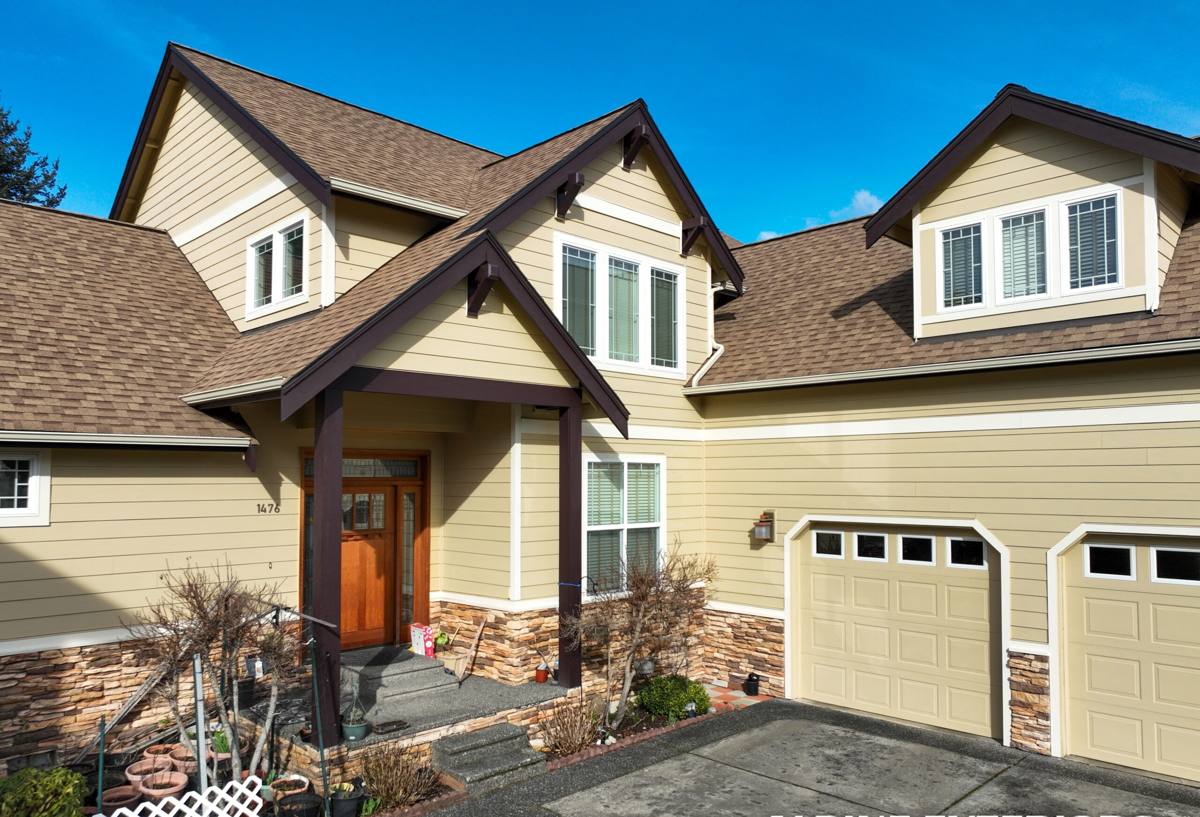
What "New-Construction" Windows Actually Means
New-construction windows are built with a nailing (or nail) fin around the frame, designed to be installed into a rough opening before the exterior wall covering goes on. That's different from a pocket or insert replacement window, which drops into an existing frame with the old exterior trim left in place. On a new build or an addition in Sudden Valley, new-construction is almost always the right call — it lets us tie the window directly into the house wrap and flashing system rather than working around whatever's already there.
Why This Distinction Matters Here
The nailing fin is only as good as the flashing detail around it. In a climate that gets a lot of wind-driven rain, a fin that's face-nailed without proper pan flashing and a correctly lapped house wrap is a future leak, even if the window itself is a quality product. We treat the fin and flashing as one system, not two separate steps.
Choosing the Right Window for a Sudden Valley Build
Frame Material
Vinyl, fiberglass, and wood-clad frames all have a place, but they behave differently in a damp, shaded, moss-prone setting. Vinyl is low-maintenance and won't rot, but cheaper vinyl can warp with heavy sun-shade temperature swings near tree lines. Fiberglass holds paint and dimension well over decades and handles moisture exposure without much fuss, which is why we lean on it for homes with heavy tree cover or lake-facing exposure. Wood-clad windows look great and perform well when detailed correctly, but they demand more attention to exterior sealant maintenance — not a dealbreaker, just something to plan for.
Glazing and Gas Fill
Double-pane with a low-E coating and argon fill is the baseline we recommend for this area; triple-pane is worth discussing on north- or lake-facing walls where wind exposure is higher. The glazing package affects condensation resistance on the interior side too, which matters in a climate where indoor humidity runs higher for more of the year.
Sill and Frame Drainage
Look for a sill design with a real drainage path — weep holes that actually clear debris, not just decorative slots. In a wooded lot, needles and seed litter find their way into every gap, and a sill that can't shed that debris and drain water will hold moisture against the frame long after the rain stops.
Flashing and Water Management: The Part That Actually Prevents Leaks
Most window failures we get called out to fix aren't a bad window — they're a flashing detail that got skipped or done out of order. On new construction, we control that sequence from the start.
Rough Opening Prep
The rough opening gets sloped sill pan flashing before the window ever goes in, so any water that gets past the window sheds outward, not into the wall cavity. This is a five-minute step that gets skipped constantly on rushed jobs.
House Wrap Integration
Flashing tape and house wrap need to be lapped shingle-style — top piece over the one below it — so water always runs down and out, never behind a seam. We tie the head flashing under the wrap above the window and the side and sill flashing over the wrap below it, every time.
Sealant as a Backup, Not the Plan
Caulk and sealant should be the second line of defense, not the only one. A window that relies on a bead of sealant to stay dry will fail once that sealant ages, cracks, or gets scoured by driving rain — which happens on this side of the state more than people expect.
Our New-Construction Window Installation Process
- Rough opening check — verify size, level, plumb, and square before the window arrives on site.
- Sill pan flashing — sloped, sealed, and tested before the window is set.
- Dry-fit and set — window is set, shimmed plumb and square, and fastened through the nailing fin per manufacturer spacing.
- Flashing tape sequence — sides, then head, integrated with the house wrap in proper shingle-lap order.
- Interior air seal — low-expansion foam or backer rod and sealant around the frame interior, sized to the gap so the frame isn't bowed.
- Final inspection — operation check, level check, and a walk-through of the flashing before siding closes it in.
That last step matters more in Sudden Valley than in a lot of neighborhoods, because once siding and trim go on over wooded, shaded walls, a flashing mistake can go unnoticed for years — right up until it shows up as rot or interior staining.
Comparing Frame Material for a Sudden Valley Build
| Frame Material | Moisture & Moss Resistance | Maintenance | General Cost Position |
|---|---|---|---|
| Vinyl | Good; won't rot, can warp in extreme sun/shade swings near trees | Low | Lowest |
| Fiberglass | Excellent; dimensionally stable in damp, shaded conditions | Low to moderate | Mid to upper |
| Wood-clad | Good on the exterior clad face; interior wood needs protection from indoor humidity | Moderate; sealant and finish upkeep | Highest |
None of these is wrong for Sudden Valley — the right choice depends on how much tree cover and lake-facing exposure a given elevation gets, and how much upkeep the homeowner wants to take on long-term.
Common Mistakes We See on New Builds Near the Lake
- Skipping sloped sill pan flashing because "the window has its own weep system"
- Taping flashing in the wrong order, so water runs behind a seam instead of over it
- Over-driving fasteners through the nailing fin, which can bow the frame and cause seal failure
- Foaming the interior gap too aggressively, bowing the jamb inward
- Choosing a window glazing package based on price alone, without accounting for wind exposure on lake-facing walls
- Closing in siding before the flashing has been inspected
Why Hire a Crew That Already Works Sudden Valley
Sudden Valley isn't a standard grid-lot neighborhood — the terrain, tree cover, and lake proximity change how a house needs to shed water, and a crew that's only worked flatter, more open sites in town can miss details that matter here. Knowing which elevations catch the worst wind-driven rain, how much moss pressure a north-facing wall is going to see, and how local building department expectations apply to new construction in the area all come from repeat experience in this specific community, not a general playbook.
We also coordinate directly with builders and general contractors on new-construction timelines, so windows go in at the right point in the framing sequence — not too early, when the opening isn't finished, and not so late that it holds up the schedule for siding and trim crews.
What to Expect After Move-In
A correctly installed new-construction window in this climate should need very little from you: an annual check of exterior sealant joints, keeping weep holes clear of needles and debris, and a rinse-down if moss starts to establish on nearby trim or siding. If you ever notice staining below a window, a soft spot in interior trim, or a window that's become hard to operate, those are early signs worth having looked at — catching a flashing issue early is a small fix, catching it late usually isn't.
If you're planning new construction or an addition in Sudden Valley and want windows installed with this level of attention to the local climate, we're happy to walk the site and put together a free, no-pressure estimate — just fill out the form below.