 Bellingham Exterior
 Roof Repair Built for Sudden Valley's Conditions
Sudden Valley sits in one of the wetter, more heavily wooded pockets of Whatcom County, and that combination shapes what a roof needs here more than almost anywhere else in the Bellingham area. Mature tree cover means constant shade on large sections of most roofs, which means moss, moisture retention, and organic debris are a year-round concern rather than a seasonal nuisance. Add in the driving rain that comes off the water and through the valley during fall and winter storms, and you have a roofing environment that punishes shortcuts and rewards careful, experienced work.
We repair roofs in Sudden Valley regularly, and the failures we see here follow a pattern: moss holding moisture against shingles long after a storm has passed, gutters and valleys clogged with needles and leaf litter, and flashing that's been quietly working loose under the stress of wind-driven rain. None of that is exotic. It's just what happens to a roof in a shaded, wet, forested setting when maintenance and repair timing slip.
Why Sudden Valley Roofs Age Differently
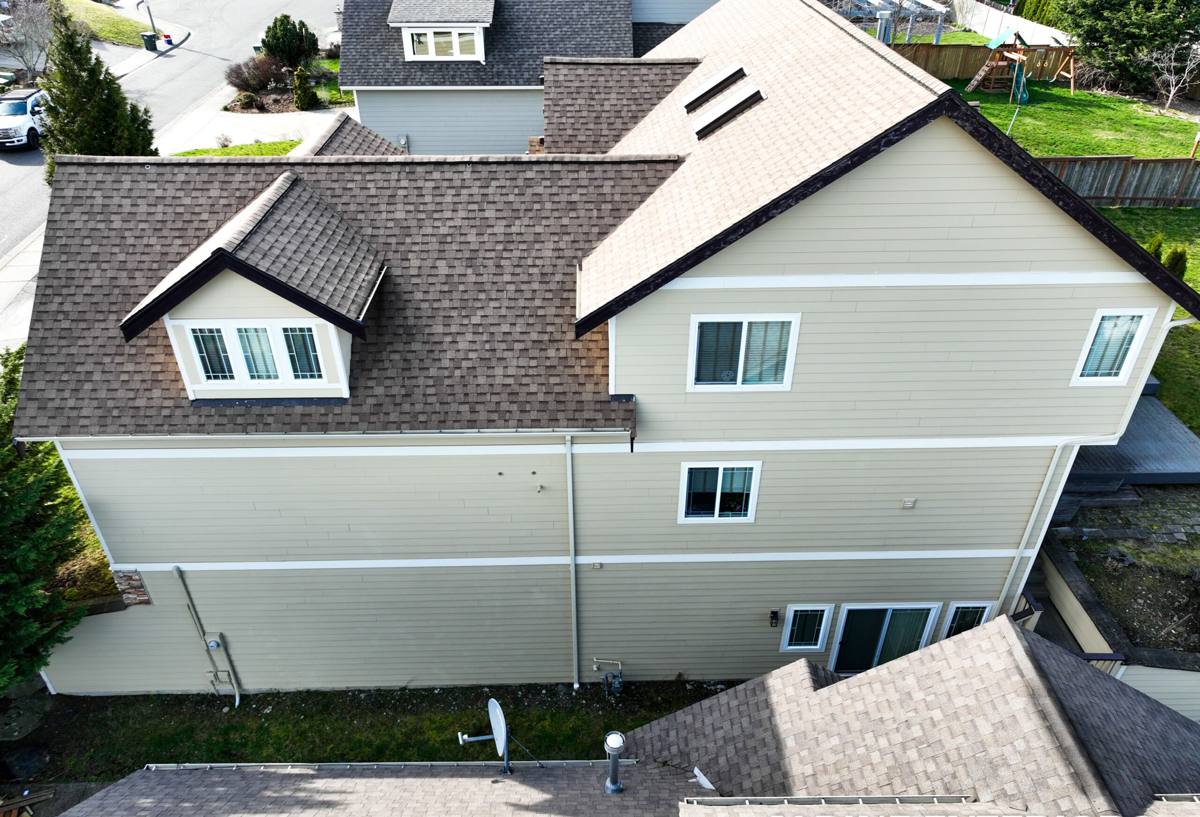
Two homes with identical roofs — one in an open, sunny part of Bellingham and one tucked into the tree cover around Sudden Valley — will not age the same way. The shaded roof stays damp longer after every rain, which is most of the year in Whatcom County. That extended dampness is what allows moss and moss-adjacent algae growth to take hold on shingles, especially on north-facing slopes and anywhere overhanging branches block sun and airflow.
What the Moss Actually Does
Moss itself isn't just cosmetic. As it grows, it lifts shingle edges, holds water against the roofing material far longer than bare shingle would, and creates a foothold for further growth. Over a season or two, that moisture cycle accelerates granule loss on asphalt shingles and can work its way under lapped edges, which is exactly where leaks start. By the time moss is visible from the ground, it's often already affecting the shingles underneath it.
What Driving Rain Does
Wind-driven rain off the water and through the valley doesn't fall straight down — it's pushed sideways and up under laps, ridge caps, and flashing details that would stay dry in calmer conditions. That's why leaks in this area so often show up at penetrations (vents, chimneys, skylights) and valleys rather than in the open field of the roof. A roof can look intact from the driveway and still be taking on water at these vulnerable points during a real storm.
Signs a Sudden Valley Roof Needs Repair
Homeowners in this area tend to catch problems either too early (worrying about cosmetic moss) or too late (after a ceiling stain appears). Here's what actually warrants a call:
- Visible moss or dark streaking on shaded slopes, especially if it's thickening year over year
- Granules collecting in gutters or at downspout outlets — a sign of shingle wear, not just normal aging
- Soft or spongy spots underfoot when walking the roof (a sign of deck moisture, not just surface wear)
- Water stains on interior ceilings, particularly near chimneys, skylights, or where two rooflines meet
- Lifted, cracked, or missing shingles after a windy rain event
- Debris buildup in valleys that doesn't clear on its own between storms
- Daylight visible through the attic decking, or damp insulation below the roof deck
Any one of these on its own might just need monitoring. Two or more together, especially combined with an interior stain, usually means active water intrusion that's worth addressing before the next storm cycle.
What a Correct Repair Actually Involves
A proper roof repair in this climate isn't just patching the spot where water showed up inside. Interior stains are often several feet away from the actual entry point, because water travels along the underlayment or decking before it finds a way through. Our process starts with tracing the leak to its real source, not just covering the visible symptom.
Our Repair Process
- Inspection from the roof, not just the ground. We walk the roof to check flashing, valleys, penetrations, and shaded slopes directly — moss coverage and granule loss are easy to miss from a ladder glance.
- Moss and debris removal. We clear moss and organic buildup using methods that don't strip granules or damage the shingle mat, then treat the area to slow regrowth.
- Leak source tracing. We follow water paths along the decking and underlayment to find where it's actually entering, which is often not where the ceiling stain appears.
- Targeted repair. We replace damaged shingles, re-seat or replace failing flashing, and repair underlayment where it's been compromised — matching materials to what's already on the roof where possible.
- Drainage check. We confirm gutters, valleys, and downspouts are actually moving water off the roof, since a repair means little if debris backs water up again within a season.
- Documentation and honest recommendation. If the surrounding roofing shows broader wear, we tell you plainly whether a repair will hold or whether you're better off planning for replacement — we don't pad a small job or downplay a bigger one.
Repair vs. Replacement: How We Decide
Not every leak means a new roof, and not every moss problem means the shingles are failing. The table below covers the factors that typically tip the decision one way or the other for homes in this area.
| Factor | Leans Toward Repair | Leans Toward Replacement |
|---|---|---|
| Roof age | Under 12-15 years | Approaching or past typical shingle lifespan |
| Moss/moisture damage | Localized to one or two slopes | Widespread across most shade-facing sections |
| Decking condition | Solid, no soft spots | Soft or spongy in multiple areas |
| Flashing condition | Isolated failure at one penetration | Multiple flashing points failing or corroded |
| Shingle condition overall | Granule loss limited to repair area | Granule loss and curling widespread |
| Prior repair history | First repair in this area | Same area has needed repeated patching |
We walk homeowners through where their roof actually falls on this table rather than defaulting to whichever service is more profitable for us. A well-timed repair on a sound roof is the right call more often than not — but a roof past its practical lifespan usually costs more in repeated repair calls than it saves.
Materials and Methods We Use
For repair work, matching the existing roofing system matters as much as the repair technique itself. Mismatched shingle types or incompatible flashing metals can create new problems — galvanic corrosion between dissimilar metals, or visible mismatch that affects resale appearance. We source materials that match or are compatible with what's already installed, and we flag it clearly if an exact match isn't available so you can decide how to proceed.
On flashing specifically, we favor durable metal flashing properly integrated with the shingle courses over caulk-dependent fixes. Caulk and roofing cement have their place for small, low-stress repairs, but as a primary seal against Whatcom County's wind-driven rain, they degrade faster than properly lapped metal flashing and tend to need repeat attention. We'll always explain the trade-off rather than defaulting to the fastest fix.
Pre-Repair Checklist We Walk Through On Site
- Confirm the actual leak source before starting any repair work
- Check attic ventilation, since poor airflow accelerates moisture damage from the inside
- Inspect all flashing points on the roof, not just the one near the reported leak
- Assess moss coverage on every slope, not just the visibly affected one
- Verify gutters and downspouts are clear and properly pitched
- Check for any soft decking near the repair area before closing it back up
Timing Repairs Around the Seasons
In Whatcom County, the driest, most workable window for roof repair is generally late spring through early fall. Waiting until the rainy season is in full swing to address a known issue means working around active storms and risking further interior damage while a repair is scheduled. For Sudden Valley specifically, tackling moss removal and flashing checks before the wet season sets in each year is one of the most effective things a homeowner can do — it's far easier to prevent a leak than to chase one once the rain starts in earnest.
That said, we don't turn away emergency repairs in the middle of winter storms. Active leaks get a timely response regardless of season, with permanent repair work scheduled as soon as conditions allow.
Why a Crew That Knows This Area Matters
Roofing crews unfamiliar with heavily shaded, lake-adjacent communities sometimes treat every moss patch the same way or apply a one-size approach to flashing repair that doesn't account for how aggressively wind-driven rain finds gaps here. Working in and around Bellingham and Sudden Valley specifically means recognizing which slopes on a given roof are chronically shaded, which valleys collect the most debris, and where storm patterns tend to expose weak flashing first. That local pattern recognition shortens the time between "something's wrong" and "here's exactly what's wrong and how we're fixing it."
It also means honest guidance about maintenance frequency. A roof in this setting generally benefits from more frequent moss and debris checks than a roof in a drier, more open part of the county — not because the roofing material is inferior, but because the environment demands it.
Get a Straightforward Assessment
If you're seeing moss buildup, a ceiling stain, or storm damage on a Sudden Valley roof, it's worth getting eyes on it before the next rain. We offer free, no-pressure estimates — we'll walk the roof, explain exactly what we find, and give you a straight answer on whether it's a repair or something bigger. Use the form below to get started.