 Bellingham Exterior
 New Roof Installation Built for Sunnyland's Climate
Sunnyland sits close enough to Bellingham Bay that salt-laden air is a constant factor in how roofing materials age here, and it's inland enough to sit under the same wet, gray weather pattern that defines most of Whatcom County's fall through spring. That combination — salt air, driving rain off the Strait, and a moss season that can run six months or more — is hard on roofs that weren't specified with this exact neighborhood in mind. A roof that performs well in a dry inland climate can underperform in Sunnyland within a decade if the underlayment, ventilation, and material choices weren't matched to what this area actually throws at a house.
We install new roofs for homes throughout Sunnyland and the surrounding Bellingham neighborhoods, and our approach starts with the site conditions, not a one-size-fits-all package. A roof on a shaded, tree-lined Sunnyland lot needs different moss and moisture management than a roof on an open, wind-exposed block closer to the water. Getting that right up front is what separates a roof that looks good at installation from one that still performs well in year fifteen.
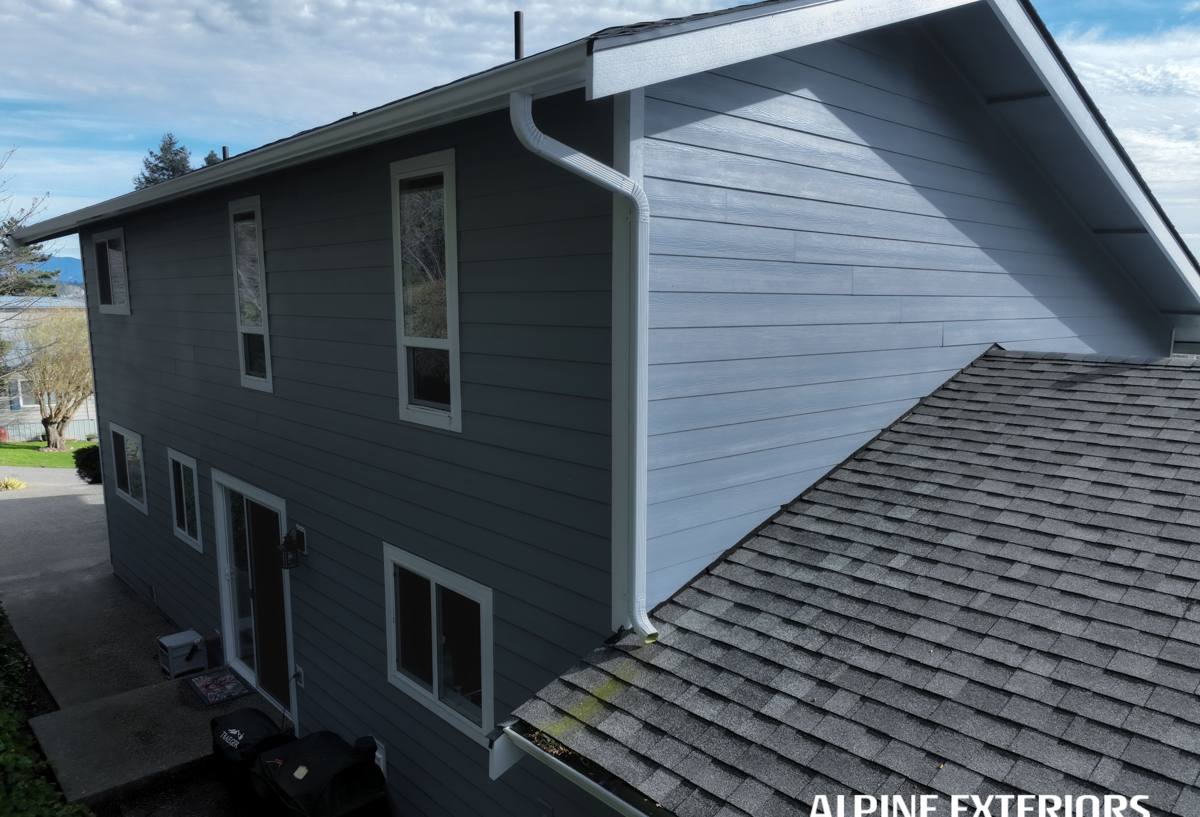
What Sunnyland Homes Need From a New Roof
Salt Air and Metal Fatigue
Airborne salt accelerates corrosion on exposed metal — flashing, fasteners, vents, and gutters all take the brunt of it. Standard galvanized fasteners and lower-grade flashing can start showing rust streaks and early failure points well before the shingles or panels around them are due for replacement. On a coastal-influenced roof like the ones in Sunnyland, we spec corrosion-resistant metals and fasteners as a baseline, not an upgrade, because replacing failed flashing under an otherwise sound roof is a needless expense that's easy to avoid at installation.
Driving Rain and Wind-Driven Water
Bellingham doesn't just get rain — it gets rain pushed sideways by wind coming off the water, which changes how water moves across a roof surface. Water that would normally run straight down a slope can get driven up and under standard-lap shingle installations, especially at valleys, eaves, and any place two roof planes meet. That's why underlayment selection and detail work at these transition points matter more here than in drier climates where a simpler installation might hold up fine.
Moss and the Long Wet Season
Shade, moisture, and mild temperatures are exactly what moss needs to establish, and Sunnyland's tree cover combined with our long wet stretch gives moss a wide window to take hold. Moss isn't just cosmetic — it holds moisture against roofing material, works into shingle layers and butt joints, and can lift edges over time, which lets water find its way underneath. A new roof installed without moss-resistance built in is starting the clock on that problem from day one.
What a Correct Installation Involves
A new roof is more than laying material down in rows. The parts of the system that don't show are usually what determine whether the roof performs for its full service life or starts causing problems in year eight.
- Tear-off and deck inspection: full removal of the old roofing so the deck can be checked for rot, soft spots, or delamination before anything new goes down.
- Deck repair: any damaged sheathing replaced — covering over a compromised deck is one of the most common shortcuts that leads to early failure.
- Ice and water shield at vulnerable points: eaves, valleys, and penetrations get self-adhering waterproof membrane, not just standard felt, because these are where wind-driven rain causes the most damage.
- Synthetic underlayment across the field: a water-resistant, breathable layer under the primary roofing material as a second line of defense.
- Corrosion-resistant flashing and fasteners: at chimneys, walls, valleys, and every penetration, matched to the salt-air exposure common in this part of Bellingham.
- Balanced ventilation: intake at the eaves and exhaust at the ridge, sized to the attic volume, so moisture doesn't get trapped under the deck.
- Moss-resistant material selection or treatment: options that make the surface less hospitable to moss growth in shaded, damp conditions.
- Manufacturer-specified nailing and exposure: installed to the pattern and exposure the manufacturer requires, which is also what keeps the material warranty valid.
Roofing Material Options for Sunnyland Homes
There's no single "right" material for every home — the right choice depends on your roof's pitch, your home's style, your budget, and how much shade and moss exposure your particular lot deals with. Here's how the common options stack up for this specific climate:
| Material | Salt Air Performance | Moss Resistance | Typical Lifespan |
|---|---|---|---|
| Architectural asphalt shingle | Good, with corrosion-resistant flashing and fasteners | Moderate; algae/moss-resistant granules help | 25–30 years |
| Standing seam metal | Very good with marine-grade coatings and fasteners | Strong — smooth surface sheds moss more easily | 40–50+ years |
| Composite/synthetic shake | Good; resists corrosion since it's non-metal | Good, depending on product line | 30–50 years |
| Cedar shake | Requires diligent maintenance near salt air | Lower without regular treatment; needs upkeep | 20–30 years with maintenance |
We generally steer Sunnyland homeowners away from untreated cedar shake unless they're committed to a consistent maintenance schedule, not because the material is inferior, but because the upkeep burden in a shaded, damp, salt-influenced setting is higher than most homeowners want to take on. That's a maintenance trade-off, not a knock on the product — cedar performs well in the right conditions and with the right care.
Our Installation Process
1. On-Site Assessment
We walk the roof and attic, checking pitch, existing ventilation, deck condition, tree coverage, and exposure to wind and salt air. This is also when we talk through material options based on what your specific home and lot actually need.
2. Written Scope and Estimate
You get a clear, itemized scope — material, underlayment system, flashing approach, ventilation plan, and timeline — before any work starts. No verbal-only agreements.
3. Tear-Off and Deck Prep
Old roofing comes off, the deck is inspected and repaired as needed, and the site is protected to keep debris out of landscaping and gutters.
4. Waterproofing and Underlayment
Ice and water shield goes down at eaves, valleys, and penetrations first, followed by underlayment across the full field.
5. Material Installation
Roofing material is installed to manufacturer spec — correct nailing pattern, exposure, and flashing detail at every wall, chimney, skylight, and vent.
6. Ventilation Check and Final Walkthrough
We confirm intake and exhaust ventilation is balanced, clean up the site, and walk the finished roof with you before calling the job complete.
Why Local Experience in Sunnyland Matters
A roofing crew that works Bellingham regularly already knows how the wind comes off the water in this part of town, which lots hold shade and moisture longest, and how salt exposure varies even block to block. That's not something you can fully account for from a spec sheet — it comes from having installed and serviced roofs in these exact conditions. It also means we're not guessing about local permitting or what tends to go wrong on homes like yours; we've already solved those problems on roofs nearby.
Working locally also matters after the installation. If a question comes up during the first heavy storm season or you want your ventilation checked before moss season sets in, you're calling a crew that's a short drive away and already familiar with your roof, not chasing down a company that installed it once and moved on.
Roof Replacement Warning Signs Worth Checking
If you're not sure whether your current roof needs replacement or just repair, these are the signs worth having a professional look at:
- Shingles that are curling, cupping, or losing significant granule coverage
- Persistent moss growth that returns quickly after cleaning
- Daylight visible through the roof deck from inside the attic
- Soft or spongy spots when walking the roof
- Rust staining or visible corrosion at flashing and metal fixtures
- Interior water stains on ceilings after heavy wind-driven rain
- A roof approaching or past the manufacturer's rated lifespan
Maintaining a New Roof in This Climate
Even a well-installed roof benefits from basic upkeep in a climate like this one. Keeping gutters clear so water isn't backing up under the eaves, having moss growth addressed before it spreads rather than after, and getting an occasional look at flashing and attic ventilation will meaningfully extend the service life of any roof installed here. None of this needs to be complicated or frequent — it's mostly about catching small issues while they're still small.
Get a Free, No-Pressure Estimate
If your Sunnyland home needs a new roof, or you're not sure whether repair or replacement makes more sense, we're happy to take a look and give you an honest assessment. There's no obligation and no pressure — just a clear picture of your options and what they'd cost. Use the form below to request your free estimate.