 Bellingham Exterior
 Siding Repair for Sunnyland Homes in Bellingham, WA
Sunnyland is one of Bellingham's older, established neighborhoods, with a mix of home ages and siding types spread across tree-lined residential streets. That mix matters when something goes wrong with siding, because a repair that works on a newer subdivision home doesn't always translate to a 1960s rambler or a remodeled bungalow a few blocks over. We work in Sunnyland regularly, which means we already have a sense of the home styles, the moisture patterns, and the kind of siding damage that shows up here before we ever pull up to the curb.
This page is specifically about siding repair in Sunnyland, not siding in general. If you're dealing with a soft spot near a downspout, a cracked panel from a stray branch, or paint that keeps failing in the same spot every couple of years, this is the service that fixes it, and the section below explains what actually causes it in this part of Whatcom County.
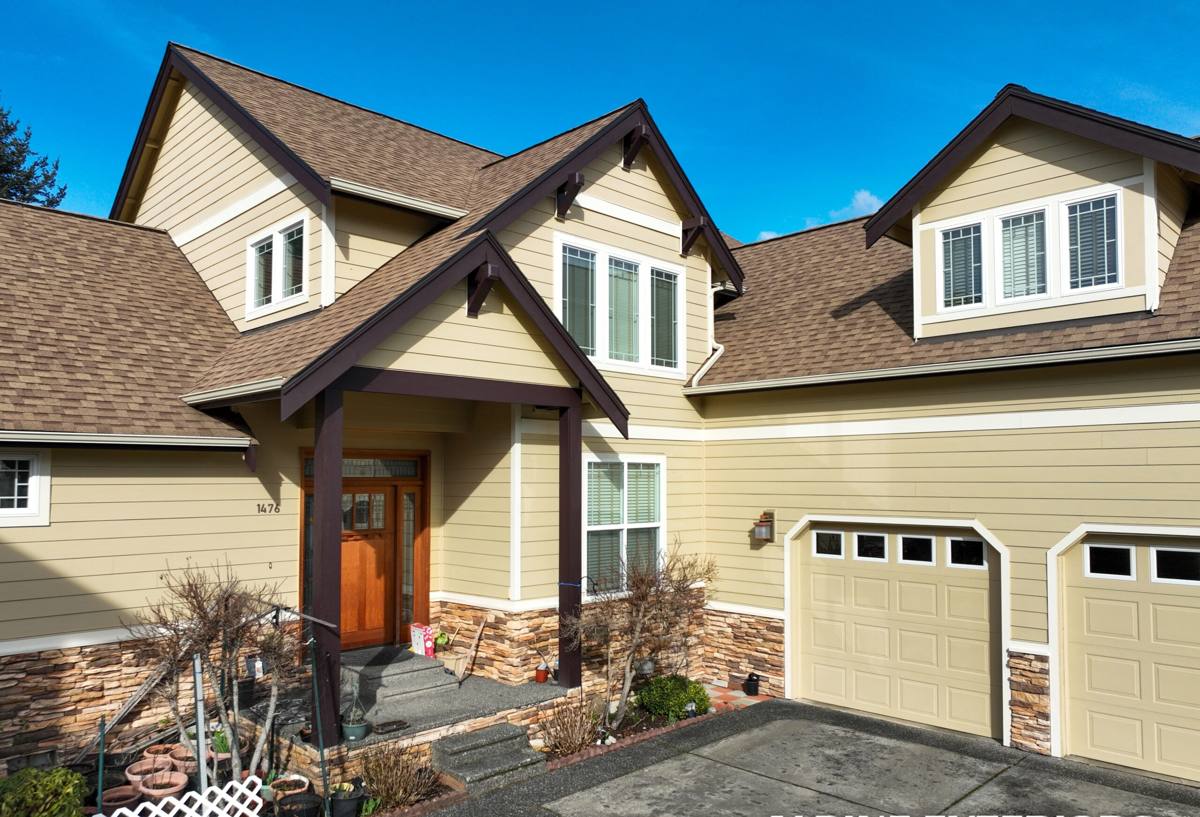
What Bellingham's Climate Does to Siding
Bellingham sits close enough to salt water, and gets enough rain and cloud cover, that siding here ages differently than siding in a drier inland climate. Three factors do most of the damage over time.
Salt Air and Moisture
Proximity to Bellingham Bay means a steady low-level exposure to salt-laden air, especially on days with wind off the water. Salt air accelerates corrosion on fasteners, trim, and any exposed metal flashing, and it also holds moisture against exterior surfaces longer than dry air would. Siding that's already compromised, cracked, or poorly sealed absorbs that moisture instead of shedding it.
Driving Rain and Wind-Driven Water
Whatcom County doesn't just get a lot of rain, it gets a lot of wind-driven rain, which behaves differently than a straight-down shower. Wind-driven water gets pushed sideways and upward into laps, seams, and butt joints that were never designed to handle water moving in that direction. Over years, this is what turns a small gap in caulking or flashing into a real rot problem behind the siding.
Moss, Shade, and Slow-Drying Walls
Sunnyland's mature tree cover is part of what makes the neighborhood pleasant to live in, but shaded, slow-drying walls are exactly where moss and algae take hold. Moss holds moisture against the siding surface far longer than open sun-exposed walls, and it works into seams and fastener heads where it keeps that wall damp long after the rain has stopped. A long moss season, which is essentially most of the year here, means north- and west-facing walls under tree cover need more attention than south-facing walls that dry out quickly.
Signs Your Sunnyland Home Needs Siding Repair
Most siding failures don't announce themselves with a dramatic collapse. They show up as small, specific symptoms that are easy to write off until they've spread. Watch for these:
- Soft or spongy areas when you press on the siding, especially near the bottom courses or below windows
- Paint that bubbles, peels, or fails repeatedly in the same location year after year
- Visible cracks, splits, or impact damage from branches, hail, or debris
- Dark streaking, persistent moss, or algae growth concentrated in shaded or tree-covered sections
- Gaps opening up at butt joints, corner trim, or around window and door casings
- A musty smell or visible staining on interior walls that share an exterior wall with damaged siding
- Fasteners backing out, popping, or leaving rust streaks down the siding face
Any one of these on its own might be minor. Several showing up in the same wall section usually means water has already found a way behind the siding, and that's a different repair than surface damage alone.
What a Correct Siding Repair Actually Involves
A siding repair that only addresses what's visible from the ground tends to fail again within a season or two. Doing it correctly means treating the visible damage as a symptom and finding the actual entry point.
Diagnosing the Real Cause
Before any board comes off, we look at what's feeding the damage: a failed kick-out flashing, a gutter that's been overflowing onto the wall below, a missing or degraded weather barrier, or simply age and UV breakdown on old caulk joints. Cutting out damaged siding without identifying the water source just delays the same repair.
Matching Boards, Reveals, and Finish
Patching in a mismatched board, a different reveal, or an obviously different sheen is one of the fastest ways to make a repair look worse than the damage did. Matching plank width, exposure, and texture to the existing siding is part of the job, not an extra.
Flashing and Water Management
Any repair around a window, door, deck ledger, or roof-to-wall intersection has to include correct flashing, not just fresh caulk over the old problem. Caulk is a backup layer, not the primary water management strategy, and repairs that rely on caulk alone tend to be the ones we get called back to redo a few years later.
Caulking and Paint Lines
Once the structural repair is done, the finish work is what makes it disappear into the wall. That means factory-matched or properly primed touch-up, clean caulk lines at trim and joints, and enough dry time before painting so the repair doesn't trap moisture behind fresh paint.
When Repair Makes Sense, and When It Doesn't
Not every damaged wall needs a full re-side, and not every problem area should be patched and left alone. If the damage is contained, limited to a section or two, and the rest of the siding is sound and well-attached, a properly matched repair is the right call. It costs a fraction of a full re-side and, done correctly, holds up just as well as the surrounding material.
Repair stops making sense when the damage is a symptom of a wider problem rather than an isolated event. If moss, rot, or moisture damage shows up in multiple, unrelated areas of the same wall, that usually points to a systemic issue with the weather barrier, the original installation, or the siding material itself rather than one bad spot. In that case, spending money on repeated patch jobs over a few years often ends up costing more than addressing the wall properly once. Part of an honest inspection is telling you which situation you're actually in, rather than defaulting to whichever answer is more profitable for us.
Why the Siding Material Affects the Repair
What the wall is made of changes how a repair holds up long term, which matters more in Bellingham's wet, shaded conditions than it would somewhere drier.
| Siding Type | Repair Behavior in a Wet, Shaded Climate |
|---|---|
| James Hardie fiber cement | Non-combustible, dimensionally stable, and engineered for moisture cycling; a properly matched repair section holds paint and resists warping over time |
| Vinyl | Can warp, buckle, or crack in cold snaps and impact damage, and matching faded older panels gets harder every year as colors weather and discontinue |
| LP SmartSide (engineered wood) | Vulnerable to swelling and edge deterioration if water gets behind a panel, which makes hidden moisture damage more likely to keep spreading after a surface repair |
| Cedar or primed spruce | Needs ongoing sealing and refinishing to resist moss and moisture; a repair that isn't maintained on the same schedule as the rest of the wall will fail again sooner |
We install and repair James Hardie fiber cement siding because it's the product we trust to hold up to this specific climate: salt air, sideways rain, and long stretches of shade and moss pressure. When we're repairing a Hardie wall, we're working with a material that was engineered for exactly these conditions in the first place, which makes a correctly executed repair a long-term fix rather than a temporary patch.
Our Sunnyland Siding Repair Process
- On-site inspection. We look at the damaged area and the surrounding wall, checking flashing, caulk joints, and any related trim or gutter issues that may be feeding the problem.
- Honest diagnosis. We tell you plainly whether this is a contained repair or a sign of a larger issue, including if sheathing or framing underneath needs attention.
- Written scope and estimate. You get a clear explanation of what's being repaired, what materials will be used, and a realistic price range before any work starts.
- Repair and matching. Damaged sections are removed, the underlying cause is corrected, and new material is matched to the existing siding's reveal, texture, and finish.
- Final water management check. Flashing, caulk, and paint lines are inspected once more before we consider the job finished, not just the patched board itself.
Why Hire a Crew That Already Works in Sunnyland
A repair crew that's worked in this specific part of Bellingham has already seen how Sunnyland's tree cover, older housing stock, and proximity to the water play out on real walls. That's different from general siding experience. It means we're not guessing about how moss builds up on a shaded north wall here, or how wind off the bay drives rain into a joint that would stay dry somewhere more sheltered. It also means we can usually give you a straight answer on-site about whether you're looking at a quick patch or something that points to a bigger moisture issue, because we've already diagnosed that pattern on other homes nearby.
Local also means accountability. If a repair doesn't hold up the way it should, you're not chasing down a crew that worked one job in your neighborhood and moved on to another county. We're back in this area on a regular basis, which keeps us honest about doing the repair right the first time.
Get a Free, No-Pressure Estimate
If you're seeing soft spots, cracked panels, persistent moss, or paint that won't stay put on a Sunnyland home, it's worth getting a second set of eyes on it before the damage spreads further into the wall. Fill out the form below for a free estimate, with no pressure and no obligation, and we'll give you a straight assessment of what your siding actually needs.