 Bellingham Exterior
 Asphalt Shingle Roofing for the York Neighborhood
York is one of the older, established residential pockets close to the heart of Bellingham, and the roofs here show it. Mature trees overhang a lot of these lots, houses sit close enough together that moisture and shade linger, and many of the homes are old enough that they're on their second or third roof since original construction. Asphalt shingle roofing remains the right call for most of these houses — it's proven, it's repairable, and it doesn't demand the specialty maintenance that some higher-end materials do. But "the right material" and "the right installation" are two different things, and in a neighborhood like York, the installation details matter more than the shingle brand on the wrapper.
This page covers what a shingle roof actually needs to hold up in York's specific conditions, what a correct job looks like from tear-off to final inspection, and why working with a crew that already knows this part of Bellingham saves you money and headaches down the line.
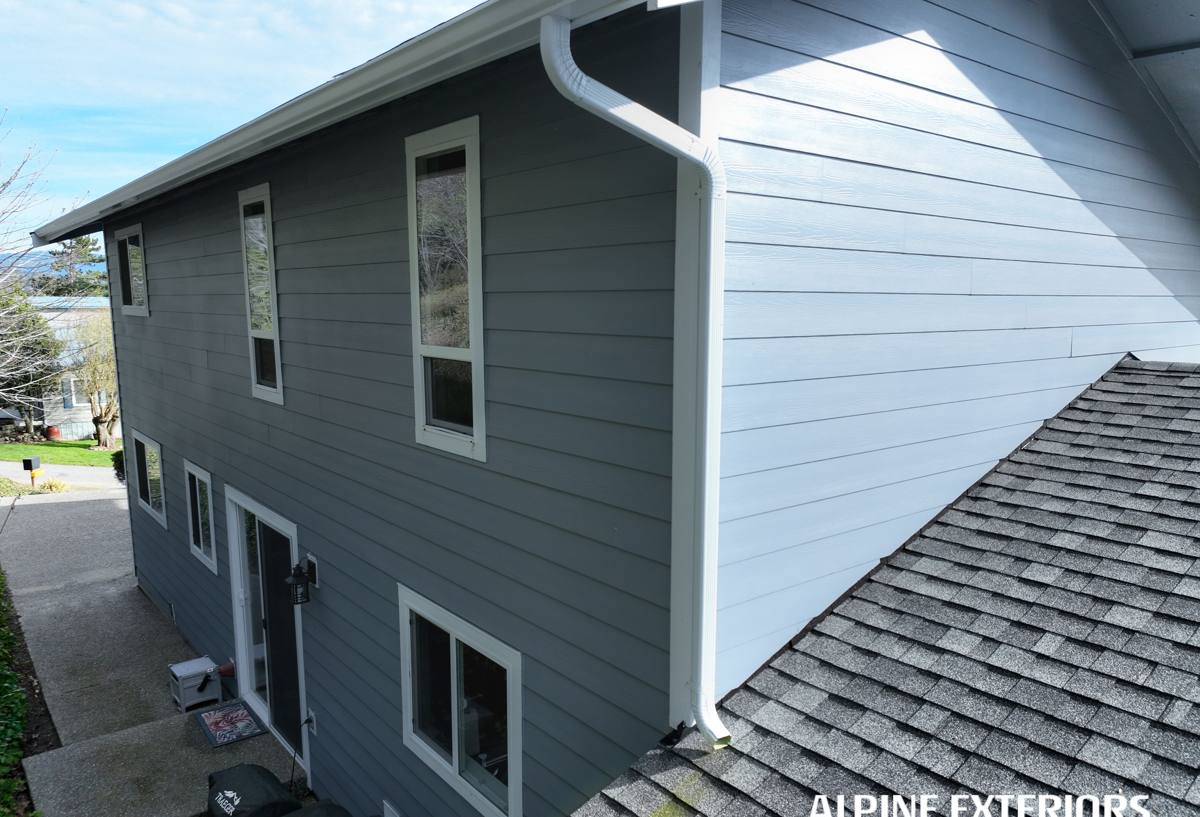
What Whatcom County Weather Does to a Shingle Roof
Bellingham sits close enough to the water that salt-laden air is a real factor, not a talking point — it accelerates corrosion on exposed metal fasteners, flashing, and vent stacks faster than inland installations ever see. Combine that with the long stretch of driving rain we get most of the year, and you've got two forces working against any roof that isn't detailed correctly: water intrusion and metal fatigue.
Then there's moss. Whatcom County's moss season isn't really a season anymore on shaded, north-facing, or tree-covered roofs — it's closer to a year-round background process that only slows down in the driest summer weeks. Moss doesn't just look bad. It holds moisture against the shingle mat, lifts tabs as rhizoids work under the granule layer, and directs runoff sideways instead of down, which is exactly how water finds its way under a shingle course instead of over it.
The Three Things We Design Around
- Salt air corrosion — fasteners, flashing, and vent boots need to be rated for it, not just standard-grade.
- Sustained wind-driven rain — underlayment and flashing details matter more here than in dry climates where shingles alone do most of the work.
- Moss and shade — roof design, ventilation, and maintenance access all need to account for organic growth, not just assume it won't happen.
Why York's Housing Stock Adds Its Own Wrinkles
A lot of York homes were built in an era when roof ventilation standards and underlayment practices were a lot looser than they are today. That means when we get called out for a re-roof or a repair in this neighborhood, we're often working around decking that's seen more moisture cycling than a newer subdivision roof would have, sometimes with prior repairs layered on top of each other. Mature tree canopy over many of these lots also means more organic debris — needles, leaves, seed pods — collecting in valleys and against chimneys, which is a direct contributor to moss colonization and clogged drainage paths.
None of this means a York roof is doomed to problems. It means the tear-off and inspection phase of any job here needs to be honest about what's underneath, not just a shingle swap over a deck that may already be compromised.
What a Correct Asphalt Shingle Installation Actually Involves
A shingle roof is a system, not a single product. The shingle itself is often the least important variable in whether a roof lasts 15 years or 30. Here's what we consider non-negotiable on every job, in York or anywhere else in Bellingham:
Tear-Off and Deck Inspection
We remove existing layers down to the deck rather than layering over old shingles. That's the only way to actually see the condition of the sheathing, catch soft or delaminated spots, and confirm the deck can properly hold fasteners. In a neighborhood with older housing stock, skipping this step is how small problems turn into full deck replacements two years later.
Underlayment Selection
Given how much wind-driven rain this region sees, we lean on synthetic underlayment with taped or lapped seams for the field of the roof, and self-adhered ice-and-water membrane at the vulnerable spots — eaves, valleys, and around penetrations. This is the layer that saves you when wind pushes rain uphill under a shingle tab, which happens here more than most homeowners realize.
Flashing Details
Chimney flashing, step flashing along walls, valley metal, and vent boot flashing all need to be corrosion-resistant given the salt air exposure, and installed as separate, properly lapped pieces rather than caulked-over shortcuts. Flashing failure, not shingle failure, is the single most common cause of the roof leaks we get called out to repair.
Ventilation
Balanced intake and exhaust ventilation keeps the underside of the deck dry and temperature-stable, which matters for shingle lifespan and for controlling condensation in an area with our humidity levels. It also reduces the moisture conditions that moss and algae thrive on.
Fastening
Correct nail placement, count, and penetration depth, using corrosion-resistant fasteners suited to coastal air. Under-driven or over-driven nails are a leading cause of premature shingle blow-off in wind events, and it's one of the most common defects we find on prior installations we're asked to repair.
Our Process, Start to Finish
- On-site inspection — we walk the roof (or use a drone/photo inspection where access is limited), check the deck condition where visible, and look at ventilation, flashing, and moss/moisture patterns.
- Honest scope and estimate — we tell you if it's a repair, a partial re-roof, or a full replacement, and why, with the cost factors laid out plainly.
- Tear-off and deck assessment — full removal of old roofing, with any deck repairs flagged and priced before we cover it up.
- Underlayment and flashing installation — the system layers that actually keep water out, installed to current best practice, not the era the house was built in.
- Shingle installation — correct nailing pattern, proper exposure, and attention to valleys, ridges, and penetrations.
- Final walk-through — we go over what was done, what to expect for maintenance, and answer questions before we consider the job finished.
Repair, Partial Re-Roof, or Full Replacement?
Not every issue on a York roof means a full tear-off. The table below outlines how we typically think through the decision, though every roof gets its own honest assessment on-site.
| Situation | Likely Approach | Key Factor |
|---|---|---|
| Isolated leak, flashing failure, storm damage to a section | Targeted repair | Deck and surrounding shingles still sound |
| Moss buildup with granule loss in shaded areas only | Cleaning + partial shingle replacement | Damage is localized, not roof-wide |
| Widespread granule loss, curling, or age near end of shingle life | Full re-roof | Remaining lifespan too short to justify partial work |
| Multiple past layers, unknown deck condition, recurring leaks | Full tear-off and re-roof | Can't verify or fix the deck without removing everything |
What Drives the Cost of a Shingle Roof in This Area
Pricing depends on the specifics of your roof, but the factors below are the ones that consistently move the number up or down on jobs in and around York and greater Bellingham:
- Roof size and pitch — steeper roofs take longer and require more safety setup.
- Number of layers to remove — tearing off two or three old layers costs more than one.
- Deck condition — any plywood or sheathing replacement is priced separately once we can see it.
- Roof complexity — valleys, dormers, chimneys, and multiple penetrations all add labor and flashing work.
- Shingle tier — standard three-tab versus architectural/laminate shingles, and warranty length.
- Access and tree cover — mature trees common in York can mean extra care, cleanup, or staging considerations.
A Homeowner's Pre-Estimate Checklist
- Note any rooms with ceiling stains, especially after wind-driven rain events.
- Check the attic (if accessible) for daylight, damp insulation, or musty smell.
- Look at the roof from ground level for dark streaking, moss patches, or curling shingle edges.
- Note the age of the roof if known, or when you purchased the home.
- Mention any past repairs or leaks to whoever inspects it — history matters for diagnosis.
Maintenance That Actually Extends Shingle Life Here
Given the moss and moisture conditions typical of this neighborhood, a shingle roof in York benefits from periodic moss treatment and gentle debris removal from valleys and gutters — pressure washing shingles is not something we recommend, as it strips granules and shortens shingle life rather than protecting it. A yearly or twice-yearly look at flashing points, especially around chimneys, is worth far more than it costs, since catching a small flashing gap early is a fraction of the cost of repairing water damage after it's been leaking into the deck for a season.
Why Hire a Crew That Already Works York
A roofing crew that regularly works this part of Bellingham has already seen how these houses were built, what past repair habits look like in this neighborhood, and which flashing and ventilation shortcuts tend to show up on older roofs here. That familiarity means fewer surprises during tear-off, faster and more accurate estimates, and a crew that isn't guessing at how salt air, rain patterns, and tree cover interact with this specific type of housing stock. It also means being available for follow-up if something needs attention after the job — not a company that did one job in the area and moved on.
If you're weighing a repair against a full re-roof, or just want an honest read on where your shingle roof stands, we're glad to come out and take a look. The estimate is free, there's no pressure, and you'll get a straight answer either way — just fill out the form below to get started.