 Bellingham Exterior
 Siding in York Has to Work Harder Than Siding Ten Miles Inland
York sits close enough to Bellingham Bay that homes here deal with a different mix of weather than a house out past Lake Whatcom or up in the county's drier pockets. Marine air carries salt and moisture onto exterior walls almost daily, wind-driven rain comes off the water at angles that push water where flat-on rain wouldn't reach, and the tree cover and cloud ceiling that make this neighborhood pleasant to live in also mean siding stays damp longer between dry stretches. None of that is exotic weather. It's just steady, and steady is what wears siding out.
Homeowners in York often tell us the same thing: their siding looked fine for years, and then somewhat suddenly it didn't — soft spots at the bottom courses, dark streaking under the eaves, paint that won't hold like it used to. That's rarely a sign of one bad storm. It's usually the cumulative effect of a material or an installation detail that wasn't built for this specific combination of salt, rain, and shade in the first place.
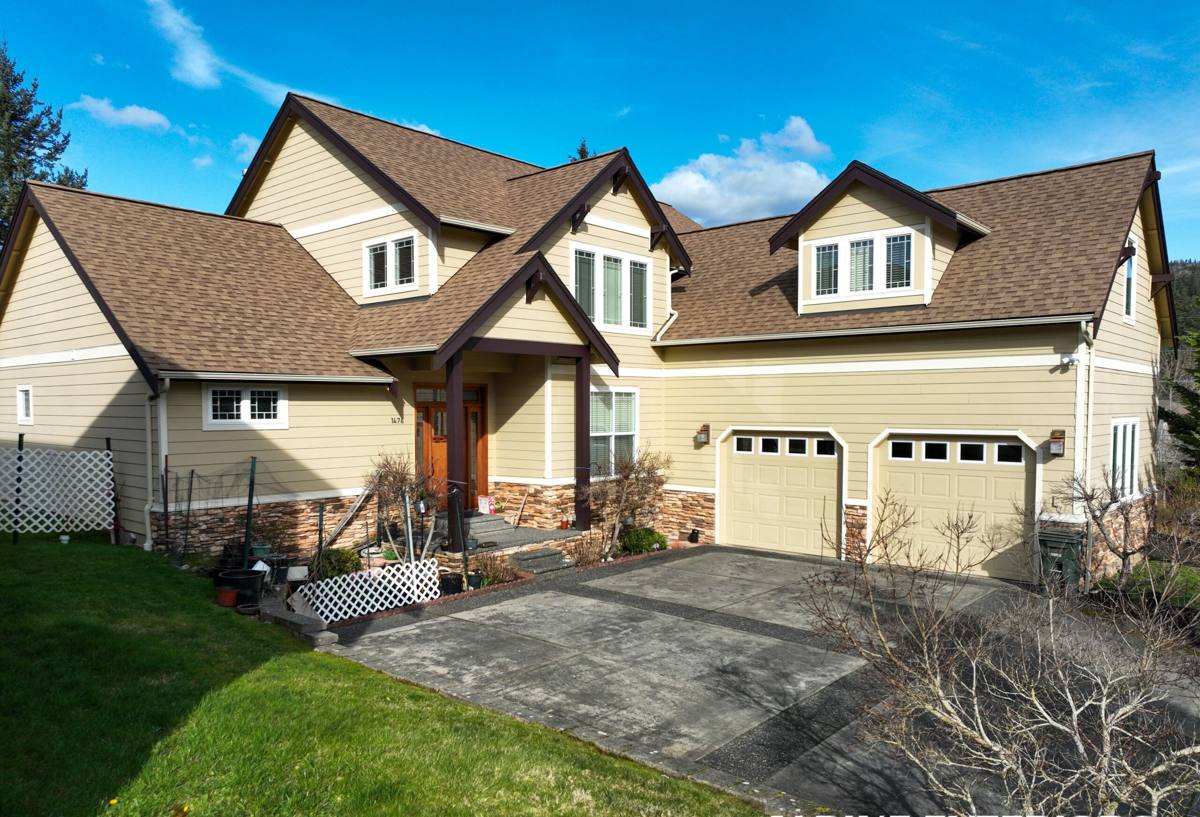
What Whatcom County's Climate Actually Does to Exterior Walls
Driving Rain and Wind-Driven Moisture
Rain that falls straight down is easy to shed. Rain that comes in sideways off Bellingham Bay finds every lap, seam, and penetration in a wall system and tries to work its way behind the cladding. Siding that depends on caulk and paint alone to stay sealed will eventually let water in around window trim, corner boards, and butt joints. Once water gets behind the surface layer, the sheathing and framing underneath are what actually take the damage.
Salt Air and Slow Corrosion
Coastal-adjacent air carries fine salt that settles on exterior surfaces and accelerates corrosion of exposed metal — fasteners, flashing, trim screws. On a siding system with unprotected or improperly rated fasteners, that shows up years later as rust streaks bleeding through paint or, worse, fastener failure that lets panels loosen.
Moss, Mildew, and a Long Damp Season
York gets real shade from mature trees in a lot of yards, and shaded, north-facing walls here can stay damp for days after a storm passes. That's exactly the environment moss and mildew need. On wood-based products, prolonged dampness plus organic growth is a direct path to rot. On any siding, moss holding moisture against the surface for weeks at a time is hard on paint, caulk, and the material itself.
Why We Only Install James Hardie Fiber Cement
We install James Hardie fiber cement siding exclusively — not vinyl, not LP SmartSide, not primed spruce or cedar, not other fiber cement brands. That's not a marketing position, it's a standard we hold because of what we've seen this climate do to alternatives over time.
Why Fiber Cement Fits This Climate
Fiber cement is cement, sand, and cellulose fiber pressed and cured into a dense, stable board. It doesn't absorb water the way wood-based siding does, it doesn't warp or expand and contract the way vinyl does in temperature swings, and it's non-combustible — a genuine advantage as wildfire-season smoke and ember exposure become a bigger consideration even west of the Cascades. It holds paint and factory finish far longer than wood because it isn't feeding moisture back into the coating from underneath.
The HZ5 Engineered Product Line
James Hardie engineers its siding for specific climate zones, and the HZ5 line is built for regions with sustained moisture exposure like ours. The formulation and moisture-management engineering in HZ5 products is specifically about performing in wet, humid, freeze-capable Pacific Northwest conditions rather than a one-size-fits-all national product.
ColorPlus Factory Finish
Most Hardie siding we install carries the ColorPlus finish — a baked-on, factory-applied coating that's more UV- and moisture-stable than field-applied paint, backed by its own finish warranty. In a climate where a field-painted surface is fighting damp air for months of the year, starting with a factory finish rather than relying on site painting to hold up is a meaningful difference over a 15- or 20-year horizon.
What a Correct Installation Actually Involves
Fiber cement siding's real-world performance depends heavily on installation quality — this is a product where the difference between a correct install and a fast one shows up in five to ten years, not on day one. The details that matter most in a wet, salt-air climate like York's:
- Proper starter strip and clearance at the base of the wall so the bottom course never sits in standing water or direct soil contact
- Correctly lapped and sealed flashing at every window, door, and roofline intersection, installed before siding goes on, not caulked in after
- Fastener spacing, type, and depth that match Hardie's published installation requirements — corrosion-resistant fasteners are non-negotiable this close to the water
- Minimum gaps maintained at butt joints and trim so the material can move slightly with temperature and moisture without cracking caulk lines
- A drainage plane and weather-resistive barrier behind the siding that actually drains, not just a barrier that's present
- Field-cut edges properly sealed or primed per manufacturer spec, since a raw cut edge left exposed is a common failure point
Skip any one of these and you can still end up with siding that looks right at handoff and causes problems years later — usually right around when a warranty claim becomes complicated.
Comparing Siding Options for a Climate Like York's
Homeowners comparing bids sometimes get quotes across several materials. Here's how the main options stack up against the specific conditions York deals with — sustained rain, salt-influenced air, and long damp stretches in shaded yards.
| Material | Moisture Behavior | Finish Durability | Fire Rating | Typical Lifespan Here |
|---|---|---|---|---|
| James Hardie Fiber Cement | Doesn't absorb and swell; engineered drainage detailing | Factory ColorPlus finish resists fade and moisture | Non-combustible | 30+ years installed to spec |
| Vinyl | Sheds water but seams and J-channels can trap moisture behind panels | Field-limited color; fades and can chalk over time | Combustible, can warp near heat | 15-25 years, more in full sun exposure |
| LP SmartSide (engineered wood) | Wood-based strand product; vulnerable at cut edges and joints if not maintained | Requires ongoing paint maintenance | Combustible | Highly dependent on caulk/paint upkeep |
| Cedar / Primed Spruce | Absorbs moisture readily; needs consistent ventilation and upkeep | Repaint or restain cycle every few years | Combustible | Variable, shortened by prolonged dampness |
This isn't a claim that the alternatives are poorly made products — vinyl and engineered wood both have legitimate uses. It's why, specifically for the moisture and salt exposure homes in York deal with, we've standardized on one material rather than installing whatever a homeowner saw advertised.
Our Process for a York Siding Project
Assessment and Scope
We start by walking the exterior and identifying what's actually happening behind the current siding — soft sheathing, failed flashing, existing moisture damage — rather than just quoting a re-skin over unknown problems. In a neighborhood with mature tree cover and shaded walls, we pay particular attention to north- and west-facing sides where moss and dampness tend to concentrate.
Removal and Prep
Old siding comes off down to the sheathing so we can inspect and repair anything compromised before new material goes up. This is the point where hidden rot or failed old flashing gets caught — covering it over with new siding just delays the same problem.
Weather Barrier and Flashing First
Before a single piece of Hardie board goes up, the drainage plane, weather-resistive barrier, and flashing at every penetration get installed and inspected. This is the layer that actually keeps water out long-term — the siding itself is the visible, durable shell on top of it.
Installation to Manufacturer Spec
Fastener pattern, clearances, joint treatment, and finish detailing follow James Hardie's published requirements for the HZ5 zone, which is also what keeps the manufacturer's warranty intact if it's ever needed.
Final Walkthrough
We walk the finished job with the homeowner, checking caulk lines, trim, and any areas that need touch-up before calling it complete.
Maintaining Fiber Cement Siding in a Coastal, Mossy Climate
Fiber cement is low-maintenance compared to wood, but "low-maintenance" isn't "no-maintenance" in a climate like this one. A simple annual routine keeps a Hardie system performing for decades:
- Rinse siding once or twice a year with a garden hose to clear salt residue and organic buildup, especially on shaded walls
- Keep gutters clear so overflow doesn't run down the siding face repeatedly during heavy rain
- Trim back shrubs and tree branches touching the siding to cut down on trapped moisture and moss growth
- Inspect caulk lines at trim and joints every year or two and re-caulk where it's cracked or pulling away
- Watch for moss forming at the base of walls or under eaves and remove it gently before it holds moisture against the surface long-term
- Address any impact damage or chipped finish promptly rather than letting it sit exposed through a wet season
Why It Matters That Your Crew Already Works in York
Siding installation quality is only partly about the product — the rest is judgment calls made on-site: how much clearance to leave at grade on a slightly sloped lot, how to detail flashing around a specific window style, where moss is likely to become a recurring issue given a yard's shade pattern. A crew that has worked on homes throughout Bellingham and Whatcom County has already seen how this particular mix of rain, salt air, and shade plays out over years, not just on installation day. That experience shows up in fewer callbacks and siding that's still doing its job well past the warranty period.
If you're weighing siding options for a home in York, we're happy to take a look and talk through what your house specifically needs — no pressure, no pushy sales pitch. Fill out the form below to request a free estimate.