 Bellingham Exterior
 Building a Deck That Actually Holds Up in Barkley
Barkley is one of Bellingham's newer planned neighborhoods, and most of the homes here share a common trait: they were built to a modern code, with an eye toward outdoor living. That means a lot of Barkley properties already have a deck, a patio slab waiting for a deck, or a homeowner who's been thinking about adding one for years. The catch is that a deck built for a dry inland climate doesn't automatically survive Whatcom County's weather. A deck here has to deal with salt-laden air moving in off Bellingham Bay, months of steady drizzle, and a moss season that can run from fall through spring. Building one correctly for this neighborhood isn't about upgrading everything to the most expensive material available — it's about understanding which details actually matter in this climate and getting those right the first time.
What Bellingham's Climate Does to an Outdoor Deck
Salt Air and Metal Fasteners
Bellingham sits close enough to salt water that airborne salt is a real factor for anything metal on an exposed deck. Standard zinc-coated screws and bolts corrode faster here than they would twenty or thirty miles inland. Once a fastener starts rusting, it weakens, stains the surrounding wood or composite, and eventually needs replacing — often before the decking itself is due for attention. This is one of the most overlooked details in deck construction, and it's also one of the cheapest to get right at the time of build.
Driving Rain and Water Management
Whatcom County rain isn't just frequent, it often comes in sideways during winter storms, which means water finds its way into gaps and seams that would stay dry in a calmer climate. A deck's ledger board — the piece that attaches it to the house — is the single most common failure point we see, because water gets behind it and rots the rim joist or sheathing without ever showing on the surface. Proper flashing and a small air gap between the ledger and siding aren't optional extras here; they're the difference between a deck that lasts decades and one that causes a hidden structural problem in five to eight years.
The Long Moss Season
Shade, moisture, and mild temperatures are exactly what moss wants, and Barkley's tree cover combined with Bellingham's damp fall-through-spring stretch gives it plenty of opportunity. Moss on a deck surface isn't just cosmetic — it holds moisture against the boards, and on wood decking that accelerates rot. On composite decking, moss can work into the surface texture of lower-grade boards and become difficult to remove without damaging the finish. Material choice, board spacing, and how much sun the deck gets all factor into how much of a moss problem a homeowner will actually deal with.
Choosing the Right Decking Material for Barkley
There's no single "best" decking material — there's a best material for a given budget, sun exposure, and maintenance appetite. Here's how the common options stack up specifically against Bellingham's climate conditions:
| Material | Moisture & Moss Resistance | Maintenance | Typical Lifespan |
|---|---|---|---|
| Cedar | Naturally rot-resistant but needs sealing to stay that way | Annual cleaning and re-sealing recommended | 15-20 years with upkeep |
| Pressure-treated fir/hem-fir | Good if properly sealed; prone to moss in shaded spots if neglected | Sealing every 1-2 years | 15-25 years with upkeep |
| Composite decking | Very good; resists rot but can trap surface moisture without airflow | Periodic washing, no sealing or staining | 25-30+ years |
| PVC decking | Excellent; fully resists moisture absorption | Low; occasional washing | 30+ years |
For Barkley specifically, we tend to steer homeowners with heavily shaded lots toward composite or PVC, simply because wood in constant shade needs more diligent upkeep to avoid moss and soft spots. On sunnier, more open lots, a well-sealed cedar or fir deck can perform very well and gives a more traditional look that suits a lot of the homes in this neighborhood.
What a Correctly Built Deck Involves Below the Boards
The decking surface is the part everyone sees, but the structure underneath is what determines whether the deck is still safe and solid in fifteen years. A correctly built deck in this climate includes:
- Footings sized and set to local frost depth and soil-bearing requirements, not just poured to a "standard" depth
- Proper ledger flashing with a drainage gap, so water sheds away from the house rather than pooling behind the board
- Joist spacing matched to the actual decking material — composite and PVC often require tighter spacing than solid wood
- Hardware rated for coastal exposure — hot-dip galvanized or stainless steel connectors and fasteners, not generic zinc-coated hardware
- A slight slope away from the house across the whole deck surface, so water doesn't sit and collect
- Joist tape or a protective barrier on top of the framing to keep standing water from soaking into the wood joists themselves
None of these details are visible once the deck is finished, which is exactly why they're the details that get skipped by crews trying to hit a lower price. They're also the details that decide whether a homeowner is looking at a simple board replacement in year twelve or a full structural rebuild.
Our Process for Barkley Deck Projects
On-Site Assessment
We start by walking the property, looking at sun exposure, drainage patterns, existing grade, and how the deck will connect to the house. If there's an existing deck being replaced, we check the ledger and framing for hidden rot before quoting anything, since that changes the scope of the job.
Design and Material Selection
We talk through layout, railing style, and decking material with an honest rundown of trade-offs for each option — not just the ones with the best margin. Budget, maintenance tolerance, and how the space will actually be used all shape the recommendation.
Permitting
Most new decks and many deck replacements in Bellingham and unincorporated Whatcom County require a building permit, particularly for decks attached to the house or elevated more than a couple feet off grade. We handle the permit application and inspections as part of the job so homeowners aren't left navigating that process alone.
Construction
Framing goes in first, with every ledger, footing, and connection point built to the standards above before a single decking board is installed. We don't cut corners on what's underneath just because it won't be visible.
Final Walkthrough
Before we consider the job done, we walk the finished deck with the homeowner, cover basic maintenance expectations for the material chosen, and make sure railings, stairs, and fasteners all meet code and feel solid underfoot.
Railings, Hardware, and Fasteners for Coastal Exposure
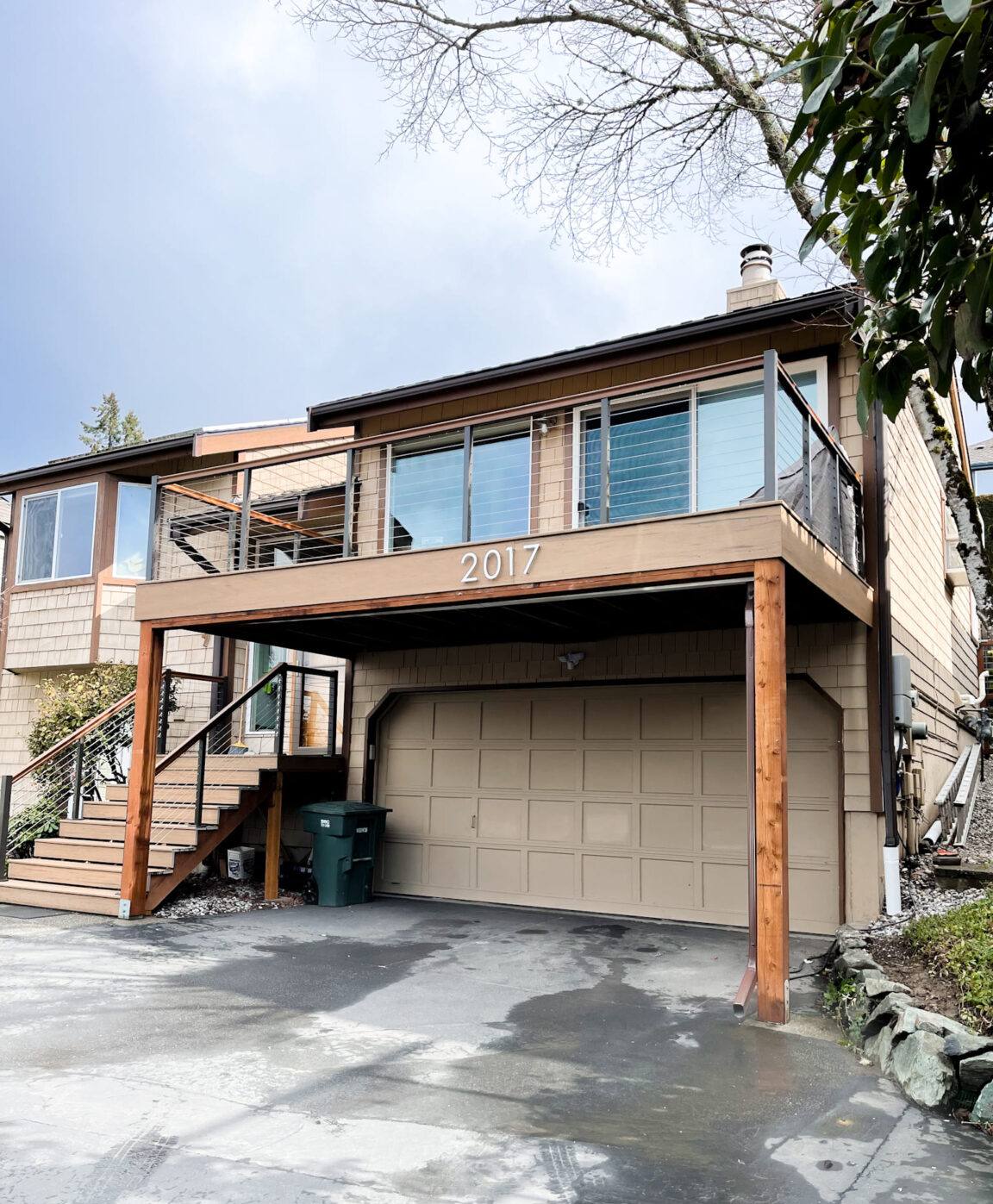
Railings take more weather abuse than almost any other part of a deck, since they're fully exposed on all sides. Wood railings need the same sealing discipline as wood decking, and painted metal railings can start showing surface rust at fastener points within a few years if the wrong hardware was used underneath the paint. Powder-coated aluminum railings hold up well against salt air with minimal upkeep, and cable railing systems — increasingly popular for the modern look many Barkley homes have — need stainless steel cable and hardware specifically, since standard-grade cable will corrode and lose tension over time in this environment. Every fastener that's exposed to the weather on a deck we build, whether it's holding down a board or securing a post, is spec'd for coastal-grade corrosion resistance rather than whatever is cheapest at the supply house.
Keeping a Barkley Deck Moss-Free and Long-Lasting
Even a well-built deck needs some seasonal attention in this climate. A simple maintenance routine goes a long way:
- Sweep debris and fallen leaves off the surface regularly through fall, since trapped organic matter feeds moss growth
- Rinse the deck surface a few times a year, especially shaded sections, to knock back early moss before it takes hold
- Check and clear gaps between boards so water and debris aren't trapped against the framing below
- Re-seal wood decking on the manufacturer-recommended schedule rather than waiting until it looks obviously weathered
- Inspect railing posts and stair connections once a year for movement, which can signal a loosening fastener before it becomes a safety issue
Signs Your Current Deck Needs Attention
Homeowners often wait too long to address deck problems because the surface still looks fine. Some warning signs are worth acting on before they become bigger repairs:
- Soft or spongy spots underfoot, particularly near the house or around post bases
- Persistent moss or dark staining in the same spots season after season, even after cleaning
- Visible gaps, rust streaks, or movement at the ledger board where the deck meets the house
- Railings or stair stringers that flex or wobble under normal weight
- Fasteners that are visibly rusted, popped up, or leaving discolored halos in the decking material
Any of these can indicate a problem that started below the surface and worked its way up — worth a professional look rather than a wait-and-see approach.
Why a Crew That Already Works in Barkley Makes a Difference
Building decks in a place like Bellingham means designing for this specific climate every time, not applying a generic build spec and hoping it holds up. A crew that regularly works in Barkley and the surrounding Bellingham area already knows which fastener grades hold up against the salt air here, how local drainage and soil conditions affect footing depth, and what the City of Bellingham and Whatcom County permitting process actually requires before work starts. That local familiarity shows up in fewer surprises during the build and a deck that's genuinely built for the conditions it will sit in for the next several decades, not just a design pulled from a catalog.
If you're planning a new deck or replacing one that's showing its age, we're happy to come take a look and talk through honest options for your property. Use the form below to request a free, no-pressure estimate.