 Bellingham Exterior
 Barkley's Roofs Work Harder Than Most People Realize
Barkley sits close enough to the water and tucked in among enough mature tree cover that its roofs take on a specific combination of stress: salt-laden air drifting in off Bellingham Bay, long stretches of driving rain that push water sideways under poorly sealed edges, and a moss season that can run most of the year in the shadier, tree-lined sections of the neighborhood. None of that is unique to Barkley by itself, but together it adds up to a roofing environment that punishes shortcuts faster than drier parts of the country ever would.
A roof that's installed correctly for this climate holds up. One that's installed to a generic national standard — the kind of install you'd see in a dry, low-wind market — tends to show its age early, usually as moss buildup, soft spots at the edges, or slow leaks that don't show up until they've already done interior damage.
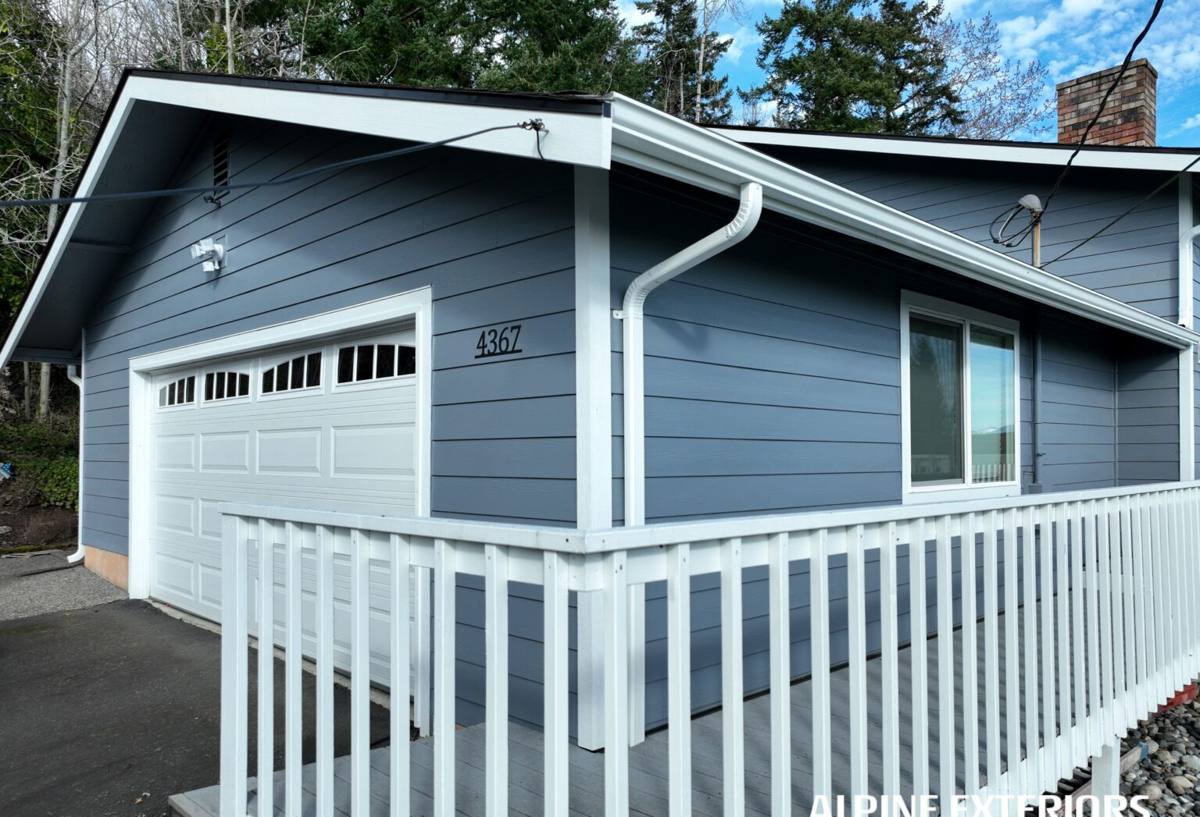
Signs a Barkley Home Needs a New Roof, Not Another Repair
What to look for outside
- Shingles that are cupping, curling, or losing granules in patches (check the gutters for grit)
- Moss or algae streaking that keeps coming back within a season or two of cleaning
- Soft, spongy decking you can feel underfoot near valleys or eaves
- Flashing around chimneys, skylights, or dormers that's rusted, lifted, or was never properly step-flashed
- Visible sagging along the roofline, especially near the ridge
What to look for inside
Water stains on ceilings that appear after wind-driven rain (not necessarily the heaviest rain of the year), a musty smell in the attic, daylight visible through the roof deck, or insulation that's damp or matted are all signs the roof has stopped doing its job. In a marine climate like Whatcom County's, a slow leak can go unnoticed for a long time because it doesn't always show up as an obvious drip — it shows up as rot.
Age matters too. Most asphalt composition roofs in this climate are realistically good for 20–25 years, sometimes less if ventilation was poor or moss was allowed to sit for years at a time. If your roof is in that range and showing two or more of the signs above, patch repairs are usually a short-term fix on a system that's already failing underneath.
What a Correct Installation Actually Involves
A new roof is not just shingles nailed to plywood. In a climate that sees sustained rain and salt air, the parts you don't see matter more than the parts you do.
Deck inspection and repair
Every old roof comes off down to the deck, and the deck gets inspected board by board. Soft or delaminated plywood gets replaced before anything new goes down — covering rotten decking with new shingles just hides the problem for a few more years.
Underlayment and water barriers
Synthetic underlayment across the whole roof, with self-adhering ice-and-water membrane at the eaves, valleys, and around every penetration — chimneys, vents, skylights. In a region where wind-driven rain can push water uphill under shingles, this layer is what actually keeps a home dry, not the shingle surface itself.
Flashing
Step flashing at walls and chimneys, proper counter-flashing, and correctly lapped valley metal. Reused old flashing is one of the most common causes of early leaks on an otherwise good roof.
Ventilation
Balanced intake (soffit) and exhaust (ridge) ventilation so the attic can actually breathe. Poor ventilation traps moisture, which shortens shingle life and feeds the exact conditions that grow moss and mildew on the roof surface and in the attic itself.
Fasteners and wind rating
Correct nail placement and count per manufacturer spec, not just "enough to hold it down." Under-nailing is invisible until the first real windstorm.
Roofing Material Options for Barkley Homes
There's no single "best" roofing material for every Barkley home — it depends on tree cover, sun exposure, budget, and how long you plan to own the house. Here's an honest comparison of what we most commonly install or evaluate in this area:
| Material | Typical Lifespan Here | Moss Resistance | Best For |
|---|---|---|---|
| Standard 3-tab asphalt | 15–20 years | Low — needs regular cleaning | Budget-focused projects, rentals |
| Architectural (dimensional) asphalt | 20–25+ years | Moderate; better with algae-resistant granules | Most homes — best balance of cost and durability |
| Metal (standing seam or panel) | 40–50+ years | High — sheds moss and debris well | Homes with heavy tree cover or long-term ownership plans |
| Cedar shake | 20–30 years with upkeep | Low without regular treatment | Homeowners committed to ongoing maintenance |
| Synthetic/composite shingle | 30–50 years | Moderate to high | Homes wanting a shake or slate look with less upkeep |
We don't push cedar shake as a default in shaded, damp parts of Barkley — not because it's a bad product, but because it demands a maintenance schedule (cleaning, treatment, occasional shake replacement) that a lot of homeowners underestimate going in. If you want that look and are prepared for the upkeep, we'll install it correctly. If you want the look with less ongoing work, synthetic composite is worth a look.
Our Installation Process
- On-site assessment — we walk the roof and attic, check decking condition, ventilation, and flashing details, and take measurements.
- Written estimate — material options, scope of work, and timeline laid out clearly, with no vague allowances.
- Permitting — we handle the City of Bellingham (or county, depending on exact location) permit and inspection requirements so you don't have to chase paperwork.
- Tear-off and deck repair — full removal of old roofing, deck inspected and repaired as needed.
- Underlayment, flashing, and ventilation install — the water-barrier and airflow work described above, done before a single shingle goes down.
- Roofing material installation — installed to manufacturer spec for wind and warranty compliance.
- Site cleanup — magnetic sweep for nails, full debris removal.
- Final walkthrough — we go over the finished roof with you before calling the job done.
Ventilation and Moisture: The Part Most Homeowners Never See
Attic ventilation gets less attention than shingle color, but it's often the difference between a roof that lasts its full rated life and one that fails early. In a marine climate, a poorly ventilated attic traps humid air year-round. That trapped moisture condenses on the underside of the deck, feeds rot from the inside out, and creates ideal conditions for the same moss and algae growth we're trying to keep off the roof surface.
Balanced ventilation — enough intake at the soffits to match exhaust at the ridge — lets that moisture escape before it becomes a problem. It's a detail that costs little to get right during a new install and is expensive to fix afterward, since it often means opening up soffits or reworking ridge vents on a roof that's already finished.
What Affects the Cost of a New Roof in Barkley
| Factor | Why It Matters |
|---|---|
| Roof size and pitch | Steeper, larger roofs take more material, time, and safety equipment |
| Number of layers to remove | Tear-off of multiple old layers adds labor and disposal cost |
| Deck condition | Rotten plywood found during tear-off requires replacement before install continues |
| Material choice | Asphalt, metal, and composite carry different material and labor costs |
| Roof complexity | Valleys, dormers, skylights, and multiple chimneys all add flashing work |
| Access | Steep sites or limited driveway/staging access can affect labor time |
We won't quote a price without seeing the roof — anyone who does is guessing, and that guess usually turns into a change order mid-project. A proper estimate accounts for what's actually on your roof, not a rough average.
Why Local Roofing Experience in Barkley Actually Matters
A crew that regularly works Barkley and the surrounding Bellingham neighborhoods knows things a roofer from outside Whatcom County has to learn on your job: which sections of the neighborhood sit under enough tree canopy to need extra attention to ventilation and moss prevention, how salt air off the bay affects metal flashing and fastener choices over time, and what the City of Bellingham's permitting and inspection process actually requires so the job doesn't stall waiting on paperwork.
That familiarity shows up in small decisions throughout a project — where to add extra ice-and-water membrane, which flashing details need reinforcing, how to sequence work around Whatcom County's rain patterns so the deck isn't left exposed longer than necessary. It's not something you can fully replicate with a generic install checklist.
Keeping a New Roof Performing After Installation
A correctly installed roof still benefits from basic upkeep, especially in a climate this wet:
- Clean gutters at least twice a year so water isn't backing up under the edge of the roof
- Remove moss buildup promptly rather than letting it sit through a full wet season
- Trim back overhanging branches to reduce shade, debris, and physical damage to the roof surface
- Have the attic checked periodically for proper airflow and signs of moisture
- Schedule a quick visual inspection after any major windstorm
None of this is complicated, but skipping it is how a well-installed roof ends up needing early attention anyway.
If your Barkley home's roof is showing its age or you're planning ahead for a replacement, we're happy to take a look and give you a straightforward, no-pressure estimate — just fill out the form below.