 Bellingham Exterior
 Birch Bay's Waterfront Climate Is Hard on Windows
Birch Bay sits right on the water, and that location cuts both ways. The views are part of why people love living out here, but the same exposure that makes the bay beautiful also makes it one of the more demanding places in Whatcom County to own a home. Salt-laden air off the water works its way into window hardware, weep holes, and metal components over time. Wind-driven rain off the Strait pushes moisture sideways into gaps that would stay dry in a more sheltered spot. And the tree cover and damp shoulder seasons common around Bellingham mean moss and algae get a long runway to establish themselves on north-facing trim, sills, and anything that stays shaded and wet.
None of that is a reason to avoid living here — it's just a reason to think differently about windows than a homeowner further inland would. A window system that's fine in a dry, sheltered neighborhood can fail early in Birch Bay if it wasn't chosen and installed with this specific exposure in mind.
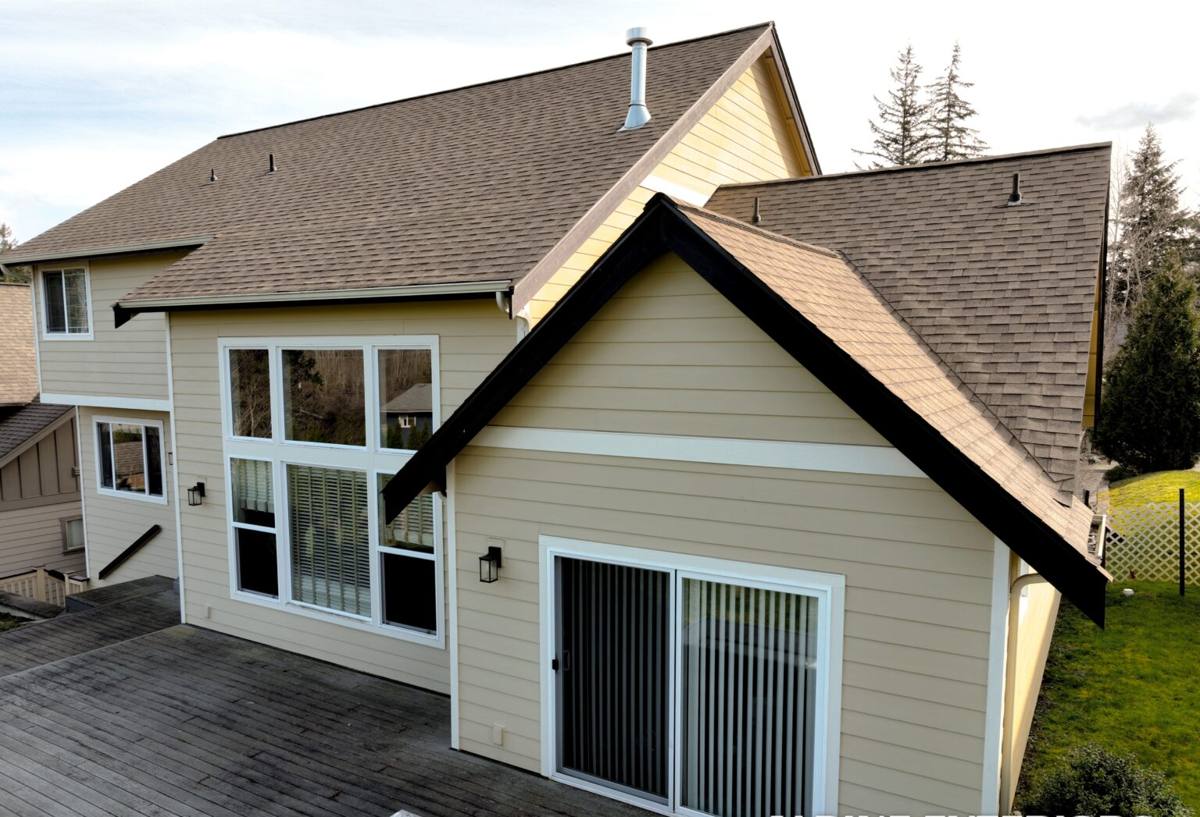
What "Energy-Efficient" Actually Means Out Here
Energy efficiency gets marketed as a glass spec, but for a coastal window it's really a system problem. The glass package matters — low-E coatings, gas fills, and multi-pane construction all reduce heat loss and cut down on the cold-radiating feeling you get sitting near an old single-pane window in January. But in a place with this much wind and moisture, the frame, the seals, and the installation determine whether that efficiency actually holds up.
The Three Things That Actually Drive Performance
- Glass package — low-E coatings and inert gas fills (argon or krypton) that slow heat transfer through the glass itself
- Frame and seal quality — how well the frame resists warping, UV breakdown, and moisture intrusion at the corners and weep system
- Installation — flashing, sealant, and shimming that keep wind-driven rain from getting behind the window in the first place
A high-end glass package installed with sloppy flashing will still let in cold drafts and moisture within a few seasons. That's the trade-off homeowners don't always hear about until it's already a problem.
Signs Your Current Windows Are Costing You Money
Most homeowners don't replace windows because of one dramatic failure — it's a slow accumulation of small signs. Worth paying attention to:
- Condensation building up between panes (a sign the seal has failed and the gas fill is gone)
- Cold drafts near the frame even when the window is fully latched
- Difficulty opening, closing, or locking — often from frame warping or hardware corrosion
- Visible moss, algae, or dark staining collecting on the sill or lower frame
- Soft or discolored trim around the window, which can point to water getting behind the frame
- Noticeably higher heating bills compared to a similar-sized, similarly oriented room
Any one of these on its own might not mean much. Several together, especially on the windows facing the water or the prevailing wind, usually mean the window system is past the point where sealant and weatherstripping fixes will hold.
Installation Is Where Coastal Jobs Are Won or Lost
We'd rather be blunt about this than let it be a surprise later: in a wind-driven-rain environment like Birch Bay, installation quality matters more than almost any other single decision. A window that's flashed correctly, sealed with the right materials, and shimmed so it doesn't bind or sag will perform for decades. One that's caulked in place without proper flashing will let water track behind the siding within a few wet winters, no matter how good the glass is.
What a Correct Installation Actually Involves
- Removing the old window and inspecting the rough opening and sheathing for hidden rot or prior water damage before anything new goes in
- Installing flashing tape and a drainage plane that directs any water that does get past the window back out, not into the wall cavity
- Setting the window level, plumb, and square, with shims at the correct load points so the frame doesn't rack over time
- Sealing with exterior-grade sealant rated for the material and movement it will see, not just a bead of caulk around the trim
- Insulating the gap between the frame and rough opening properly — too little leaves a draft path, too much (or the wrong type) can bow the frame
Skipping any of these steps is exactly how a homeowner ends up with a "new" window that still drafts, fogs, or lets moisture into the wall within a couple of years.
Choosing a Frame Material for a Bay-Facing Home
There's no single "best" frame material — it depends on exposure, budget, and how much upkeep you want to do. Here's how the common options generally hold up in a salt-air, high-moisture setting like Birch Bay:
| Frame Material | Coastal Performance | Maintenance |
|---|---|---|
| Vinyl | Good moisture and salt resistance; won't rust or rot | Low — occasional cleaning |
| Fiberglass | Excellent dimensional stability in temperature swings; handles wind load well | Low |
| Wood-clad | Warm appearance, but the wood core is vulnerable if the exterior cladding is ever breached | Higher — cladding and seals need periodic inspection |
| Aluminum | Strong but conducts heat and cold, and is more prone to corrosion in salt air over time | Moderate |
We don't push one material on every home. A shaded, moss-prone north side of a house has different needs than a wall that takes direct wind off the water, and we'll talk through that difference with you rather than sell a one-size-fits-all package.
How Our Process Works
We keep the process straightforward because window replacement shouldn't feel like a mystery:
- On-site assessment — we look at each window's exposure, current condition, and any signs of water intrusion around the frame or sheathing
- Product recommendation — based on exposure, budget, and how the home is oriented to wind and rain, not a default package
- Written estimate — clear about materials, scope, and what's included so there are no surprises later
- Removal and inspection — we check the rough opening for hidden damage before anything new goes in
- Installation — proper flashing, sealing, and shimming as described above
- Final walkthrough — we check operation, seals, and cleanup with you before calling the job done
What Affects the Cost of a Window Project
Every home is different, but these are the factors that most often move the price up or down:
| Factor | Why It Matters |
|---|---|
| Number and size of windows | Larger openings and more units mean more material and labor |
| Frame material | Vinyl is typically the most budget-friendly; fiberglass and wood-clad cost more |
| Glass package | Double vs. triple pane, and coating/gas-fill upgrades, add cost but improve performance |
| Condition of the existing opening | Rot or water damage found during removal adds repair work before the new window goes in |
| Access and exposure | Upper-story or hard-to-access windows on wind-exposed walls take more time to install correctly |
We'll never give you a number without seeing the actual windows and openings first — anyone quoting a firm price sight unseen is guessing.
Living With Salt Air and Moss Season: Upkeep That Actually Helps
Even a well-installed, energy-efficient window benefits from a little seasonal attention in this climate. A short checklist we give homeowners:
- Rinse salt residue off frames and glass a few times a year, especially on wind-exposed sides of the house
- Keep weep holes clear of debris, pollen, and moss so water can drain out instead of pooling on the sill
- Check exterior caulking annually for cracking or separation, particularly after a hard winter
- Trim back vegetation that keeps a window in constant shade, since that shade is what lets moss and algae take hold
- Operate locks and hardware a few times through the year so corrosion doesn't set in unnoticed
None of this is heavy maintenance — it's the kind of five-minute task that, done a couple of times a year, adds years to a window system's life in this environment.
Why Local Experience in Birch Bay Matters
A crew that mostly works drier, more sheltered inland neighborhoods can still do fine carpentry — but they may not default to the flashing details, sealant choices, or frame recommendations that a wind-exposed, salt-air property like a Birch Bay home actually needs. We work throughout Bellingham and Whatcom County, and the waterfront communities like Birch Bay get treated as their own case, not a smaller version of an inland job. That means starting with what the wind and water do to this specific home, not what works in general.
If your windows are drafty, fogged, hard to operate, or just overdue, we're happy to take a look and give you an honest read on what's actually going on — no pressure, no upsell. Use the form below to request a free estimate and we'll set up a time to walk the property with you.