 Bellingham Exterior
 Energy-Efficient Windows Built for Birchwood's Climate
Windows are usually the first place a homeowner in Birchwood notices a house isn't performing the way it should. A room that never quite warms up in winter, a furnace that runs longer than it seems like it needs to, glass that fogs on the inside during a cold snap — these are window problems more often than they're heating system problems, and in this part of Bellingham, the climate makes that gap show up faster than it would somewhere drier. Salt-tinged marine air, rain that gets driven sideways by wind rather than falling straight down, and a moss season that lingers on shaded walls for much of the year all put steady pressure on window seals, frames, and glazing. Older or lower-grade windows don't fail all at once under that pressure. They lose performance gradually, one degree of draft and one percentage point of heat loss at a time, until the energy bill and the comfort of the house both reflect it.
This page is about what energy-efficient window replacement actually looks like for a home in Birchwood specifically — what the local climate demands from a window, what a correct installation involves, and how we approach the job from first visit to final walkthrough.
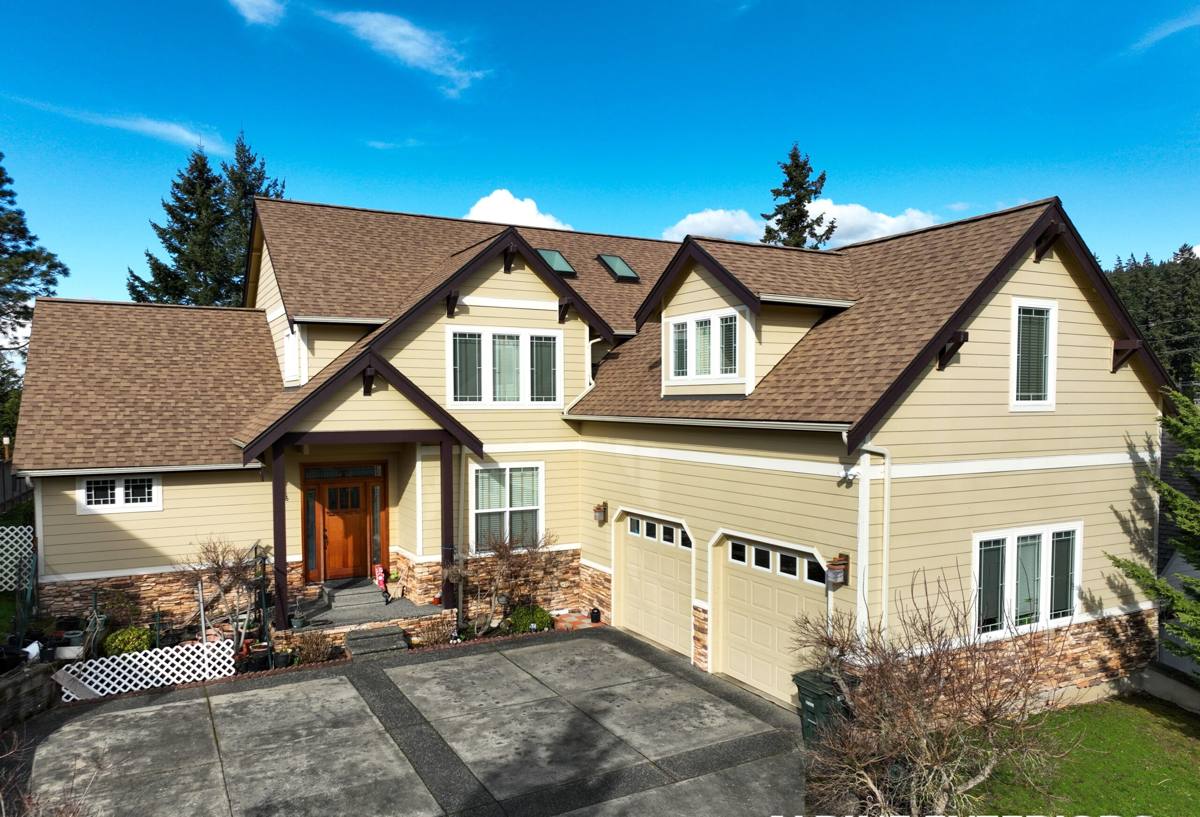
What This Climate Does to Windows Over Time
Wind-Driven Rain and Air Leakage
Rain in this part of Whatcom County doesn't stay polite. Storms push it sideways into wall assemblies, which means it reaches gaps around a window frame that would stay dry in a calmer, drier climate. Those same gaps are also where conditioned air leaks out of the house year-round, so a window that's letting water in during a storm is very often the same window letting heat out every other day of the year. Air leakage and water intrusion tend to travel the same path.
Marine Air and Frame or Hardware Wear
Salt-influenced air moving through Bellingham speeds up wear on lower-grade window hardware, fasteners, and frame components. It's a slow process — pitting, stiff locks, hardware that doesn't seal as tightly as it did when it was new — and it directly affects energy performance, since a window that no longer closes and locks fully tight isn't going to hold its rated efficiency no matter how good the glass package was on day one.
Condensation and a Long Moss Season
Mild, damp conditions for much of the year give moss and mildew a long window to take hold on sills, trim, and shaded wall sections around Birchwood homes. Older single-pane windows and early double-pane units also show heavy interior condensation during cold stretches, which is usually a sign a seal has failed rather than just a cosmetic nuisance. Trapped moisture between panes or pooling on a sill isn't just unsightly — it's actively feeding the wood rot and mold growth that shorten a window's usable life.
What Actually Makes a Window Energy Efficient
"Energy-efficient" gets used loosely in window marketing, but a few specific factors are what actually determine how a window performs in a climate like this one.
U-Factor and Solar Heat Gain
U-factor measures how well a window resists heat transfer — lower is better, and it's the number that matters most for a marine climate like Bellingham's, where the bigger concern most of the year is heat escaping rather than heat coming in. Solar heat gain coefficient (SHGC) measures how much solar heat passes through the glass; in the Pacific Northwest that number matters less than it would in a sunnier climate, but it still plays a role on south- and west-facing rooms that get direct afternoon sun. Washington falls in the stricter Northern climate zone under the national ENERGY STAR program, which reflects the fact that heat retention, not heat rejection, is the priority here.
Glazing and Gas Fill
Double-pane glass with a low-E coating and an argon gas fill between the panes is the practical baseline for this climate — it cuts heat loss significantly compared to older single-pane or clear double-pane glass, and it also reduces interior condensation, which is a common complaint on older Birchwood homes during cold, damp stretches. Triple-pane units push performance further and can be worth it on a north-facing wall or a home with unusually high heating costs, though the added cost doesn't pencil out for every room or every budget.
Frame Material
Frame material affects both insulating value and how well the window holds up to sustained moisture. Vinyl and fiberglass frames resist rot in a way uncladded wood frames don't, which matters given how much rain this region sees, and both come in insulated or multi-chambered profiles that improve on older, thinner frame designs. Wood-interior, clad-exterior units are still a legitimate option where the interior look matters, provided the exterior cladding is genuinely weathertight.
| Frame Material | Insulating Performance | Moisture Resistance | Typical Fit |
|---|---|---|---|
| Vinyl | Good, especially multi-chambered profiles | Excellent — won't rot | Most Birchwood replacement projects |
| Fiberglass | Very good, more dimensionally stable through temperature swings | Excellent — won't rot | Larger openings or homes wanting a paintable frame later |
| Wood, clad exterior | Good, warmer look on the interior | Good, entirely dependent on the exterior cladding staying intact | Homes where interior wood trim matters aesthetically |
| Aluminum | Poor without thermal breaks | Good structurally, prone to condensation | Rarely the right call for residential energy upgrades here |
Signs Your Birchwood Windows Are Costing You Money
- Noticeable drafts or cold spots near the frame even when the window is fully closed and locked
- Fogging or visible moisture trapped between the panes of a double-pane window
- Interior condensation on the glass or sill during cold weather
- Sills or trim that feel soft, look discolored, or show early rot
- Windows that stick, won't stay open, or no longer lock tightly
- Rising heating bills without a clear explanation elsewhere in the house
- Paint or finish peeling faster on window trim than on the rest of the exterior
What a Correct Energy-Efficient Window Install Involves
A high-performance window unit only delivers its rated efficiency if it's installed correctly. We've seen plenty of good windows underperform for years because of installation shortcuts that were never visible from inside the house.
- Removing the old window and inspecting the framing and sheathing underneath for rot or hidden water damage before anything new goes in
- Taking precise measurements of the actual rough opening rather than assuming it matches the old unit's nominal size
- Repairing any damaged framing or sheathing found during removal, since sealing a new window over old rot just hides the problem
- Installing sill pan, side, and head flashing in the correct sequence so water sheds outward at every layer
- Setting and shimming the unit square and plumb, which matters for both weather sealing and smooth operation of the sash and hardware
- Insulating the gap between the frame and rough opening with appropriate material, not relying on spray foam or caulk alone as the only barrier
- Finishing exterior trim so it directs water away from the new seams instead of letting it pool against them
Skip the flashing and air-sealing steps and even a premium window with an excellent glazing package can leak, draft, or fog prematurely. The unit itself is only part of what determines real-world energy performance.
Cost Factors Worth Understanding
Two window quotes for the same house can look very different once you know what's driving the number. Understanding these factors makes it easier to compare bids that aren't actually apples to apples.
| Factor | Why It Matters |
|---|---|
| Frame material | Vinyl, fiberglass, and clad-wood differ in upfront cost and long-term maintenance |
| Glazing package | Double-pane low-E argon versus triple-pane changes both cost and heat retention |
| Opening condition | Rot, old flashing failures, or out-of-square framing add repair work before the new unit goes in |
| Number of units | A whole-house window replacement typically has better per-unit economics than a single window |
| Size and configuration | Larger units, bays, or non-standard shapes cost more to manufacture and install |
| Access | Upper-floor windows or tight lot access can add labor time |
We won't quote a real number without seeing the windows in person, but we'll walk you through exactly what's driving the price on your specific project rather than handing over a single lump-sum figure.
How Our Process Works
We keep the process straightforward, because a window project touches your comfort and your energy bill for years, not just the day the crew leaves.
- On-site inspection: We check frame condition, seal integrity, hardware function, and how the existing flashing ties into the siding around each opening.
- Honest read on repair vs. replacement: Not every window needs to come out — we'll tell you plainly which ones do and which don't.
- Written estimate: A clear scope covering frame material, glazing package, flashing work, and cleanup, not a vague single-line number.
- Ordering and lead time: Custom or non-standard sizes take longer to arrive, and we'll give you a realistic timeline upfront rather than an optimistic one.
- Installation: Old windows come out, framing is repaired if needed, and new units go in with full flashing and air-sealing detail as standard practice, not an upsell.
- Final walkthrough: We check operation, seals, and finish work with you in person before we call the job done.
Why Hiring a Crew That Already Works in Birchwood Matters
A contractor who works Birchwood and the surrounding Bellingham area regularly has already seen how salt-influenced air wears down underspecified hardware, how wind-driven rain finds its way past flashing that wasn't lapped correctly, and which wall orientations hold condensation and moss longest through the wet months. That experience shows up in small, practical decisions on install day — how much lap a flashing detail needs, which hardware grade actually holds up here, when an opening needs extra attention because of how the original wall was built — the kind of judgment calls that separate windows still performing cleanly in fifteen years from ones showing drafts and rot in five.
It also matters after the crew leaves. A workmanship warranty is only as good as the company standing behind it, and a contractor with an ongoing, established presence in Whatcom County is one you can actually reach if a question comes up down the road.
A Practical Checklist Before You Hire
- Does the estimate specify frame material, glazing package, and U-factor, not just "new windows"?
- Is flashing and air-sealing work explicitly written into the scope, not treated as an assumed extra?
- Do they carry current Washington contractor licensing and active liability insurance?
- Does the bid separate the manufacturer's product warranty from the contractor's own installation warranty?
- Can they give a realistic lead time for ordering, not just an installation date?
- Can they point to recent, real work in or near Birchwood and the greater Bellingham area?
If your Birchwood home has drafty, foggy, or hard-to-close windows — or you're just planning ahead for an energy-efficient upgrade — we're glad to take a look and give you an honest, no-pressure read on your options. Use the form below to schedule a free estimate.