 Bellingham Exterior
 Windows Built for Birchwood's Conditions, Not Just Any Bellingham Home
Birchwood sits close enough to the water and tree cover that its homes take on a specific kind of weather stress: salt-laden air drifting in off the Sound, long stretches of driving rain through fall and winter, and a moss season that seems to start earlier and last longer every year. Windows here don't fail the way they do in drier inland climates. They fail at the edges — at seals, sills, and flashing details that were never built to handle constant moisture cycling. When we install windows in Birchwood, we're not just swapping glass and frames. We're addressing how water moves around a window opening in a Whatcom County winter, and making sure it has nowhere to go but back outside.
A lot of the window problems we see in this neighborhood didn't start as window problems. They started as a small gap in flashing, a caulk line that dried out and cracked, or a sill that was never pitched to shed water. Over a few wet seasons, that turns into fogged glass, soft trim, or a draft that shows up every time the wind picks up off the water. Good installation prevents that chain reaction before it starts.
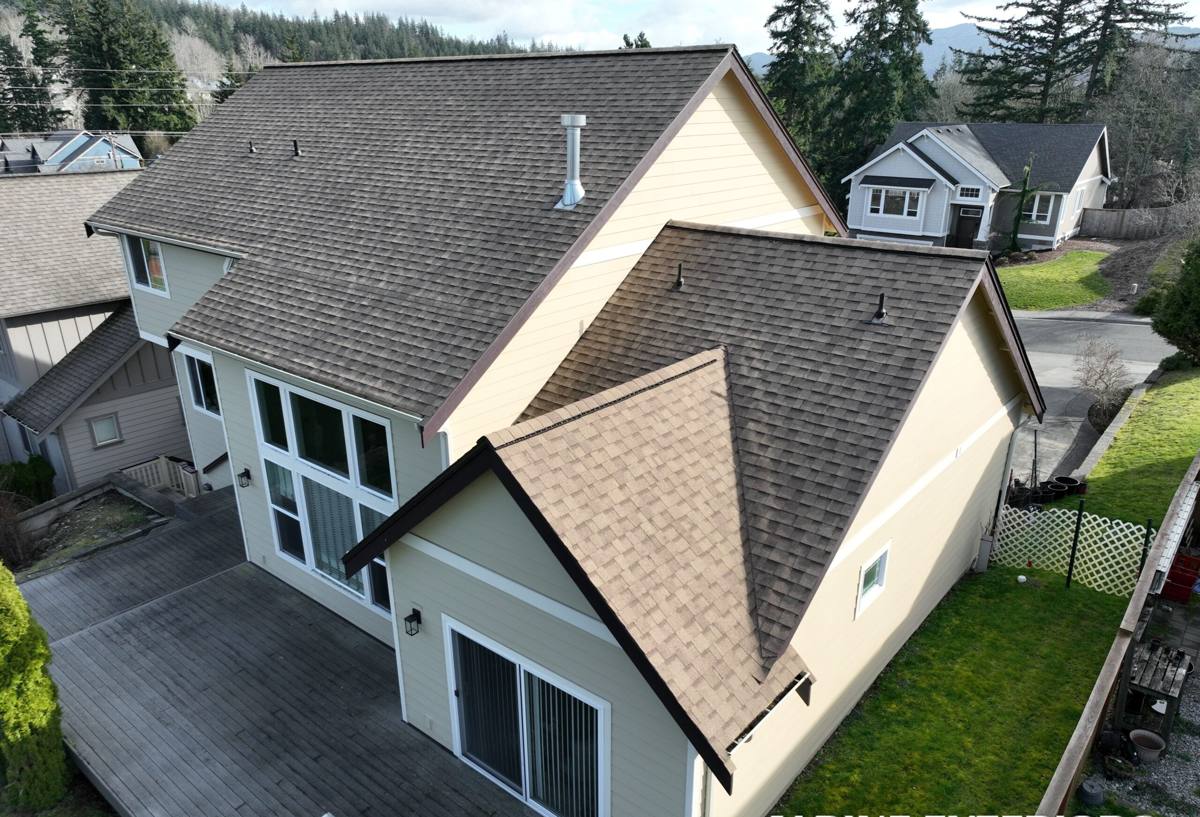
What Birchwood's Climate Actually Does to Windows
Salt Air and Metal Components
Homes with any exposure to marine air deal with accelerated corrosion on window hardware — hinges, locks, and especially older aluminum frames. Salt air doesn't just sit on the surface; it works into pits and seams over time, which is why we pay attention to hardware quality and frame material, not just the glass package, when we spec a window for this area.
Driving Rain and Wind-Driven Water
Bellingham's winter storms don't just drop rain straight down — wind pushes it sideways into window openings, testing every seal and flashing detail far harder than a calm rain would. A window that performs fine in a still afternoon can leak under wind-driven rain if the flashing wasn't lapped correctly during installation.
Moss, Shade, and Moisture Retention
Birchwood's tree cover is part of its character, but shaded, moisture-retentive conditions mean trim, siding, and window sills around openings stay damp longer after every rain. That extended dampness is exactly what lets rot get a foothold in wood trim and lets moss creep onto sills and horizontal surfaces near the window. Installation details that manage water runoff and airflow around the opening matter more here than they would on a sunny, open lot.
What a Correct Window Installation Actually Involves
"New windows" can mean a lot of different things depending on who's doing the work. A correct installation in a climate like this one includes several steps that are easy to skip and hard to notice until something goes wrong two or three winters later.
- Removing the old window and fully inspecting the rough opening for rot, soft framing, or prior water damage before anything new goes in
- Repairing or replacing any compromised framing or sheathing — never installing a new window over a damaged opening
- Installing proper flashing that integrates with the home's existing water-resistive barrier, not just caulk alone
- Setting the window level, plumb, and square, with correct shimming so the frame isn't under stress
- Sealing and insulating the gap between the window frame and rough opening with the right materials — not just spray foam everywhere
- Finishing exterior trim and sealant lines so water sheds away from the opening instead of pooling at the sill
- A final check of operation, sealing, and cleanup before we consider the job done
Skip any one of these steps and the window itself can be top quality and still leak, fog, or draft. Most of the callbacks we get from other companies' installs trace back to flashing or sealing shortcuts, not the window product itself.
Choosing the Right Window for a Birchwood Home
There's no single "best" window brand or material for every house — the right choice depends on the home's age, exposure, and how the current windows are failing. That said, a few factors matter more in this specific climate than they would elsewhere.
| Factor | Why It Matters Here |
|---|---|
| Frame material | Vinyl and fiberglass resist the corrosion that salt air causes in bare aluminum hardware and frames over time |
| Glass package | Dual-pane with low-E coating helps manage condensation swings between cold, wet exteriors and heated interiors |
| Weep hole design | Weep systems that stay clear are critical for shedding wind-driven rain instead of trapping it in the frame |
| Sill pitch and drainage | A properly pitched sill moves water off the window fast, which matters more under shaded, slow-drying conditions |
| Hardware finish | Corrosion-resistant hardware coatings hold up longer with any marine air exposure |
We don't push a single product line on every home. Our standard is matching the window to the specific exposure and budget in front of us, and being upfront about the maintenance trade-offs of each option — including where a lower upfront cost means more upkeep down the road.
Our Installation Process for Birchwood Homes
1. On-Site Assessment
We look at the existing windows, the condition of the rough openings, and how water currently drains around each one. This is also when we flag any rot or prior damage so there are no surprises once demo starts.
2. Straightforward Product Recommendation
We walk through frame material, glass options, and realistic cost ranges based on what we saw during the assessment — not a generic sales pitch, but options that fit the house.
3. Careful Removal and Opening Prep
Old windows come out cleanly, and any compromised framing or sheathing gets repaired before a new window goes in. We don't install over a problem and hope it stays hidden.
4. Flashing, Sealing, and Setting the Window
This is the step that determines whether the window performs for twenty years or leaks in three. We integrate flashing with the existing wall assembly and set the window so it's structurally sound and properly sealed.
5. Trim, Cleanup, and Final Walkthrough
Exterior trim gets finished to shed water correctly, the site gets cleaned up, and we walk through operation and sealing with the homeowner before calling the job complete.
Why It Matters That We Already Work in Birchwood
A crew that already works Birchwood knows what a rough opening in this neighborhood tends to look like after years of rain exposure, roughly how tree cover on a given lot affects drying time, and which details of a window install actually matter for this specific stretch of Whatcom County versus a drier or less shaded part of Bellingham. That's not something you can fully substitute with a generic installation checklist. It shows up in small decisions — how much attention a north-facing, shaded opening gets versus a sun-exposed one, or how we sequence work around a wet forecast — that add up to a window that holds up rather than one that needs attention again in a few years.
Signs Your Birchwood Home's Windows Need Attention
- Fogging or moisture between panes, which usually means a failed seal on an older dual-pane unit
- Visible gaps, soft spots, or discoloration in the trim or sill around the window
- A noticeable draft near the window frame during windy, wet weather
- Moss or persistent green staining building up on the sill or trim
- Windows that are difficult to open, close, or lock — often a sign the frame has shifted or swelled
- Visible daylight or a whistling sound around the frame during storms
Any one of these on its own might not be urgent, but a few together usually mean the window and its surrounding flashing are due for a real look, not just a caulk touch-up.
What Realistic Costs Depend On
We won't quote a number without seeing the house, but the main cost drivers for a Birchwood window project are consistent: the number of windows, frame material and glass package chosen, whether any rot repair is needed at the opening, and the complexity of the trim work involved. A single straightforward replacement in an existing opening is a much smaller project than a full-home replacement that also involves repairing water damage discovered during removal. We'll walk through where your project falls on that range during the estimate, with no pressure to upgrade beyond what the house actually needs.
If your Birchwood home's windows are showing any of the signs above, or you're just ready to stop losing heat and dealing with drafts every winter, we're happy to come take a look. The estimate is free, there's no pressure, and you'll get a straight answer about what your home actually needs.