 Bellingham Exterior
 Roof Repair in Blaine: Built for Coastal Whatcom County Conditions
Blaine sits right up against the water near the Canadian border, which means homes here take on a different kind of wear than roofs just a few miles inland. Salt-laden air, wind-driven rain off the water, and a moss season that seems to start earlier and last longer every year all combine to shorten the useful life of roofing materials that were never designed with this exact combination of stresses in mind. A roof repair in Blaine isn't just patching a leak — it's addressing the specific way this climate attacks a roof system, from the fasteners to the flashing to the shingles themselves.
This page covers what Blaine homeowners actually need to know about roof repair: what's usually going wrong, what a correct repair involves, how our process works, and why it matters to hire a crew that already understands this stretch of Whatcom County rather than one that treats every roof the same regardless of where it sits.
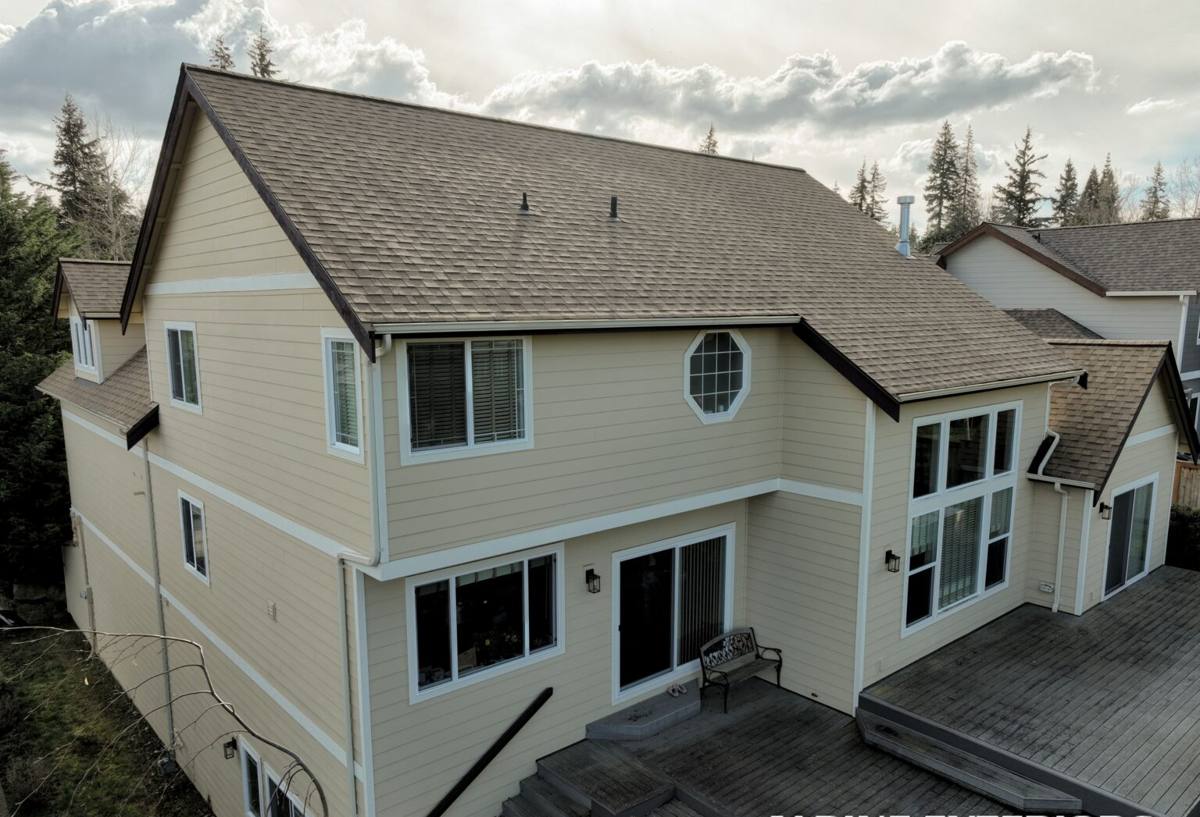
Why Blaine Roofs Wear Differently
Three conditions do most of the damage to roofs in this area, and they rarely act alone.
Salt Air and Corrosion
Homes closer to open water are exposed to airborne salt that accelerates corrosion on exposed metal — flashing, fasteners, vents, and gutter hardware age faster here than they would inland. Once corrosion starts on a fastener or a flashing seam, it doesn't stay contained; it creates a path for water to follow.
Driving Rain
Wind off the water doesn't just drop rain straight down — it pushes it sideways and up under laps, seams, and flashing that would stay dry in a calmer rain. Roofs here need details (flashing overlaps, underlayment coverage, seal points) that account for wind-driven moisture, not just gravity.
A Long Moss Season
Cool, damp, shaded conditions for much of the year give moss and algae plenty of time to establish on north-facing slopes and anywhere shade lingers. Moss doesn't just look bad — it holds moisture against the roofing material, lifts shingle edges as it grows, and works its way into fastener holes and laps over time.
Common Roof Repair Issues We See in Blaine
Most repair calls in this area fall into a handful of categories. Recognizing them early is the difference between a straightforward repair and a much larger project.
- Moss-related shingle lift and granule loss — moss roots work under shingle tabs, breaking the seal and exposing the underlayment.
- Corroded or failing flashing — around chimneys, skylights, valleys, and roof-to-wall transitions, where salt air and repeated wetting accelerate metal fatigue.
- Wind-driven leaks at eaves and rakes — water pushed sideways under shingle edges that weren't detailed for coastal wind loads.
- Nail pops and fastener backout — often from a combination of moisture cycling and corrosion, leaving small punctures that let water in gradually.
- Clogged or failing gutters backing water up under the roof edge — moss debris and needle buildup are constant in this climate, and a full gutter sends water where it doesn't belong.
- Deteriorated pipe boot and vent seals — rubber and sealant components that age faster under UV and constant damp cycling.
What a Correct Roof Repair Actually Involves
A roof repair done right isn't just sealing the spot where water is showing up inside the house. Interior stains and exterior leak points are often several feet apart, since water travels along the underlayment or decking before it finds a way through the ceiling. A proper repair traces the leak to its actual source, checks the surrounding material for hidden damage, and replaces or re-seals everything that's compromised — not just the visible symptom.
This matters even more in Blaine's climate, because a repair that only addresses the surface problem tends to fail again within a season or two once moss regrows or the next wind-driven storm finds the same weak point.
Our Roof Repair Process
1. Inspection
We start by getting on the roof (weather permitting) to look at the actual condition of the shingles, flashing, fasteners, and any moss or debris buildup — not just the area where a leak is showing inside. We also check attic ventilation and insulation where accessible, since poor ventilation contributes to moisture problems from the inside out.
2. Diagnosis and Written Estimate
We explain what we found in plain terms — what's failing, why, and what it will take to fix it correctly. You get a written estimate before any work begins, with repair scope and cost factors spelled out so there are no surprises.
3. The Repair
Depending on what we find, this may involve replacing damaged shingles, resealing or replacing flashing, treating and removing moss, correcting fastener issues, or addressing ventilation problems that are driving moisture damage. We match materials to what's already on the roof where possible and use fastening and flashing details suited to this area's wind and moisture exposure.
4. Cleanup and Documentation
We clear debris, remove old material, and leave the site clean. You get a clear summary of what was repaired and what to watch for going forward — including any areas that are aging and worth monitoring even though they didn't need repair this time.
Repair vs. Replacement: How We Help You Decide
Not every roof problem calls for a full replacement, and not every roof problem should be patched indefinitely either. We walk you through the honest tradeoffs rather than defaulting to whichever option is bigger.
| Factor | Repair Usually Makes Sense | Replacement Is Worth Considering |
|---|---|---|
| Age of roofing material | Well within its expected service life | At or past the manufacturer's expected lifespan |
| Extent of damage | Isolated to one area or a few components | Widespread across multiple slopes |
| Underlying decking | Solid, no rot found during inspection | Soft spots or rot discovered under shingles |
| Moss and algae presence | Light to moderate, treatable | Heavy, long-term growth with granule loss across large areas |
| Number of past repairs | First or second repair in this area | Repeated repairs to the same section over recent years |
When a roof is genuinely near the end of its service life, we'll say so — a repair that's likely to fail again within a year isn't a good use of your money, and we'd rather tell you that upfront than sell you a patch we don't believe in.
Materials and Approach for Coastal Whatcom County Conditions
For flashing and fasteners, we favor materials and coatings that hold up better against salt air exposure than standard-grade hardware, since corrosion is one of the more predictable failure points on roofs this close to open water. For moss treatment, our approach focuses on removal and prevention methods that don't damage the shingle surface in the process — aggressive pressure washing or improper scraping can do more harm than the moss itself by stripping granules and shortening shingle life. We're upfront that no roofing material is maintenance-free in this climate; the goal is choosing details and materials that hold up as long as reasonably possible and catching wear before it becomes a leak.
Why a Crew That Already Works in Blaine Makes a Difference
Roofing knowledge that applies to a dry inland climate doesn't automatically transfer to a waterfront community near the Canadian border. A crew that regularly works roofs in Blaine and the surrounding Whatcom County coastline knows which slopes tend to hold moss longest, which flashing details tend to fail first under wind-driven rain, and how local permitting and inspection expectations work. That familiarity shows up in fewer callbacks and repairs that are diagnosed correctly the first time, instead of guesswork based on conditions somewhere else entirely.
Signs You Should Have a Roof Repair Looked At Now
Catching these early usually keeps a repair small. Waiting typically doesn't.
- Visible moss growth, especially on north-facing or shaded slopes
- Granules collecting in gutters or at downspout outlets
- Shingles that look curled, lifted, or cracked at the edges
- Water stains on interior ceilings or upper walls
- Rust streaks or visibly corroded flashing around chimneys or vents
- Daylight visible through the roof deck from inside the attic
- Gutters that overflow or back up during heavy rain
If you're seeing one or more of these, it's worth having a look before the next stretch of driving rain finds the weak spot.
Get a Free, No-Pressure Roof Repair Estimate
If you're dealing with a leak, visible moss, or a roof that's just showing its age, we're happy to take a look and give you an honest read on what it needs — repair or otherwise. Fill out the form below to request a free estimate for your Blaine property, and we'll walk you through exactly what we find.