 Bellingham Exterior
 Board & Batten Siding in York: Matching the Look to the Climate
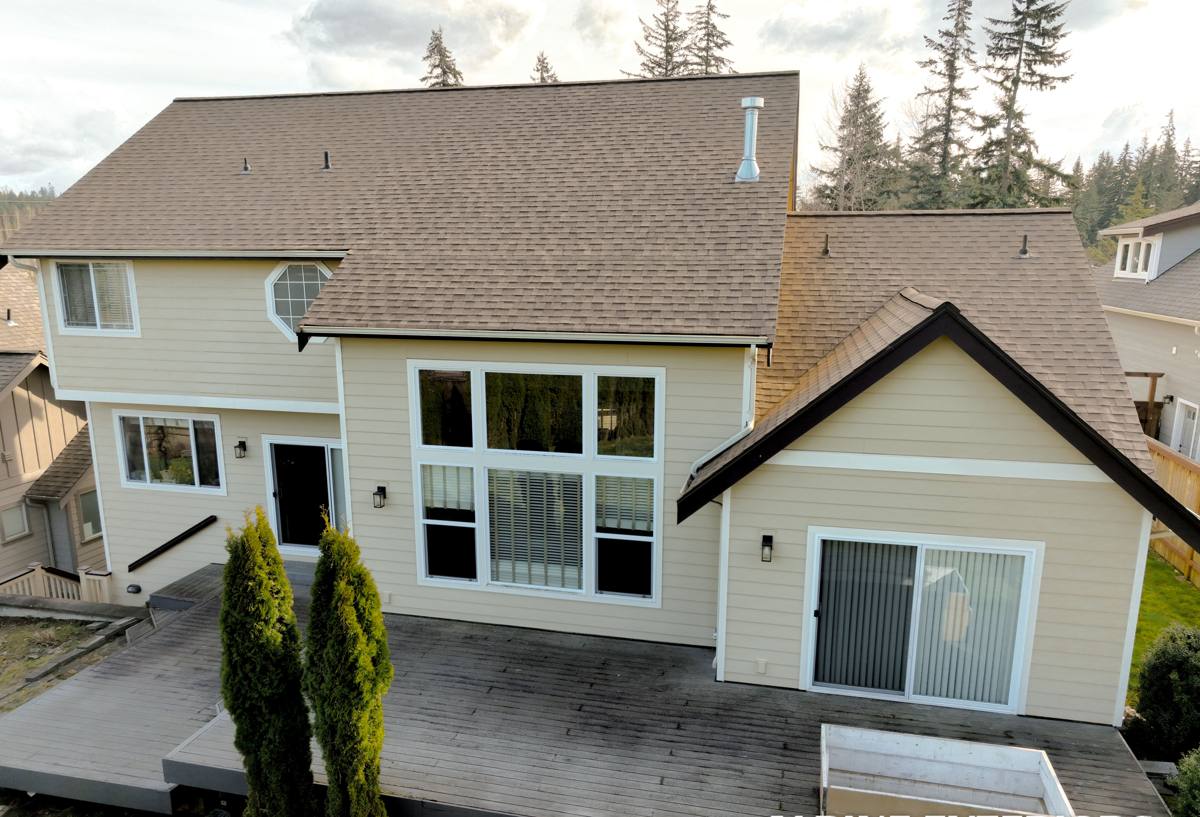
Board and batten has become one of the most requested siding profiles in the Bellingham area, and York is no exception. The vertical lines read as clean and modern on newer builds, but they also suit the older farmhouse and craftsman homes scattered through this part of Whatcom County. Homeowners like it for the look. What they don't always think about is that board and batten is also a functional choice — when it's built right, the wide boards and raised battens shed water differently than horizontal lap siding, and that matters here more than in most parts of the country.
This page is about doing board and batten correctly for a York property, not board and batten in general. The profile is only as good as the material behind it and the installation underneath it, and both of those decisions carry more weight in a marine climate than they would somewhere dry.
What Bellingham's Climate Actually Does to Vertical Siding
Whatcom County sits right on the water, and York homes get the full package: salt-laden air off the Sound, long stretches of driving rain in the fall and winter, and a moss season that can run most of the year on shaded north and west walls. Each of these stresses a siding system in a different way.
- Salt air accelerates corrosion on fasteners, flashing, and trim — cheap or improperly coated hardware fails years before the siding itself does.
- Driving rain hits vertical board and batten seams directly, so the water management behind the boards has to actually work, not just look tidy.
- Moss and algae take hold on any surface that stays damp, and untreated wood-based products give moss something to root into over time.
- Freeze-thaw swings, while milder here than inland, still stress any siding material that absorbs and holds moisture.
None of this makes board and batten a bad choice for York — it makes material selection and installation detail the whole ballgame.
Why We Only Install James Hardie Board & Batten
Board and batten shows up in a lot of materials — cedar, primed spruce, engineered wood, vinyl, fiber cement. We install James Hardie fiber cement exclusively, and on a vertical profile that's directly exposed to wind-driven rain and salt air, the reasons matter more than usual.
Fiber cement doesn't feed moss the way raw or lightly primed wood can, it doesn't swell and split at cut edges the way engineered wood products can if the field isn't sealed perfectly, and it holds a factory-applied finish instead of relying on a field-applied coat that has to be redone every few years. On a house near Bellingham Bay, those aren't small differences — they're the difference between repainting battens every 5-7 years and leaving the finish alone for well over a decade.
HardiePanel and HardieTrim: The Actual System
A proper Hardie board and batten installation isn't one product — it's a system. The field is typically HardiePanel vertical siding, and the battens are HardieTrim boards fastened over the panel seams at a consistent, engineered spacing. Both come with Hardie's ColorPlus factory finish, which is baked on and warranted separately from the substrate, so the panel and the trim age together instead of the trim fading or chalking faster than the field.
HZ5 Engineering for This Climate
Hardie's HZ5 product line is engineered for the Pacific Northwest's wetter, cooler conditions, with formulation differences from the HZ10 line sold in hot, dry regions. For a York property sitting in a marine climate zone, HZ5 is the correct product family, not a substitute.
What a Correct Installation Involves
Board and batten fails early almost exclusively because of what's happening behind the boards, not the boards themselves. The visible seams are the easy part; the water management is where jobs go wrong.
Rainscreen and Furring
On a house taking direct rain off the water, we install over a furring strip or engineered rainscreen gap rather than nailing panels flat to the weather-resistive barrier. That gap lets any moisture that gets past the cladding drain and dry instead of sitting against the sheathing — the single biggest factor in how long a siding job lasts in this climate.
Fastening
Battens need to land on framing or blocking with corrosion-resistant fasteners driven to Hardie's specified pattern and depth — not just close enough. Overdriven or underdriven fasteners are one of the most common causes of early siding callbacks, and they're invisible until the finish starts failing around them.
Flashing and Penetrations
Every window, door, hose bib, and light fixture is a place water can get behind the cladding. Flashing has to be installed and lapped correctly — over the weather barrier, under the siding — at every one of those points, not just at the roofline.
Joints and Clearances
Butt joints get properly flashed or backed, not just caulked and hoped for. Siding is held off grade, decks, and roof lines with the clearance Hardie's install guide requires, so splashback and ponding water don't sit against the bottom course.
How We Approach a York Project
The process on a board and batten job doesn't change dramatically between neighborhoods, but the details we pay closest attention to shift based on the site. On a York property, that usually means:
- Walk and assess — current siding condition, exposure to wind and rain off the water, existing moss or moisture staining, and trim condition.
- Water management plan — confirm rainscreen approach, flashing details at every penetration, and drainage at the base of the wall.
- Material spec — HZ5 HardiePanel and HardieTrim in the ColorPlus finish and batten spacing that fits the home.
- Tear-off and sheathing check — old siding comes off, sheathing gets inspected for hidden rot before anything new goes up.
- Install to spec — fastener pattern, batten spacing, flashing, and clearances installed to Hardie's published requirements, not shortcuts.
- Final walk-through — trim, caulking, and touch-up checked against the install standard before we call it done.
Board & Batten Material Comparison for This Climate
| Material | Moss/Moisture Behavior | Finish Durability | Long-Term Fit for York |
|---|---|---|---|
| James Hardie fiber cement | Doesn't feed moss growth; drains well with proper rainscreen | Factory ColorPlus finish, warranted separately | Strong — built for marine/wet climates in HZ5 |
| Cedar | Attractive but absorbs moisture; needs consistent sealing to resist moss | Field-applied stain/paint, regular upkeep | High-maintenance in salt air and rain exposure |
| Primed spruce / engineered wood | Vulnerable at cut edges and joints if field-sealing isn't perfect | Field-applied paint, shorter repaint cycle | Installation-sensitive; less margin for error |
| Vinyl board and batten | Doesn't feed moss but can warp/distort with heat and impact | Color molded in, but fades and chalks over time | Lower cost, shorter realistic lifespan here |
What Drives Cost on a York Board & Batten Job
Every board and batten estimate is specific to the house, but a few factors consistently move the number:
| Factor | Why It Matters |
|---|---|
| Tear-off scope | Full removal of old siding and inspection of sheathing adds labor but catches hidden rot before it's buried |
| Wall complexity | Dormers, bump-outs, and multiple gables mean more cuts, more flashing, and more batten layout work |
| Rainscreen approach | Furring strips and drainage detailing add material and labor but are what makes the system last here |
| Trim and batten spacing | Tighter batten spacing or wider trim boards increase material cost per square foot |
| Color and finish | Standard ColorPlus colors vs. custom field-painted trim affect both cost and long-term maintenance |
We give straight ranges during the estimate walk-through once we've seen the actual wall conditions — not a number pulled from a square-footage chart.
Maintaining Board & Batten in a Marine Climate
James Hardie board and batten is low-maintenance, not no-maintenance. A short annual routine keeps it performing:
- Rinse siding annually to clear salt residue and organic buildup, especially on north- and west-facing walls
- Check caulking at trim joints and penetrations for cracking or gaps once a year
- Keep gutters clear so overflow doesn't run down the wall face repeatedly
- Trim back vegetation and landscaping that holds moisture against lower courses
- Watch for moss starting at shaded corners and address it early rather than letting it establish
Why Hiring a Crew That Already Works York Matters
Board and batten installation isn't complicated in theory, but the margin for error is small in a climate that tests every seam, fastener, and flashing detail every winter. A crew that's already worked on homes in and around York and greater Bellingham has a working sense of how the local exposure — proximity to the water, prevailing wind and rain direction, moss pressure on shaded elevations — actually plays out on a wall, rather than applying a generic installation approach and hoping it holds up.
That local familiarity shows up in small decisions: where we add extra flashing attention, how we handle drainage at grade on a site with poor runoff, which elevations need closer moss monitoring built into the maintenance conversation. None of it is exotic — it's just paying attention to the conditions this specific area produces, year after year.
Get a Straight Answer for Your Home
If you're weighing board and batten for a York property, we're glad to take a look and give you a clear, no-pressure estimate — what the job actually involves, what it will cost, and how it holds up given your home's exposure. Use the form below to get started.