 Bellingham Exterior
 Composite Decking for Lynden Homes
Lynden sits inland from Bellingham Bay, out in Whatcom County's farmland, so it doesn't take the same direct salt spray that decks closer to the water deal with. What it does get is a long, wet season — months of steady rain, heavy dew off the surrounding fields, and enough shade and moisture in the shoulder seasons to grow moss on almost any horizontal surface that isn't maintained. That combination is exactly what composite decking was designed to handle, which is why it's become the default choice for homeowners here who are tired of re-staining a wood deck every spring or chasing rot at the ledger board.
This page covers what a composite deck actually needs to hold up in this specific climate, what a correct installation looks like underneath the boards, and how we approach the job for homeowners in and around Lynden.
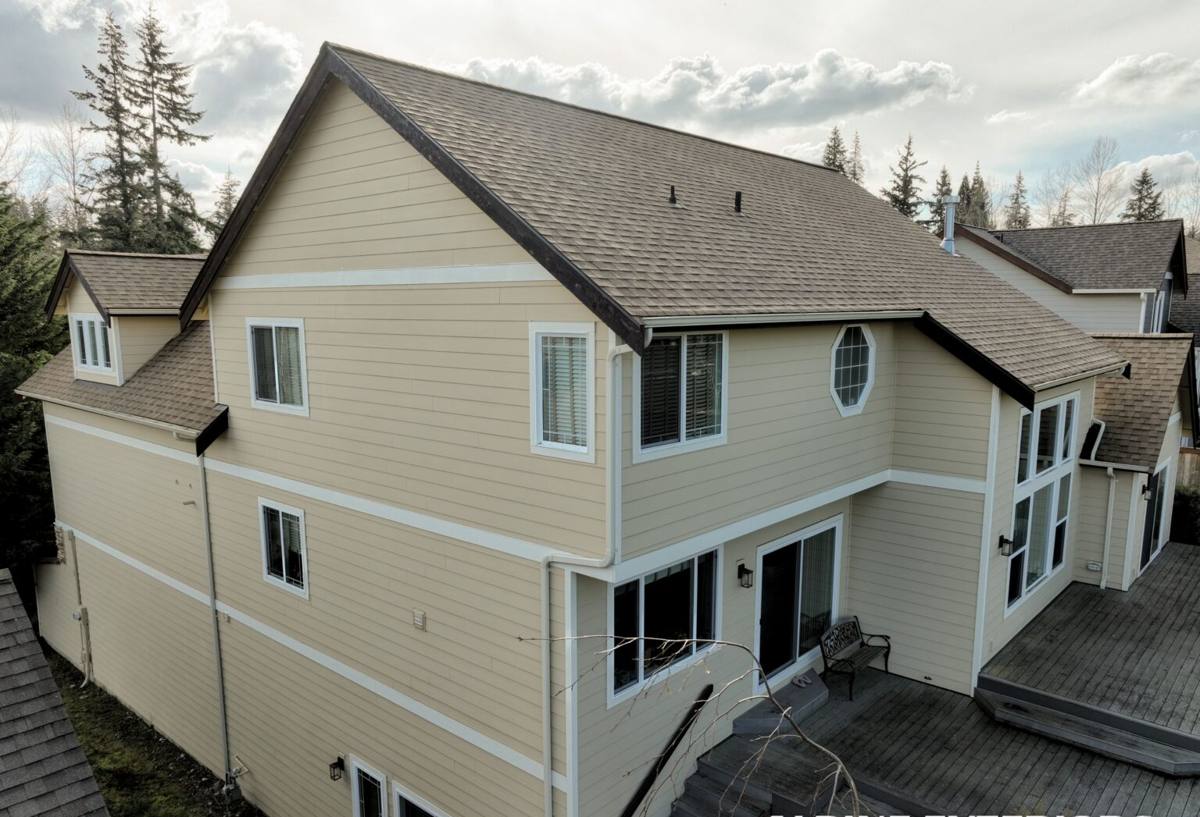
What Lynden's Climate Actually Does to a Deck
Whatcom County doesn't get extreme weather so much as it gets relentless, ordinary weather — rain from fall through spring, mild temperatures that never fully dry things out, and enough overcast days that decks in partial shade rarely get a good dry-out stretch. On a wood deck, that shows up as graying, splintering, and eventually soft spots where water sits in seams and around fasteners. On any deck material, it shows up as moss and algae growth on boards that don't get direct sun.
Composite decking doesn't rot, but it isn't immune to the climate either. The boards themselves shed water fine — the problems show up in three places if the job isn't built correctly:
- Framing and joists underneath that were never properly protected from moisture, even though the decking above them is composite
- Poor drainage or airflow under the deck, which keeps the substructure damp long after a storm passes
- Fastening and board-gapping done wrong, which lets water pool on the surface or in hidden seams where moss and mildew take hold
A composite deck is only as good as the frame it's built on and the details around the edges. That's the part homeowners don't see in the showroom sample.
What a Correct Composite Deck Build Involves
The Substructure
Composite boards are non-structural — all the weight-bearing work happens in the joists, beams, and posts underneath, almost always pressure-treated lumber. In a climate that stays damp for months at a stretch, that framing needs joist tape or a comparable flashing barrier on top of every joist, proper post bases that keep wood off concrete or soil, and enough ventilation underneath the deck for air to actually move. Skipping joist protection is the single most common shortcut we see on older or poorly built decks in this area — the composite boards look fine on top while the frame underneath is degrading.
Board Spacing and Fastening
Composite boards expand and contract with temperature more than wood does, so gapping has to account for that movement — too tight and boards can buckle or bow, too wide and debris and moss get a place to take hold. Hidden fastener clip systems, installed to the manufacturer's spec, give a cleaner surface than face-screwing and reduce the number of places water and dirt can collect.
Drainage and Grade
Every deck needs a slight slope away from the house and a ledger board connection that's properly flashed so water is directed off the structure, not into the rim joist. On lower decks close to grade, we also look at whether the ground underneath drains on its own or needs help — standing water under a deck keeps everything above it damp for days after a storm has already cleared.
Composite vs. Other Decking Materials
| Material | Maintenance | Moisture Behavior | Typical Lifespan Here |
|---|---|---|---|
| Composite (capped) | Occasional wash-down; no staining or sealing | Won't rot; resists moss staining better than wood | 25–30+ years |
| Pressure-treated wood | Annual cleaning, re-stain or seal every 1–3 years | Absorbs water; prone to splintering, cupping, rot at fasteners | 10–15 years before major repair |
| Cedar | Regular sealing to maintain color and resist moisture | More rot-resistant than PT lumber but still absorbs moisture | 15–20 years |
| PVC decking | Low, similar to composite | Fully water-resistant but can look and feel less like natural wood | 25–30+ years |
We install composite decking for most Lynden projects because it holds up well against sustained moisture without the annual upkeep wood requires, and it has a more natural look and feel than most PVC products. We don't push it as the only right answer for every homeowner — if budget or aesthetic preference points toward wood, we'll say so and build that deck correctly too, with the understanding that maintenance will be part of the deal.
Our Process
- On-site assessment — we look at existing framing (if replacing an old deck), grade, drainage, and how much direct sun the space actually gets, since shaded decks need different attention to moss prevention.
- Design and material selection — board color, gapping, railing, and fastening system, sized to your framing and Whatcom County's snow and wind load requirements.
- Permitting — most new or rebuilt decks in Whatcom County and the City of Lynden require a permit, especially anything attached to the house or above a certain height. We handle that paperwork as part of the job.
- Demolition and framing — old decking and any compromised framing removed and replaced; new joists protected with flashing tape before anything is installed on top.
- Composite board installation — hidden fastener clips, manufacturer-spec gapping, and proper ledger flashing at the house connection.
- Final walkthrough — we go over basic care with you before we consider the job done.
Living With a Composite Deck Through a Whatcom Winter
Composite decking is genuinely low-maintenance, but "low" isn't "none." In a region with this much shoulder-season moisture, a little seasonal attention keeps a deck looking good for its full lifespan:
- Sweep leaves and debris off the surface regularly in fall — trapped organic material is what feeds moss growth, not the board material itself
- Rinse the deck a few times a year with a garden hose and a stiff (non-metal) bristle brush; pressure washers can be used but only on a wide fan setting to avoid damaging the board's cap layer
- Check that gaps between boards stay clear so water keeps draining through instead of sitting on the surface
- Keep gutters and downspouts near the deck clear so runoff isn't dumping extra water onto or under it
- Inspect railing posts and stair connections once a year for any movement, especially after a hard winter
None of this is heavy labor — it's the difference between a deck that looks new for two decades and one that develops green staining in the shady corners within a couple of years.
Why Hire a Crew That Already Works in Lynden
Deck framing that's correct for a drier climate isn't automatically correct here. A crew that mostly works inland or in drier regions can build a deck that looks fine on delivery day and still develops moisture problems in the frame within a few winters, because the joist protection, drainage detailing, and fastener choices weren't built for a place where the ground barely dries out from October through May. Working regularly in Whatcom County means knowing which details actually matter for this climate and which are optional elsewhere but not here — how much slope a ledger connection needs, how much ventilation a low deck requires, which fastening systems hold up under repeated wet-dry cycling.
It also means understanding Whatcom County and City of Lynden permitting requirements without a learning curve on your project, and knowing how local frost depth and soil conditions affect post footings.
Cost Factors to Expect
| Factor | Why It Matters |
|---|---|
| Deck size and shape | Square footage and complexity (curves, multiple levels) directly drive material and labor |
| Board and railing selection | Composite lines vary in price by cap technology, color, and warranty length |
| Existing framing condition | Rebuilding rotted substructure costs more than decking over sound existing framing |
| Height and railing requirements | Taller decks need code-compliant railing and sometimes stairs, adding cost |
| Site access | Tight lots or backyard-only access can add labor time for material staging |
Exact pricing depends on all of the above, and we'll walk through each factor with you before giving a number — we don't believe in quoting a job we haven't actually looked at.
If you're planning a new composite deck or replacing one that's showing its age, we're happy to come take a look and talk through what your specific property needs. The estimate is free, there's no pressure, and you can use the form below to get started.