 Bellingham Exterior
 Why Ferndale Decks Wear Out Faster Than Homeowners Expect
Ferndale sits close enough to Bellingham Bay and the Strait of Georgia that salt-laden air is a fact of daily life, not an occasional coastal breeze. Combine that with Whatcom County's long wet season, and a deck here is under attack from two directions at once: moisture that soaks into wood fiber and connective hardware, and salt that speeds up corrosion in every nail, screw, and joist hanger holding the structure together. A deck built to a generic national spec, without that combination in mind, tends to show its age years before it should.
Then there's moss. Whatcom County's mild, wet winters give moss and algae months to establish themselves on any horizontal wood surface that doesn't dry out quickly. Once moss takes hold on decking boards, it holds moisture against the wood around the clock, which is exactly the condition that rots joists, softens ledger boards, and turns a walkable surface into a slip hazard. A deck that looks fine from the yard can have real structural problems underneath if that moss cycle has been running unchecked for a few seasons.
None of this means decks can't last in Ferndale — it means they have to be built and replaced with this specific climate in mind, not treated like a generic backyard project.
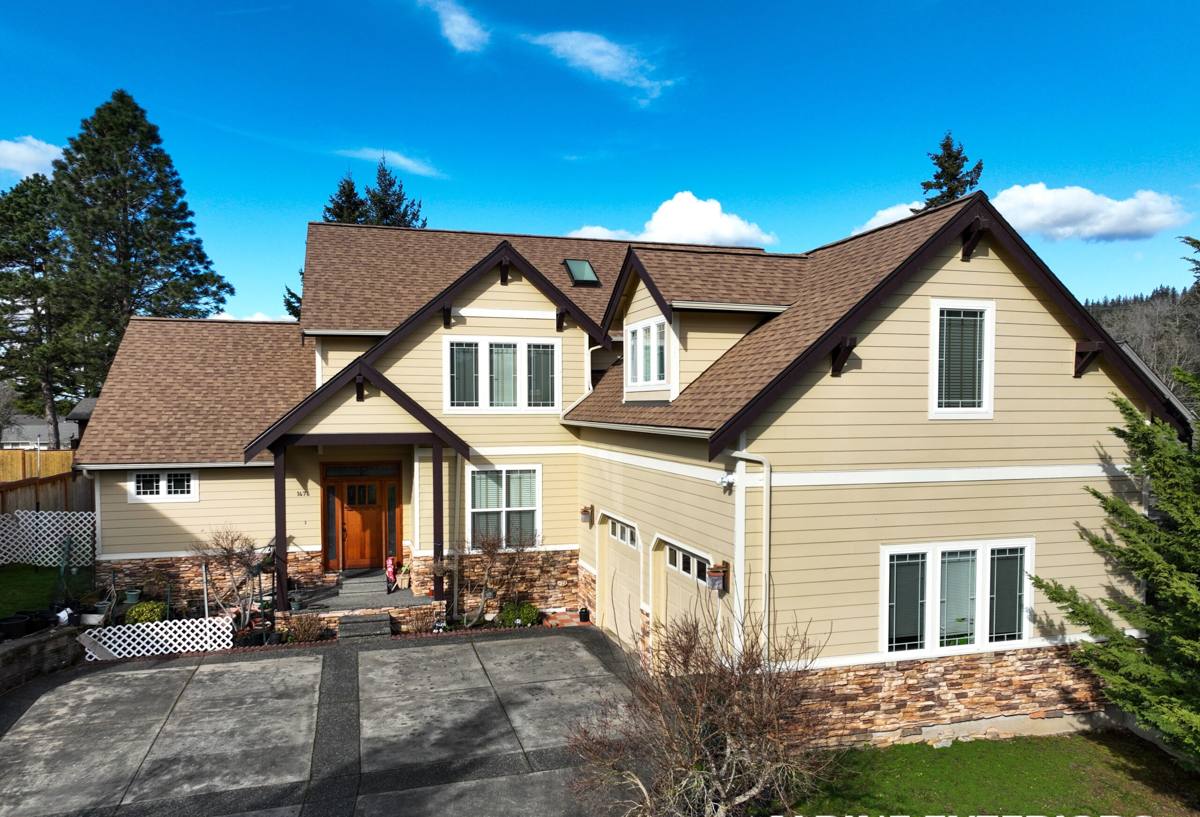
Signs a Deck Needs Replacement, Not Another Repair
We get a lot of calls from Ferndale homeowners who've already replaced a few boards or resealed the surface and are wondering why the deck still feels off. Repairs make sense when the problem is cosmetic or isolated. Replacement becomes the honest answer when the damage has reached the structure itself.
Structural warning signs
- Joists or beams that feel spongy or give slightly when you press on them from underneath
- A ledger board (where the deck attaches to the house) with soft spots, rust streaks, or visible gaps
- Deck posts with soft, discolored wood at the base, especially where they meet a concrete footing
- Railings that wobble more than a quick tightening should fix
- Fasteners that are heavily rusted or have started to bleed rust stains into the wood
- A deck more than 15–20 years old that has never had the substructure inspected
If you're only seeing surface graying, minor splintering, or moss on the boards themselves, that's often a repair-and-refinish situation. If you're seeing any of the items above, board replacement won't fix the underlying problem — the frame is what's failing.
Why repairing an old, undersized deck often isn't worth it
Many older decks in this area were also built before current code expected the ledger attachment, joist hanger spacing, and guardrail requirements they'd need today. When we're already opening up a deck for repair and find outdated framing, we'll tell you honestly when a patch is just delaying a full rebuild rather than solving it.
What a Correct Deck Replacement Actually Involves
A deck replacement is more than swapping old boards for new ones. Done right, it starts below grade and works up.
Footings and posts
Footings need to sit below the frost line and bear on undisturbed, well-draining soil. In areas of Ferndale with heavier clay content, we pay close attention to drainage around footings so water isn't sitting against the concrete and post base year-round.
The ledger connection
The ledger board is the single most important structural connection on most decks — and the most common point of failure when water gets behind it. Correct installation means proper flashing that sheds water away from the house sheathing, lag bolts or through-bolts sized and spaced to code (not just deck screws), and a small gap or flashing detail that keeps water from wicking between the ledger and the siding.
Framing and hardware
Given the salt air here, we spec hot-dip galvanized or stainless structural hardware — joist hangers, post bases, and fasteners — rather than the lighter coated hardware that's adequate further inland but corrodes faster this close to salt water.
Decking and railings
Board spacing, fastening pattern, and airflow underneath the deck all affect how well the decking sheds water and resists the moss buildup that's constant in this climate. Railings and guardrails are set to current code height and baluster spacing, which matters both for safety and for resale.
Decking Material Options for Ferndale's Climate
There's no single "best" decking material — there's a best material for your budget, your maintenance appetite, and how much sun versus shade the deck actually gets. Here's how the common options hold up against salt air, rain, and moss specifically.
| Material | Moisture & Salt Air Behavior | Moss Resistance | Maintenance |
|---|---|---|---|
| Pressure-treated lumber | Good rot resistance when properly sealed; fasteners must be rated for treated wood to avoid corrosion | Needs regular cleaning; moss establishes readily in shaded spots | Reseal every 1–2 years |
| Cedar | Naturally rot- and insect-resistant; handles our rain well but grays without maintenance | Moderate — still needs periodic cleaning in shaded areas | Reseal or stain every 1–3 years |
| Composite decking | Excellent — doesn't absorb moisture or rot; hardware and framing still need proper materials | Better resistance, though algae/moss can still film on shaded, low-airflow boards | Periodic washing; no staining or sealing |
For a house that gets a lot of shade from trees or a north-facing yard — common in parts of Ferndale — composite is worth the higher upfront cost simply because it won't rot the way wood can if moss and moisture sit on it season after season. For a sunnier, well-drained site, a properly maintained cedar or treated-wood deck is a perfectly reasonable and more affordable choice. We'll walk your specific site conditions with you before recommending one over the other; we're not pushing a single product line regardless of fit.
Why we don't oversell any one composite brand
Composite products vary a lot in how their core is made and how their surface resists moisture wicking at cut edges. Our standard is to install per manufacturer spec, including proper edge sealing and ventilation underneath, because a composite deck installed without attention to airflow can trap moisture just as effectively as poorly built wood decking.
Our Deck Replacement Process
- On-site assessment. We inspect the existing deck from below and above, check the ledger and footings, and identify how much of the failure is climate-driven versus age or original build quality.
- Design and material selection. We talk through material options, layout, railing style, and any changes you want (larger footprint, added stairs, different orientation) against your budget.
- Permitting. We handle the permit application with Whatcom County or the City of Ferndale, depending on your address, so the structure is inspected and signed off correctly.
- Demolition and disposal. Old decking, framing, and hardware are removed and hauled off — we don't leave debris piled in the yard.
- Rebuild from the footings up. Footings, posts, ledger, framing, decking, and railings are installed in that order, with inspections at the stages the permit requires.
- Final walkthrough. We go over the finished deck with you, including what maintenance it needs and on what schedule, before we consider the job done.
Permits and Code in Whatcom County
Most deck replacements that involve new framing, footings, or a change in size require a building permit, and the ledger and guardrail details are exactly the items inspectors check most closely — because they're the most common failure points. Skipping the permit might save time upfront, but it can create real problems later: at resale, with insurance claims, or if the deck is ever found to be out of compliance during an unrelated inspection. We pull permits as a standard part of the job rather than treating it as optional.
What Deck Replacement Costs Depend On
We don't publish a flat price because the honest range depends on a handful of factors that vary a lot from one Ferndale property to the next.
| Factor | Why It Matters |
|---|---|
| Deck size and height | More square footage and elevated decks (requiring stairs, more railing, taller posts) both add material and labor |
| Material choice | Composite typically costs more upfront than pressure-treated wood but less over the deck's life in maintenance |
| Substructure condition | If footings and framing are sound, replacement can focus on decking and railings; if not, the whole substructure is rebuilt |
| Site access | Decks with difficult equipment or material access take longer and cost more to build and to demo |
| Permit and inspection scope | Larger structural changes trigger more inspection steps, which affects timeline more than raw cost |
As a broad range, a straightforward wood deck replacement typically runs lower than a full composite rebuild with new footings and railings — but the only way to give you a real number is to see the deck and site in person.
Protecting Your New Deck From Ferndale's Climate
Whatever material you choose, a little seasonal attention goes a long way against salt air, rain, and moss.
- Sweep debris and standing leaves off the deck regularly, especially in fall
- Rinse salt residue off the deck surface and railings periodically if you're close to the water
- Keep gutters and downspouts clear so runoff isn't draining directly onto or under the deck
- Check for moss forming in shaded corners and remove it before it spreads
- Reseal wood decking on the schedule appropriate to the product — don't wait until it's visibly gray and dry
- Have the ledger connection and under-deck framing glanced at every couple of years, even if the surface looks fine
Why Hiring a Crew That Already Works in Ferndale Matters
A deck built to a spec sheet from a drier, inland climate is going to underperform here. Crews who work Ferndale and the surrounding Whatcom County coastline regularly know which hardware grade actually holds up against salt air, which ledger flashing details keep water out through a Pacific Northwest winter, and where moss tends to establish first on a given lot orientation. That local pattern recognition is the difference between a deck that needs attention again in five years and one that's still solid in twenty.
We also know the permitting process for Ferndale and Whatcom County specifically, which keeps the inspection steps moving instead of stalling on paperwork neither side saw coming.
If your deck is showing its age, or you just want an honest read on whether it's a repair or a replacement, we're happy to take a look. Fill out the form below for a free, no-pressure estimate.